
Purpose
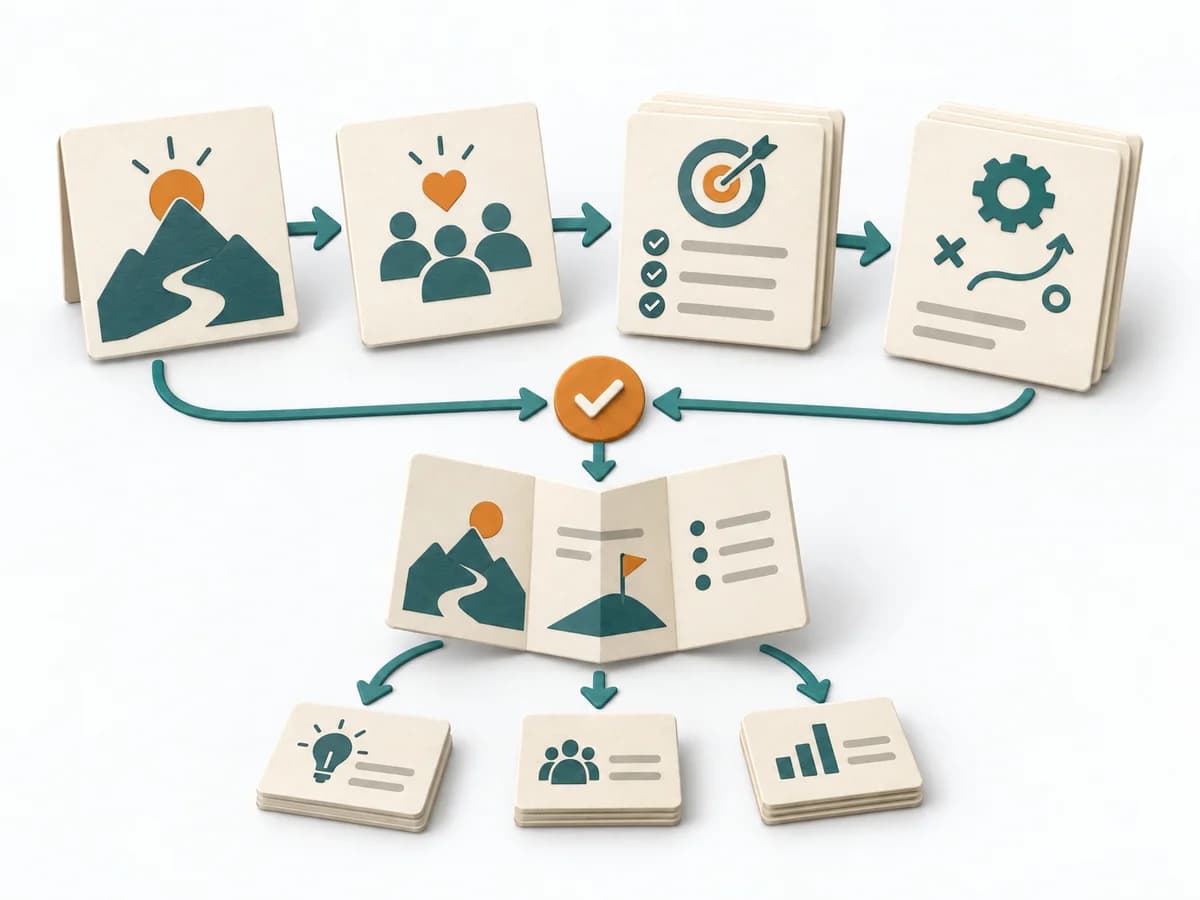
Balanced Scorecard translates strategy into a few interconnected perspectives and metrics. It holds impact, steering, and learning together in daily work instead of narrowing strategy down to financial figures.
Business Strategy Framework
The Balanced Scorecard translates strategy across four perspectives into objectives, measures, targets, and initiatives.
The Balanced Scorecard complements financial results with customer, internal process, and learning and growth perspectives. A strategy map connects objectives as value-creation hypotheses; the scorecard assigns measures, targets and initiatives. Recurring reviews examine execution and strategy together.
How does our strategy create intended financial or stakeholder value through capabilities, processes and customer outcomes?
Example and worksheet use the same method-specific structure.
Strategy
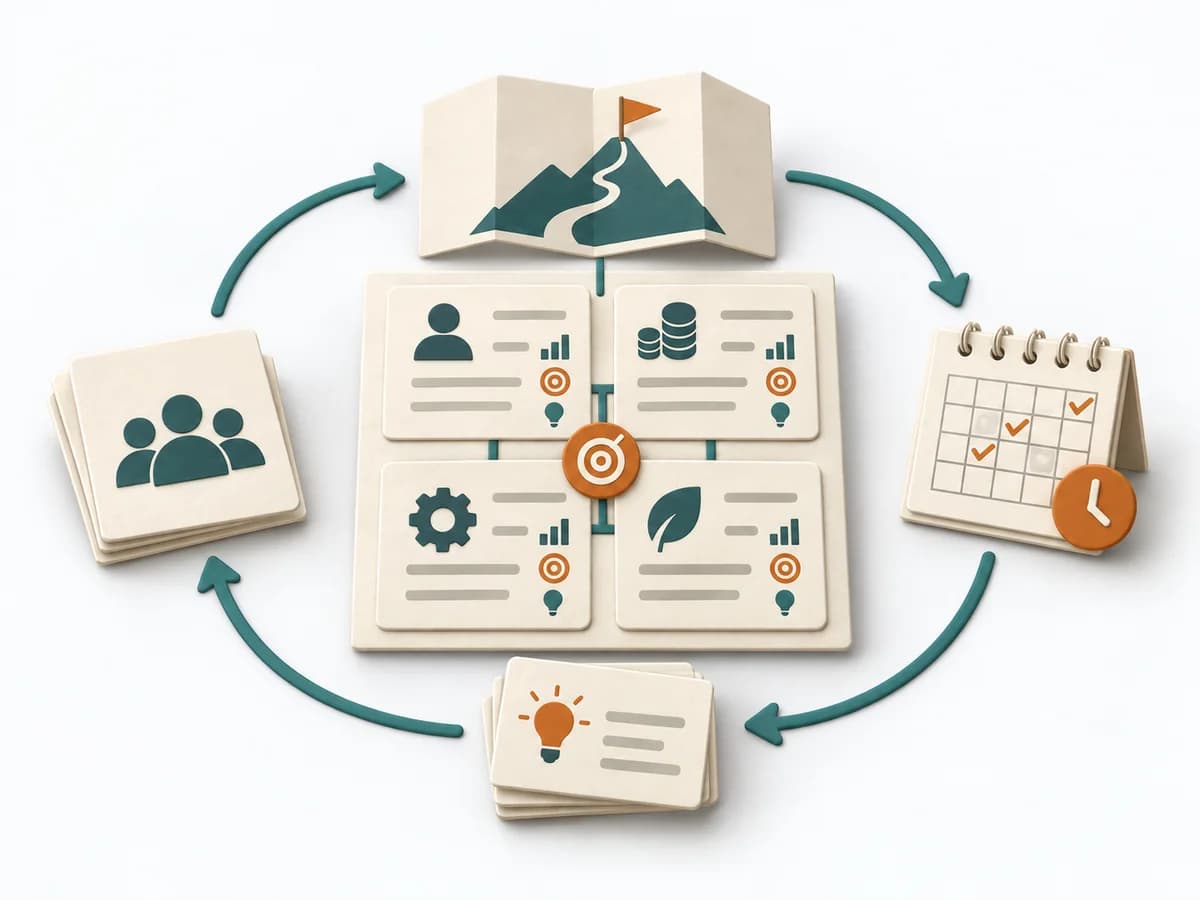
The scorecard starts from a bounded strategy and intended value creation.
Objectives
Financial, customer, internal process, and learning and growth form a traceable value chain.
Measures
Every strategic objective receives a few meaningful lag and, where needed, lead indicators.
Initiatives
Only initiatives with a clear contribution to an objective and gap enter the scorecard.
Review
Recurring reviews examine outcomes, drivers and the underlying strategic hypothesis together.
Monthly or quarterly reviews update values and initiatives; changes to objectives or the value chain are versioned.
Useful when an organization or unit wants to steer a concrete strategy across several perspectives. The effort is excessive for operational team metrics without a strategic choice.
Connected objectives across financial, customer, process, and learning and growth.
Objectives with measures, baselines, targets, initiatives, owners and reviews.
Fictional scorecard
Fictional example for a digital learning product. Each perspective connects objective, measure, target and initiative.
| Perspective | Strategic objective | Measure | Target | Initiative |
|---|---|---|---|---|
| FinancialWhich financial outcomes demonstrate sustainable success? | Grow recurring revenue from existing customers. | Net Revenue Retention | 108% by Q4 | Engage customers with renewal risk early. |
| CustomerWhich customer outcome supports the strategy? | Learners reach their first course success faster. | Median time to first completion | From 9 to 5 days by Q3 | Test a guided first learning path. |
| Internal processWhich processes must excel? | Publish new courses without long approval delays. | Anteil Freigaben unter 2 Stunden | From 62% to 90% by Q3 | Simplify approval queue and exceptions. |
| Learning and growthWhich capabilities and infrastructure enable the processes? | Product teams review impact regularly with reliable data. | Teams mit zweiwöchentlichem Outcome-Review | From 1 to 4 teams by Q2 | Introduce review format, dataset and coaching. |
Relationships across perspectives are strategic hypotheses to test in review.
Clarify strategy, target group, value proposition, horizon and economic result. Involve decision makers and data owners.
Balanced Scorecard translates strategy into a few interconnected perspectives and metrics. It holds impact, steering, and learning together in daily work instead of narrowing strategy down to financial figures.
The team first sets the strategic direction and the relevant perspectives. Then goals, metrics, targets, and initiatives are worked out per perspective and embedded in a review cadence. This keeps strategy visible and changeable in operations.
The Balanced Scorecard works because it translates strategy into a connected set of goals, metrics, and impact assumptions. It only carries weight once the financial view, customer view, internal processes, and learning ability aren't run side by side but read as a cause-and-effect structure. What's decisive is a few meaningful metrics, clear trade-offs, and regular recalibration, so the instrument supports leadership instead of increasing reporting burden.
A small strategic core with few goal relationships that can be embedded into existing review routines fits well for the start. Watch out when metrics are easily available but strategically irrelevant; discipline is needed in selection then. End with a fixed review cadence, named owners, and clear rules for when a metric gets adjusted or replaced.
The method guide walks execution through 5 phases, timing, 5 pitfalls, and clear stop criteria.
Open method guideYour perspective
Your feedback helps shape the next improvements to methodatlas.
Prepare the whole flow or one selected phase with real inputs.
To be confirmed
To be confirmed
Develop and operate the scorecard Time: Half a day to several weeks for setup; monthly or quarterly reviews
Complete this worksheet on paper or in your own document during the work.
| Perspective | Your objective | Measure and definition | Baseline, target and date | Initiative and assumption |
|---|---|---|---|---|
| Financial | ||||
| Customer | ||||
| Internal process | ||||
| Learning and growth |
For each objective add definition, baseline, source, cadence, owner and guardrail.
Kaplan & Norton · Balanced Scorecard
Expected artifact: Strategic frame
Target group · value · result · horizon · assumptions
Entry:
...
Expected artifact: Strategy map
Objectives · four perspectives · causal assumptions
Entry:
...
Expected artifact: Measurement frame
Metric · definition · baseline · target · source · frequency
Entry:
...
Expected artifact: Strategic portfolio
Initiative · contribution · assumption · owner · milestone
Entry:
...
Expected artifact: Strategy review
Trend · explanation · decision · revision
Entry:
...
...
Method guide: https://methodatlas.meierhoff-systems.de/en/methods/balanced-scorecard/run-sheet
Fitting alternatives with decision guidance, followed by other related methods.
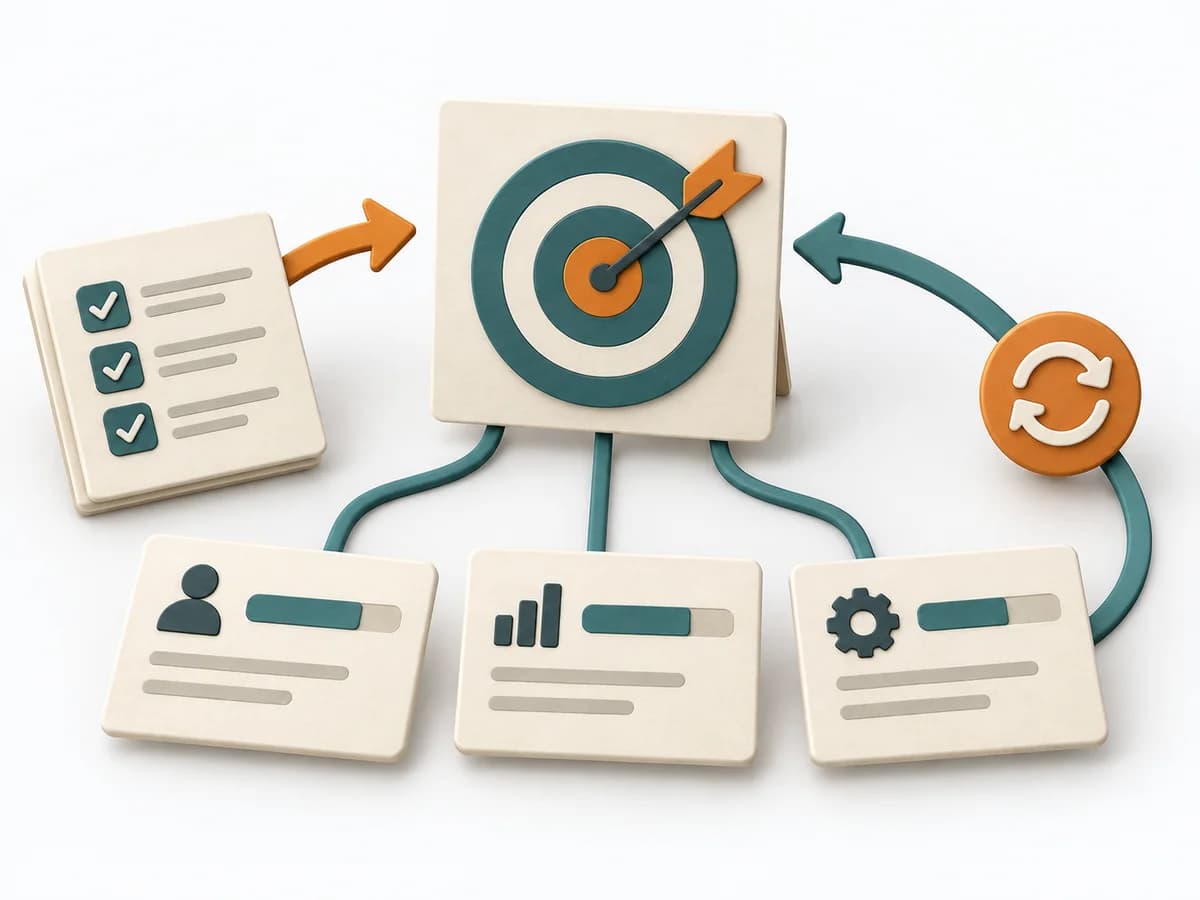
Instead of Balanced Scorecard, when you want to use OKRs to sharply align impact goals with a few measurable results.
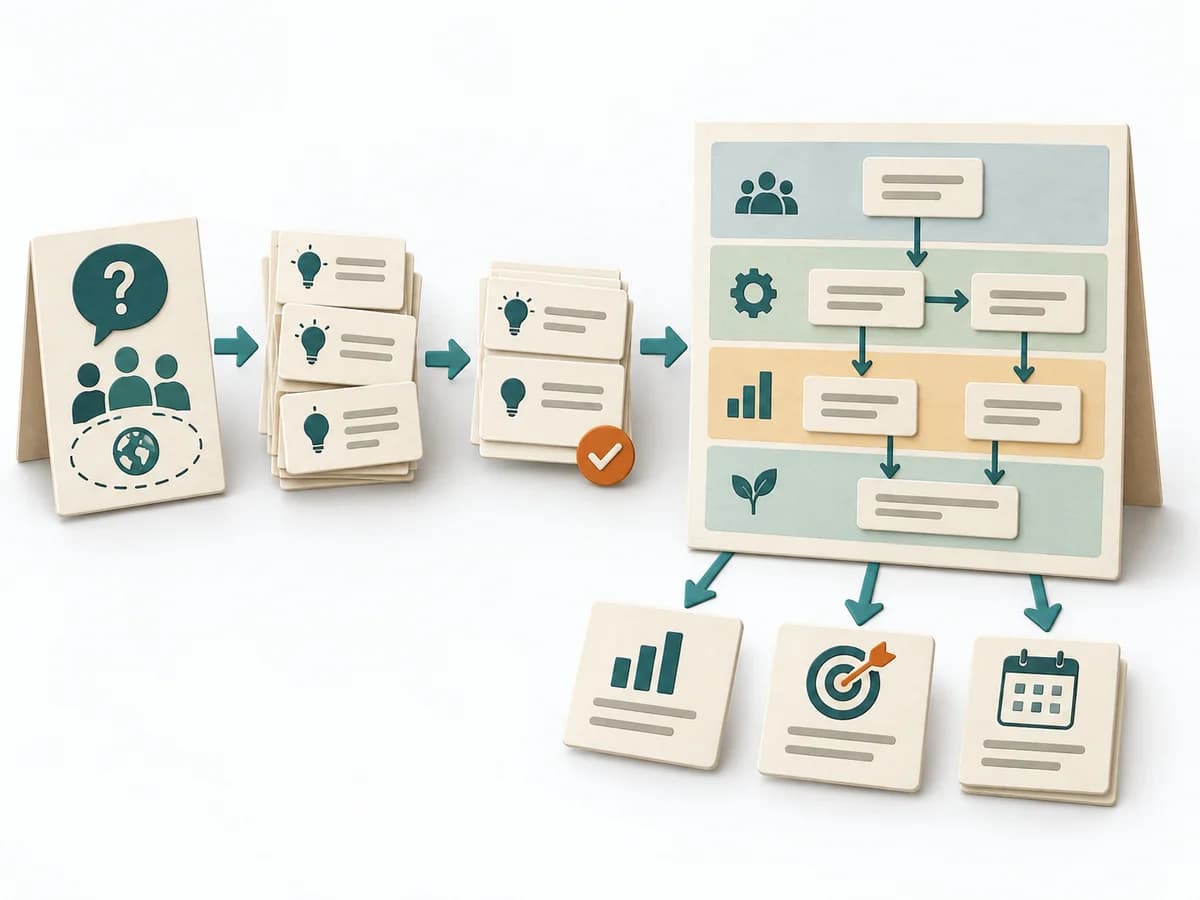
Visualizes strategic objectives and cause-and-effect relationships so a leadership team sees the same strategy story.

Connects strategy development, translation, operational planning, monitoring, and adjustment into a repeatable leadership cycle.
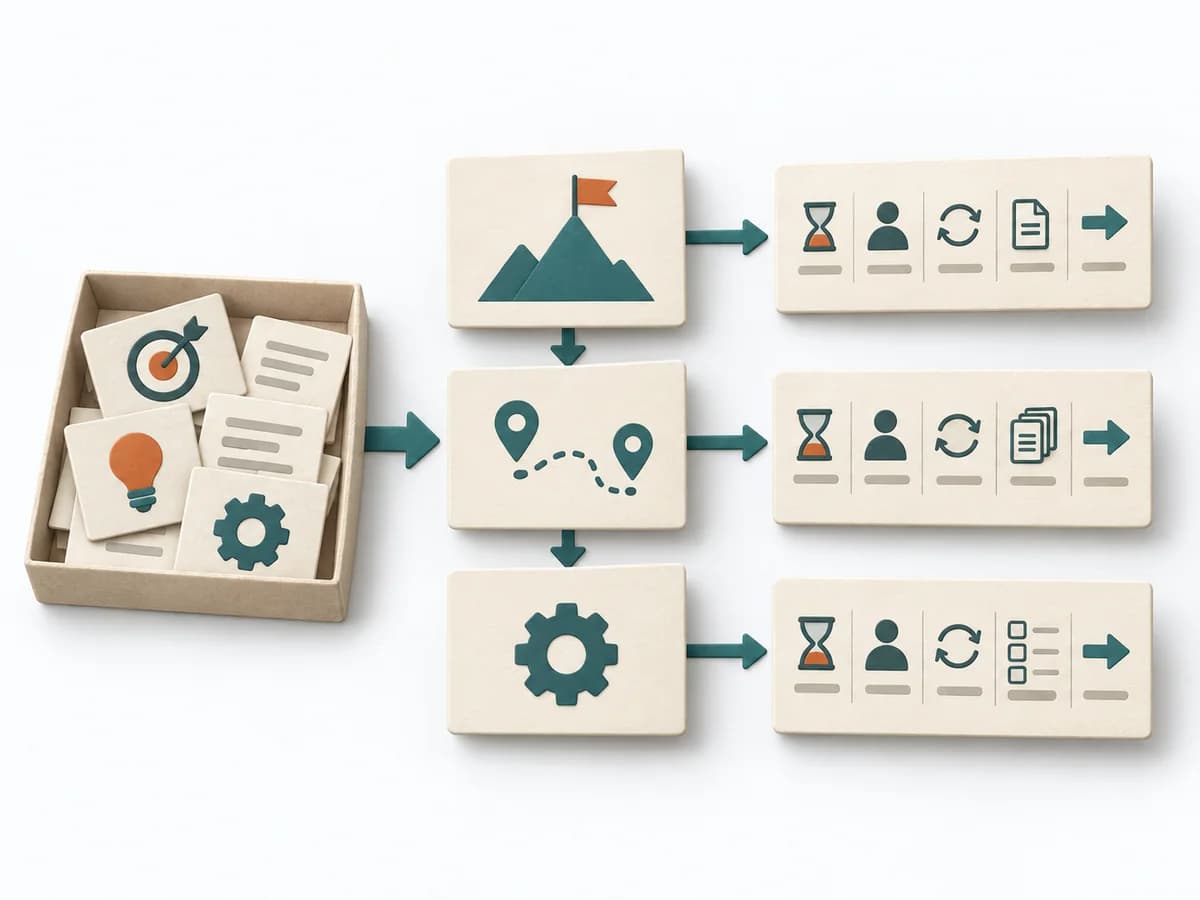
Separates planning levels by time horizon, decision type, and control logic, so strategy does not get mixed up with day-to-day business.
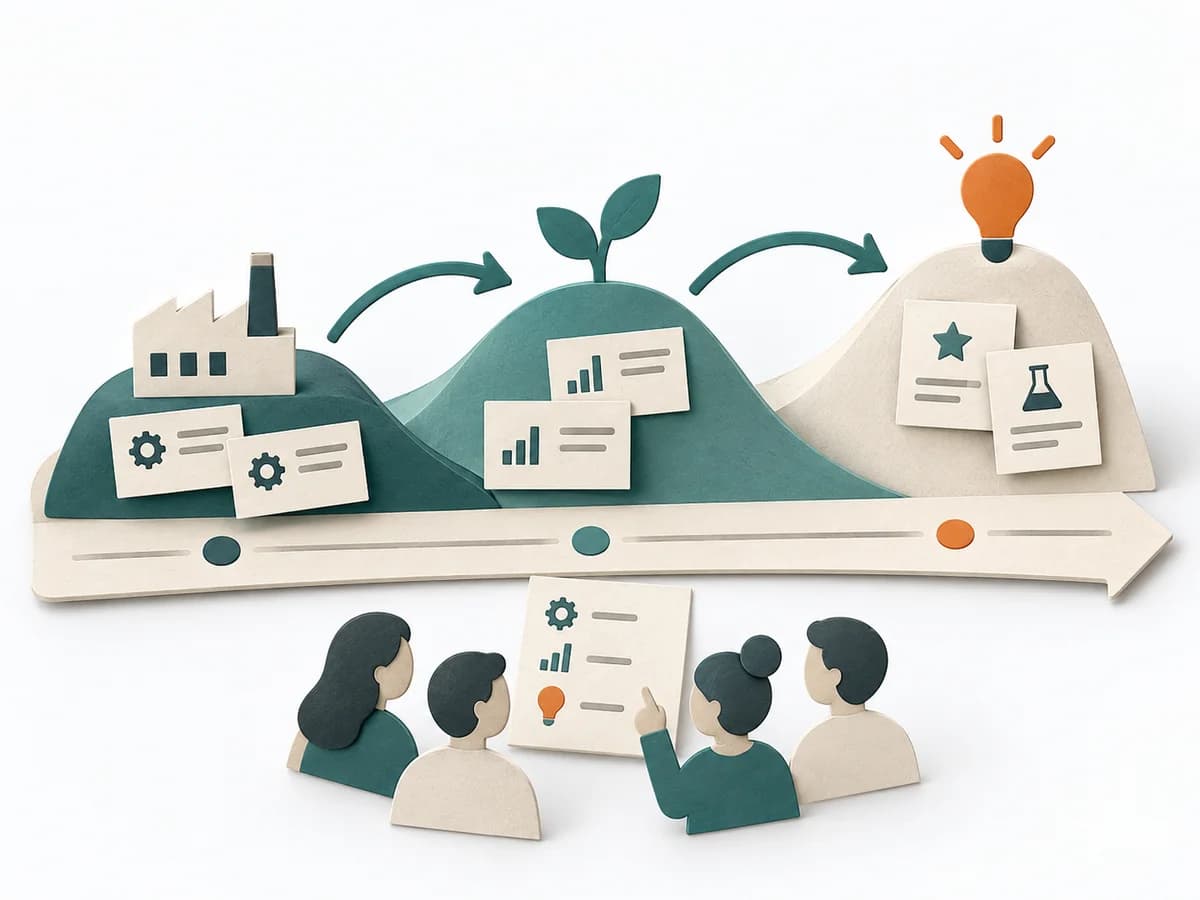
Structures current business, emerging growth fields, and future options across three horizons so portfolio decisions can balance today, tomorrow, and later.

Clarifies starting point, opportunities, and strategic options by framing the scope and target state, capturing the seven elements, and deriving change actions.
