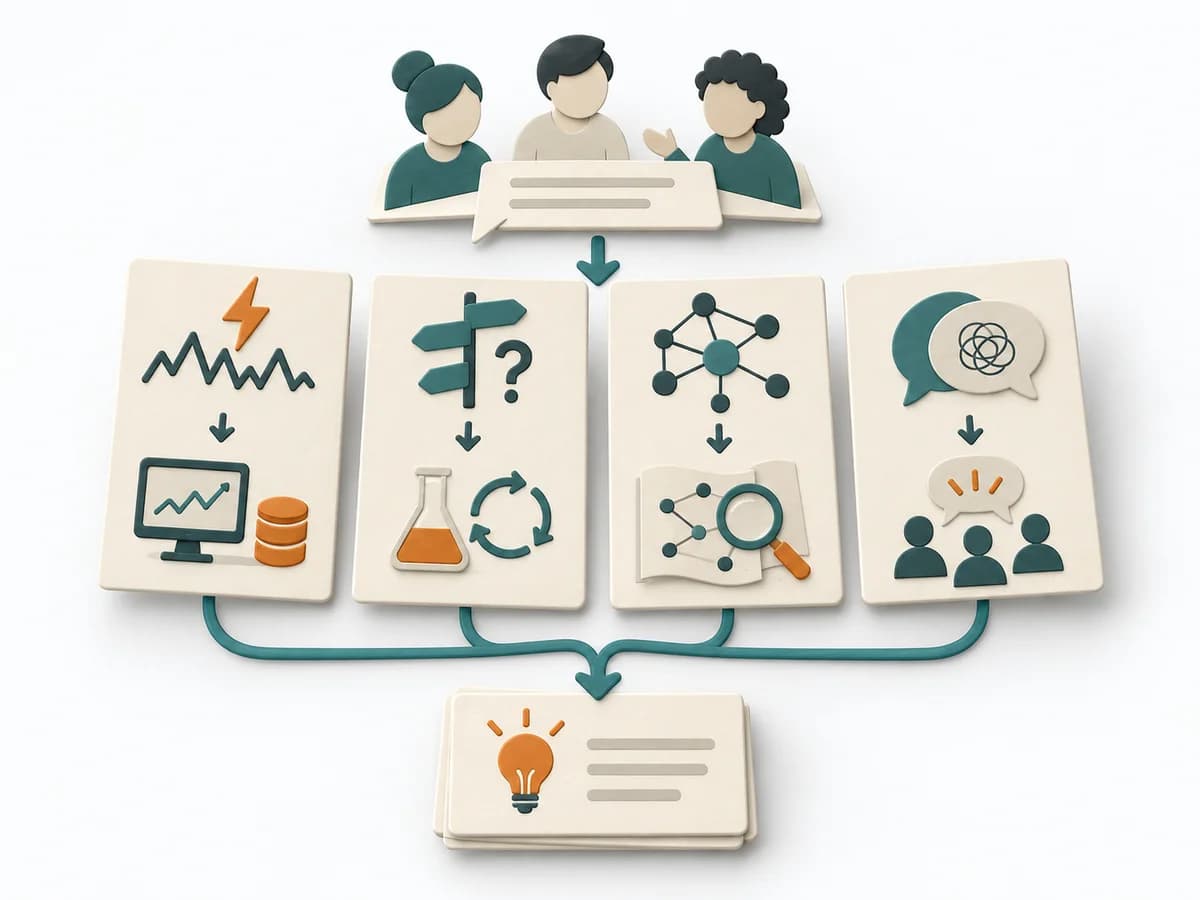
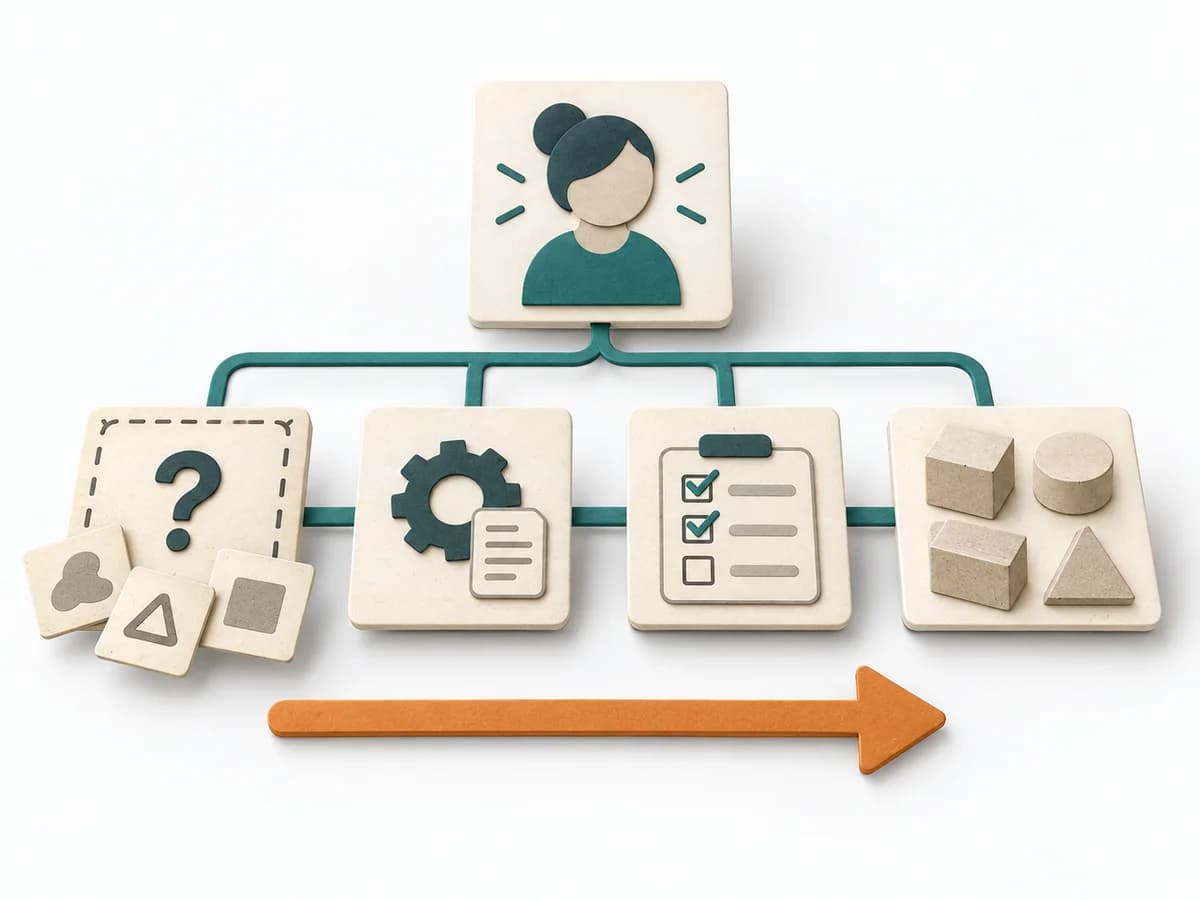
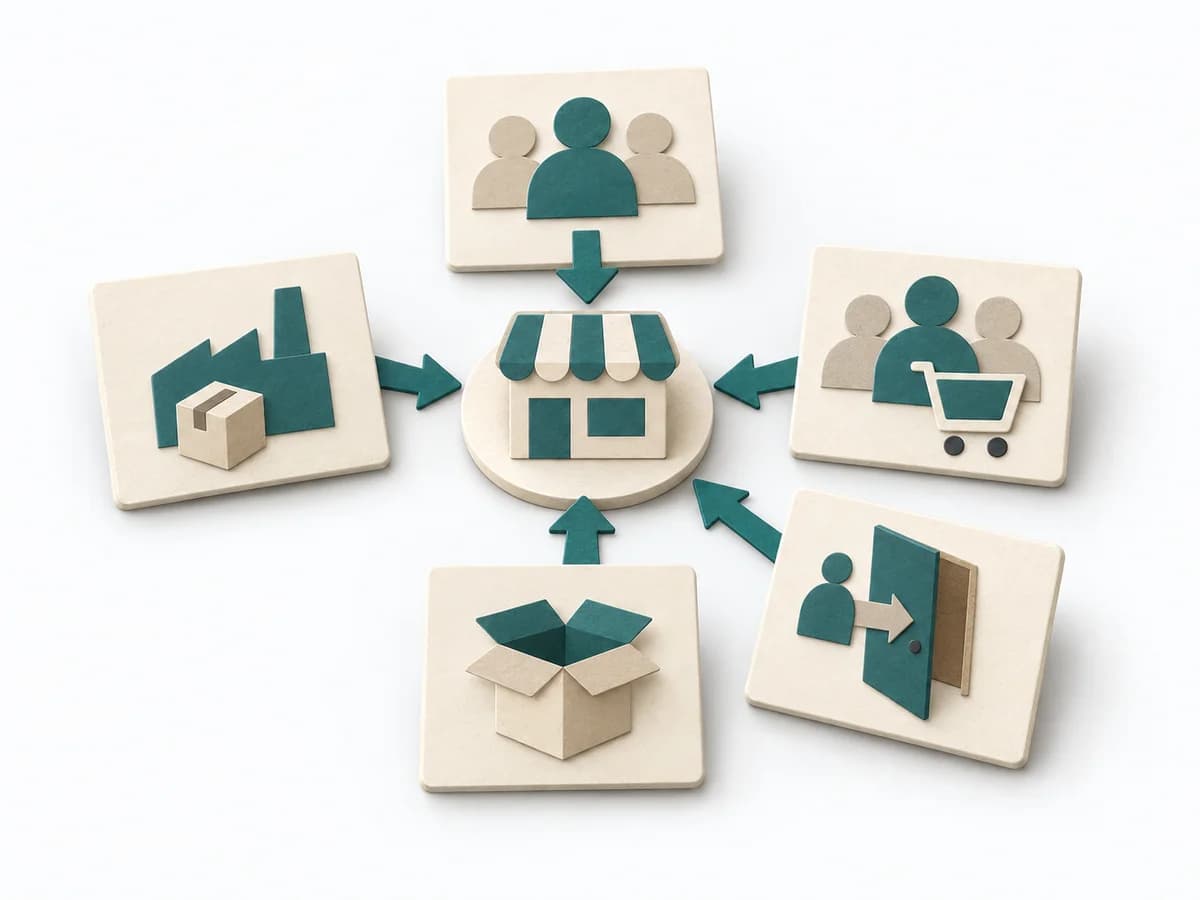
VUCA Scan: Worksheet
Plan VUCA Scan around its domain steps and the concrete decision question.
# VUCA Scan: Worksheet

## Question
To be confirmed

## Desired outcome
To be confirmed

## Scope
Establish and review the practice
Time: 45–75 minutes

Complete this worksheet on paper or in your own document during the work.

## Preparation for this scope

### Method setup
- **Materials:** Environmental signals and time series, decision and exposure, system and stakeholder knowledge, shared workspace, source links, and decision log.
- **Roles:** Strategy/Risk · domain experts · decision owner
- **Advance information:** Collect Environmental signals and time series, decision and exposure, system and stakeholder knowledge in advance and mark open assumptions.
- **Overall time needed:** 45–75 minutes
- **Setup:** Prepare diagnose a situation by rate of change, information gap, system interdependence, and missing interpretive model visibly and calibrate assessment terms before starting.

### Prepare for the work steps

#### Situation: Situation
- Environmental signals and time series
- decision and exposure
- system and stakeholder knowledge

#### Diagnose: Diagnose
- situation brief
- decision and exposure
- system and stakeholder knowledge

#### Response: Response
- VUCA diagnosis
- decision and exposure
- system and stakeholder knowledge

#### Monitor: Monitor
- response set
- decision and exposure
- system and stakeholder knowledge


## VUCA response map

| Subject | Volatility information to record | Uncertainty information to record | Complexity information to record | Ambiguity information to record |
| --- | --- | --- | --- | --- |
| VUCA response map |   |   |   |   |

- **VUCA response map:** Worked example

Enter only real input, sources, and decisions.

[U.S. Army Heritage and Education Center: VUCA](https://usawc.libanswers.com/ahec/faq/84869)


## Situation: Situation
Expected artifact: situation brief

situation brief · source · uncertainty · next decision

Entry:

...

- [ ] Is exposure concrete?

## Diagnose: Diagnose
Expected artifact: VUCA diagnosis

VUCA diagnosis · source · uncertainty · next decision

Entry:

...

- [ ] Is every classification mechanistically justified?

## Response: Response
Expected artifact: response set

response set · source · uncertainty · next decision

Entry:

...

- [ ] Does response fit the dimension?

## Monitor: Monitor
Expected artifact: monitoring plan

monitoring plan · source · uncertainty · next decision

Entry:

...

- [ ] Does a signpost trigger a concrete adaptation?

## Open questions and next steps

...

Method guide: https://methodatlas.meierhoff-systems.de/en/methods/vuca-scan/run-sheet
Wardley Mapping: Worksheet
Prepare the decision, source evidence and next review.
# Wardley Mapping: Worksheet

## Question
To be confirmed

## Desired outcome
To be confirmed

## Scope
Run the method
Time: See catalog planning range; no universal duration.

Complete this worksheet on paper or in your own document during the work.

## Preparation for this scope

### Method setup
- **Materials:** Shared visual workspace, source evidence, and an agreed decision question.
- **Roles:** Mapper, domain experts, users or service owners, strategy decision-maker.
- **Advance information:** Collect existing data, examples, constraints and relevant stakeholder perspectives.
- **Overall time needed:** 2–4 h for one strategic domain; gather evidence and review separately.
- **Setup:** State the user, user need and strategic purpose before drawing capabilities. Trace dependencies from user need down through capabilities; label links. Place components on visibility and evolution axes using evidence, not aspiration. Discuss environmental climate and applicable doctrine against map positions. Choose small strategic plays, assumptions, owners and signals to revisit.

### Prepare for the work steps

#### Purpose: State purpose and user need
- Strategic question, beneficiaries and users

#### Chain: Draw value chain and dependencies
- Purpose and people who know the landscape

#### Evolution: Place visibility and evolution
- Value chain, market signals and technical evidence

#### Plays: Derive climate, doctrine and plays
- Map, relevant market forces and organizational capabilities


## Wardley map: components and evolution

| Scenario | User need | Component | Dependency | Evolution | Next question |
| --- | --- | --- | --- | --- | --- |
| Component 1 |   |   |   |   |   |

- **Component 1:** Record an observation or example for this row.

Evolution positions are hypotheses until supported by market evidence.

[Introduction · Learn Wardley Mapping](https://learnwardleymapping.com/introduction/)


## Purpose: State purpose and user need
Expected artifact: Purpose statement

Purpose statement

Entry:

...

- [ ] Is the need stated from the user’s perspective?

## Chain: Draw value chain and dependencies
Expected artifact: Labelled value chain

Labelled value chain

Entry:

...

- [ ] Is each component needed for the user need?

## Evolution: Place visibility and evolution
Expected artifact: Wardley Map with justified positions

Wardley Map with justified positions

Entry:

...

- [ ] Does evidence support evolution rather than aspiration?

## Plays: Derive climate, doctrine and plays
Expected artifact: Strategic options with review signal

Strategic options with review signal

Entry:

...

- [ ] Does each play lead to a testable action?

## Open questions and next steps

...

Method guide: https://methodatlas.meierhoff-systems.de/en/methods/wardley-mapping/run-sheet
Porter Five Forces: Worksheet
Define the industry by product, customer group, geography and value-chain level.
# Porter Five Forces: Worksheet

## Question
To be confirmed

## Desired outcome
To be confirmed

## Scope
Complete workflow
Time: 2–4 hours plus market and industry research

Complete this worksheet on paper or in your own document during the work.

## Preparation for this scope

### Method setup
- **Materials:** Industry definition, customer and supplier data, competitor list, cost and price logic, and source register.
- **Roles:** Strategy owner, market and finance expertise, sales or procurement perspective, and research owner.
- **Advance information:** Offer, customer group, geography, value-chain level, competitors, substitutes and suppliers.
- **Overall time needed:** 2–4 hours plus market and industry research
- **Setup:** Prepare five force areas; capture mechanism, evidence, trend and implication for every finding.

### Prepare for the work steps

#### Industry: Define the industry
- Offer and customer group
- Geography and value-chain level

#### Forces: Investigate five forces
- Industry definition
- Market and company data

#### Dynamics: Assess interactions
- Force profiles
- Technology and regulatory change

#### Options: Derive positioning options
- Structural system view
- Capabilities and goals

#### Monitor: Monitor assumptions
- Option portfolio
- Critical assumptions


## Porter Five Forces

### New entrants
Which entry barriers and expected responses shape entry?

...

### Supplier power
How concentrated, differentiated and replaceable are key inputs?

...

### Buyer power
How strongly do buyers aggregate, compare and switch?

...

### Substitutes
Which different solutions meet the same customer need?

...

### Rivalry
How intensely do incumbents compete, and why?

...

[Harvard Business School: The Five Forces](https://www.isc.hbs.edu/strategy/business-strategy/Pages/the-five-forces.aspx)


## Industry: Define the industry
Expected artifact: Industry definition

In scope, out of scope and rationale

Entry:

...

- [ ] Does the boundary identify actors competing for the same value pool?

## Forces: Investigate five forces
Expected artifact: Five force profiles

Mechanism, evidence, trend and affected value

Entry:

...

- [ ] Is every assessment explained by a mechanism?
- [ ] Are substitutes defined from the customer perspective?

## Dynamics: Assess interactions
Expected artifact: Dynamic industry map

Interaction, direction and horizon

Entry:

...

- [ ] Does the integrated view reveal more than separate labels?

## Options: Derive positioning options
Expected artifact: Option portfolio

Option, force, prerequisite and risk

Entry:

...

- [ ] Does each option address an evidenced mechanism?
- [ ] Are buyer, supplier and rival reactions considered?

## Monitor: Monitor assumptions
Expected artifact: Monitoring plan

Assumption, signal, source, owner and review

Entry:

...

- [ ] Could the signal invalidate a strategic option?

## Open questions and next steps

...

Method guide: https://methodatlas.meierhoff-systems.de/en/methods/porter-five-forces/run-sheet
Scenario Planning: Worksheet
Plan a session or initiative to match the actual scope of work.
# Scenario Planning: Worksheet

## Question
To be confirmed

## Desired outcome
To be confirmed

## Scope
Prepare the full method
Time: Several working sessions across days; research and stakeholder review are separate.

Complete this worksheet on paper or in your own document during the work.

## Preparation for this scope

### Method setup
- **Materials:** Decision brief, evidence on driving forces, uncertainty notes, workshop materials and an owner for signposts.
- **Roles:** Strategy owner · domain experts · facilitator · decision makers able to act on findings.
- **Advance information:** Choose materials, data access and participants to fit the research or decision question.
- **Overall time needed:** Several working sessions across days; research and stakeholder review are separate.
- **Setup:** Open the method-specific structure. Fictional examples are for orientation only; keep the blank worksheet separate from actual findings.

### Prepare for the work steps

#### Question: Frame the decision and horizon
- Choose a focal strategic decision, horizon, scope and participants with different expertise.
- Decision brief, evidence on driving forces, uncertainty notes, workshop materials and an owner for signposts.

#### Drivers: Identify drivers and uncertainties
- Bounded focal question
- Decision brief, evidence on driving forces, uncertainty notes, workshop materials and an owner for signposts.

#### Scenarios: Construct distinct scenarios
- Drivers and critical uncertainties
- Decision brief, evidence on driving forces, uncertainty notes, workshop materials and an owner for signposts.

#### Options: Stress-test options and signposts
- Contrasting scenarios
- Decision brief, evidence on driving forces, uncertainty notes, workshop materials and an owner for signposts.


## Scenario Planning working record

### Decision and horizon
Which choice and future period are being explored?

...

### Critical uncertainties
Which sourced uncertainties could change the choice?

...

### Contrasting futures
What internally coherent conditions challenge the plan?

...

### Robust response
Which action works across futures and what signal prompts review?

...

Blank worksheet: prompts only; do not copy example data.

[Scenario Development | RAND](https://www.rand.org/content/dam/rand/pubs/research_reports/RR1200/RAND_RR1286/RAND_RR1286.pdf)


## Question: Frame the decision and horizon
Expected artifact: Bounded focal question

Bounded focal question

Entry:

...

- [ ] Does the question connect to action?

## Drivers: Identify drivers and uncertainties
Expected artifact: Drivers and critical uncertainties

Drivers and critical uncertainties

Entry:

...

- [ ] Are uncertainties decision-relevant?

## Scenarios: Construct distinct scenarios
Expected artifact: Contrasting scenarios

Contrasting scenarios

Entry:

...

- [ ] Does each scenario challenge the plan?

## Options: Stress-test options and signposts
Expected artifact: Robust actions and signposts

Robust actions and signposts

Entry:

...

- [ ] Can the organization act when a signpost changes?

## Open questions and next steps

...

Method guide: https://methodatlas.meierhoff-systems.de/en/methods/scenario-planning/run-sheet