Purpose
SWOT Analysis arranges strengths, weaknesses, opportunities, and threats into a compact picture of the situation. It keeps internal capabilities and external influences separate before strategic options emerge from them.
Business Strategy Analysis method
Turns internal capabilities and external conditions into actionable options.
SWOT separates strengths and weaknesses of the unit from opportunities and threats in its environment. The most important points are connected to consequences, evidence, and next decisions.
Which internal capabilities and external conditions shape our next strategic decision?
The four quadrants separate internal and external factors. The matrix is a diagnosis, not a finished strategy.

Scope
Define what the SWOT covers, which decision is pending, and the period it addresses.
Internal
Gather internal capabilities, resources, and constraints with evidence and a comparison frame.
External
Gather external developments, actors, and conditions that support or endanger the objective.
Options
Cross prioritized factors and describe the strategic paths that follow.
Decision
Choose a few options and give them an owner, next signal, and review date.
Update the matrix when the objective, unit, or evidence changes. Keep dated versions with sources.
Use it when a defined organization, offer, or initiative needs a shared situation view and a few resulting options.

Four separated quadrants with evidence, source, and priority.

Reasoned links between internal and external factors.

A few prioritized steps with owner and review signal.
Fictional neighborhood tool-lending example
Arrange internal and external factors by favorable and unfavorable effect.
| Effect | Internal | External |
|---|---|---|
| FavorableWhich factors help the objective? | Strength: An accessible pickup point exists. Evidence: fictional site commitment. | Opportunity: A neighborhood network seeks shared resources. Evidence: fictional observation. |
| UnfavorableWhich factors hinder the objective? | Weakness: Maintenance capacity is limited. Evidence: fictional team plan. | Threat: Loss or late return. Evidence: open assumption. |
Cross prioritized points afterwards and translate them into options. SWOT is a situation view, not proof of a strategy.
Define unit, objective, and time horizon. Agree what is internally influenceable and what is external.
SWOT Analysis arranges strengths, weaknesses, opportunities, and threats into a compact picture of the situation. It keeps internal capabilities and external influences separate before strategic options emerge from them.
Strengths, weaknesses, opportunities, and threats are first gathered separately so causes and environment don't get mixed up. Only afterward are the key points weighted and translated into strategic consequences, such as safeguarding, attacking, or correcting.
SWOT Analysis helps because it brings internal capabilities and external market conditions into one shared picture of the situation. It becomes solid when strengths, weaknesses, opportunities, and threats are based on observations and read against each other for their strategic effect. Care is needed to avoid vague catch-all terms, make priorities visible, and derive consequences from the patterns so the matrix stays actionable.
Prepare a few solid facts or examples per quadrant so the session doesn't dissolve into lists of opinions. The important turning point is where one point can be both a strength and a threat at once; then it needs context and prioritization instead of quick classification. A good close condenses the matrix into a few strategic directions and open assumptions to check.
The method guide walks execution through 5 phases, timing, 5 pitfalls, and clear stop criteria.
Open method guideYour perspective
Your feedback helps shape the next improvements to methodatlas.
Compact briefing for strategic context, target state, priorities, and non-goals.
Why is this strategic clarification needed now?
What should be different in 6-12 months?
Which decisions should follow from this?
Prepare a bounded situation view and derive a few options.
To be confirmed
To be confirmed
Create a situation view Time: 30 to 60 minutes for matrix and options
Complete this worksheet on paper or in your own document during the work.
| Effect | Internal: influenceable | External: environment |
|---|---|---|
| Favorable | ||
| Unfavorable |
Worksheet: add statements, source, date, and hypothesis status per cell.
SRI/SOFT-SWOT historical reconstruction
Expected artifact: Bounded SWOT frame
One matrix covers one level and period.
Entry:
...
Expected artifact: Evidenced internal factors
Properties without relevance to the objective stay out.
Entry:
...
Expected artifact: Evidenced external factors
An internal action is not an opportunity.
Entry:
...
Expected artifact: Strategic options list
An option contains direction, effect, and open assumption.
Entry:
...
Expected artifact: Prioritized action list
Other options remain visible with status and rationale.
Entry:
...
...
Method guide: https://methodatlas.meierhoff-systems.de/en/methods/swot/run-sheet
Fitting alternatives with decision guidance, followed by other related methods.

Instead of SWOT Analysis, when you want to use Scenario Planning to compare several plausible future scenarios and their consequences.

Clarifies starting point, opportunities, and strategic options by defining the scope and market, gathering factors by category, and formulating strategic questions.

Moves the current situation, opportunities, and strategic options toward a concrete result through "explain the nine-activity template", "describe primary activities", and "derive levers and weaknesses".

Clarifies starting point, opportunities, and strategic options by defining products and markets, collecting growth options, and choosing focus options.
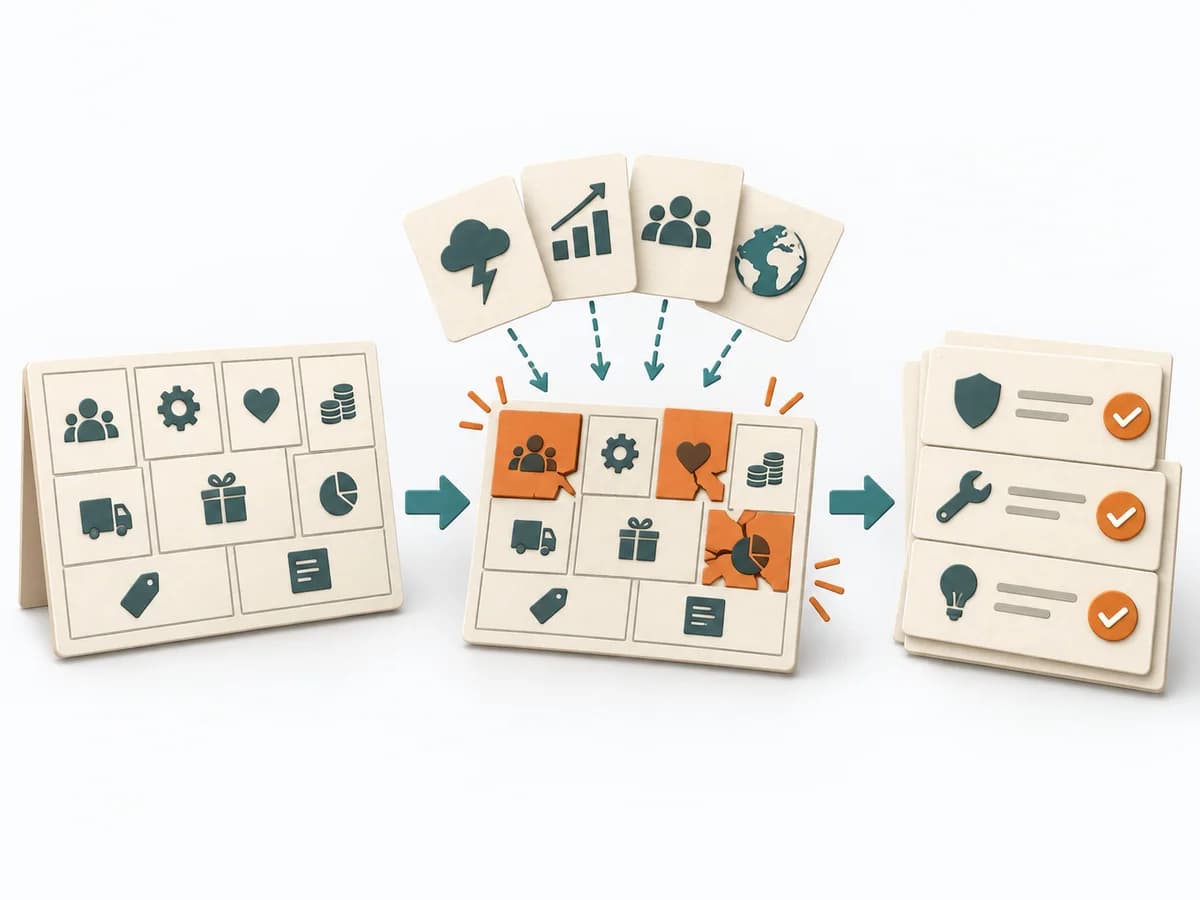
Moves the current situation, opportunities, and strategic options toward a concrete result through "place the Business Model Canvas at the center", "define two to three scenarios", and "derive actions per scenario".
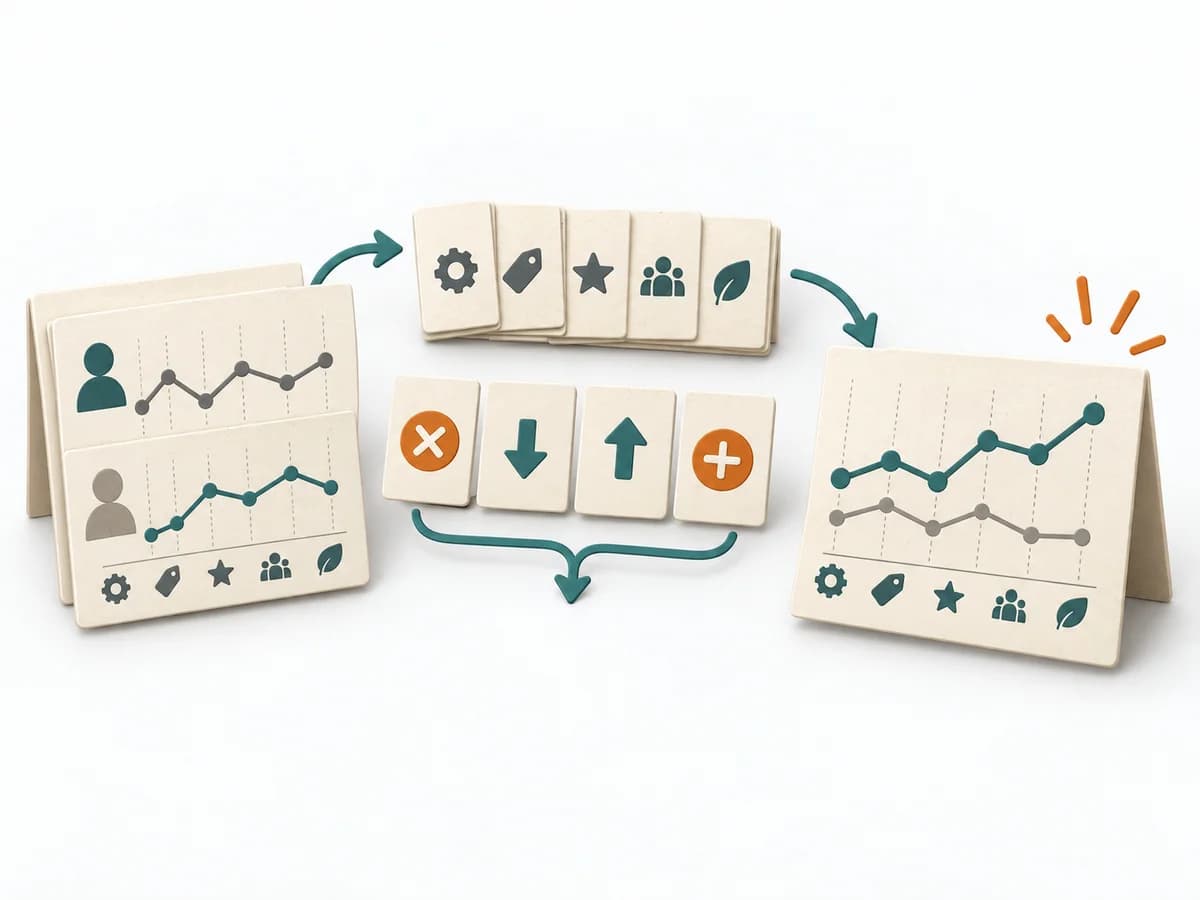
Clarifies starting point, opportunities, and strategic options by defining the competitive factors, drawing the current value curve, and testing a new value curve.