
Purpose
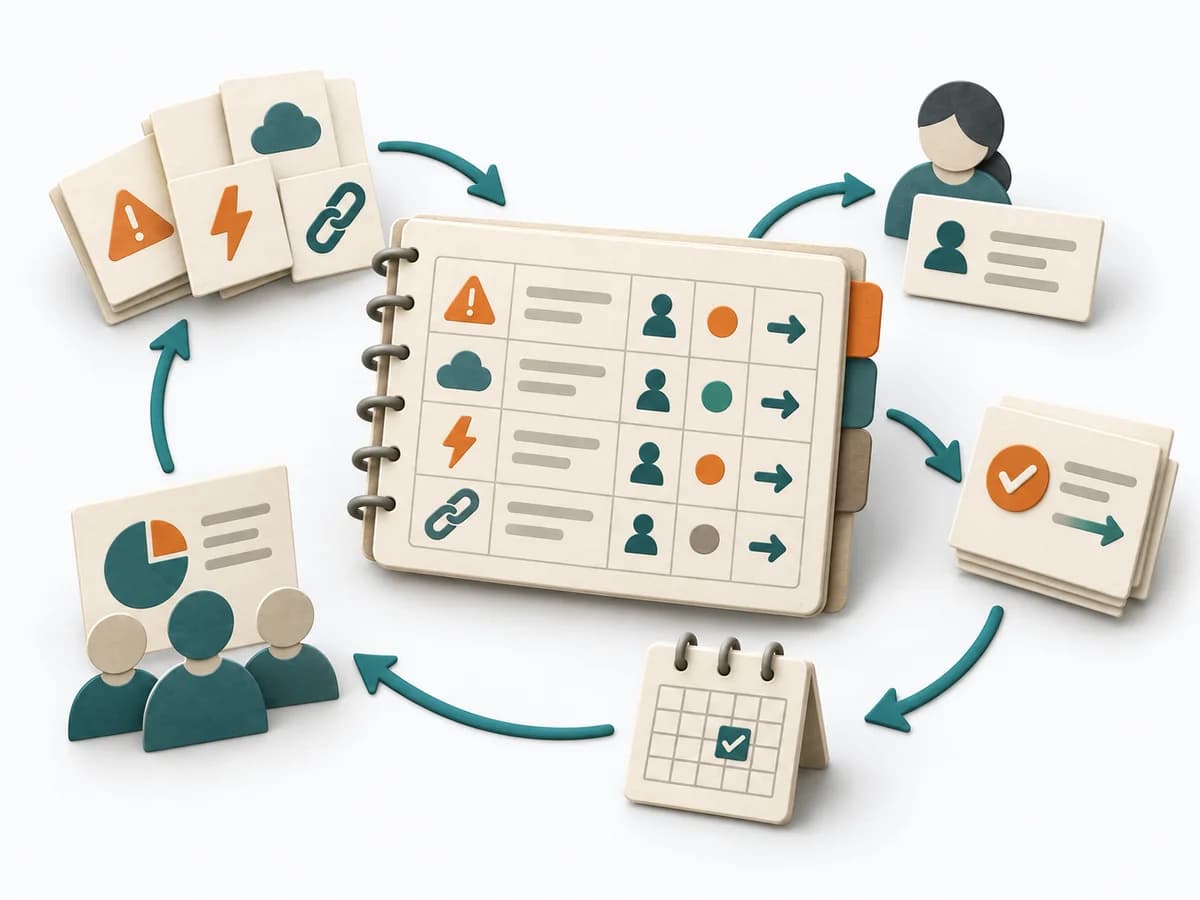
When a project faces many possible disruptions, it quickly becomes unclear which risks deserve attention first. It separates options, evaluation criteria, and open risks. The result is captured as a Risk Matrix and a Top Risk List.
Decision Making Decision method
Assesses well-formed risk scenarios with anchored likelihood and impact scales and connects priority to a response.
A Risk Matrix supports comparison when scope, time horizon, and scale anchors are explicit. Ordinal scores are conversation aids rather than precise mathematics; rare catastrophic outcomes and uncertain estimates require separate attention.
Which risks exceed our tolerance in the agreed horizon, and which response reduces them credibly?
The 5×5 values are ordinal categories. Their product is only a sorting aid and must not hide uncertainty or extreme consequences.
Calibrate
Define a scope-specific 5×5 scale with observable anchors and escalation rules.
Describe
Describe each risk as a possible event with cause, consequence, affected objective, and existing controls.
Assess
Assess likelihood and impact consistently while preserving disagreement and uncertainty.
Respond
Agree a concrete treatment, owner, and review trigger for risks above tolerance.
Reassess likelihood, impact, and residual risk after controls, incidents, or context changes while retaining dated prior values.
Useful for a bounded risk decision with named scenarios and relevant experts. Use FMEA, scenario analysis, or quantitative models for detailed failure chains or loss distributions.
Risks with justified likelihood, impact, residual risk, and uncertainty.
Prioritised responses with owners, dates, indicators, and review triggers.
Fictional worked example
Connect each scenario to calibrated ratings, controls, and a decision; this is not a quantitative risk model.
| Risk | Risk scenario | Likelihood | Impact | Controls and residual risk | Response |
|---|---|---|---|---|---|
| Checkout loginIdentity-provider outage | If the identity provider is unavailable for more than 30 minutes, customers cannot sign in or purchase. | 3/5: about once per quarter in 12 months of status history. | 5/5: complete login and purchase stop, with revenue and support impact. | Manual fallback exists but is untested; residual risk 3×5=15. | Mitigate: Operations tests by 30 June; switch-over <5 minutes, no data loss; then reassess. |
The number is an ordinal sorting aid. Anchors, uncertainty, extreme outcomes, and residual risk remain decision-relevant.
Set scope, time horizon, and verbal anchors for both axes before placing the first risk.
When a project faces many possible disruptions, it quickly becomes unclear which risks deserve attention first. It separates options, evaluation criteria, and open risks. The result is captured as a Risk Matrix and a Top Risk List.
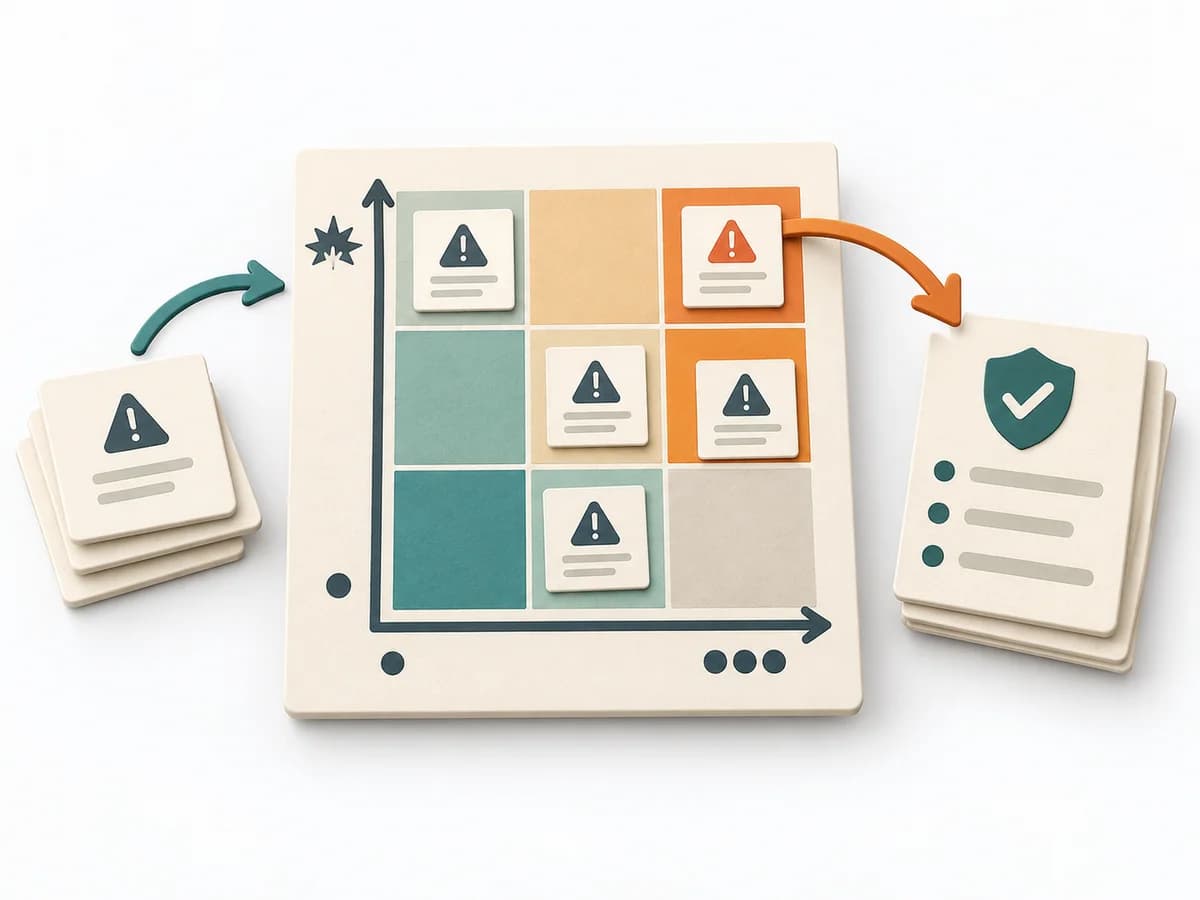
Each risk is viewed along two dimensions and placed into a shared priority logic. The matrix distinguishes rare but catastrophic issues from frequent, moderate disruptions. This allows protective measures to be concentrated at the riskiest points.
The Risk Matrix positions each identified risk on a likelihood versus impact scale, usually with three or five levels per axis. Colored zones mark urgency. It is often used in project management, security, and compliance contexts and is good for structuring discussion instead of leaving it open.
Write down the scale values before the session. Gather a separate rating for each risk across the group, then decide on an average or a consensus outcome.
The method guide walks execution through 4 phases, timing, 4 pitfalls, and clear stop criteria.
Open method guideYour perspective
Your feedback helps shape the next improvements to methodatlas.
Plan calibration, assessment, and treatment for a bounded risk set.
To be confirmed
To be confirmed
Full risk review Time: 45–60 minutes
Complete this worksheet on paper or in your own document during the work.
| Risk | If …, then … | L 1–5 + anchor | I 1–5 + anchor | Controls · residual risk | Response · owner · date |
|---|---|---|---|---|---|
| Checkout login |
For each risk, complete scenario, L/I anchors, controls, residual risk, and response.
Expected artifact: Calibrated scales
5 likelihood anchors · 5 impact anchors · thresholds · extreme-outcome rule
Entry:
...
Expected artifact: Assessable risk list
Event · cause · consequence · objective · control · evidence status
Entry:
...
Expected artifact: Justified matrix
L · I · category · rationale · residual risk · uncertainty
Entry:
...
Expected artifact: Risk treatment plan
Response · action · owner · date · indicator · residual risk
Entry:
...
...
Method guide: https://methodatlas.meierhoff-systems.de/en/methods/risk-matrix/run-sheet
Fitting alternatives with decision guidance, followed by other related methods.
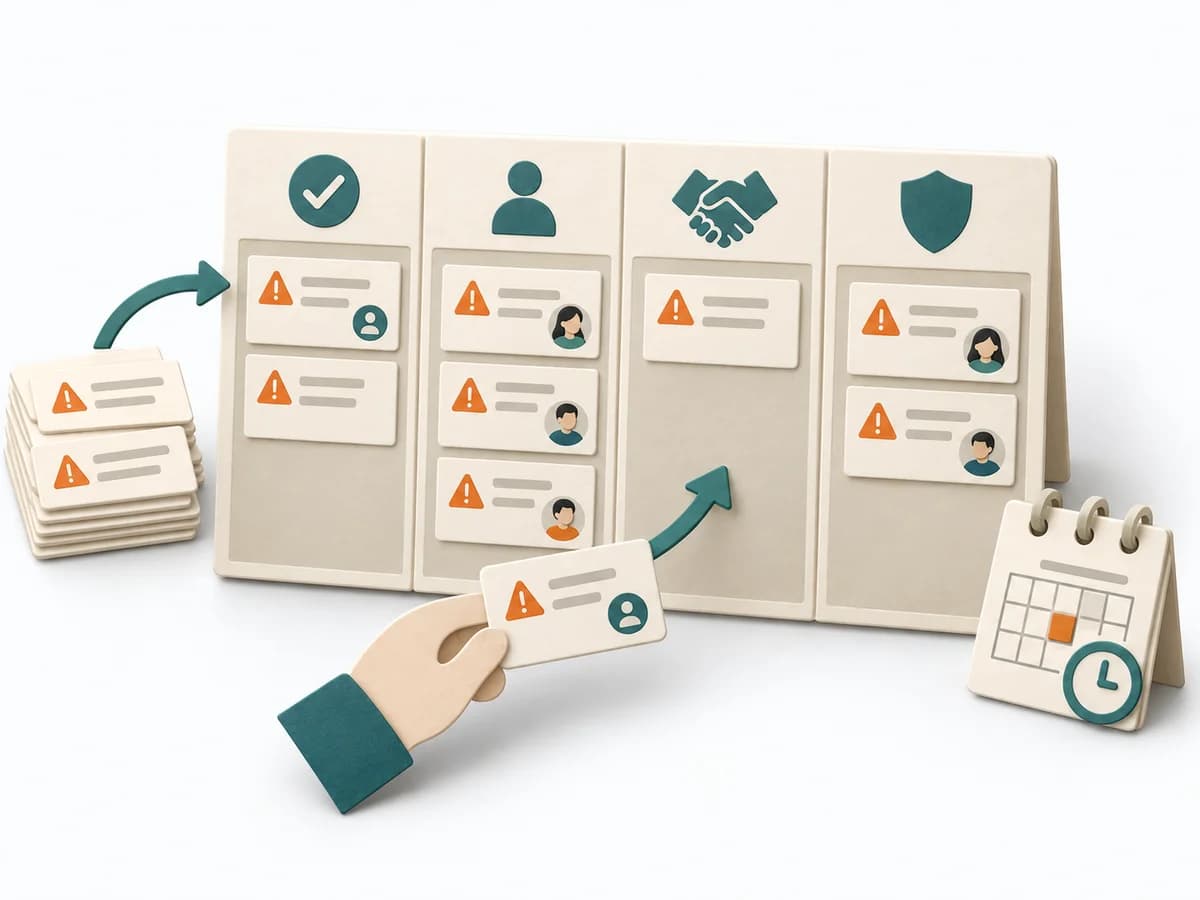
Instead of Risk Matrix, choose ROAM Board when you want to discuss risks together and only need a living status of actions.
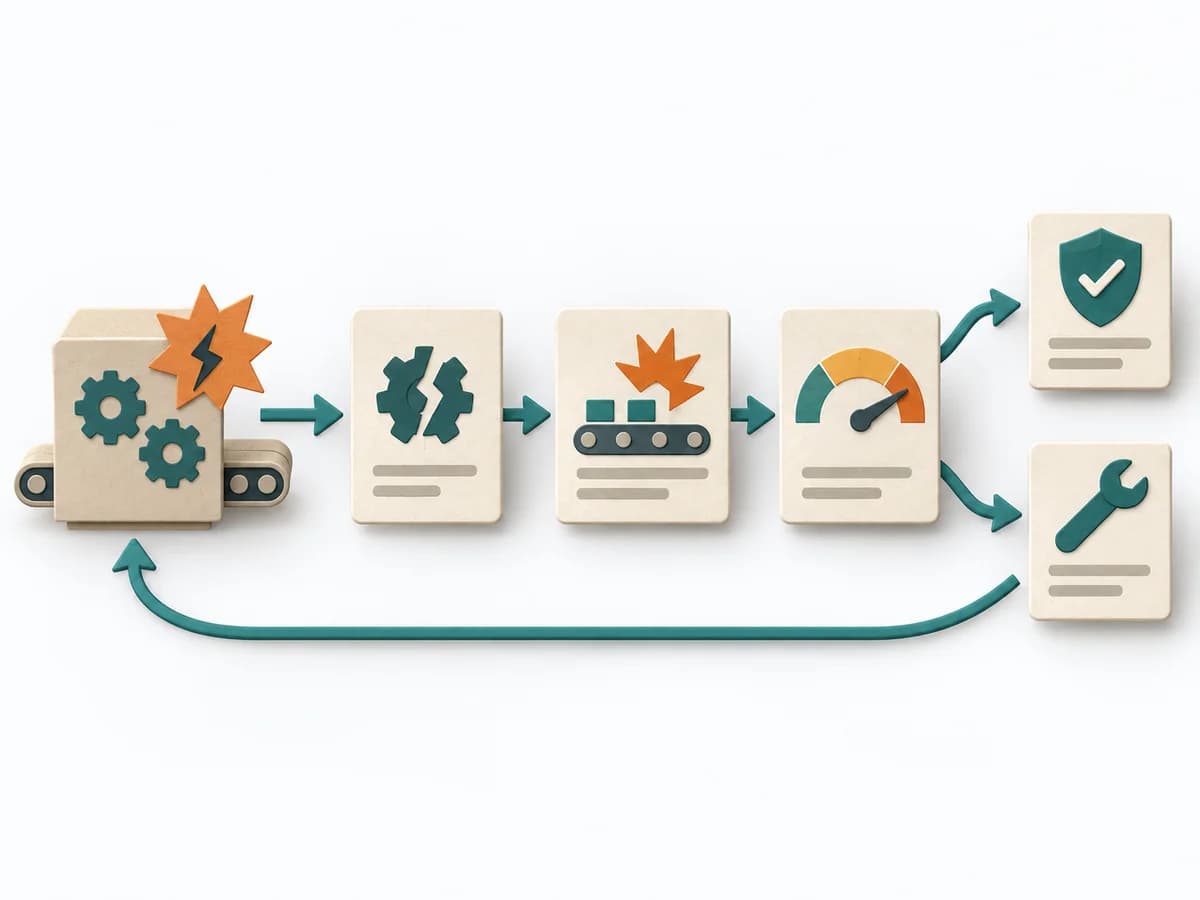
Instead of Risk Matrix, choose Failure Mode and Effects Analysis when you want to systematically safeguard against failure modes, effects, and countermeasures.

Examines an initiative from an opposing perspective, collects weaknesses, and derives prioritized mitigations.

Clarifies options, criteria, and risks by framing the initiative or decision, collecting implicit assumptions, and planning tests or research.

Sharpens a planned step through impact, success criteria, and risks down to the smallest sensible move.

Draws decisions as branching paths so options, conditions, and consequences become clearer in comparison.