Purpose
In complex management decisions, clarity is often missing about who recommends, who agrees, and who makes the decision. RAPID creates this assignment and stabilizes decisions across several levels.
Decision Making Decision method
Clarifies who recommends, agrees, provides input, decides, and executes the decision.
Bain’s RAPID separates Recommend, Agree, Perform, Input and Decide. The letters are roles, not a chronological sequence: a recommendation uses input and required agreement, a clearly named person decides, and Perform executes.
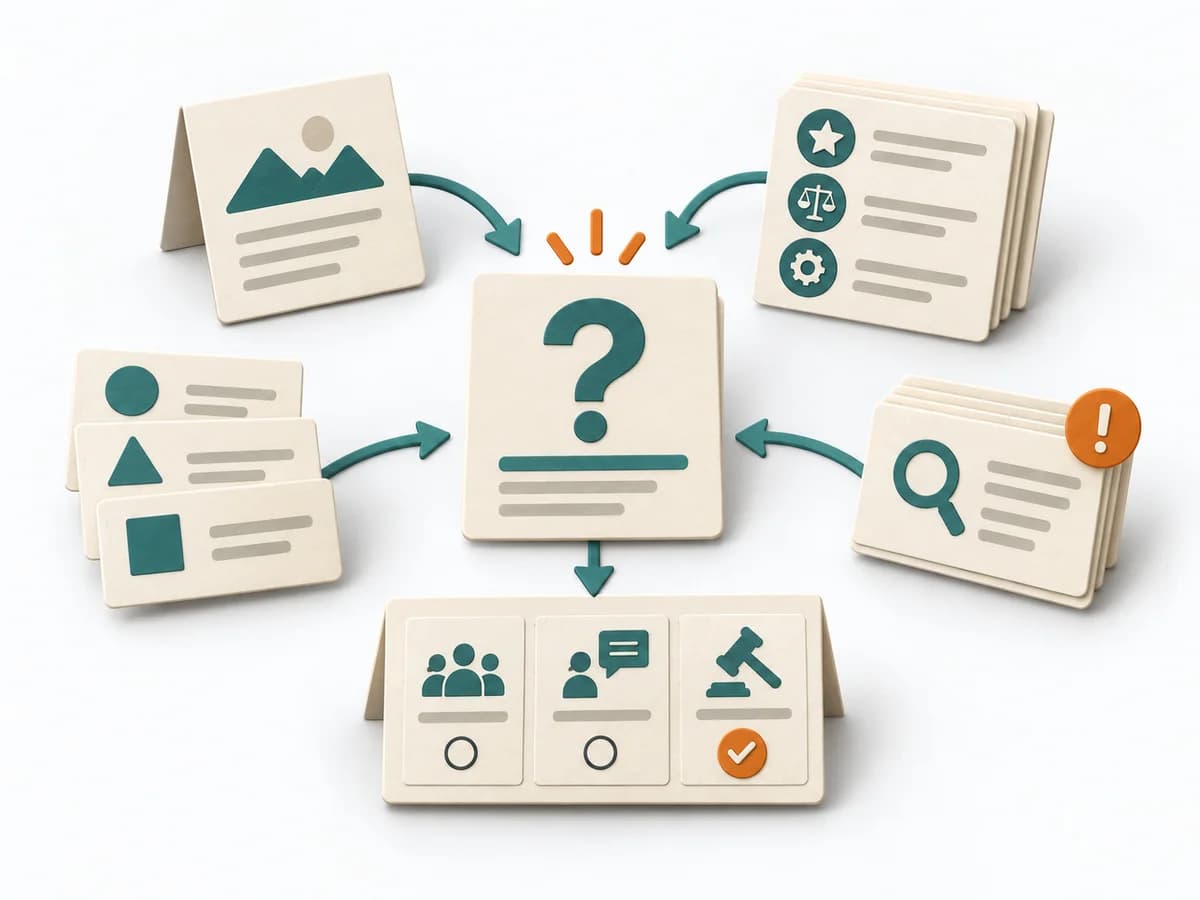
Who recommends, must agree, provides input, decides and executes the decision?

Brief
Bound the question, deadline, discretion and mandatory conditions.
Rights
Assign Recommend, Input, Agree, Decide and Perform with specific responsibilities; set one final D role.
Recommend
Recommend gathers input, compares alternatives and develops a reasoned recommendation.
Decide
Decide makes the final choice with rationale and states conditions or rejected options.
Perform
Perform takes ownership of execution steps, resources and feedback; surface blockers to Decide early.
After execution, review whether the decision and responsibility model worked; change roles when needs change.
For consequential cross-functional decisions with genuine agreement requirements and clear execution.
RAPID matrix and traceable recommendation with agreements, explicit decision and verifiable execution handover.
The review record describes the result after implementation and lessons from the decision process.
Fictional example
Bain’s RAPID separates Recommend, Agree, Perform, Input and Decide. The letters are roles, not a chronological sequence: a recommendation uses input and required agreement, a clearly named person decides, and Perform executes.
| Role | Person or group | Authority and responsibility | Contribution and handover |
|---|---|---|---|
| R · RecommendWho develops the recommendation and alternatives? | Lea | Compare hosting options and justify recommendation | Provider B with evidence to Amir |
| A · AgreeWho must agree within which bounded mandatory area? | Nora | Agreement on data processing, no general product veto | Confirm data location and processing before decision |
| P · PerformWho executes and which outcome is reviewed? | Jan for operations | Set up environment, monitoring and recovery | Provisioning and test evidence by 20 November |
| I · InputWhat advice does Recommend need by when? | Support and Finance | Assess outage consequences and cost assumptions | Expert input to Lea by Wednesday |
| D · DecideWhich single person decides finally and commits resources? | Amir | Provider selection and budget release | Decision after required agreement by month end |
Fictional: choose a hosting provider for a course platform by month end within an €8,000 annual budget. Amir selects B subject to the agreed data location. Jan provisions by 20 November; recovery test and monthly cost are checked at review.
Name one concrete decision with authority, deadline and mandatory conditions; narrowly scope required agreement rights.
In complex management decisions, clarity is often missing about who recommends, who agrees, and who makes the decision. RAPID creates this assignment and stabilizes decisions across several levels.
The roles for recommendation, agreement, performance, input, and decision are pulled apart. This makes visible where expertise lies and where responsibility ultimately needs to be concentrated. This lowers the risk of false agreement and later blockage.
RAPID strengthens decisions when recommendation, agreement, input, decision, and execution fall apart. Every role should only be involved where it makes a genuine contribution. The acronym pays off when complex alignment gets faster and hidden vetoes become rarer. What matters is that the decide role doesn't stay hidden in consensus.
For exactly one decision, list who takes on recommend, agree, perform, input, and decide, so the discussion doesn't sprawl. Value emerges when input stays limited and decision power remains recognizably separate. Close with a named decision-maker, a clear resolution, and the next implementation steps.
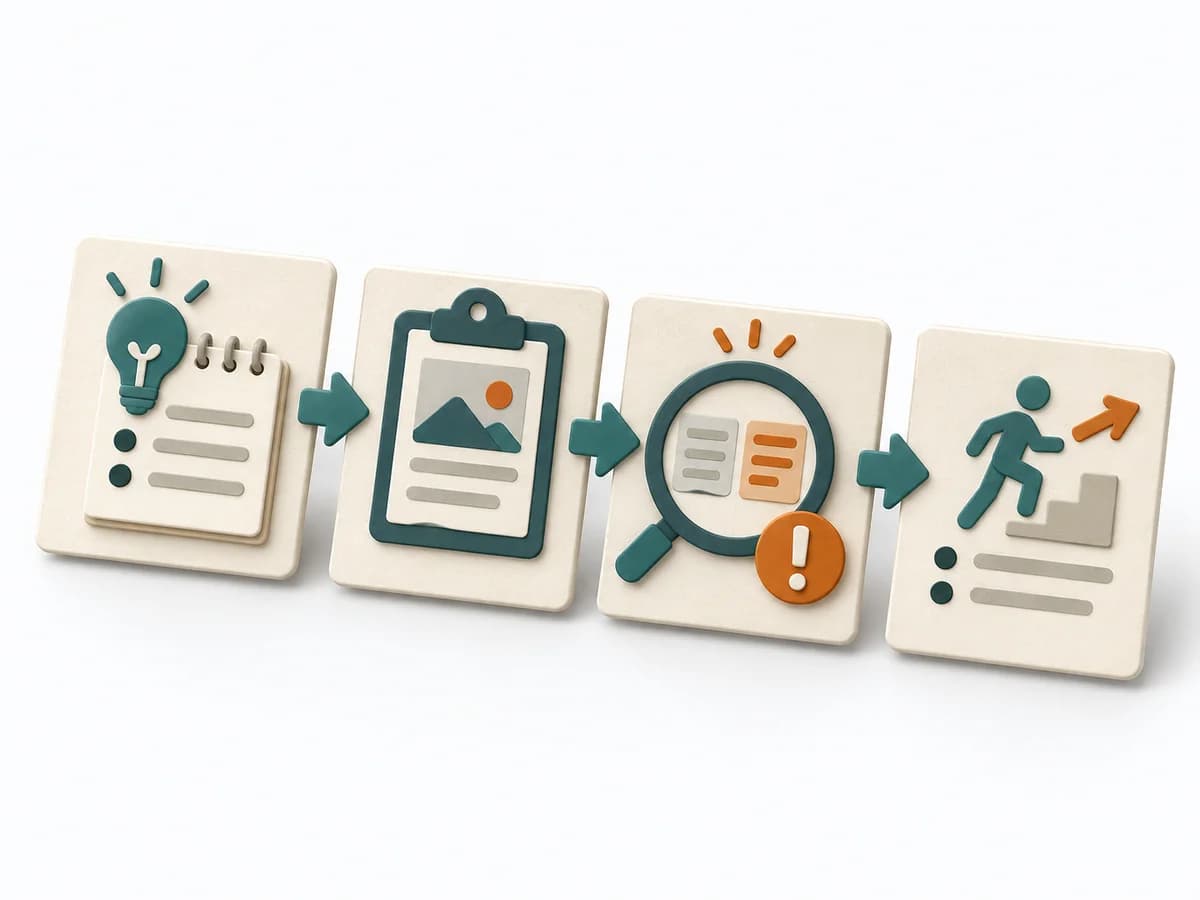
The method guide walks execution through 5 phases, timing, 5 pitfalls, and clear stop criteria.
Open method guideYour perspective
Your feedback helps shape the next improvements to methodatlas.
Name one concrete decision with authority, deadline and mandatory conditions; narrowly scope required agreement rights.
To be confirmed
To be confirmed
Complete cycle Time: 45–90 minutes for role clarification; decision and execution across further sessions
Complete this worksheet on paper or in your own document during the work.
| Role | Person or group | Authority and responsibility | Contribution and handover |
|---|---|---|---|
| R · Recommend | |||
| A · Agree | |||
| P · Perform | |||
| I · Input | |||
| D · Decide |
Agree people, rights and handovers per role. Narrowly scope Agree; exactly one final Decide. I means Input; acronym order is not a workflow.
Bain & Company: RAPID decision roles
Expected artifact: Bounded decision
Do decision scope and authority match?
Entry:
...
Expected artifact: Confirmed RAPID matrix
Is every Agree right bounded by subject?
Entry:
...
Expected artifact: Aligned recommendation
Are mandatory agreements and open objections traceable?
Entry:
...
Expected artifact: Binding decision
Is the choice explicit and documented for communication?
Entry:
...
Expected artifact: Executed decision with review
Are execution ownership and review signal agreed?
Entry:
...
...
Method guide: https://methodatlas.meierhoff-systems.de/en/methods/rapid/run-sheet
Fitting alternatives with decision guidance, followed by other related methods.
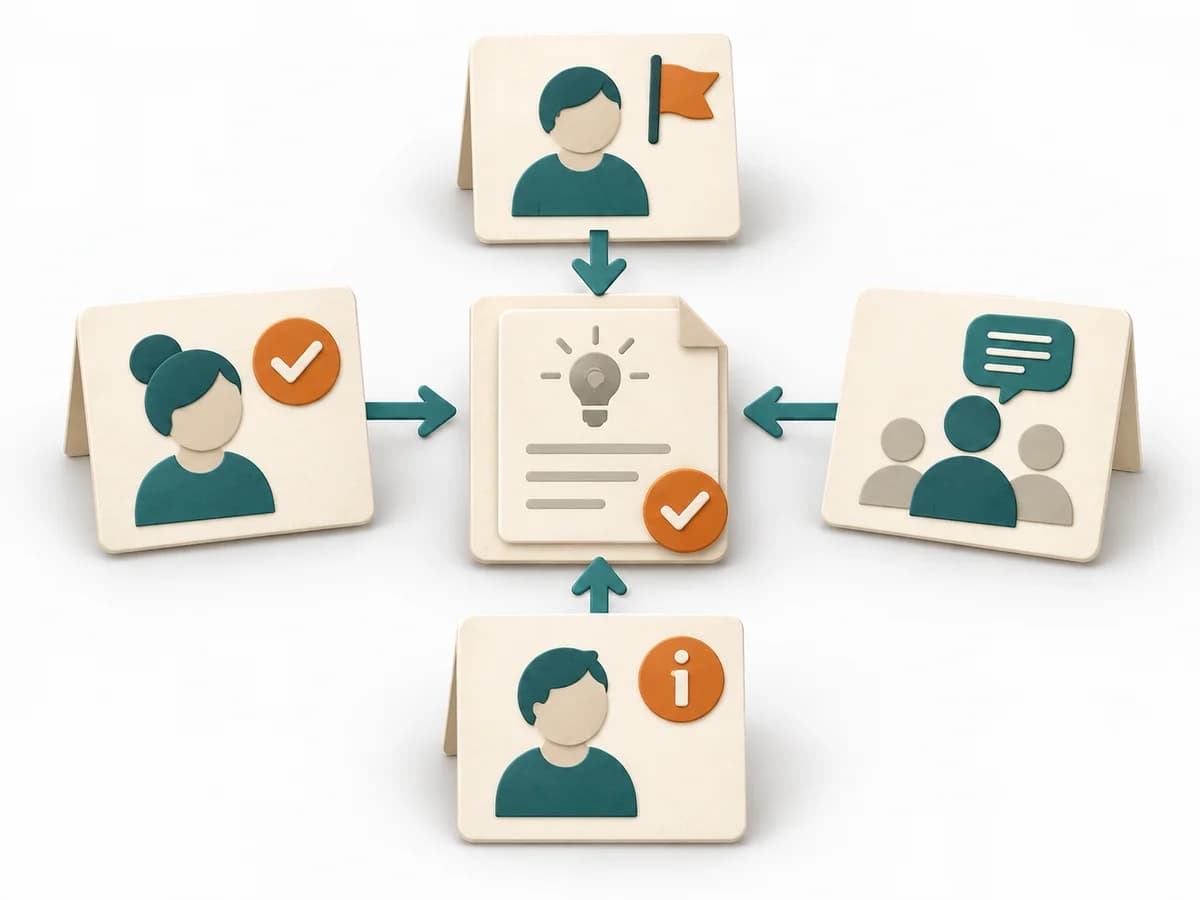
Instead of RAPID, when you want to derive a decision cleanly with clear criteria, risks, or consequences.

Moves options, criteria, and risks toward a concrete result through "identify key decision types", "collect roles", and "document and communicate the agreement".

Clarifies options, criteria, and risks by framing the central question, recording the main claim, and marking weak spots.

Draws decisions as branching paths so options, conditions, and consequences become clearer in comparison.
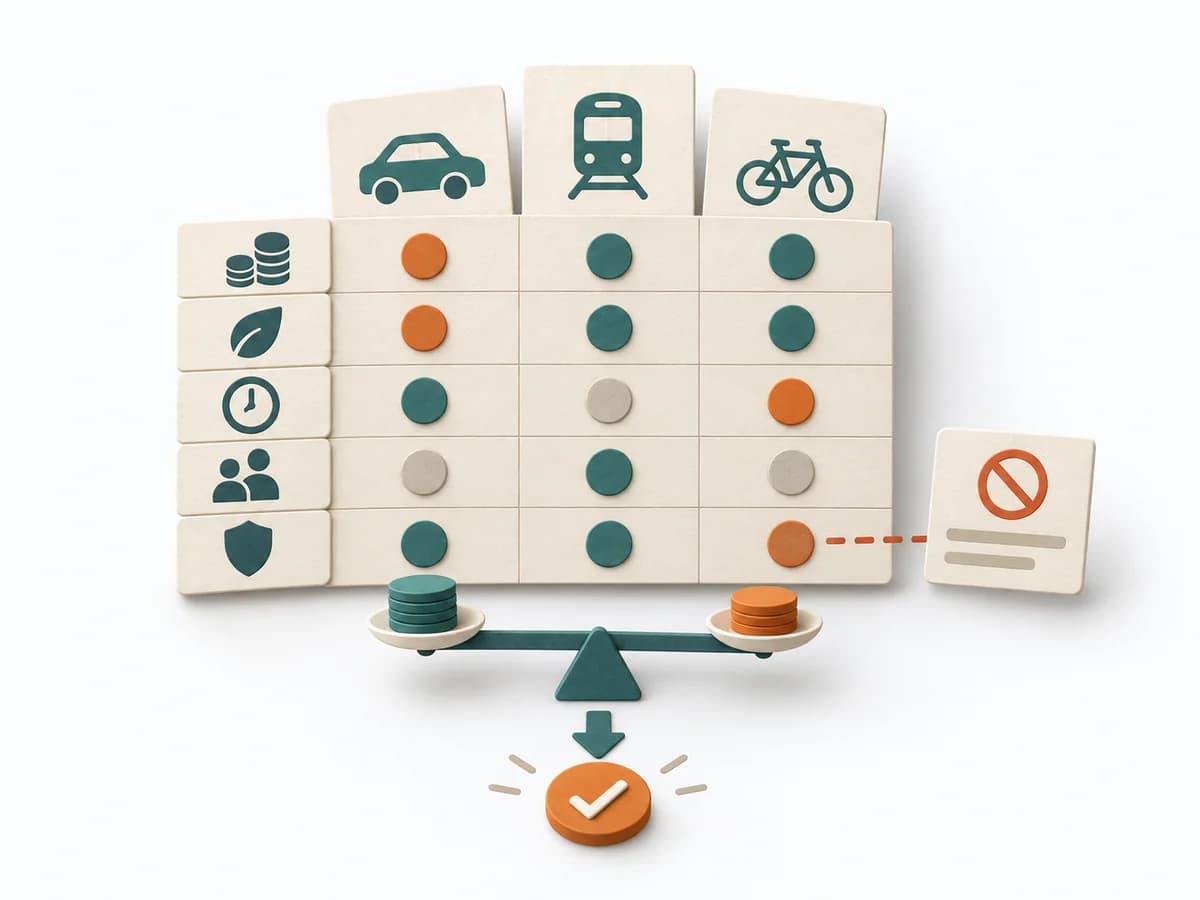
Compares options against criteria and accepted downsides so the decision stays transparently justifiable.

Bundles expert estimates across rounds until ranges, consensus, and assumptions become solid enough.