
Purpose
For decisions with follow-on paths and dependencies, a linear comparison is often not enough. A Decision Tree shows how options branch under conditions and which consequences hang on each branch.
Decision Making Decision method
A decision tree represents choices, uncertain events, and consequences as branches and makes justified options and assumptions visible.
A decision tree represents choices, uncertain events, and consequences as branches. It clarifies options and assumptions; numeric probabilities belong only where they are justified.
Which actions and uncertainties lead to which outcomes, and what assumptions support the choice?
Which actions and uncertainties lead to which outcomes, and what assumptions support the choice?

Question
State decision, alternatives, consequences and criteria; distinguish a decision diagram from an ML model.
Nodes
Use decision nodes for controlled choices, chance nodes for uncertain events and terminal nodes for outcomes.
Evidence
Add conditional probabilities at chance nodes only with evidence; branches at each node must sum to 1. Cite source and time basis for values.
Choice
Review consequences, sensitivity and qualitative criteria; record rationale, owner and revision signal.
Update the work record when new evidence, changed constraints or the planned review changes an assumption.
For multistage decisions with clear alternatives and uncertainty. Statistical decision-tree learning for classification or regression is a different technique.

The record contains the decision, alternatives, consequences, and criteria and distinguishes a decision diagram from an ML model.

The setup uses decision nodes for controlled choices, chance nodes for uncertain events, and terminal nodes for outcomes.

The branch record contains conditional probabilities at chance nodes only where evidence supports them; values cite source and time basis, and branches at each node sum to 1.

The review record contains consequences, sensitivity, qualitative criteria, rationale, owner, and revision signal.
Fictional example
Method-specific prompts and a fictional worked example; template prompts remain empty.
Name the purpose and decision owner.
**Decision node:** Add a desk at a new rental branch? Options: add / do not add.
Label every branch and node type.
**Chance node after each option:** Peak demand high or low; these events are outside direct control.
Leave unsupported probabilities unknown.
**Terminal nodes:** Describe wait time, operating cost and customer experience qualitatively. Do not add numbers without evidence.
Test whether plausible assumptions change the choice.
**Next step:** Collect peak-period data, then assess conditional probabilities per path and document their source.
OpenLearn explains decision-analysis branches and chance probabilities; IBM provides separate ML tree terminology. This guide distinguishes decision, chance and terminal nodes and uses no unsupported probabilities.
Decision trees and dealing with uncertainty | Open University OpenLearn
Write the decision, options, external events, consequences and decision criteria.
For decisions with follow-on paths and dependencies, a linear comparison is often not enough. A Decision Tree shows how options branch under conditions and which consequences hang on each branch.
The decision question is spanned out along conditions, events, and possible states. This reveals which paths are expensive, unlikely, or strategically risky and where gaining information has the greatest value. This translates uncertainty into a testable path model.
A Decision Tree shows its strength when a decision depends on conditions, events, and follow-on options. Uncertainty becomes visible as a path structure and shows where additional information would really be valuable. The tree only stays useful if relevant branches are modeled and consequences are assessed honestly.
Define the starting question, the most important branches, and the decisive uncertainties before the tree grows too wide. It becomes helpful where the value of information shows which branch should be clarified first. Close with a preferred path, the triggers for reassessment, and the biggest known remaining uncertainties.
The method guide walks execution through 4 phases, timing, 4 pitfalls, and clear stop criteria.
Open method guideYour perspective
Your feedback helps shape the next improvements to methodatlas.
Plan a session or initiative to match the actual scope of work.
To be confirmed
To be confirmed
Prepare the full method Time: 30–90 minutes for a small tree; data collection and valuation are separate.
Complete this worksheet on paper or in your own document during the work.
Name the purpose and decision owner.
...
Label every branch and node type.
...
Leave unsupported probabilities unknown.
...
Test whether plausible assumptions change the choice.
...
Blank worksheet contains prompts only, with no example data.
Decision trees and dealing with uncertainty | Open University OpenLearn
Expected artifact: Decision question and criteria
Decision question and criteria
Entry:
...
Expected artifact: Tree with clear node semantics
Tree with clear node semantics
Entry:
...
Expected artifact: Traceable branch assumptions
Traceable branch assumptions
Entry:
...
Expected artifact: Reasoned choice and review date
Reasoned choice and review date
Entry:
...
...
Method guide: https://methodatlas.meierhoff-systems.de/en/methods/decision-tree/run-sheet
Fitting alternatives with decision guidance, followed by other related methods.

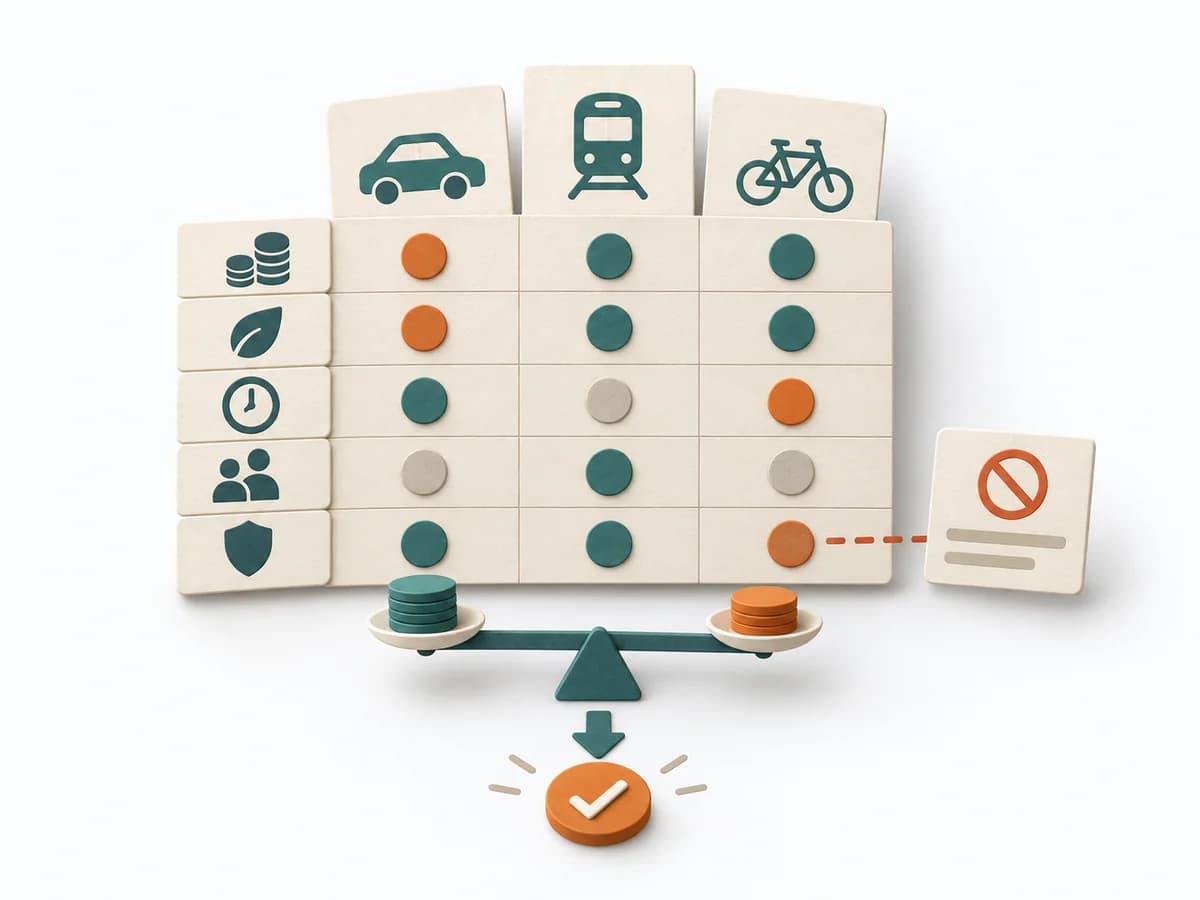
Instead of Decision Tree, when several options should be evaluated against shared criteria and no branching follow-up paths are needed.

Clarifies options, criteria, and risks by framing the central question, recording the main claim, and marking weak spots.

Connects observation, orientation, action, and feedback into a fast decision cycle.
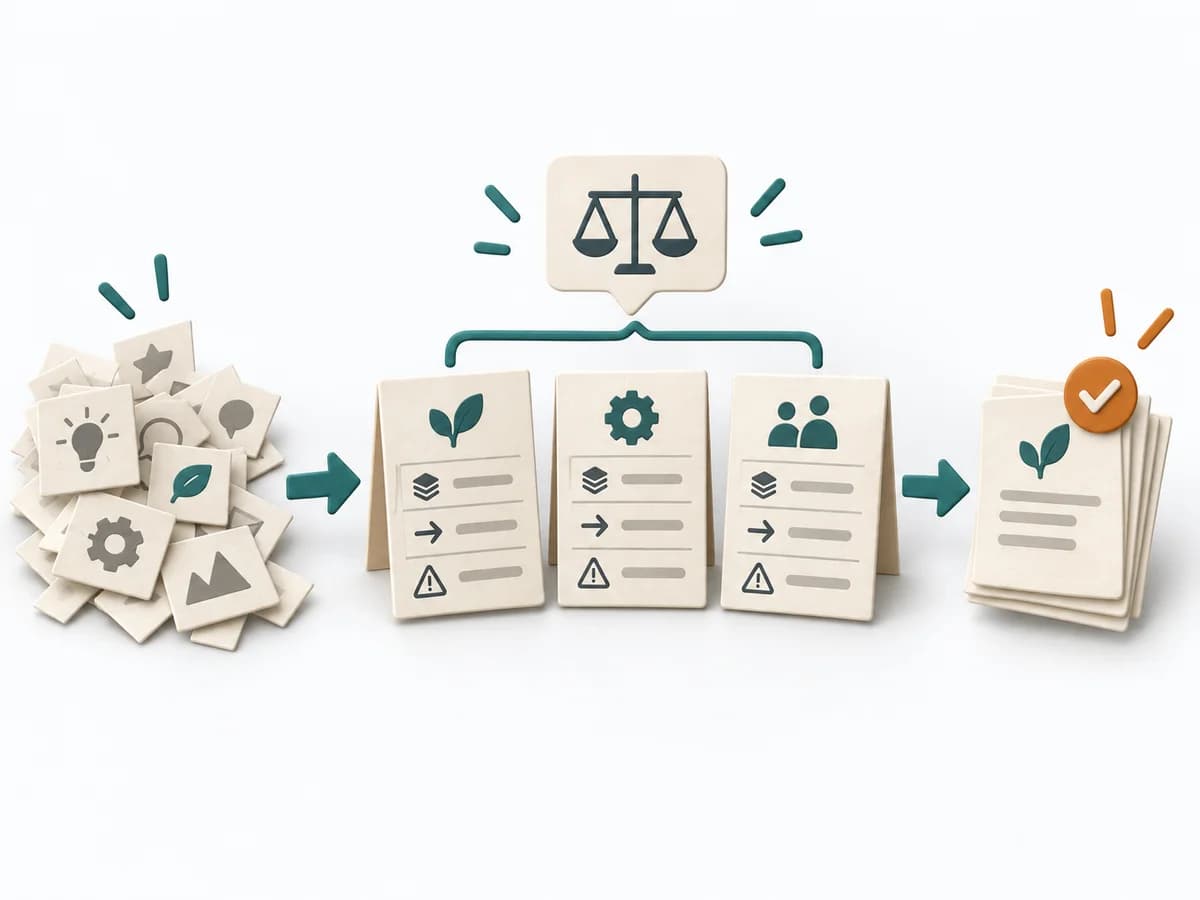
Shapes raw options into comparable descriptions with assumptions and consequences for a real shortlist.
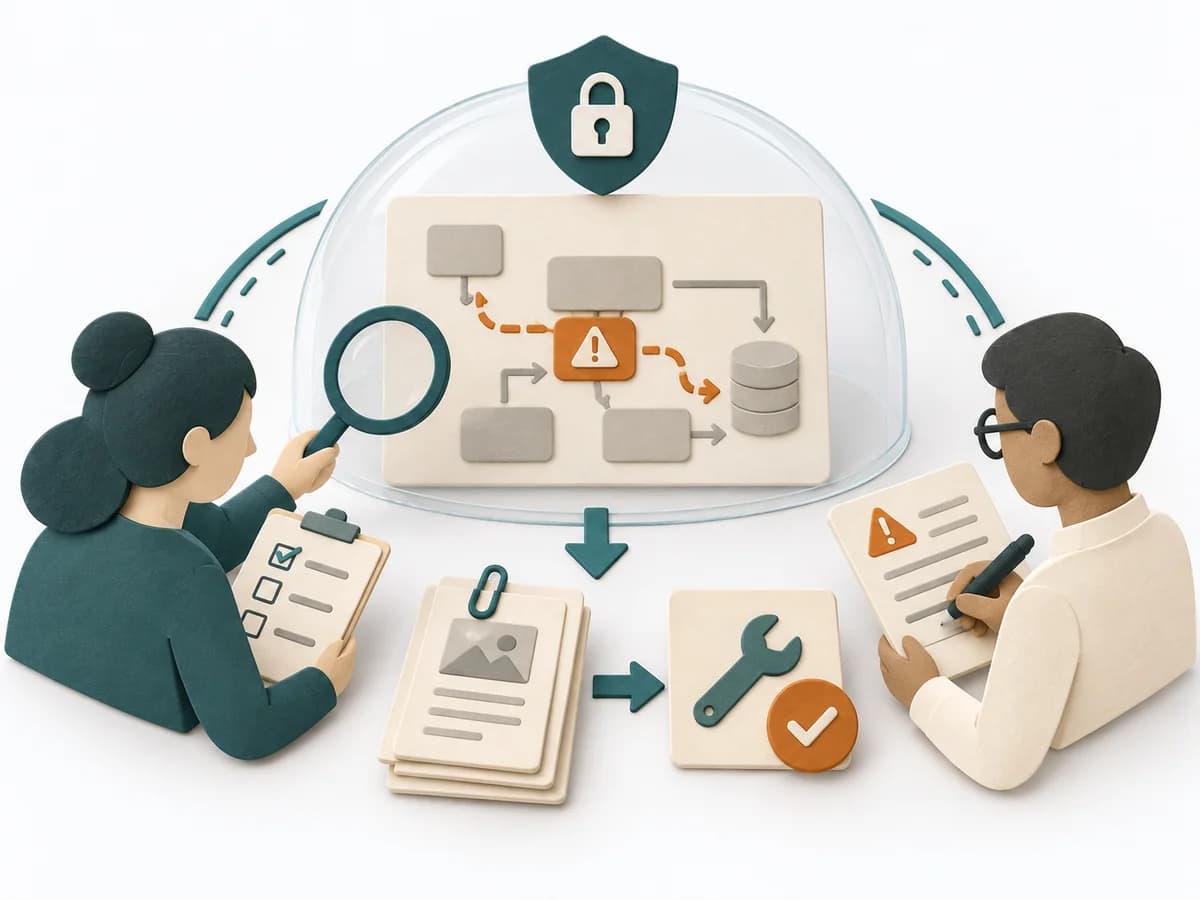
Examines an initiative from an opposing perspective, collects weaknesses, and derives prioritized mitigations.
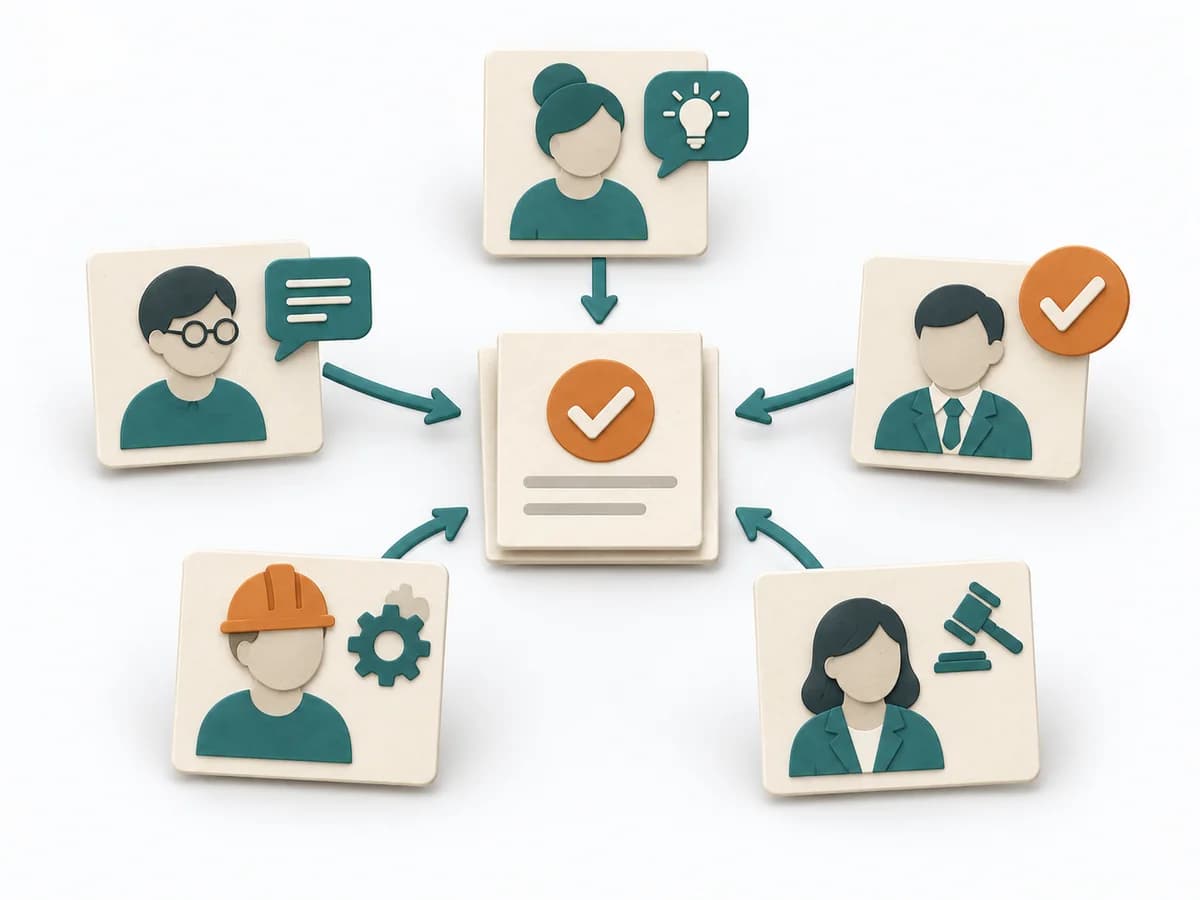
Arranges decision responsibility across five roles and makes recommendation, input, and follow-up unambiguous.