Purpose
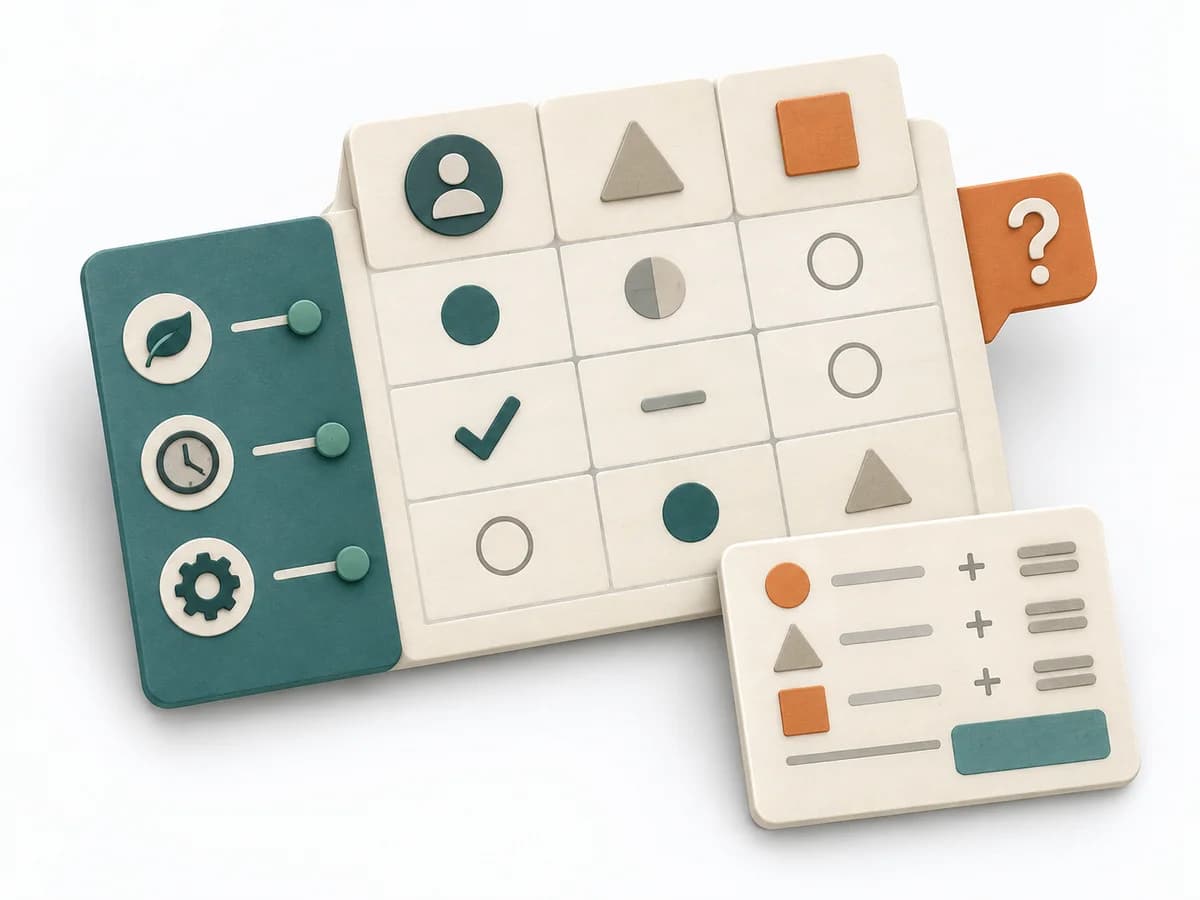
When knowledge is distributed and direct dominance should be avoided, groups quickly fall under the sway of their opinion leaders. The Delphi Method gathers assessments iteratively and gradually brings expert judgments closer together.
Decision Making Decision method
Refines independent expert judgments through feedback rounds while retaining disagreement.
Delphi elicits judgments from a deliberately selected panel whose members remain anonymous to one another. Following an independent first round, everyone receives the same aggregated feedback and may revise their judgment with reasons. Prespecified rules determine sufficient stability or consensus.
What share of our customers will require digital evidence by the end of 2028?
A survey initiative spanning weeks. Planner minutes describe a working meeting; panel response windows are additional.

Protocol
Pilot an unambiguous question with a horizon and scale; specify expertise and panel perspectives.
Elicit
Members respond without seeing other judgments; collect estimates and reasoning separately.
Feedback
Return median, range and balanced anonymous counterarguments, including minority views.
Conclude
Compare rounds against prespecified criteria, accounting for attrition and panel changes.
Run two or more rounds under an agreed protocol; start a new series when new evidence warrants revisiting the final report.
For uncertain forecasts or expert judgments where direct evidence is limited and several perspectives are needed.
A comparison of rounds including response counts, distributions, reasoning, attrition and uncertainty.
Fictional example
Delphi elicits judgments from a deliberately selected panel whose members remain anonymous to one another. Following an independent first round, everyone receives the same aggregated feedback and may revise their judgment with reasons. Prespecified rules determine sufficient stability or consensus.
What defined quantity is judged by which expert perspectives?
Customer share requiring digital evidence by end-2028; five people from sales, compliance, purchasing, product and industry research.
Which scale, feedback and stopping rules apply?
0–100%; median, range and arguments. Stop after round 2 if median changes by ≤5 percentage points; otherwise maximum 3 rounds. Stability is not consensus.
What anonymous judgments and reasons were submitted?
P1 30%, P2 40%, P3 50%, P4 60%, P5 80%; median 50%, range 50 points. Different assumptions about procurement cycles.
What was returned and how did judgments change?
Everyone receives the same distribution and counterarguments. New estimates: 40, 45, 50, 55, 70%; median 50%, range 30 points; no attrition.
Which stopping rule applies and what remains uncertain?
Median change 0 points meets the stability rule. Report a stable panel midpoint of 50%, not consensus; P5 expects faster regulatory adoption.
All situations and people are fictional.
Define the question, panel criteria, anonymity, analysis and stopping rule before inviting participants.
When knowledge is distributed and direct dominance should be avoided, groups quickly fall under the sway of their opinion leaders. The Delphi Method gathers assessments iteratively and gradually brings expert judgments closer together.
Several independent rounds reconcile expectations, reasoning, and uncertainties with one another. Through feedback, extreme positions become testable without early loudness distorting the picture. The procedure pays off when solid approximations matter more than quick apparent precision.
The Delphi Method uses repeated anonymous assessment to condense expert judgments without individual voices dominating. Precise questions, controlled feedback, and documented assumptions keep the procedure solid. The result is not a mere average but a reasoned consensus with visibly remaining uncertainty.
Prepare a precise question, shared assumptions, and clean materials so the first round stays independent and focused. Its strength shows once ranges get traced back to differing premises rather than to authority. In the end, a reasoned condensation, open uncertainty, and clear pointers for further data collection are needed.
The method guide walks execution through 4 phases, timing, 4 pitfalls, and clear stop criteria.
Open method guideYour perspective
Your feedback helps shape the next improvements to methodatlas.
Refine independent expert judgments through feedback rounds while retaining disagreement.
To be confirmed
To be confirmed
Plan the survey Time: 2–3 rounds over several weeks; about 20–40 minutes per response.
Complete this worksheet on paper or in your own document during the work.
What defined quantity is judged by which expert perspectives?
...
Which scale, feedback and stopping rules apply?
...
What anonymous judgments and reasons were submitted?
...
What was returned and how did judgments change?
...
Which stopping rule applies and what remains uncertain?
...
Enter your own information; connect open commitments to a next action.
RAND · Methodological Guidance for Delphi Panels
Expected artifact: Prespecified survey rules
A purposively selected panel is not a random sample.
Entry:
...
Expected artifact: First-round distribution
Independence precedes the first feedback.
Entry:
...
Expected artifact: Reasoned subsequent round
Minority reasoning is relevant information.
Entry:
...
Expected artifact: Panel report with limits
Stability concerns changes across rounds; consensus concerns agreement.
Entry:
...
...
Method guide: https://methodatlas.meierhoff-systems.de/en/methods/delphi-method/run-sheet
Fitting alternatives with decision guidance, followed by other related methods.

Instead of Delphi Method, when you want to work with multiple future scenarios instead of planning only one course of events.

Moves options, criteria, and risks toward a concrete result through "clarify the estimate object and unit", "collect independent estimates", and "document another round and the outcome".
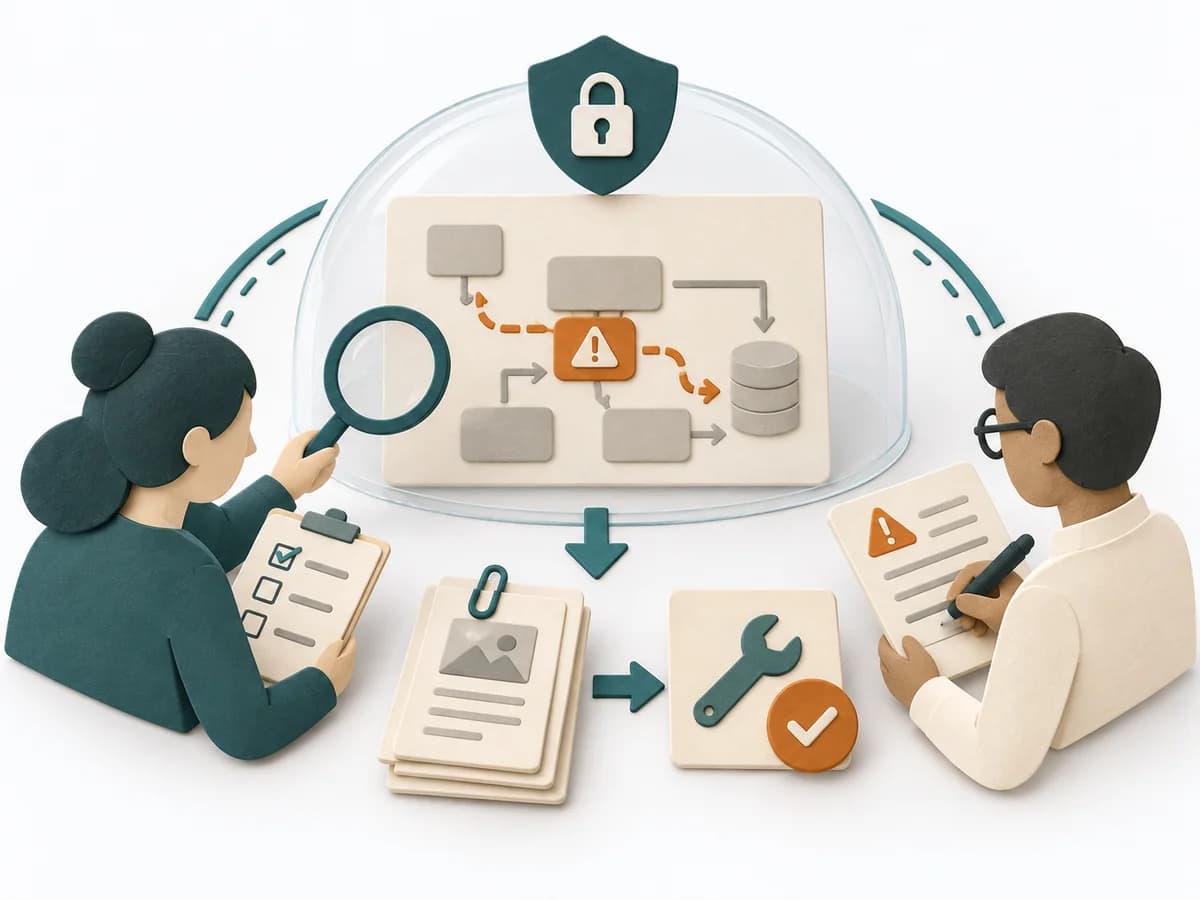
Examines an initiative from an opposing perspective, collects weaknesses, and derives prioritized mitigations.

Clarifies options, criteria, and risks by framing the central question, recording the main claim, and marking weak spots.

Sorts cases into the fitting domain and derives actions that match the degree of clarity or complexity.

Draws decisions as branching paths so options, conditions, and consequences become clearer in comparison.