

Purpose
In cross-functional decisions, responsibilities quickly blur between approval, influence, and execution. DACI arranges these roles so decision pressure, contribution, and information stay cleanly separated.
Decision Making Decision method
DACI shows who drives a decision, decides, provides input, and needs to know the result.
DACI clarifies four roles for a specific decision: the Driver runs the process, exactly one Approver decides, Contributors provide expertise and Informed receive the result. A Driver does not automatically hold decision authority.
Who drives this decision, who decides, who provides input and who needs to know the result?

Bound the decision
Record a specific decision question, deadline, options and constraints.
Assign D, A, C and I
Name one Driver for process and information gathering and exactly one Approver for the decision.
Prepare input and options
Driver gathers input by the agreed deadline and records benefits, risks and open questions per option.
Decide and communicate
Approver decides with rationale; Driver records outcome, date and open conditions.
Check the agreed reopening trigger when new information appears; reconfirm roles if decision scope or ownership changes.
For multi-stakeholder decisions where process leadership, expert input and final authority must be distinguished.
DACI matrix and decision record with question, options, rationale, date, communication and implementation ownership.
The decision record contains notification of Informed and clarified implementation, ownership, and reopening triggers.
Fictional example
DACI clarifies four roles for a specific decision: the Driver runs the process, exactly one Approver decides, Contributors provide expertise and Informed receive the result. A Driver does not automatically hold decision authority.
| Role | Person or group | Authority and responsibility | Contribution and handover |
|---|---|---|---|
| D · DriverWho drives the process with which deadlines? | Lea | Run process, gather input, maintain record | Options to Amir by Wednesday |
| A · ApproverWhich single person may make the final decision? | Amir | Choose form or vendor portal within budget | Reasoned decision on Friday |
| C · ContributorsWhat expert input is needed by when? | Nora and Jan | Assess privacy and operations; no additional veto | Assessments to Lea by Wednesday |
| I · InformedWho receives the result when and through which channel? | Course leads and support | Know the decision and account for local consequences | Project channel on Friday with rationale |
Fictional: by Friday choose between an internal booking form and a vendor portal; criteria are cost, privacy and operating effort. Amir selects the internal form because operating capability already exists. Jan implements by month end; unresolved privacy issues trigger reconsideration before launch.
Frame a decidable question, deadline and scope; the person holding final authority must be available.
In cross-functional decisions, responsibilities quickly blur between approval, influence, and execution. DACI arranges these roles so decision pressure, contribution, and information stay cleanly separated.
The decision gets a driving person, an approving authority, and a circle for input and information. This clarifies not just who delivers but also who may block or release. This reduces friction in situations with many stakeholders.
DACI helps when a decision needs a driving person, an approving authority, and clearly bounded input. Contributing, deciding, and being informed must fall apart without polite ambiguity. The approach reduces blockages, false agreement, and late objections through clear decision leadership.
The decision, its deadline, and the roles of driver, approver, contributors, and informed must be crystal clear before the debate starts. The tipping point is where contributions increase decision quality and no longer fight covertly for approval. Close with a documented decision, a visible rationale, and clean communication to everyone affected.
The method guide walks execution through 4 phases, timing, 4 pitfalls, and clear stop criteria.
Open method guideYour perspective
Your feedback helps shape the next improvements to methodatlas.
Frame a decidable question, deadline and scope; the person holding final authority must be available.
To be confirmed
To be confirmed
Complete cycle Time: 30–60 minutes for role clarification; input and decision may span sessions
Complete this worksheet on paper or in your own document during the work.
| Role | Person or group | Authority and responsibility | Contribution and handover |
|---|---|---|---|
| D · Driver | |||
| A · Approver | |||
| C · Contributors | |||
| I · Informed |
Enter your own people, authority and handovers per role. Name exactly one Approver. Driver runs the process; Contributors provide input.
Expected artifact: Decision brief
Can the question be answered unambiguously at the end?
Entry:
...
Expected artifact: Confirmed DACI matrix
Is exactly one Approver named with actual authority?
Entry:
...
Expected artifact: Decision-ready options
Can the Approver compare options using the same criteria?
Entry:
...
Expected artifact: Recorded decision
Are decision, implementation and communication recorded distinctly?
Entry:
...
...
Method guide: https://methodatlas.meierhoff-systems.de/en/methods/daci/run-sheet
Fitting alternatives with decision guidance, followed by other related methods.

Instead of DACI, when you want to derive a decision cleanly with clear criteria, risks, or consequences.
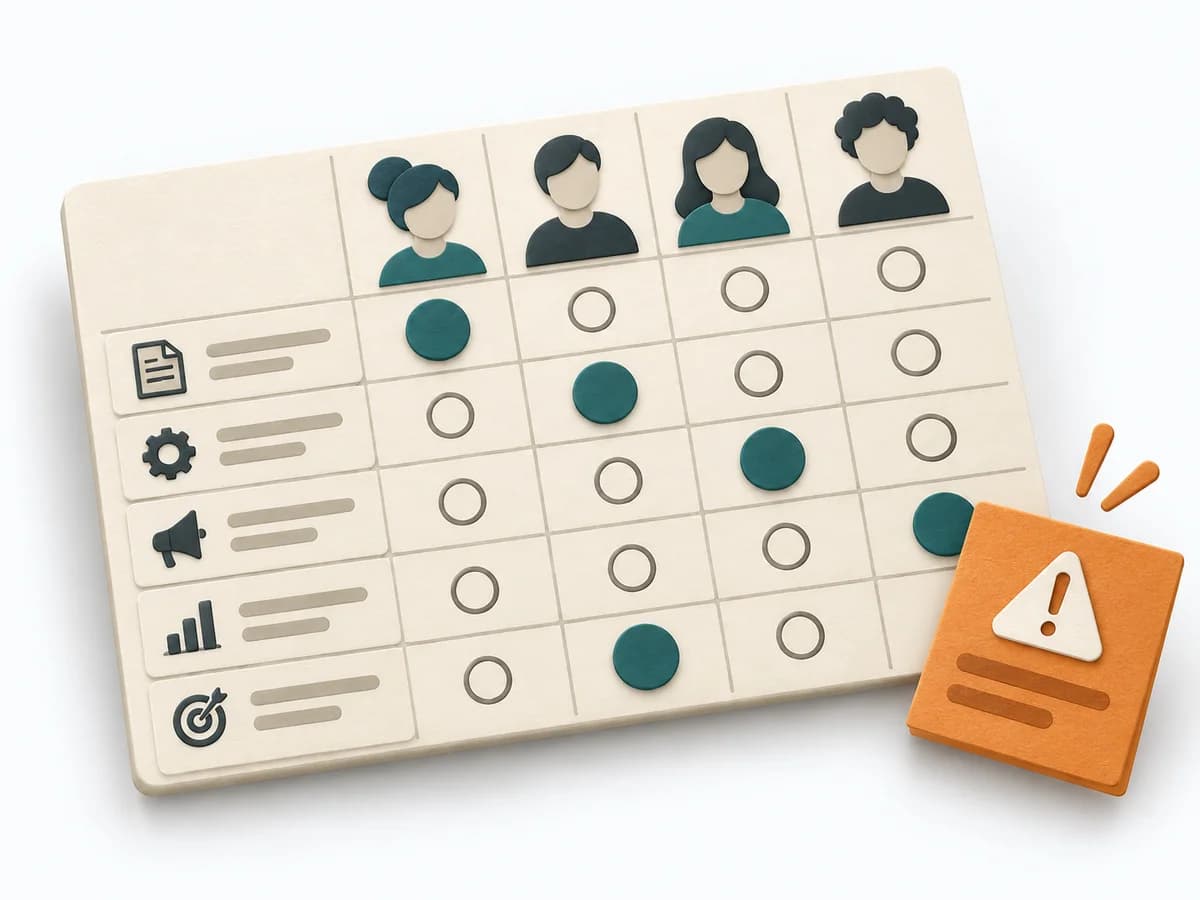
Instead of DACI, when you want to cleanly clarify responsibilities in terms of who is accountable, who executes, and who is informed.

Clarifies options, criteria, and risks by framing the central question, recording the main claim, and marking weak spots.

Weighs options against criteria so comparison, scoring rationale, and selection are documented traceably.

Draws decisions as branching paths so options, conditions, and consequences become clearer in comparison.
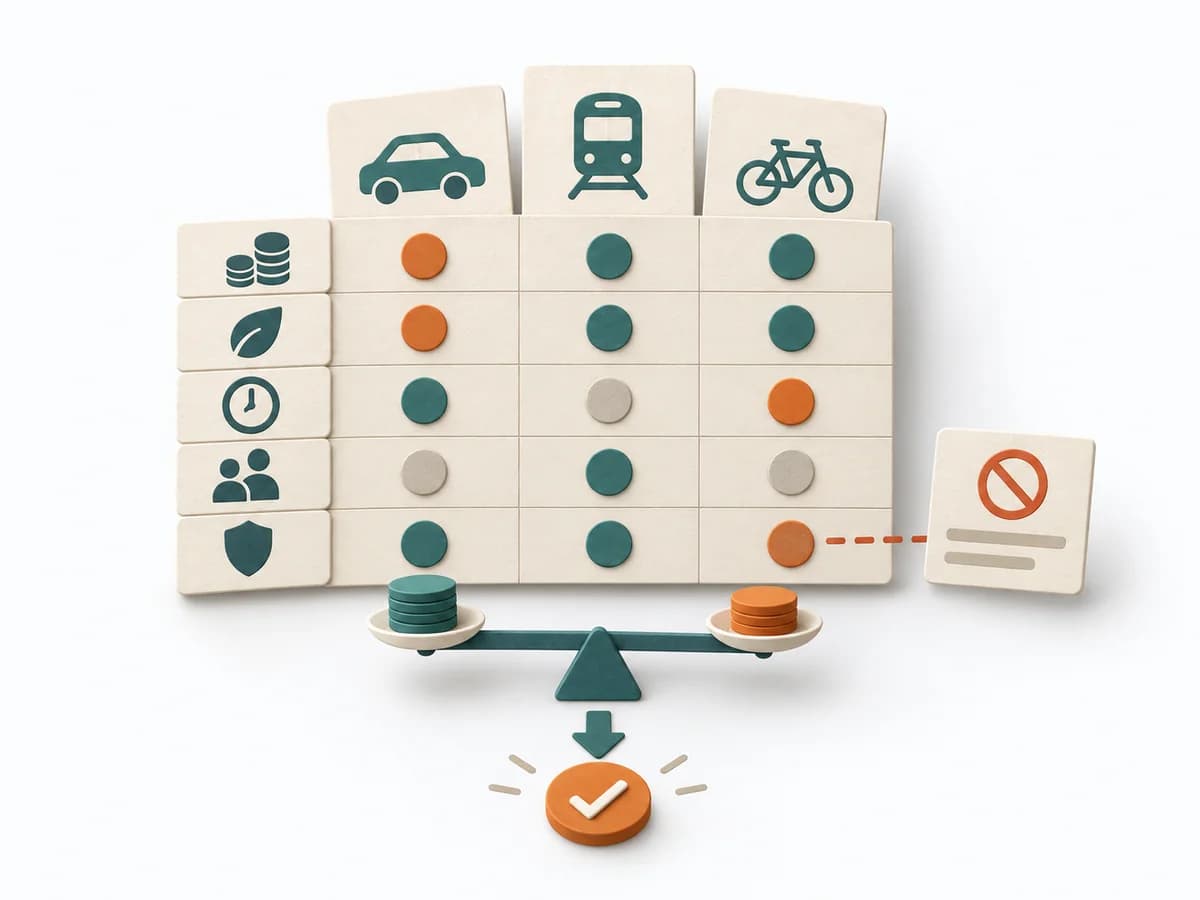
Compares options against criteria and accepted downsides so the decision stays transparently justifiable.