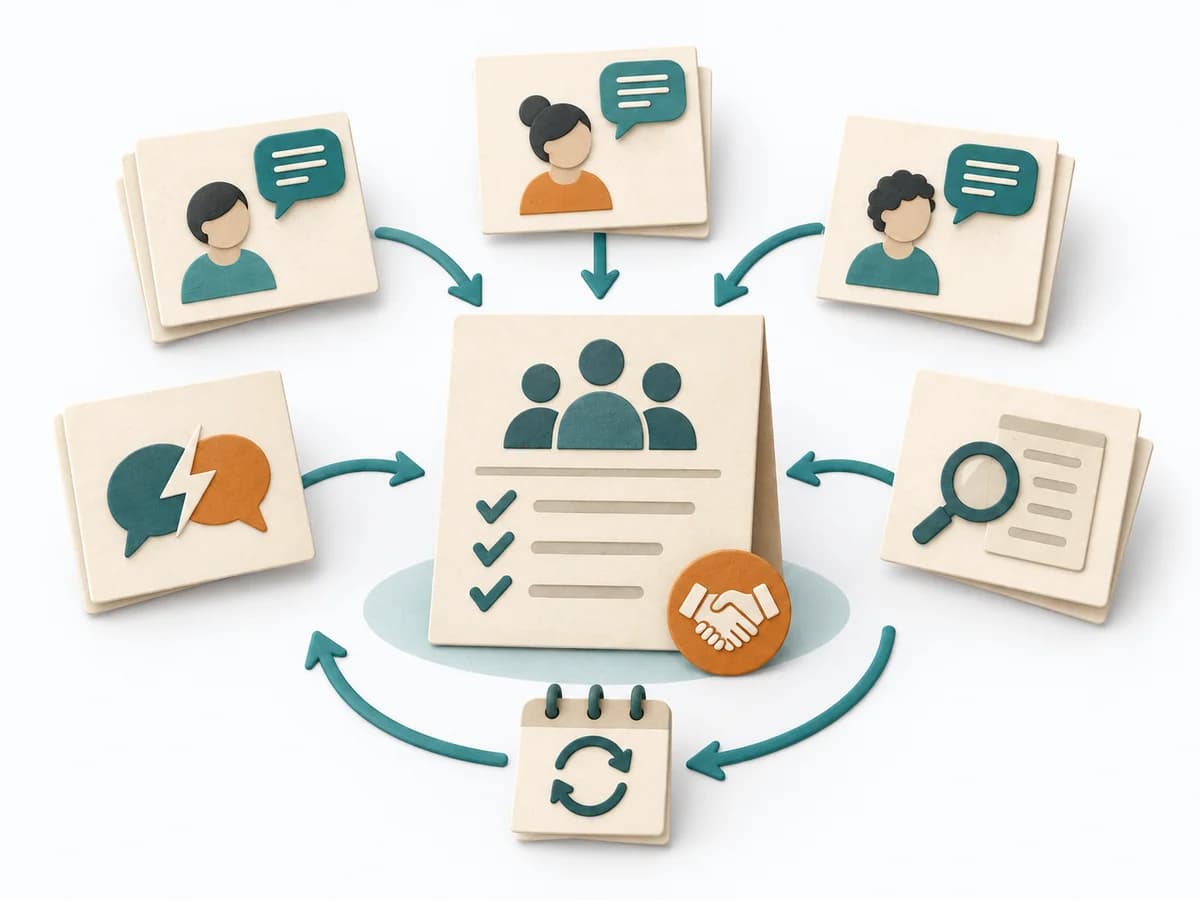
Complete firstSafe discussion space
Team and facilitator agree respectful listening and voluntary participation.
If safety is lacking, choose a more confidential feedback route.
A practical method guide: clarify prerequisites and materials, understand the complete process, and look up outputs, pitfalls, and stop criteria.
What needs to be finished first
Team and facilitator agree respectful listening and voluntary participation.
What needs to be ready before start
Three fields labelled Mad, Sad and Glad, cards, timer, period observations and an experiment field.
The affected team and a facilitator; preferably independent facilitation for conflict.
Define period and team boundary, agree confidentiality and keep personal contributions voluntary.
45–75 minutes retrospective; later review
Provide three equal fields; allow individual writing before revealing contributions.
The one question this method answers
Which experiences made us mad, sad or glad, and which working condition do we want to change?
Phases with goal, actions, output and pitfall
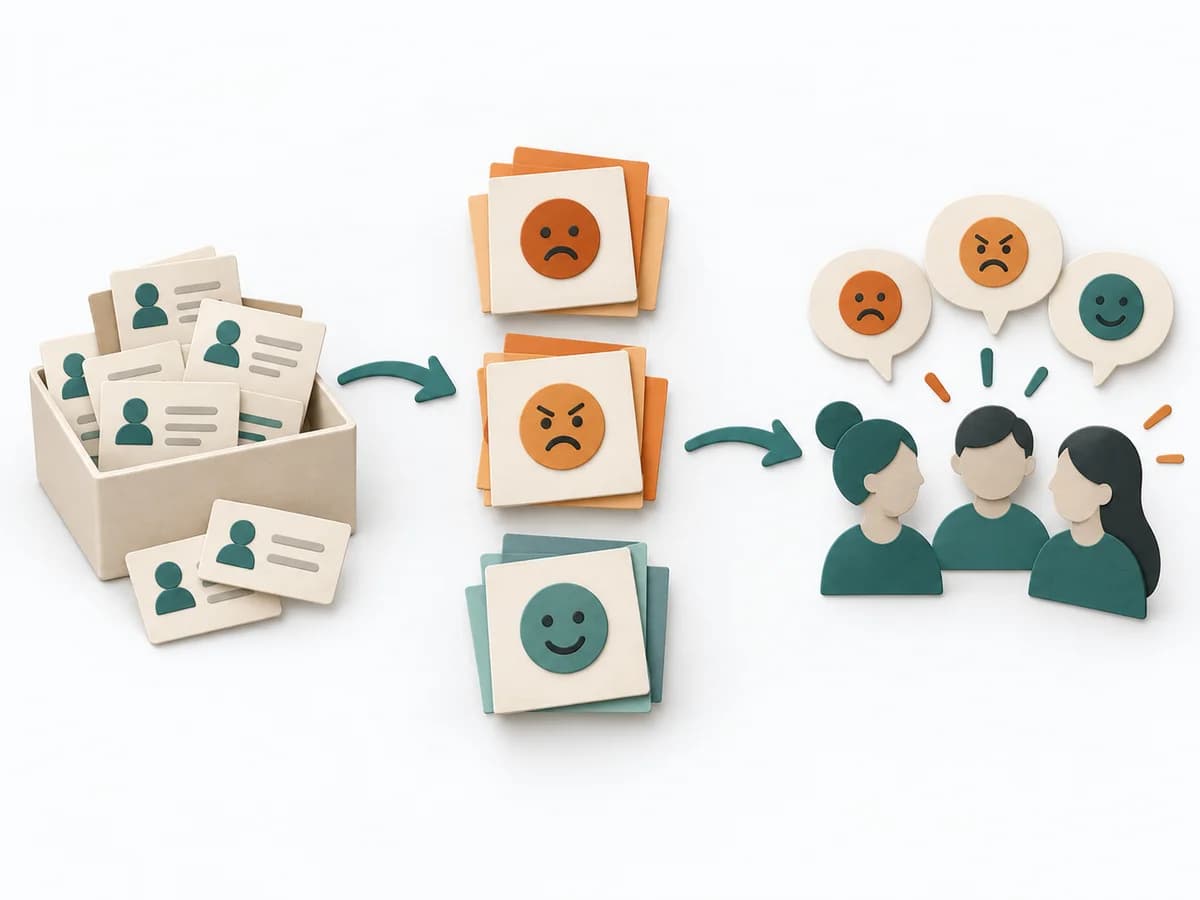
Mad Sad Glad collects experiences from an agreed period under anger, sadness and happiness. Participants choose the emotional category themselves; different reactions to the same event can coexist.
Fictional example
Mad Sad Glad collects experiences from an agreed period under anger, sadness and happiness. Participants choose the emotional category themselves; different reactions to the same event can coexist.
Which specific experience made me angry, and why?
Fictional: three last-minute Friday changes made my tested work uncertain again.
Which experience disappointed or saddened me?
Our shared learning session was cancelled for the second time; I miss the exchange.
What made me glad and what should we preserve about it?
A colleague immediately helped isolate a difficult bug; pairing reduced the burden.
Which connection is understood and within the team’s influence?
Changes become visible too late. The team can introduce a brief daily scope check.
What changes, who supports it and how will effects be reviewed later?
For two weeks, scope check at 11:00, owner Lea. At the next retro we review the number and effects of unannounced changes.
All example details are fictional and illustrate the application.
Period and safety
Goal
Shared retrospective frame
Inputs for this step
Actions
Output
Shared retrospective frame
Can participants pass without explaining themselves?
Quality check
Can participants pass without explaining themselves?
Pitfall
Everyone must disclose their feelings to the group. Allow passing and confidential feedback.
Timing: 5–10 minutes
Collect Mad, Sad and Glad
Goal
Personal experience cards
Inputs for this step
Actions
Output
Personal experience cards
Are concrete experiences recorded rather than judgements about people?
Quality check
Are concrete experiences recorded rather than judgements about people?
Pitfall
The loudest person determines emotional categories. Collect independently first and preserve authors’ categories.
Timing: 8–12 minutes
Understand experiences
Goal
Clarified change themes
Inputs for this step
Actions
Output
Clarified change themes
Are different perspectives on one event preserved?
Quality check
Are different perspectives on one event preserved?
Pitfall
Glad is used to minimise difficult experiences. Take each experience seriously and ask about its trigger separately.
Timing: 15–25 minutes
Trial an improvement
Goal
Team experiment with review
Inputs for this step
Actions
Output
Team experiment with review
Does the change have an observable effect and review date?
Quality check
Does the change have an observable effect and review date?
Pitfall
The retrospective ends with a promise to communicate better. Specify one behavioural change for a limited period.
Timing: 10–20 minutes
What comes out at the end
Sketch: what the artifact looks like
Three collections of personal experiences, clarified themes and a verifiable team experiment with owner and review date.
Record date and scope; retain the previous version and reason when changing it.
Define period and team boundary, agree confidentiality and keep personal contributions voluntary.
To be confirmed
To be confirmed
Complete retrospective Time: 45–75 minutes retrospective; later review
Complete this worksheet on paper or in your own document during the work.
Which specific experience made me angry, and why?
...
Which experience disappointed or saddened me?
...
What made me glad and what should we preserve about it?
...
Which connection is understood and within the team’s influence?
...
What changes, who supports it and how will effects be reviewed later?
...
Answer the prompts with your own information. Explicitly mark unknowns and assumptions.
Expected artifact: Shared retrospective frame
Can participants pass without explaining themselves?
Entry:
...
Expected artifact: Personal experience cards
Are concrete experiences recorded rather than judgements about people?
Entry:
...
Expected artifact: Clarified change themes
Are different perspectives on one event preserved?
Entry:
...
Expected artifact: Team experiment with review
Does the change have an observable effect and review date?
Entry:
...
...
Method guide: https://methodatlas.meierhoff-systems.de/en/methods/mad-sad-glad/run-sheet
Concrete filled scenario, fictional example
Fictional example for orientation. Counts and timings describe this case and are not universal requirements.
Concrete filled scenario, fictional example
Mad: Fictional: three last-minute Friday changes made my tested work uncertain again.
Sad: Our shared learning session was cancelled for the second time; I miss the exchange.
Glad: A colleague immediately helped isolate a difficult bug; pairing reduced the burden.
Selected theme: Changes become visible too late. The team can introduce a brief daily scope check.
Experiment and review: For two weeks, scope check at 11:00, owner Lea. At the next retro we review the number and effects of unannounced changes.
Recognize symptoms and steer against them
Quick overview, the full text is in the matching phase in the flow
Everyone must disclose their feelings to the group.
Allow passing and confidential feedback.
The loudest person determines emotional categories.
Collect independently first and preserve authors’ categories.
Glad is used to minimise difficult experiences.
Take each experience seriously and ask about its trigger separately.
The retrospective ends with a promise to communicate better.
Specify one behavioural change for a limited period.
When to pause, resolve prerequisites, or choose another approach
Go to the profile for purpose, similar methods, and sources or continue to the next method in the catalog.