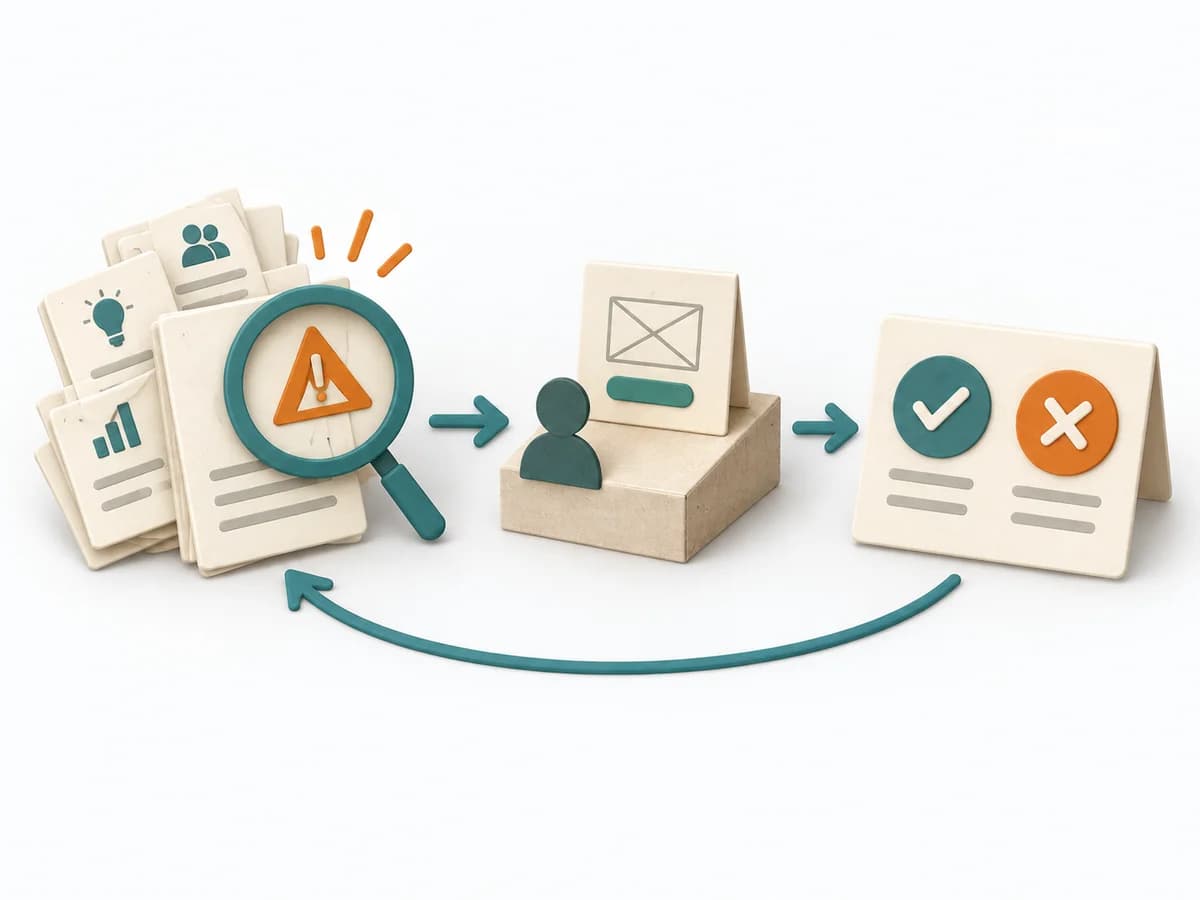
Purpose
When an early product bet still has too many open points, it brings target group, problem, and assumptions into a single view. It condenses the idea so core risks become nameable.
Product Strategy Canvas
Makes an early product bet visible and testable on one page.
Lean Canvas places problem, customer segments, solution, and business assumptions in nine fields. Each statement remains a hypothesis until suitable evidence supports it.
Which assumptions about problem, segment, solution, and economics must we test next?
The nine fields form a thinking model. The working path is one possible order; it does not replace validation.

Scope
State the product bet and the customer slice to which the canvas applies.
Problem
Describe the main unresolved problems and how people solve them today.
Solution
Sketch a minimal solution and a clear value proposition for the prioritized problem.
Economics
Add reach, learning signals, and cost and revenue assumptions.
Risks
Read the fields as linked hypotheses and plan the next check.
Revise fields when new observations change their assumptions. Keep dated versions and link tests to the fields they examine.
Use it to examine an early product or business assumption and expose the riskiest relationships for the next learning steps.

A dated version with nine clearly separated core fields.

Prioritized assumptions with evidence status and risk.

Next checks with signal and decision criterion.
Fictional neighborhood tool-lending example
Nine canonical core fields for an early product bet.
Which unresolved problems matter for the segment?
Fictional: Rare use often does not justify buying a tool.
Which minimum solution addresses the prioritized problem?
Fictional: Checked tools with simple pickup.
What concrete progress do you promise the segment?
Fictional: The right tool is available nearby.
What is hard to copy and already plausible?
Leave blank if no real advantage is evidenced.
Who experiences the problem most strongly? Who are the early adopters?
Fictional: Households with a renovation date soon as early searchers.
Which few signals show behavior or learning?
Fictional: Searches, pickups, and repeat use.
How will you reach the segment for learning and delivery?
Fictional: Neighborhood groups and local meeting places.
Which major costs apply to this bet?
Fictional: Maintenance, support, and storage.
Which revenue assumption applies to this bet?
Fictional: A possible fee per lending transaction.
Name one product bet, an initial customer segment, and the decision that learning should support.
When an early product bet still has too many open points, it brings target group, problem, and assumptions into a single view. It condenses the idea so core risks become nameable.
It arranges market assumptions, solution sketch, and risk topics on a compact surface and forces clear priorities. Critical fields are not treated as finished truth but as test material for the next learning steps.
Lean Canvas helps because it forces an early product or business assumption into a few hard fields, which limits wishful thinking. Good use treats every cell as a precise claim with decision weight, not as a friendly collection of half-baked knowledge. This reveals where risk, market logic, and solution picture don't yet fit together, and which assumptions should come under pressure first.
Go in with a clear bet and limit every field to statements that have real consequences for priority or test strategy. The format works best where one field visibly undermines another, for example target group and problem, or solution and channel. Close with the riskiest statements and the order in which you want to test them.
The method guide walks execution through 5 phases, timing, 5 pitfalls, and clear stop criteria.
Open method guideYour perspective
Your feedback helps shape the next improvements to methodatlas.
Prepare a first canvas draft or the check of a critical hypothesis.
To be confirmed
To be confirmed
Work on one product bet Time: 45 to 90 minutes for the draft; tests separate
Complete this worksheet on paper or in your own document during the work.
Which unresolved problems matter for the segment?
...
Which minimum solution addresses the prioritized problem?
...
What concrete progress do you promise the segment?
...
What is hard to copy and already plausible?
...
Who experiences the problem most strongly? Who are the early adopters?
...
Which few signals show behavior or learning?
...
How will you reach the segment for learning and delivery?
...
Which major costs apply to this bet?
...
Which revenue assumption applies to this bet?
...
Expected artifact: Bounded product bet and segment
One version covers one bet.
Entry:
...
Expected artifact: Prioritized problem hypotheses and alternatives
Missing evidence remains visible as a hypothesis.
Entry:
...
Expected artifact: Solution sketch with value proposition
Unbacked statements remain assumptions.
Entry:
...
Expected artifact: Connected operating and learning assumptions
Do not present unsupported numbers as forecasts.
Entry:
...
Expected artifact: Prioritized hypotheses and experiment backlog
The canvas starts learning; it is not proof.
Entry:
...
...
Method guide: https://methodatlas.meierhoff-systems.de/en/methods/lean-canvas/run-sheet
Fitting alternatives with decision guidance, followed by other related methods.
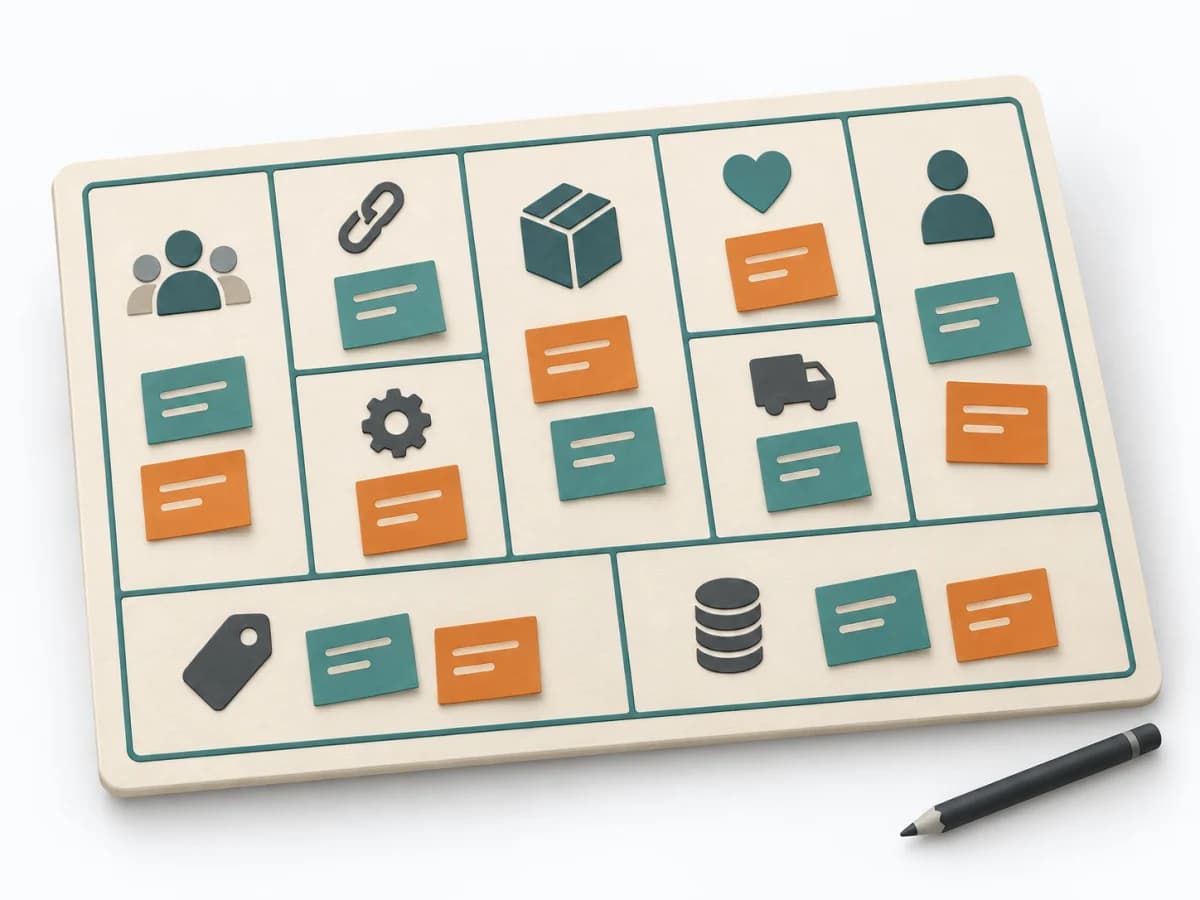
Instead of Lean Canvas, when you want to use Business Model Canvas to condense a more complete business model with segments, channels, revenue, and costs.

Compares jobs, pains, gains, and offering so real fit gaps in the value proposition become visible.
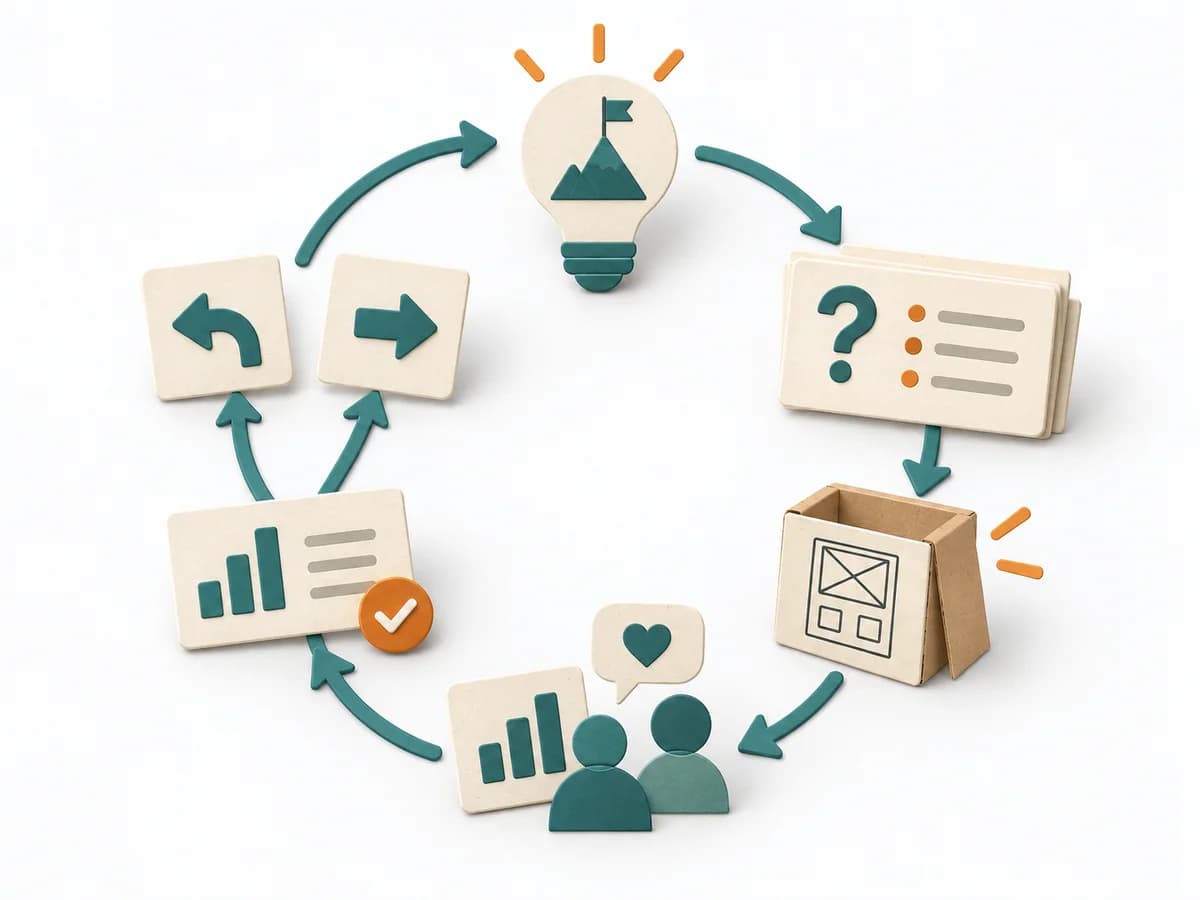
Build Measure Learn cycles turn risky assumptions into experiments that support persevere, pivot, or stop decisions.

Vision, target group, needs, value, and business goals fit onto one board that exposes assumptions for validation.

Sharpens product goal, target group needs, core features, and assumptions into a shared working picture.
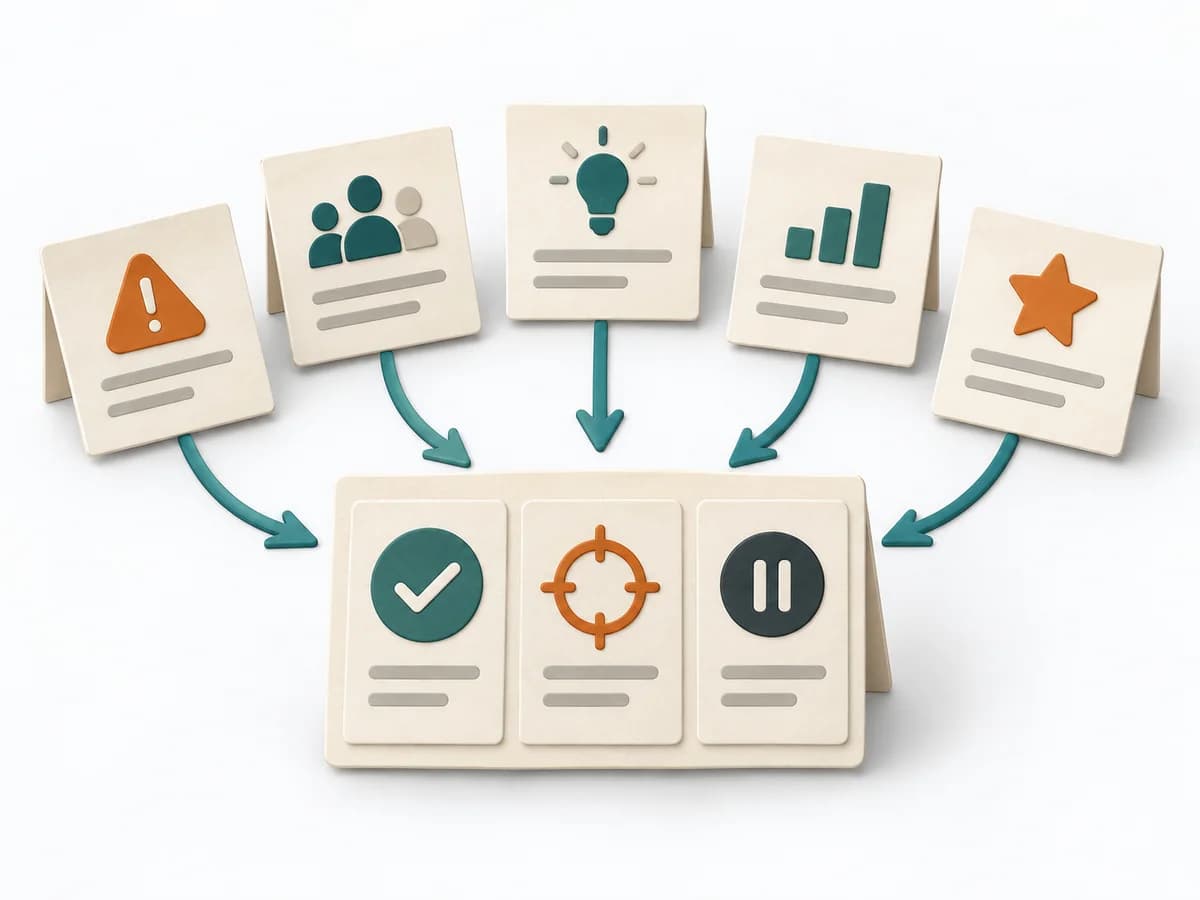
A fast venture-style triage that tests whether an idea has a clear problem, paying customer, differentiated solution, and plausible market.
