Purpose
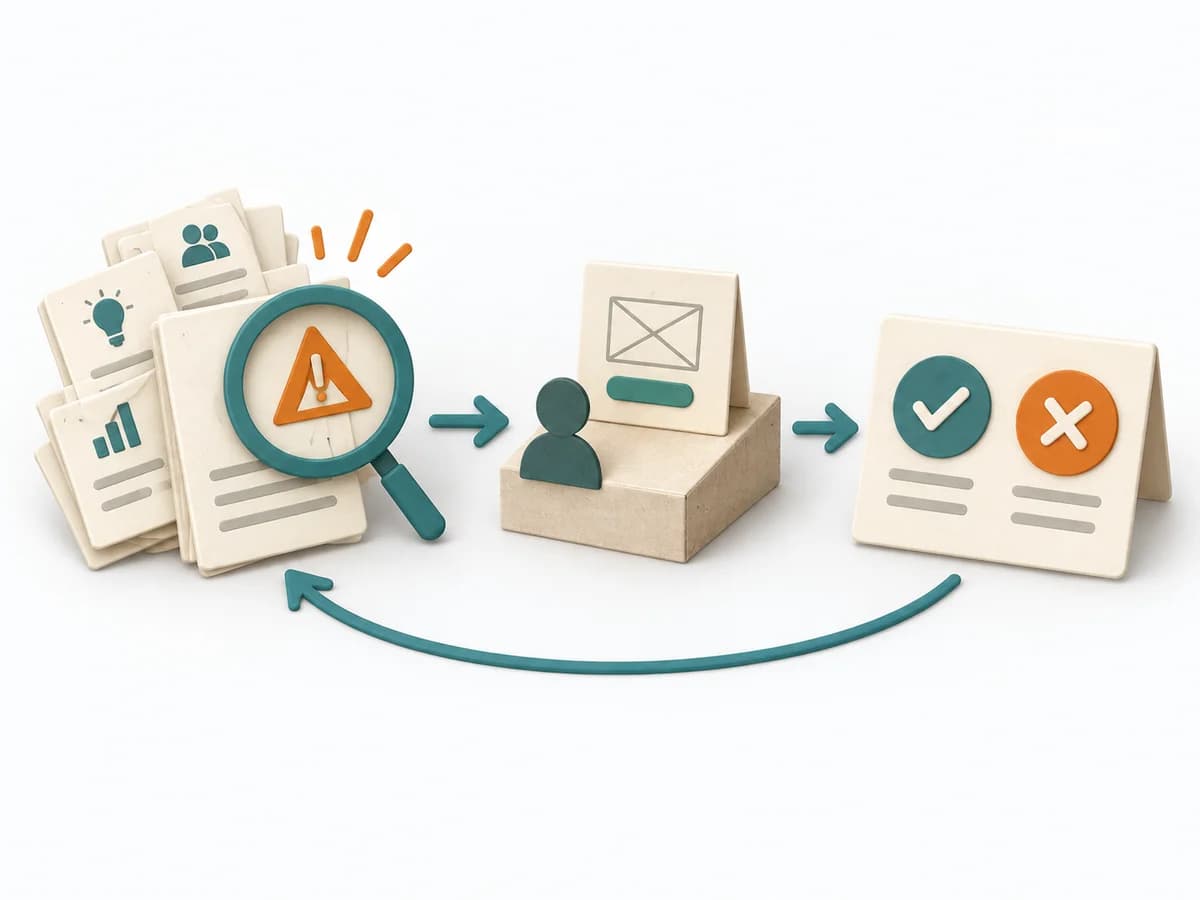
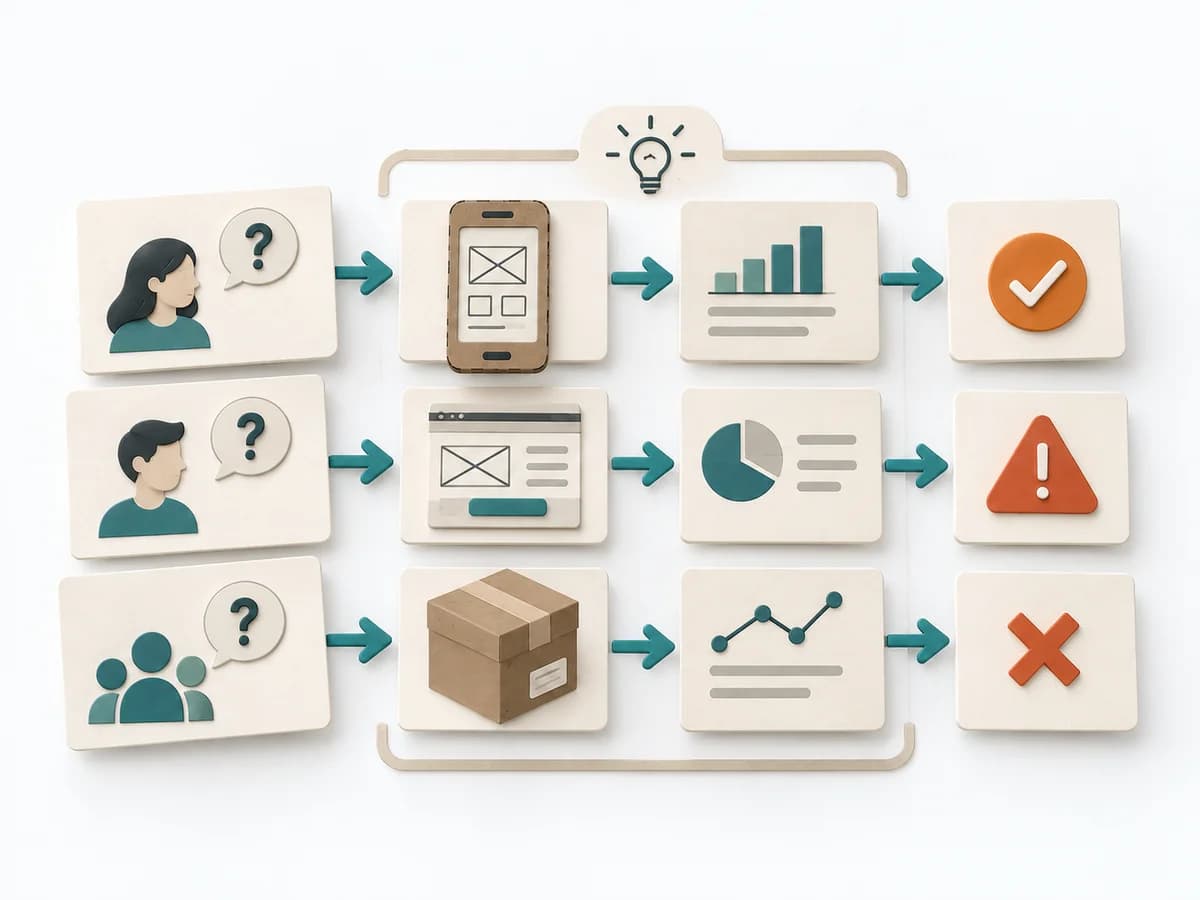
When the value proposition and customer expectation drift apart, it makes fit and mismatch legible. It shows where offering and need don't yet come together.
Product Strategy Canvas
Designs an offer around important customer jobs and tests the proposed fit.
The Value Proposition Canvas pairs a Customer Profile of jobs, pains and gains with a Value Map of products and services, pain relievers and gain creators. The proposed fit must be tested.
Which jobs, pains and gains matter to this segment, and how could our offer address them?
Keep the Customer Profile and Value Map distinct; their fit is a hypothesis to test.

Customer segment
The Customer Profile describes one well-defined group and its actual jobs.
Pains and gains
Pains and gains relate to the jobs and outcomes before, during and after completion.
Value map
The Value Map describes products and services, pain relievers and gain creators that address prioritized profile items.
Plan a fit test
The canvas makes fit assumptions visible; customer evidence comes from subsequent research.
Update both sides as customer evidence changes. Focus on a few important jobs and value contributions rather than filling every field with unrelated ideas.
Use it when designing or examining a product or service offer for one customer segment.

Jobs, pains and gains for one defined customer group.

Offer, pain relievers and gain creators connected to the profile.

Value proposition with tests, customer signals and open risks.
Fictional teaching example
The Value Map on the left contains products and services, pain relievers and gain creators; the Customer Profile on the right contains jobs, pains and gains. Their fit remains a hypothesis until evidence supports it.
Which functional, social and emotional jobs does the segment want to get done?
Fictional: A person needs a drill for a one-off repair.
Which products and services support the jobs?
Fictional: A local tool library with a catalog and collection.
Which risks, difficulties, unwanted costs or feelings arise?
Fictional: Availability is unclear before traveling.
How does the offer reduce prioritized obstacles or risks?
Fictional: A firm reservation confirmation shows the collection time and status.
Which outcomes does the segment expect, desire or value?
Fictional: Access to a suitable tool without buying and storing it.
How does the offer create desired outcomes?
Fictional: Brief usage guidance at collection.
Choose one customer segment and bring relevant research plus the current or proposed offer.
When the value proposition and customer expectation drift apart, it makes fit and mismatch legible. It shows where offering and need don't yet come together.
It places jobs, pain, and gain next to the offering and checks where the fit holds or fails. The comparison makes gaps in the value proposition concrete because customer situation and offering elements are directly related to each other.
The Value Proposition Canvas works because it juxtaposes the customer side and the offering side so that fit and gaps become recognizable. Good use stays with concrete jobs, pains, and gains for a clearly defined target group instead of producing generic market phrases. The method becomes effective when the team recognizes which elements of the offering genuinely relieve or enable, and which only sound convincing internally.
Work with a clearly bounded target group and material from real conversations or observations so the customer side holds up. The session pays off when a central pain is mentioned often but the offering only addresses it indirectly. Close with a named fit, an open gap, and the points that should be validated next.
The method guide walks execution through 4 phases, timing, 4 pitfalls, and clear stop criteria.
Open method guideYour perspective
Your feedback helps shape the next improvements to methodatlas.
Plan a focused canvas for one segment and follow-up on fit assumptions.
To be confirmed
To be confirmed
Develop a Value Proposition Canvas Time: About 90–120 minutes; research is additional
Complete this worksheet on paper or in your own document during the work.
Which functional, social and emotional jobs does the segment want to get done?
...
Which products and services support the jobs?
...
Which risks, difficulties, unwanted costs or feelings arise?
...
How does the offer reduce prioritized obstacles or risks?
...
Which outcomes does the segment expect, desire or value?
...
How does the offer create desired outcomes?
...
Expected artifact: Focused Customer Profile
Segment · context · customer jobs
Entry:
...
Expected artifact: Customer Profile with jobs, pains and gains
Job · pain · gain · evidence
Entry:
...
Expected artifact: Value Map with justified contributions
Offer · pain reliever · gain creator · connection
Entry:
...
Expected artifact: Test plan with hypothesis, customer group, signal, owner and review date
Customer group · hypothesis · test · signal · owner
Entry:
...
...
Method guide: https://methodatlas.meierhoff-systems.de/en/methods/value-proposition-canvas/run-sheet
Fitting alternatives with decision guidance, followed by other related methods.

Instead of Value Proposition Canvas, when you want to use Jobs to Be Done to understand needs through jobs to be done rather than target-group types.

Vision, target group, needs, value, and business goals fit onto one board that exposes assumptions for validation.

Condenses target group, problem, value proposition, and core assumptions into a lean picture for early product bets.
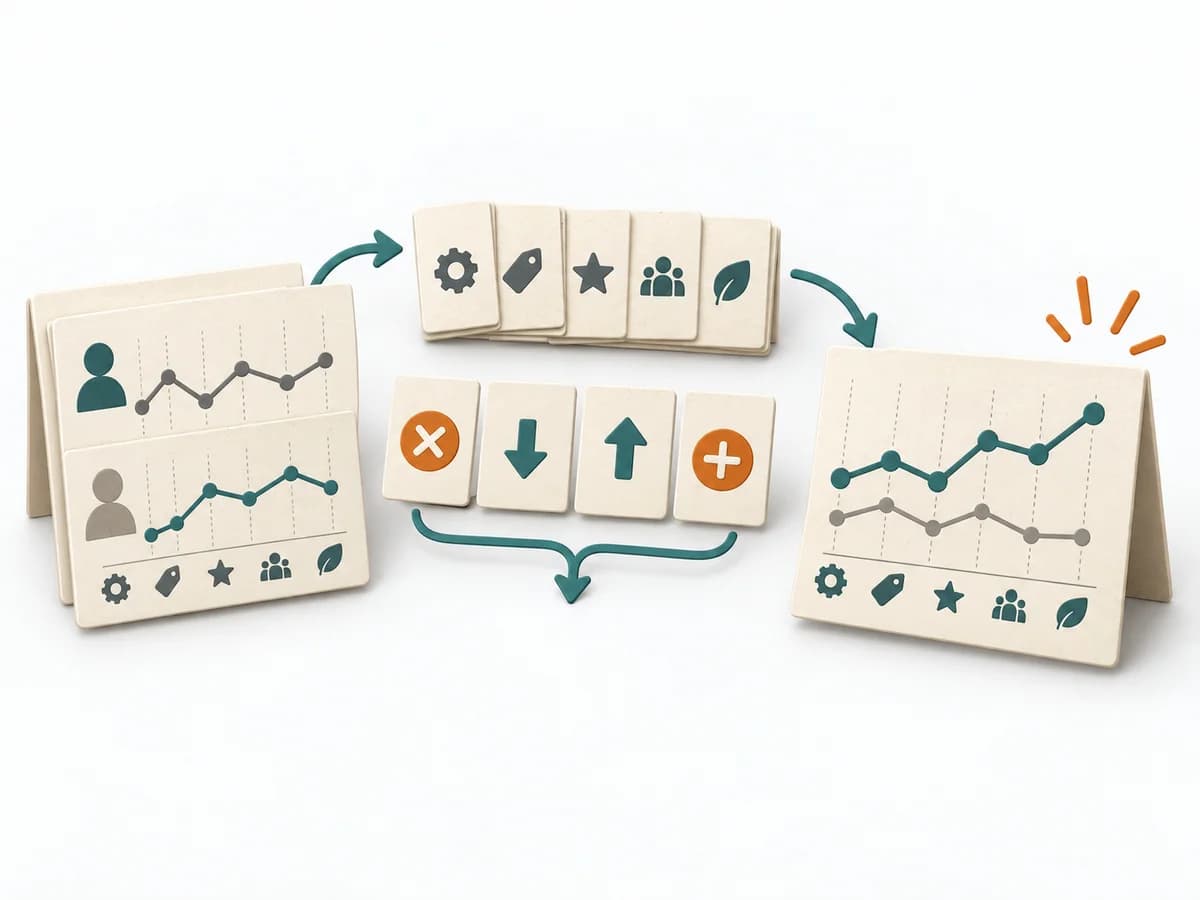
Clarifies starting point, opportunities, and strategic options by defining the competitive factors, drawing the current value curve, and testing a new value curve.
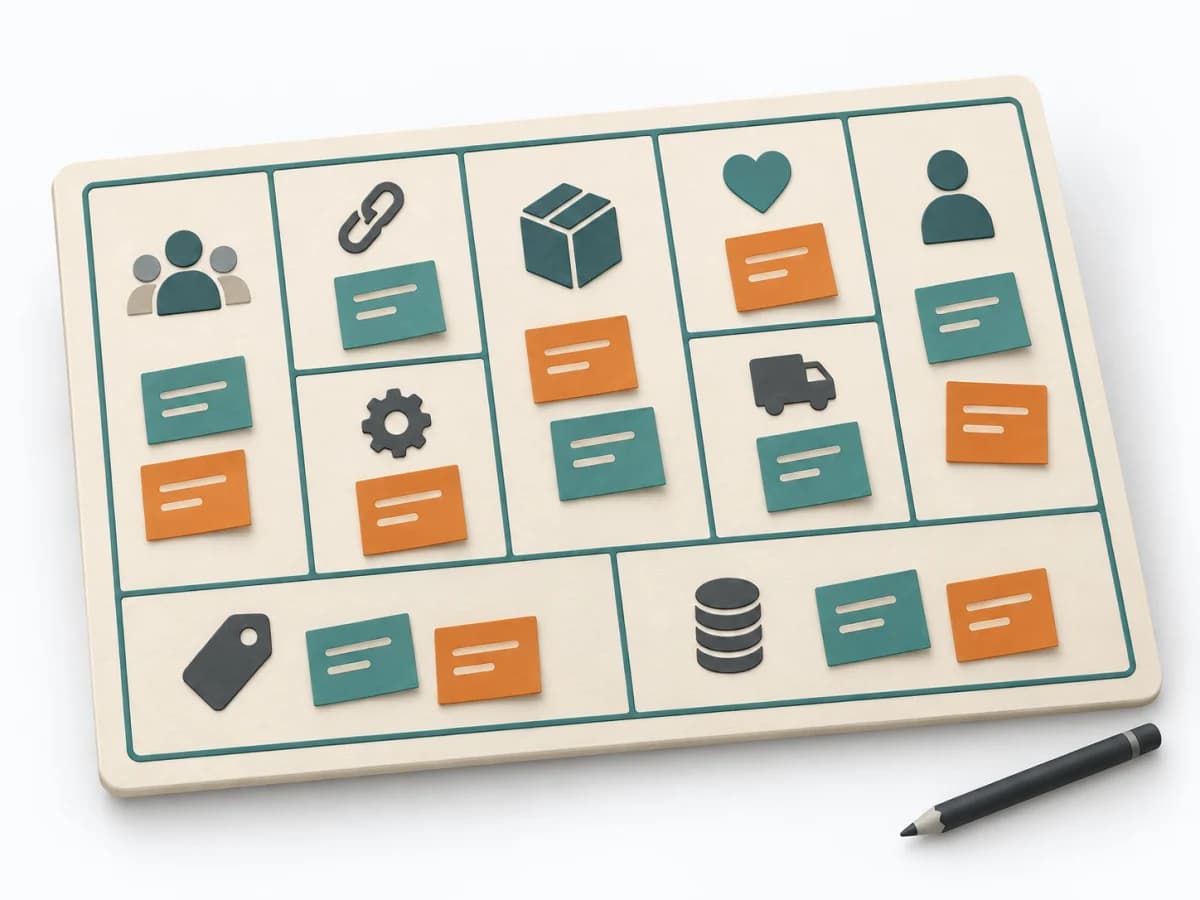
Arranges business building blocks, assumptions, and hypotheses so model variants become more clearly comparable.

Sharpens product goal, target group needs, core features, and assumptions into a shared working picture.