
Purpose
When ideas need sorting quickly, it condenses impact, confidence, and effort into one compact score. It connects customer value, product logic, and decision priorities. The result is captured as an ICE table and top-ideas list.
Product Strategy Decision method
Compares ideas through Impact, Confidence, and Ease with anchored scales and visible evidence.
ICE is a lightweight ranking, not a business case. Impact, confidence, and ease need references; confidence reflects evidence strength. The score supports discussion.
Which idea offers relatively high impact with strong evidence and reasonable effort?
ICE Scoring uses ICE = Impact × Confidence × Ease using consistent 1–10 scales. Assessments remain justified and context-bound.
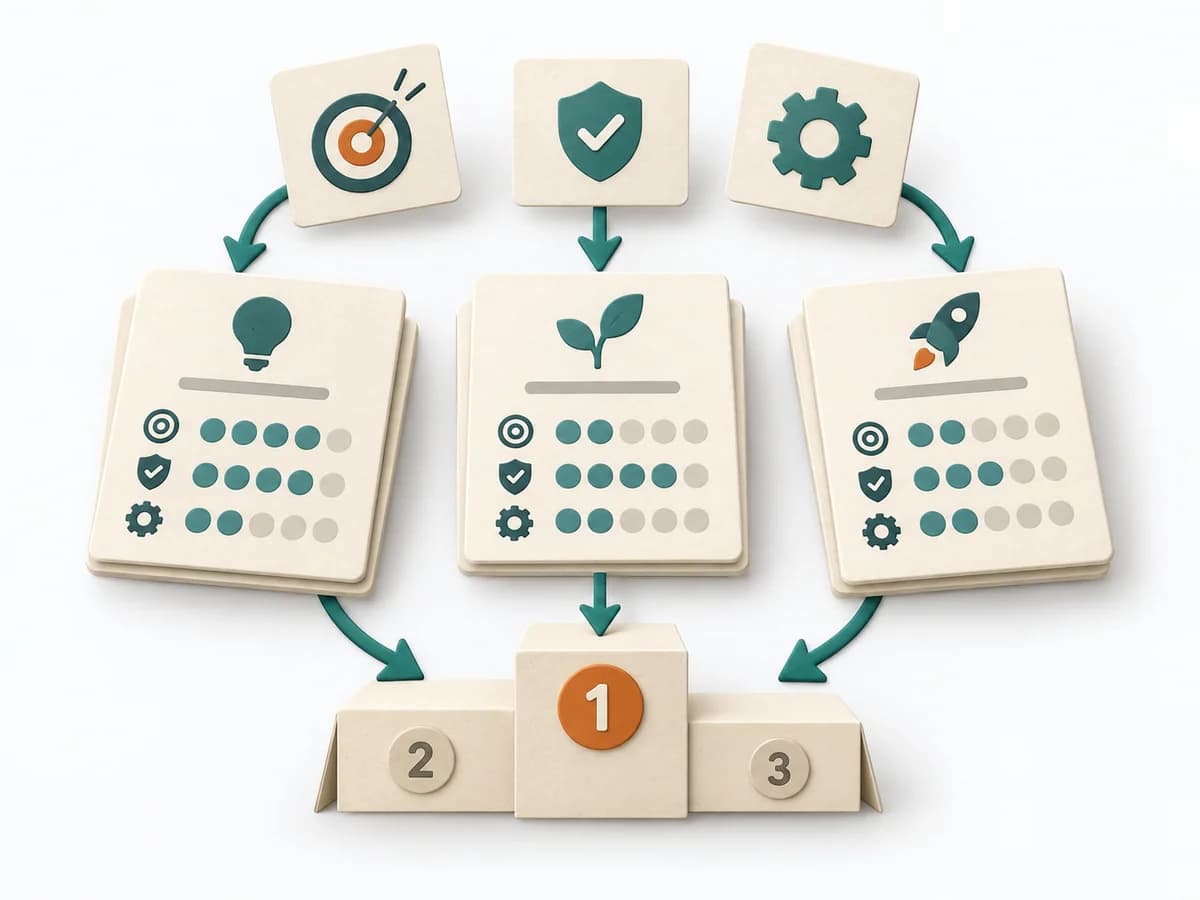
Calibrate scales
Set impact, confidence, and ease anchors using reference ideas.
Score ideas
Score every idea independently and document evidence.
Rank and challenge
Calculate ICE, challenge outliers, and select the next test.
Update confidence and impact after tests; retain the scale version.
Useful for a rough first comparison of many ideas, not as the sole major investment decision.
ICE ranking with traceable sources, assumptions, and domain decisions.
Owners, dates, and next review for ICE ranking.
Fictional worked example
ICE = Impact × Confidence × Ease using consistent 1–10 scales as a precise working structure with a fictional example.
| Item | Impact | Confidence | Ease | ICE score |
|---|---|---|---|---|
| ICE rankingWorked example | 7: affects 22% of drop-offs. | 8: funnel + 12 replays. | 6 after technical spike. | 7 × 8 × 6 = 336. |
The example demonstrates the domain logic of ICE Scoring; worksheets remain blank.
Start with the core question: Which idea offers relatively high impact with strong evidence and reasonable effort?
When ideas need sorting quickly, it condenses impact, confidence, and effort into one compact score. It connects customer value, product logic, and decision priorities. The result is captured as an ICE table and top-ideas list.
It rates every idea along the same three lenses and compares the results directly against each other. Impact, Confidence, and Ease reveal whether an option has strong potential, is well substantiated, and remains testable at a reasonable effort.
ICE Scoring comes from the growth-hacking world and was popularized by Sean Ellis, among others. The three dimensions are intentionally rough so that ideas can be compared quickly. ICE works well for idea backlogs and growth experiments, but it is less rigorous than RICE.
Define the scales in advance. Do not average away disagreement; discuss the differences instead.
The method guide walks execution through 3 phases, timing, 3 pitfalls, and clear stop criteria.
Open method guideYour perspective
Your feedback helps shape the next improvements to methodatlas.
Plan ICE Scoring around its domain steps and the concrete decision question.
To be confirmed
To be confirmed
Full workshop Time: 30–45 minutes
Complete this worksheet on paper or in your own document during the work.
| Item | 1–10 + anchor | 1–10 using evidence anchors | 1–10: 10 = very easy | Impact × Confidence × Ease |
|---|---|---|---|---|
| ICE ranking |
Enter only real input, sources, and decisions.
Expected artifact: ICE scales
ICE scales · source · uncertainty · next decision
Entry:
...
Expected artifact: scoring table
scoring table · source · uncertainty · next decision
Entry:
...
Expected artifact: ICE ranking
ICE ranking · source · uncertainty · next decision
Entry:
...
...
Method guide: https://methodatlas.meierhoff-systems.de/en/methods/ice-scoring/run-sheet
Fitting alternatives with decision guidance, followed by other related methods.
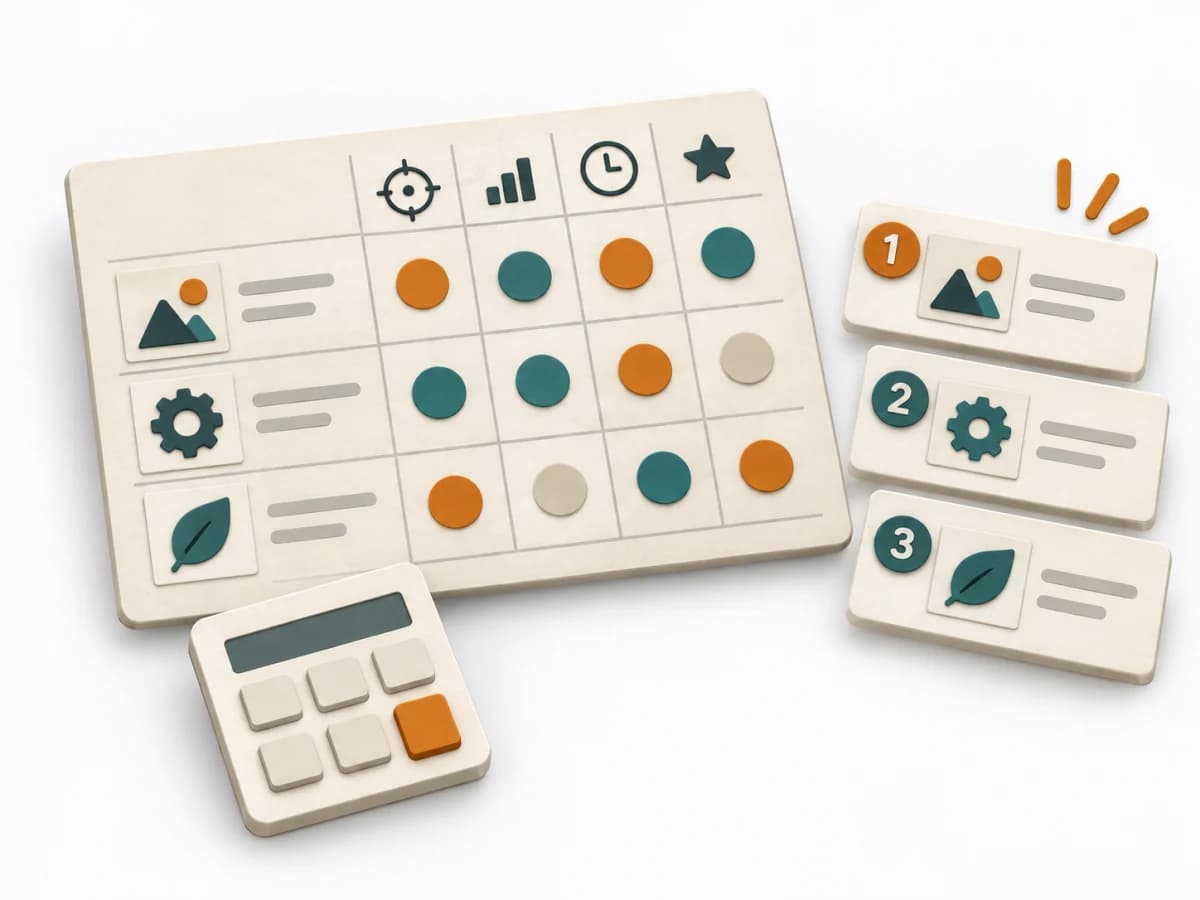
Instead of ICE Scoring, choose RICE Scoring when reach per idea should additionally flow explicitly into the assessment and more comparative precision is needed.
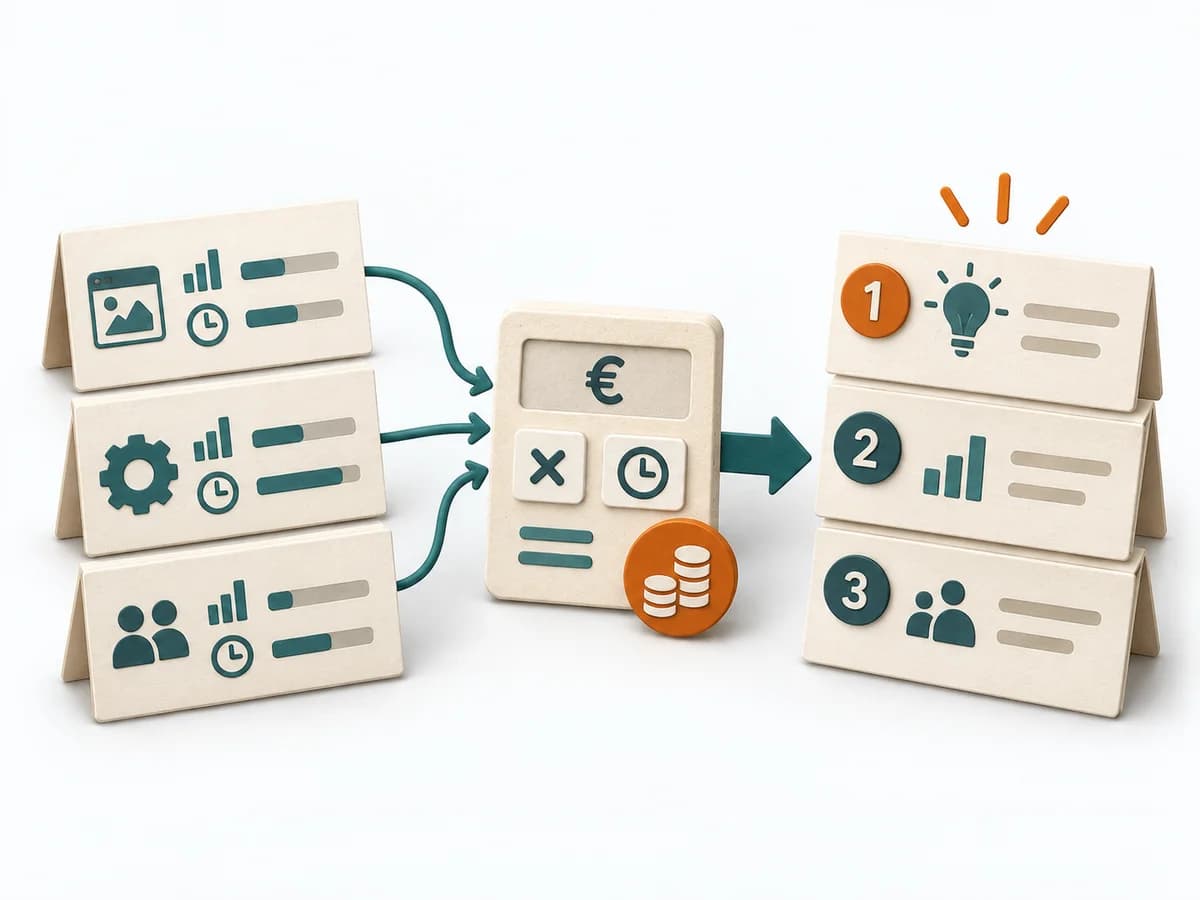
Moves scope, order, and delivery flow toward a concrete result through "adopt the initiative list", "clarify value types for each initiative, such as revenue, efficiency, or risk", and "derive a sorted sequence".

Prioritizes requirements across must, should, could, and won't, creating a negotiable release set with clear boundaries.

Links data, insights, beliefs, and bets so strategy and product decisions become traceable and reviewable.
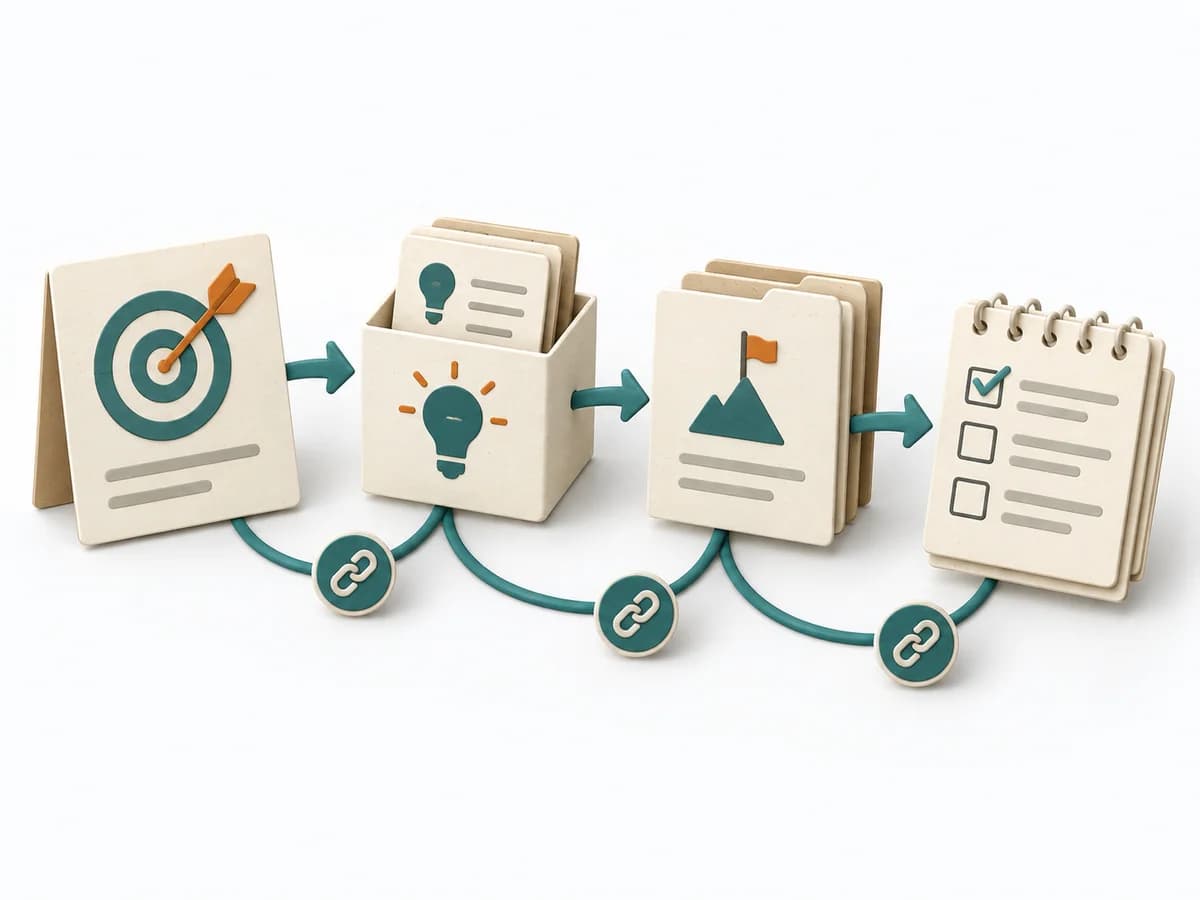
Connects goals, ideas, step projects, and tasks so product planning stays outcome-oriented and adaptive.

Classifies features by their effect on satisfaction, showing which expectations create basic, performance, or delight response.