MoSCoW: Worksheet
Question
To be confirmed
Desired outcome
To be confirmed
Scope
Shape a release
Time: 30 to 90 minutes for the first sort
Complete this worksheet on paper or in your own document during the work.
Preparation for this scope
Method setup
- Materials: Four-column board or backlog, item descriptions, rough estimates, capacity and dependency information, and a timer.
- Roles: A Product Owner or accountable role decides. Facilitation protects the Must test and time. Delivery and domain voices check effort, risks, and workarounds.
- Advance information: Gather release goal, date, capacity, risks, dependencies, and known workarounds.
- Overall time needed: 30 to 90 minutes for a first release sort. Detailed estimation and refinement follow separately.
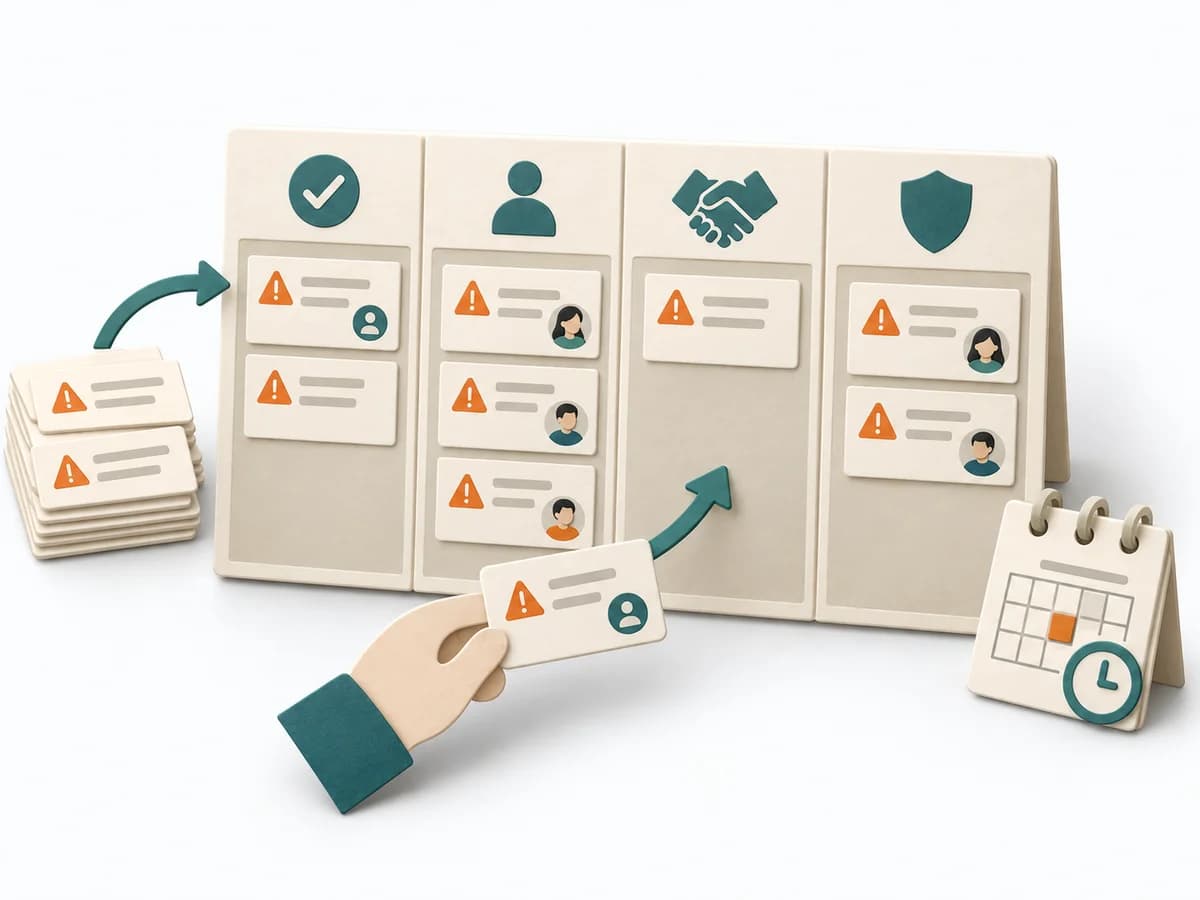
- Setup: Create four columns for Must, Should, Could, and Won’t Have this time. Explain categories and change rule first.
Prepare for the work steps
Frame: Clarify release and Must test
- Release goal and date
- Capacity, constraints, and quality boundaries
Classify: Sort items into four categories
- Backlog items
- Dependencies, risks, and value
Constraints: Check Musts against capacity and dependencies
- Categorized backlog
- Capacity and dependency information
Trade-offs: Negotiate Shoulds and Coulds
- Checked Must core
- Should and Could items
Commit: Document release set and Won’t
- Negotiated categories
- Release and decision data
MoSCoW board
Must Have
...
Should Have
...
Could Have
...
Won’t Have this time
...
Working policies
Must test
...
Time bound
...
Trade-off rule
...
Agile Business Consortium / DSDM
Frame: Clarify release and Must test
Expected artifact: Prioritization frame
Without time and capacity, the category loses force.
Entry:
...
Classify: Sort items into four categories
Expected artifact: Categorized backlog
Won’t describes a deliberate deferral in the current period.
Entry:
...
Constraints: Check Musts against capacity and dependencies
Expected artifact: Checked core scope
MoSCoW does not create false precision; rough sizes are enough for the boundary.
Entry:
...
Trade-offs: Negotiate Shoulds and Coulds
Expected artifact: Negotiated flexibility
Coulds are not promised scope.
Entry:
...
Commit: Document release set and Won’t
Expected artifact: Time-bound release decision
Reassess categories when constraints change.
Entry:
...
Open questions and next steps
...
Method guide: https://methodatlas.meierhoff-systems.de/en/methods/moscow/run-sheet