Purpose
GIST Planning helps clarify target groups, value, goals, and priorities. It links customer value, product logic, and decision priorities, and captures the result as goals, an idea bank, and a step-project list.
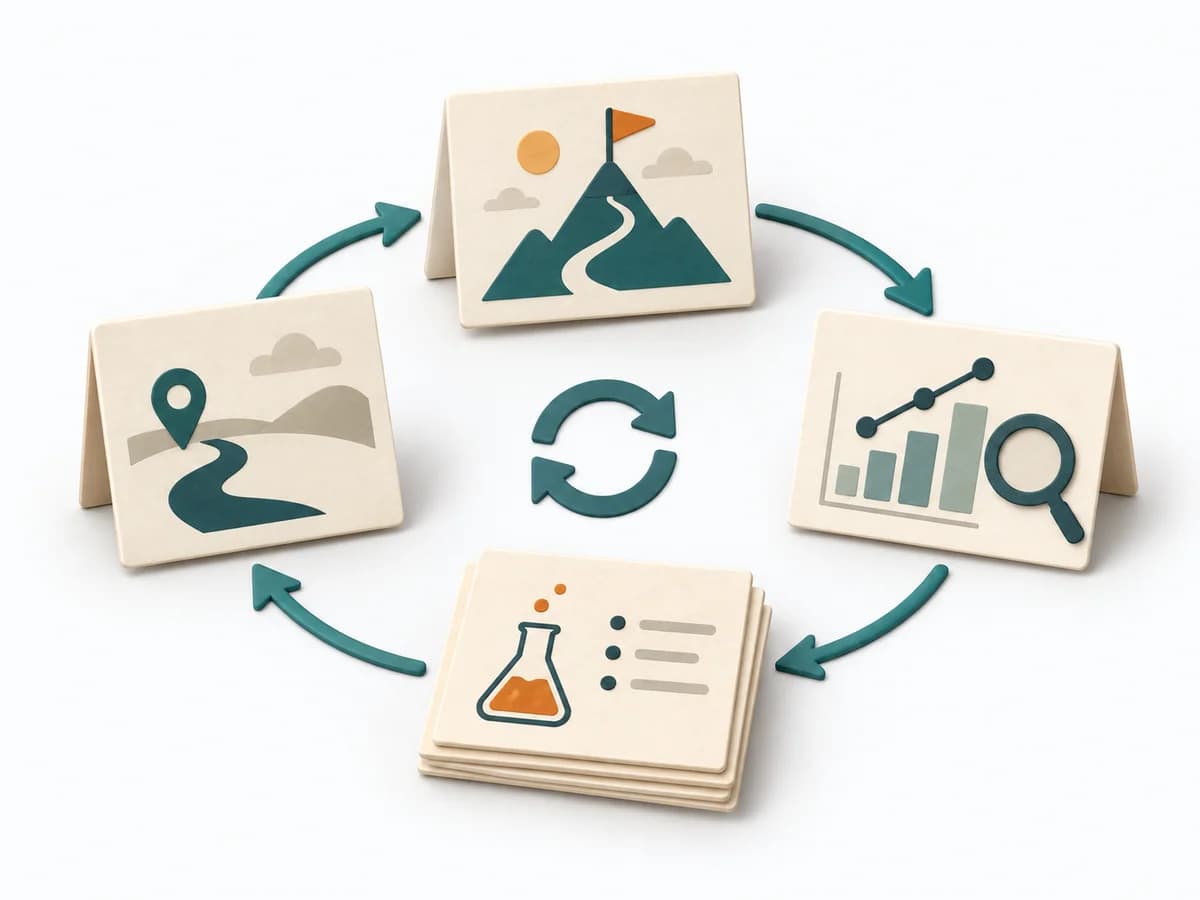
Product Strategy Process model
Connects Goals, Ideas, Step-Projects, and Tasks into an evidence-guided planning system.
GIST replaces large roadmap bets with measured goals, a scored idea bank, small step-projects, and executable tasks. Learning feeds back regularly.
Which small step-projects learn fastest which ideas move a measurable goal?
GIST Planning uses Goals → ideas → step-projects → tasks with regular evidence-based reassessment. Assessments remain justified and context-bound.
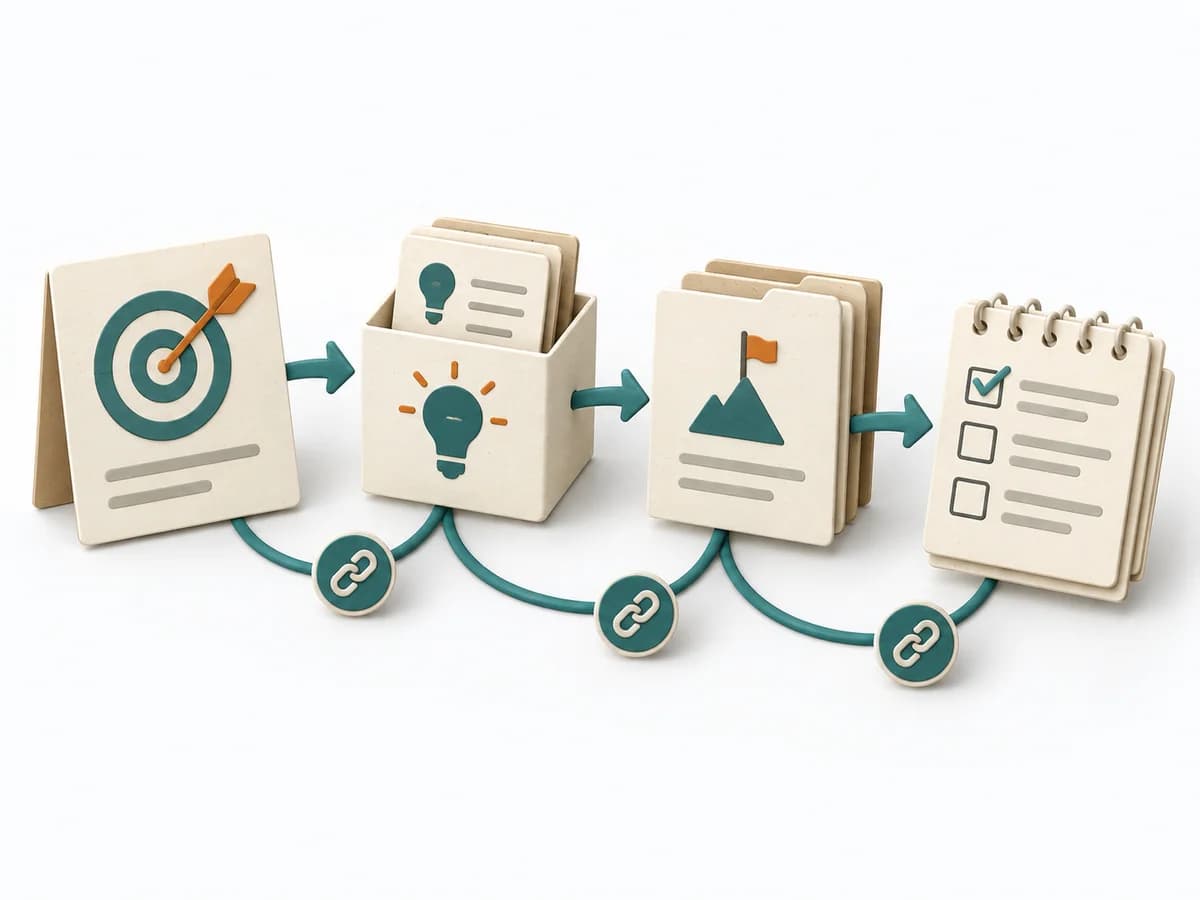
Goals
Set outcome goal with metric, baseline, target, and horizon.
Ideas
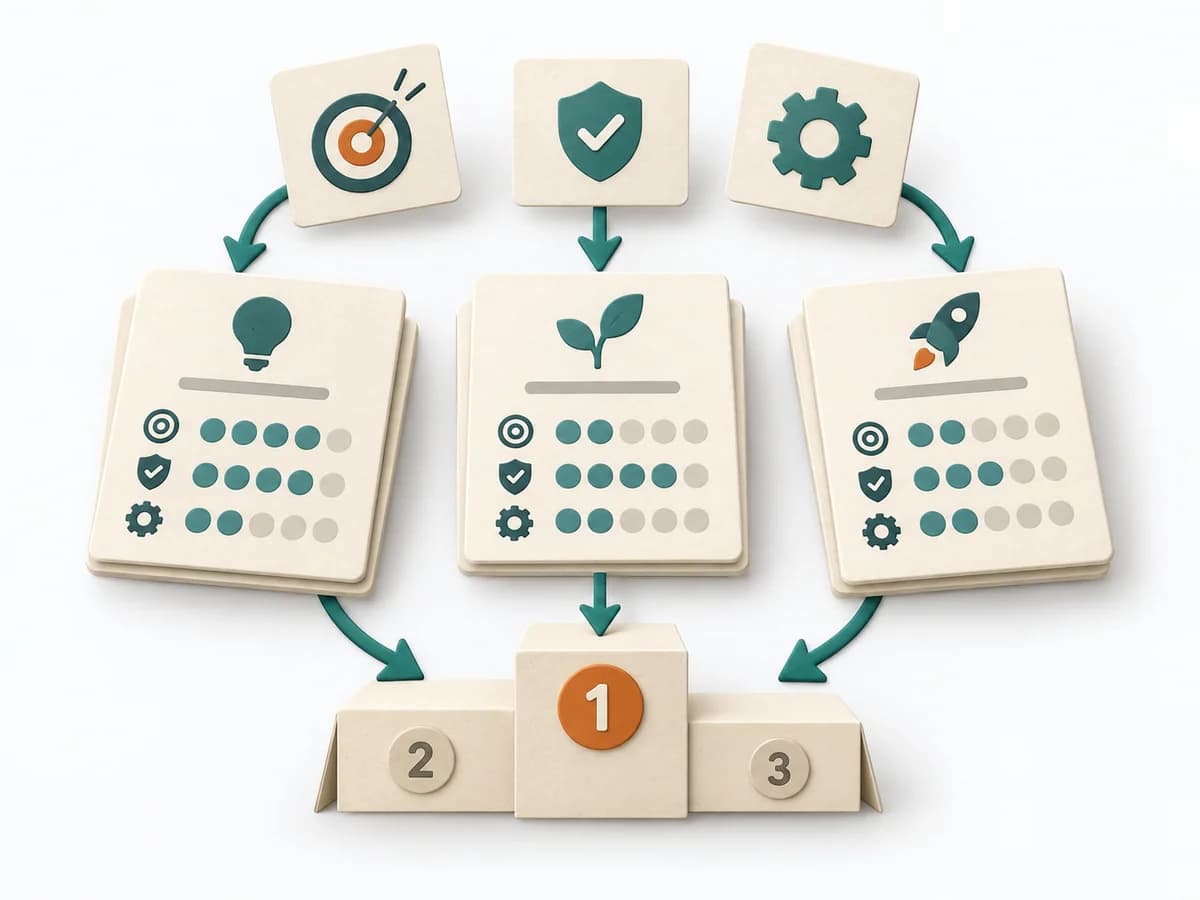
Collect and score many ideas as hypotheses.
Step-projects
Plan a small step with output, learning goal, gate, and timebox.
Tasks/learning
Execute tasks, check gate, and update goal/idea.
Update after new evidence or a material context change and retain the previous version.
For product organisations with clear goals and a need for adaptive planning.
GIST planning system with traceable sources, assumptions, and domain decisions.
Owners, dates, and next review for GIST planning system.
Fictional worked example
Goals → ideas → step-projects → tasks with regular evidence-based reassessment as a precise working structure with a fictional example.
Goal information to record
Aktivierung 42→55 % bis Q4.
Idea/confidence information to record
Geführter Import, Confidence 0,6.
Step/gate information to record
10 Tests; Gate 8 Erfolge; Ergebnis 6.
Tasks/learning information to record
Idea anpassen, nächsten Step neu planen.
The example demonstrates the domain logic of GIST Planning; worksheets remain blank.
Start with the core question: Which small step-projects learn fastest which ideas move a measurable goal?
GIST Planning helps clarify target groups, value, goals, and priorities. It links customer value, product logic, and decision priorities, and captures the result as goals, an idea bank, and a step-project list.
The team formulates strategic goals as measurable outcomes, collects ideas as hypotheses, prioritizes ideas by confidence and impact, defines step projects that can deliver learning within weeks, executes tasks in delivery cycles, and feeds results back into the idea bank.
GIST Planning was developed by Itamar Gilad to replace feature roadmaps that quickly become outdated or turn into wish lists. GIST has four levels: Goals describe desired outcomes, often in an OKR-like format. Ideas are all hypotheses that could achieve the goals, held in a prioritized idea bank. Step projects are small initiatives, usually deliverable in weeks, that test an idea. Tasks are the concrete execution work. The levels are reviewed at different cadences.
Maintain the idea bank rigorously and prioritize with transparent criteria such as ICE. Keep step projects small enough to create learning within weeks.
The method guide walks execution through 4 phases, timing, 4 pitfalls, and clear stop criteria.
Open method guideYour perspective
Your feedback helps shape the next improvements to methodatlas.
Plan GIST Planning around its domain steps and the concrete decision question.
To be confirmed
To be confirmed
Establish and review the practice Time: Continuous; goals quarterly, steps 2–10 weeks
Complete this worksheet on paper or in your own document during the work.
Goal information to record
...
Idea/confidence information to record
...
Step/gate information to record
...
Tasks/learning information to record
...
Enter only real input, sources, and decisions.
Expected artifact: goal contract
goal contract · source · uncertainty · next decision
Entry:
...
Expected artifact: idea bank
idea bank · source · uncertainty · next decision
Entry:
...
Expected artifact: step plan
step plan · source · uncertainty · next decision
Entry:
...
Expected artifact: learning update
learning update · source · uncertainty · next decision
Entry:
...
...
Method guide: https://methodatlas.meierhoff-systems.de/en/methods/gist-planning/run-sheet
Fitting alternatives with decision guidance, followed by other related methods.
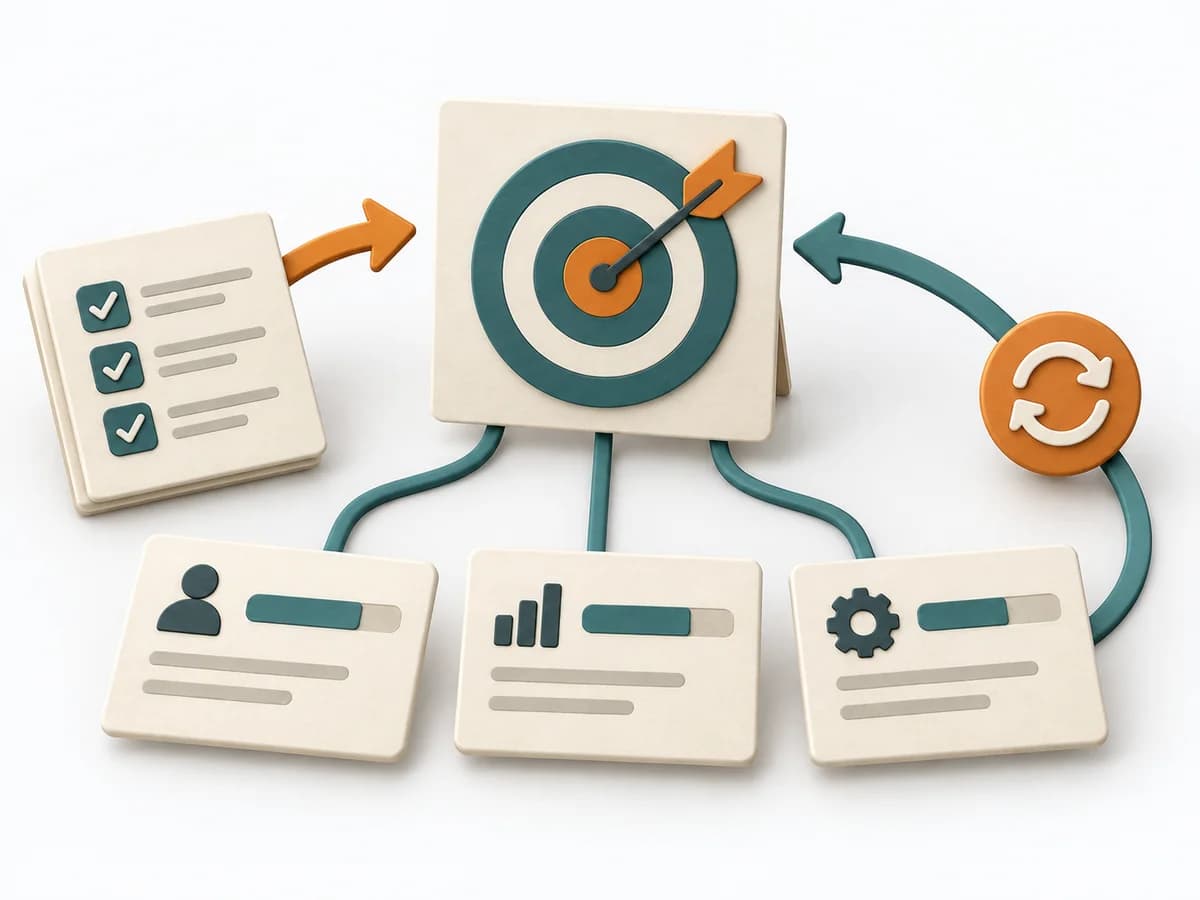
Instead of GIST Planning, choose OKRs when goal alignment and measurable results matter more than a continuous pipeline of ideas and tasks.
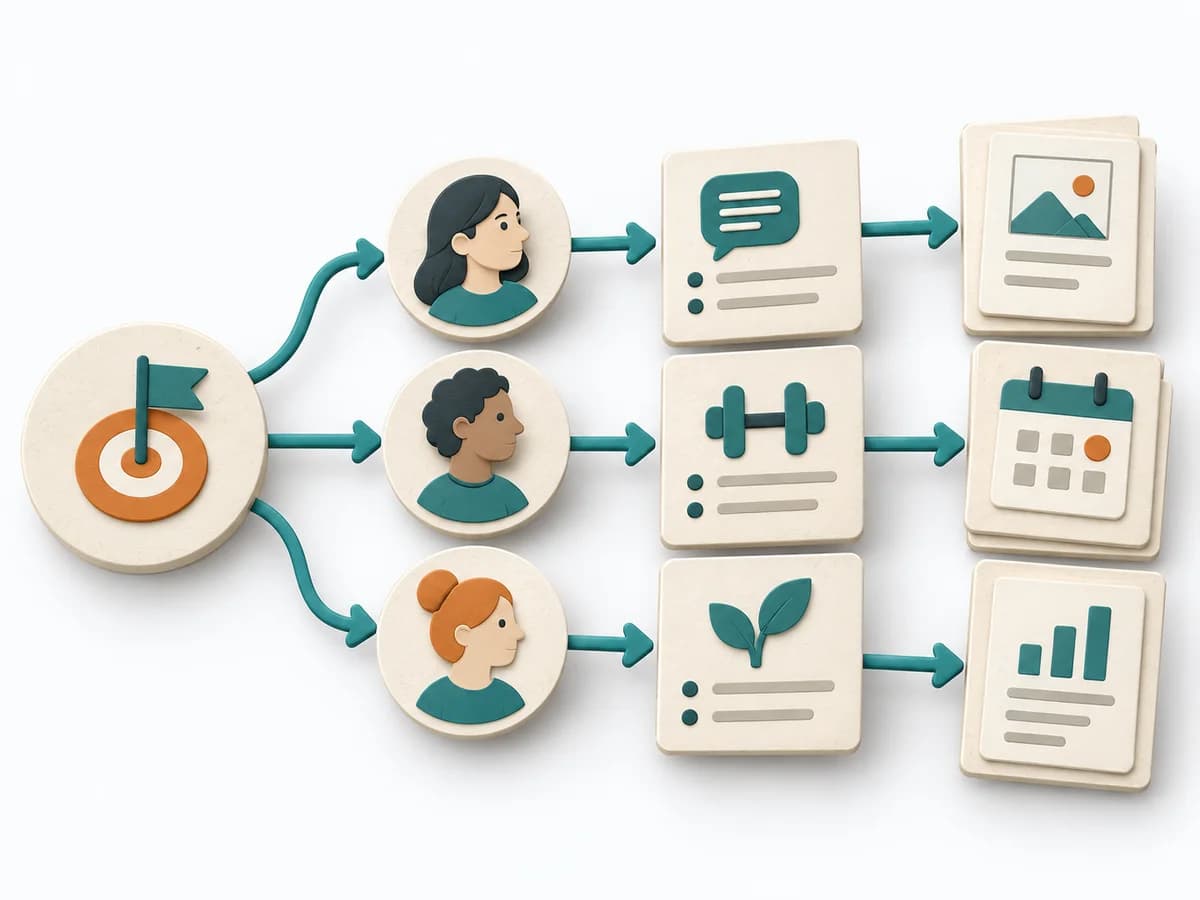
Converts goals into actors, behavior changes, and delivery options, showing which steps have leverage.
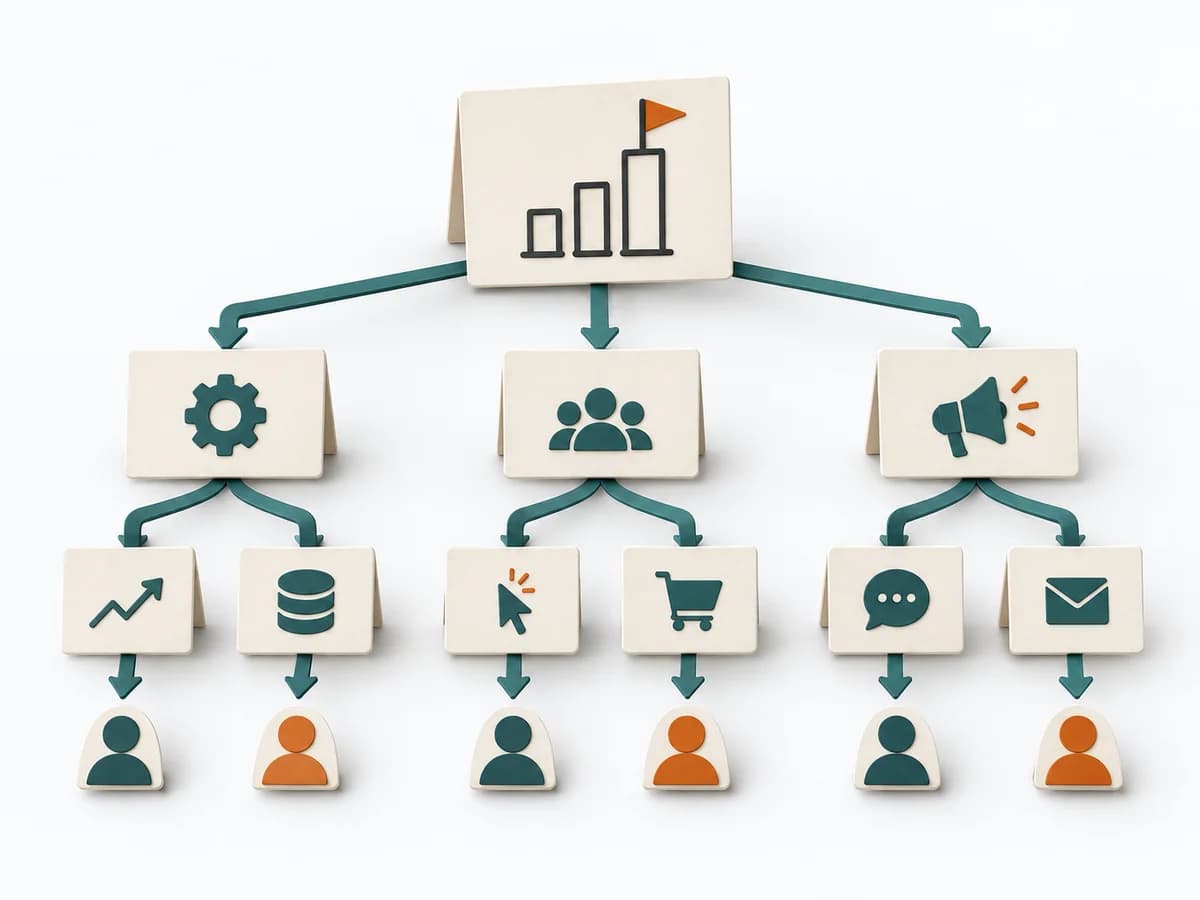
Moves target group, value, goals, and priorities toward a concrete result through "define the top metric", "describe the main driver of the top metric", and "set the review cadence".

Links data, insights, beliefs, and bets so strategy and product decisions become traceable and reviewable.
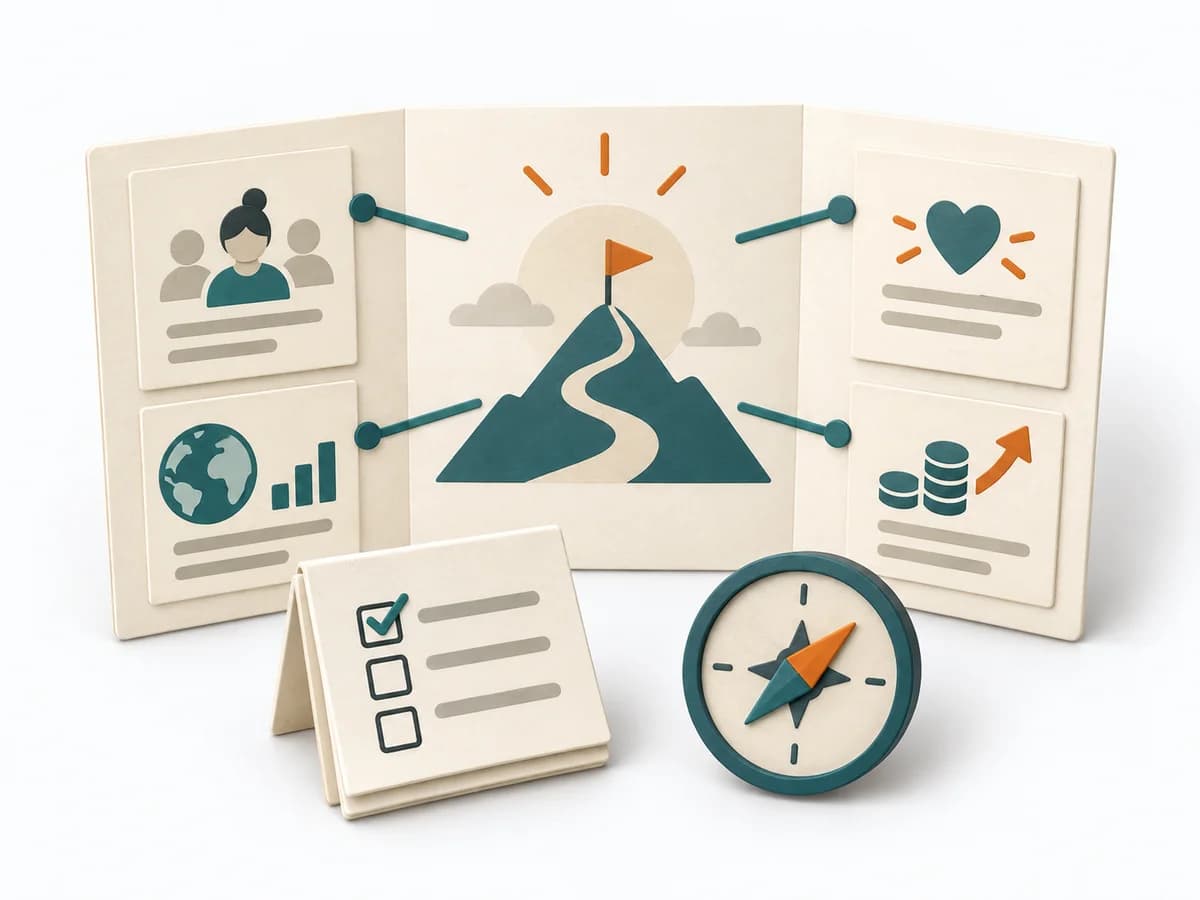
Vision, target group, needs, value, and business goals fit onto one board that exposes assumptions for validation.
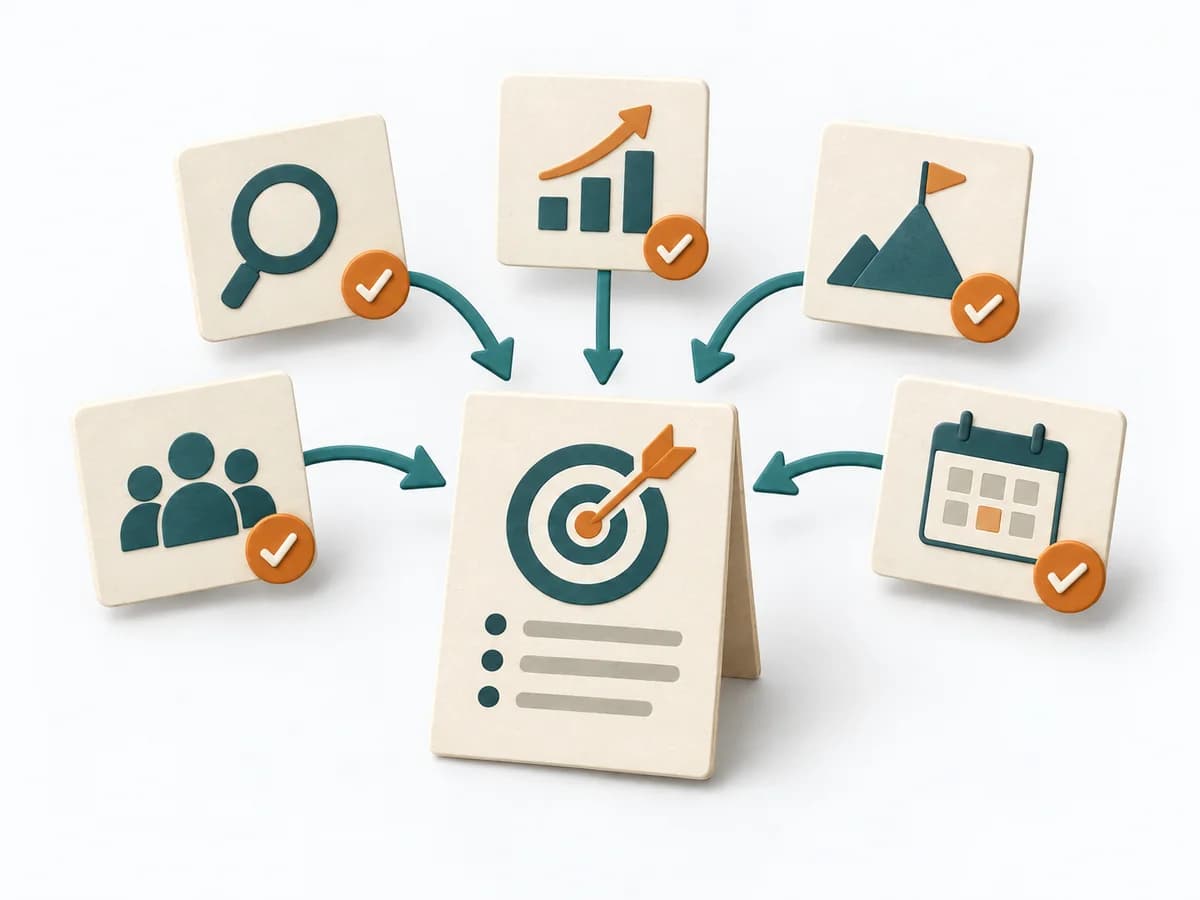
Formulates goals precisely enough that measure, relevance, and deadline together form a clear basis for steering.