


Purpose
A Future Reality Tree shows how desired actions are meant to lead to a better system state. The method checks whether a path of change holds together logically before time flows into implementation.
Systems Thinking Mapping tool
Tests a planned change against desired effects and exposes side effects, assumptions, and weak points.
Klare Verbesserungen werden als Ausgangspunkt für Wirkungsketten in die Zukunft genutzt. Zwischenzustände, mögliche Nebenwirkungen und notwendige Verstärkungen ergänzen den Pfad, bis er als überprüfbare Logik von Intervention zu Ergebnis lesbar ist.
Will the proposed injection causally produce desired effects, and which negative branches need protection before implementation?
The steps form one complete method run.
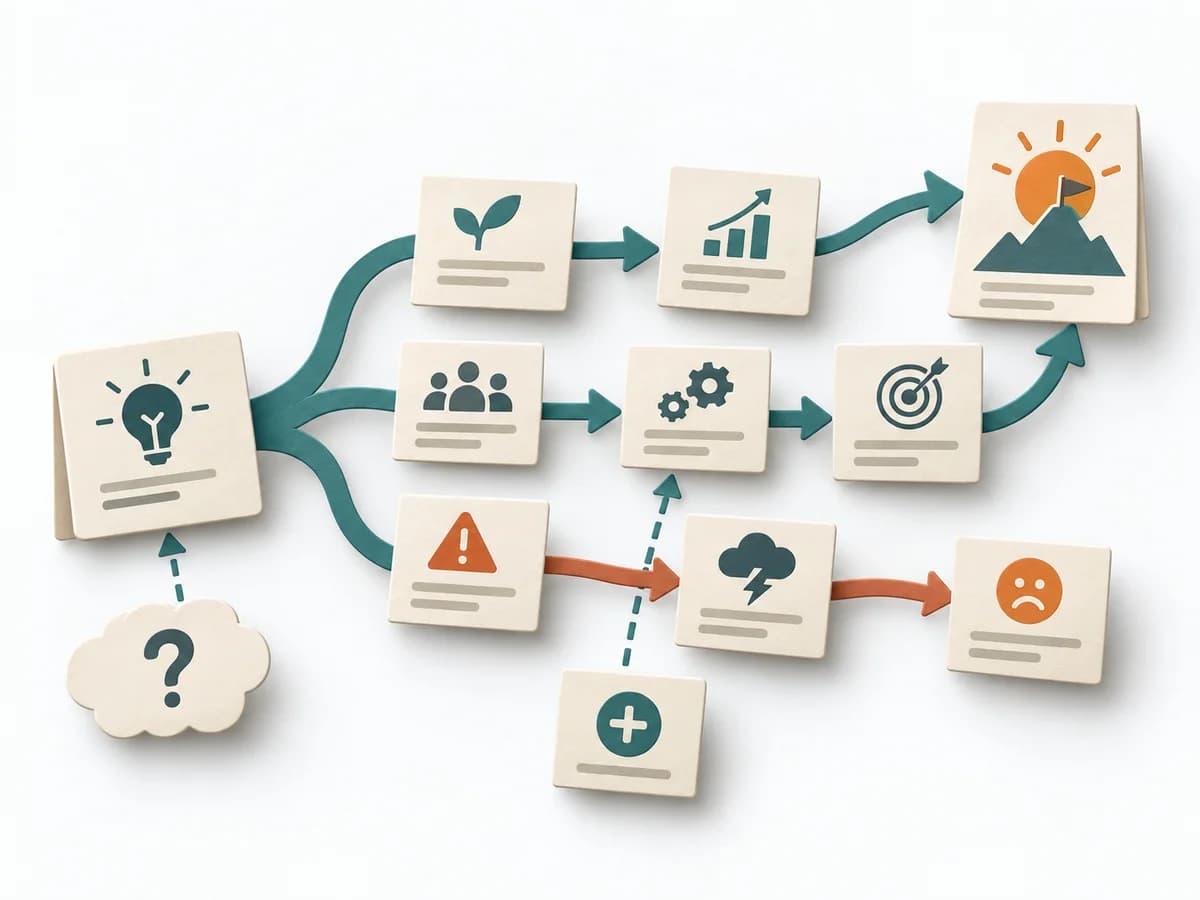
Outcomes
Translate UDEs into concrete Desired Effects with observable success.
Injection
Enter injection as a mechanism with validity boundary.
Logic
Build intermediate effects from injection to DEs with required conditions.
Side effects
Develop negative branches from affected perspectives and assess probability/severity.
Protect
Add injections and recheck the complete tree for sufficiency and conflicts.
Add new evidence at review and version decisions with the prior state.
Ein Future Reality Tree zeigt, wie gewünschte Maßnahmen zu einem besseren Systemzustand führen sollen. Die Methode prüft, ob ein Veränderungspfad logisch zusammenhängt, bevor Zeit in Umsetzung fließt.
Future Reality Tree with injection, intermediate effects, DEs, checked sufficiency, and treated negative branches.
Fictional example
Fictional values show the actual method fields.
Translate UDEs into concrete Desired Effects with observable success.
DE1 p80 wait <12; DE2 warehouse load without peaks; DE3 emergencies retain access.
Enter injection as a mechanism with validity boundary.
Capacity-visible express windows without a separate emergency rule.
Build intermediate effects from injection to DEs with required conditions.
Visible capacity + slot rule → realistic booking → fewer peaks → DE1/DE2.
Develop negative branches from affected perspectives and assess probability/severity.
Reserved windows → fewer free express places → emergency risk, unless emergency slot exists.
Add injections and recheck the complete tree for sufficiency and conflicts.
Emergency slot plus release rule preserves DE3; owner and measure set before pilot.
All values are fictional.
Provide one clear injection and affected UDEs; set system boundary and horizon.
A Future Reality Tree shows how desired actions are meant to lead to a better system state. The method checks whether a path of change holds together logically before time flows into implementation.
Clear improvements serve as the starting point for chains of effect projected into the future. Intermediate states, possible side effects, and necessary reinforcements complete the path until it reads as verifiable logic from intervention to outcome.
The Future Reality Tree works forward from planned interventions to expected effects. Every link explains why a measure should trigger a specific effect. At the same time, negative branches are sought, meaning undesirable side effects of the solution. That makes the solution not only attractive but also logically checked and less risky.
Start with a few clear injections and test every chain of effects as a team. Ask actively about side effects, missing prerequisites, and reinforcing logic. Do not record negative branches as rejection of the solution, but as a design hint for a better implementation.
The method guide walks execution through 5 phases, timing, 5 pitfalls, and clear stop criteria.
Open method guideYour perspective
Your feedback helps shape the next improvements to methodatlas.
Set subject, evidence, roles, flow, and review.
To be confirmed
To be confirmed
Complete run Time: 120–240 minutes plus domain review.
Complete this worksheet on paper or in your own document during the work.
Translate UDEs into concrete Desired Effects with observable success.
...
Enter injection as a mechanism with validity boundary.
...
Build intermediate effects from injection to DEs with required conditions.
...
Develop negative branches from affected perspectives and assess probability/severity.
...
Add injections and recheck the complete tree for sufficiency and conflicts.
...
The blank worksheet contains prompts only.
Reference · original teaching example
Expected artifact: Desired effects
Translate UDEs into concrete Desired Effects with observable success.
Entry:
...
Expected artifact: Starting injection
Enter injection as a mechanism with validity boundary.
Entry:
...
Expected artifact: Causal tree
Build intermediate effects from injection to DEs with required conditions.
Entry:
...
Expected artifact: Negative branches
Develop negative branches from affected perspectives and assess probability/severity.
Entry:
...
Expected artifact: Reviewed FRT
Add injections and recheck the complete tree for sufficiency and conflicts.
Entry:
...
...
Method guide: https://methodatlas.meierhoff-systems.de/en/methods/future-reality-tree/run-sheet
Fitting alternatives with decision guidance, followed by other related methods.

Instead of Future Reality Tree, choose Pre-Mortem when you want to play through risks in advance before they become truly costly in the project.

Instead of Future Reality Tree, choose Scenario Planning when several plausible futures should be compared side by side and a single target state is not enough.

Moves from current problems through core conflicts and future logic to a viable path through a bottleneck.
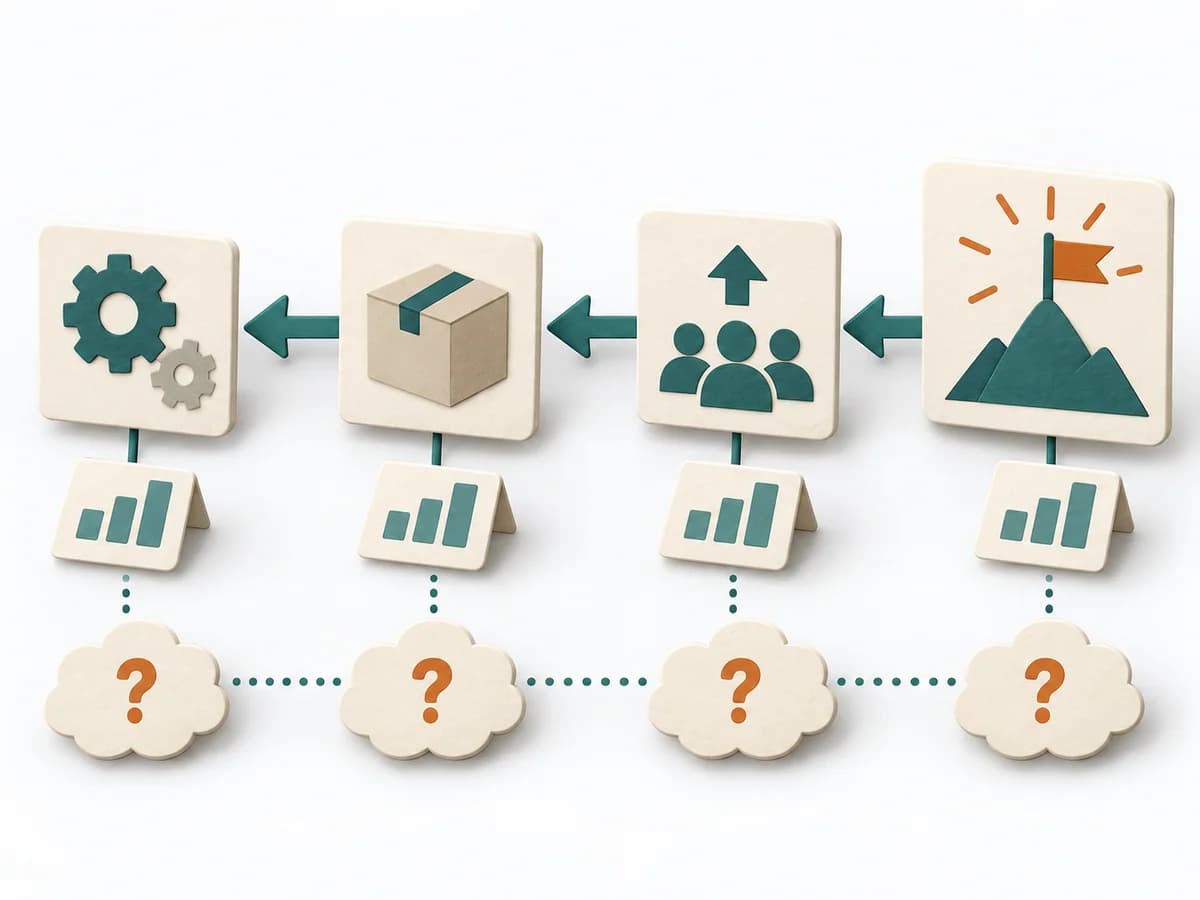
Clarifies connections, patterns, and leverage points by articulating long-term impact, working backward from outcomes, and defining measurement points and risks.

Moves relationships, patterns, and leverage toward a concrete result through "introduce the twelve leverage points", "collect planned actions", and "formulate a strategy across multiple levers".

Arranges components, relationships, and flows into a system picture that exposes dependencies and levers.