Purpose
Theory of Change translates a desired impact into a traceable chain of change. It makes assumptions, intermediate goals, and measurement points visible before a program is rolled out at scale.
Systems Thinking Planning tool
Explains which changes contribute to the intended impact and how that contribution is assessed.
A Theory of Change explains how an initiative is expected to contribute to long-term impact through necessary intermediate changes. It makes causal assumptions, context and measurement visible.
Which changes must occur for our initiative to contribute to the intended impact?
Impact goal
Define population, measurable long-term change and horizon.
Work backwards
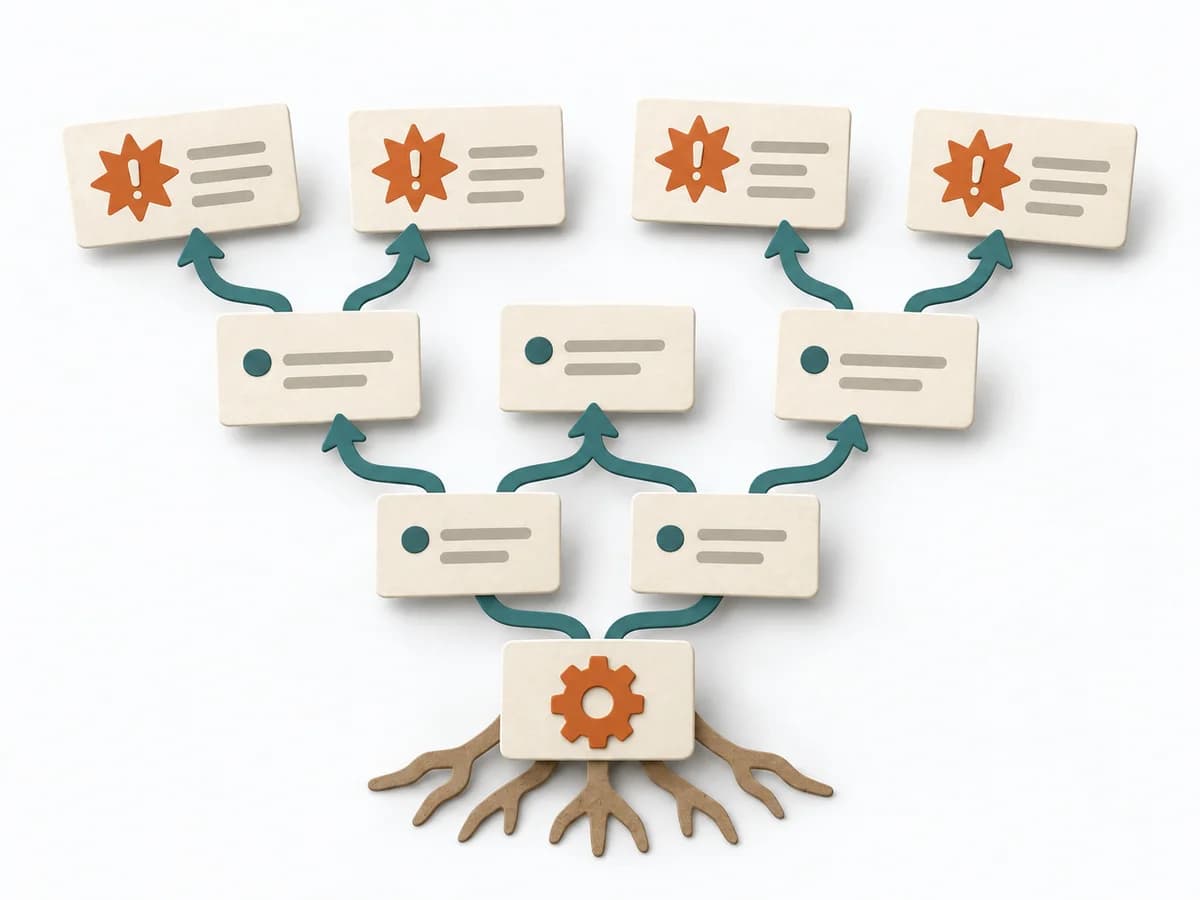
Work backwards from the goal to necessary early and intermediate changes.
Assumptions
Record mechanisms, contextual assumptions and evidence for each link.
Interventions
Link interventions to the changes they should produce.
Measurement
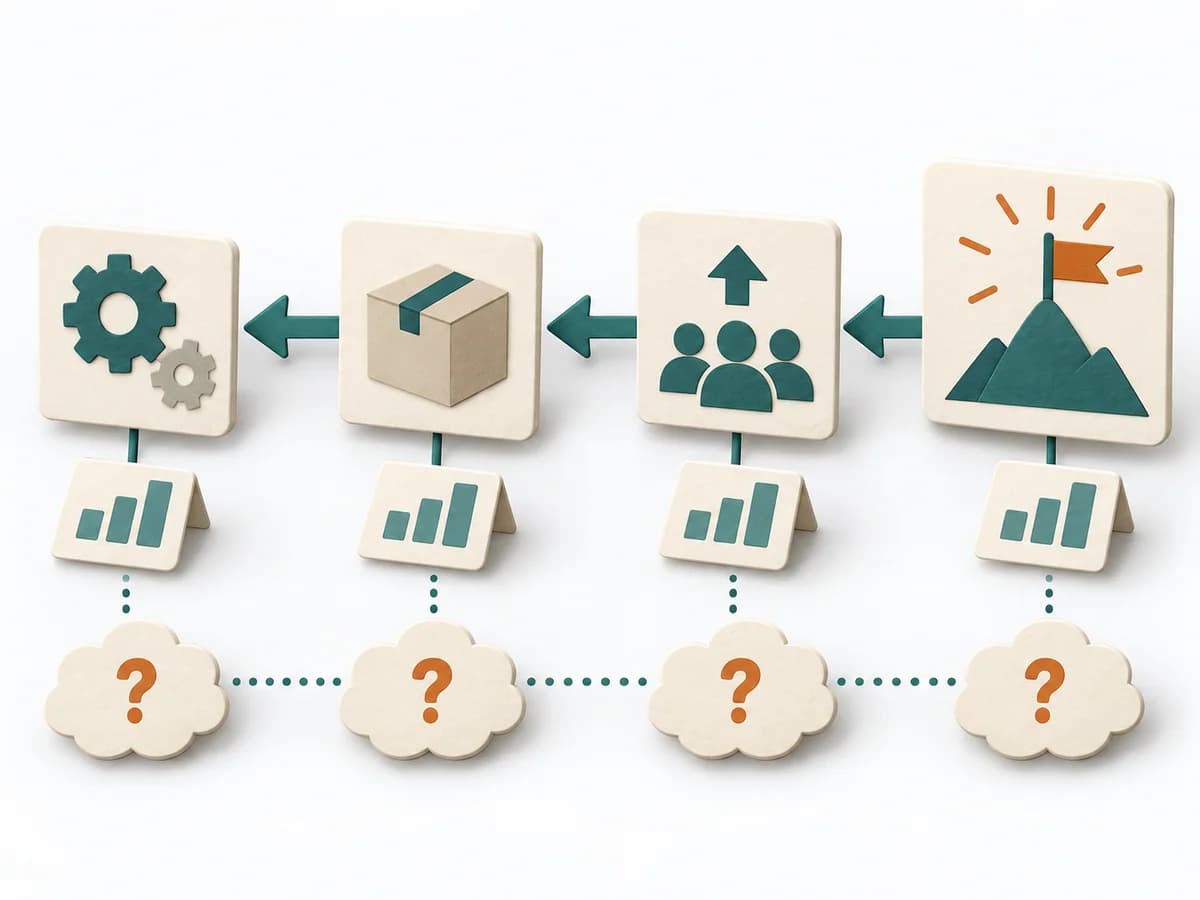
Set indicators with baseline, target, timing and data source.
When evidence changes, revise the affected causal link, assumption and intervention together.
For programmes with several outcome levels and stakeholders, especially before choosing interventions or evaluation.
Outcome pathway with preconditions, assumptions, interventions and testable indicators.
The measurement and learning plan contains a short causal narrative and distinguishes the initiative’s contribution from alternative explanations in evaluation.
Fictional example
A Theory of Change explains how an initiative is expected to contribute to long-term impact through necessary intermediate changes. It makes causal assumptions, context and measurement visible.
For whom should what change by when? Which contribution is within our influence?
Fictional: A neighbourhood programme aims to enable more independent online public-service transactions after twelve months. Target: 60% complete a defined task unaided; baseline still needs measurement.
Which early and intermediate changes are necessary? Record links with conditions and rationale.
Guided practice → confident performance in a practice case → independent everyday application → more unaided transactions. Device access AND understandable real forms are additional preconditions.
Which mechanisms, contextual factors and alternative explanations apply? What is evidenced or open?
Open: practice transfers to real forms. Risk: forms change. Check through later voluntary real tasks; separately record external portal improvements.
Which activity delivers which immediate output and is expected to change which outcome?
Mira organises four guided practice sessions and device lending. Four sessions are outputs; independent task completion is the outcome.
Set indicator, baseline, target, data source, timing, owner and adaptation decision.
Mira measures the share of defined tasks completed unaided before starting and after three and twelve months. Baseline open, twelve-month target 60%. If transfer fails, the team examines task realism and access before adding sessions.
All example details are fictional and illustrate the application.
Agree the population, desired change and time horizon.
Theory of Change translates a desired impact into a traceable chain of change. It makes assumptions, intermediate goals, and measurement points visible before a program is rolled out at scale.
The team starts from the long-term impact and works backward to outcomes, outputs, and activities. Assumptions are named explicitly, and measures are chosen so they test the program's logic. The result is a robust impact model for planning and evaluation.
Theory of Change works because it formulates the path from intervention to impact as a reasoned chain of changes. Good application lays assumptions open, describes intermediate steps cleanly, and does not confuse desired impact with activity. This reveals where the logical path is thin, which prerequisites are tacitly assumed, and where evidence delivers the greatest benefit.
Start from the desired end state and work backward through necessary changes without skipping steps. The sensitive point is where a chain only holds together if a strong unverified assumption is tacitly accepted. Close with a readable chain of impact, the riskiest assumptions, and the signals that let the team observe whether they hold.
The method guide walks execution through 5 phases, timing, 5 pitfalls, and clear stop criteria.
Open method guideYour perspective
Your feedback helps shape the next improvements to methodatlas.
Agree the population, desired change and time horizon.
To be confirmed
To be confirmed
Complete cycle Time: 90–150 minutes for a draft; evidence review and monitoring in later sessions.
Complete this worksheet on paper or in your own document during the work.
For whom should what change by when? Which contribution is within our influence?
...
Which early and intermediate changes are necessary? Record links with conditions and rationale.
...
Which mechanisms, contextual factors and alternative explanations apply? What is evidenced or open?
...
Which activity delivers which immediate output and is expected to change which outcome?
...
Set indicator, baseline, target, data source, timing, owner and adaptation decision.
...
Answer the prompts with your own information. Explicitly mark unknowns and assumptions.
Expected artifact: Impact goal
Does the goal describe a change for people?
Entry:
...
Expected artifact: Outcome pathway
Is a necessary precondition missing?
Entry:
...
Expected artifact: Assumption register
Are assumptions testable and distinct from facts?
Entry:
...
Expected artifact: Intervention plan
Does each intervention have a justified mechanism?
Entry:
...
Expected artifact: Measurement and learning plan
Could a negative finding change the theory?
Entry:
...
...
Method guide: https://methodatlas.meierhoff-systems.de/en/methods/theory-of-change/run-sheet
Fitting alternatives with decision guidance, followed by other related methods.
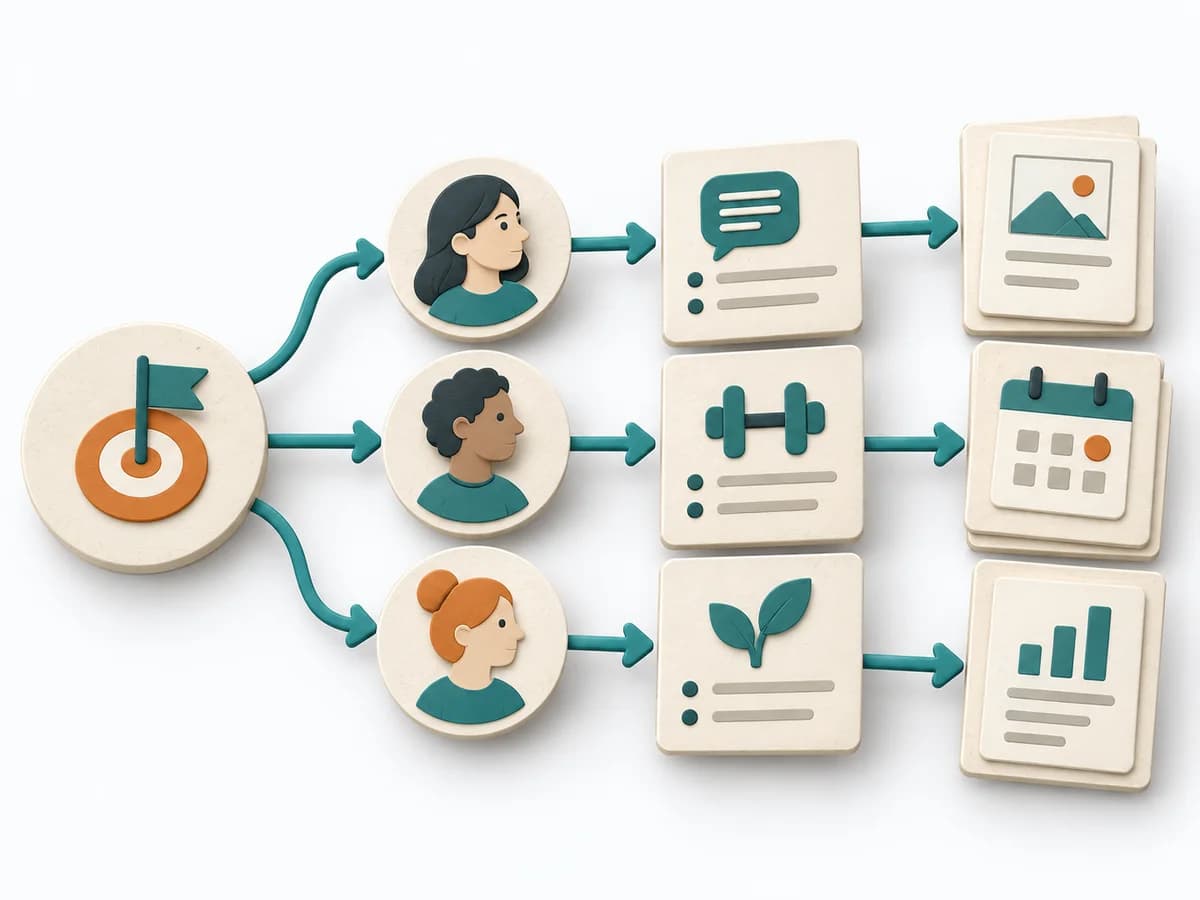
Instead of Theory of Change, choose Impact Mapping when you want to break a product goal down into actors, behavior changes, and features.
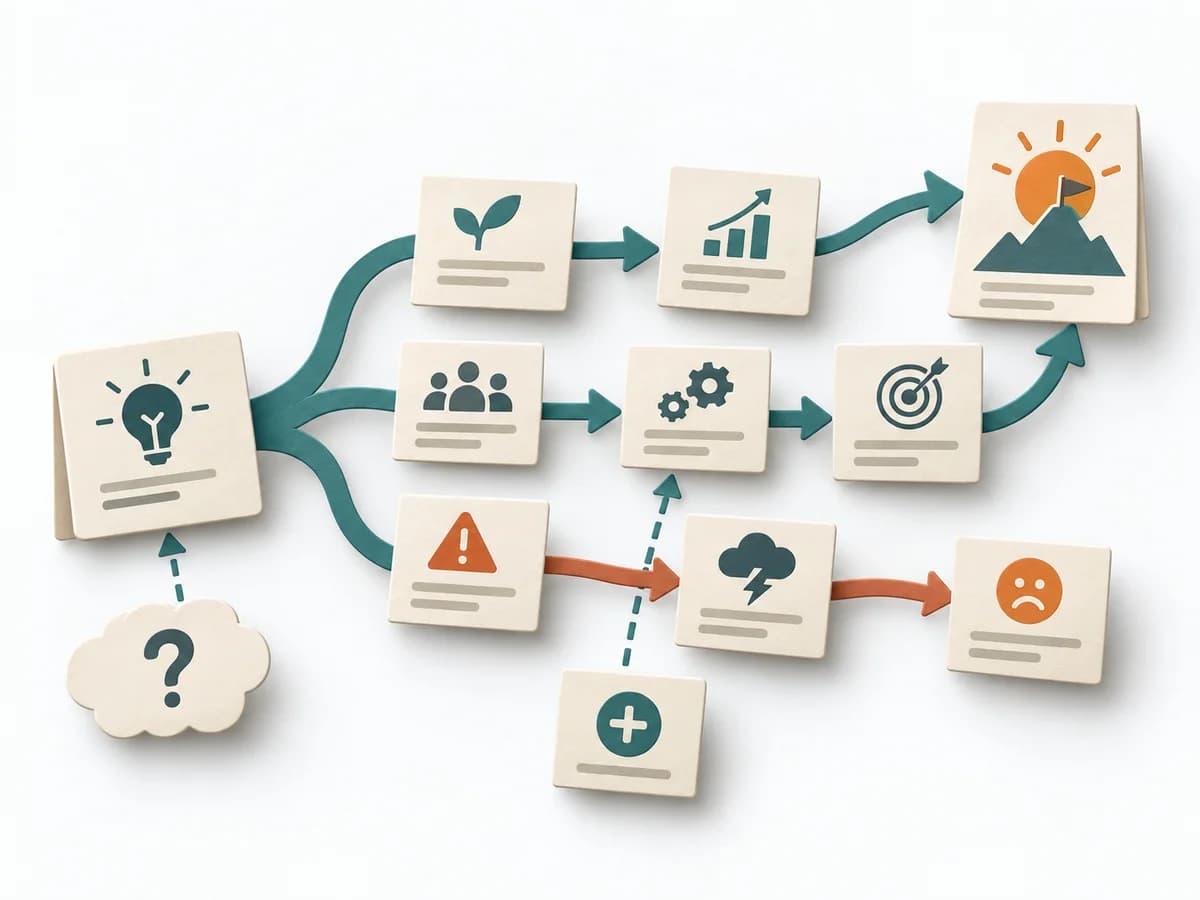
Tests a planned change against desired effects and uncovers side effects, assumptions, and weak points.
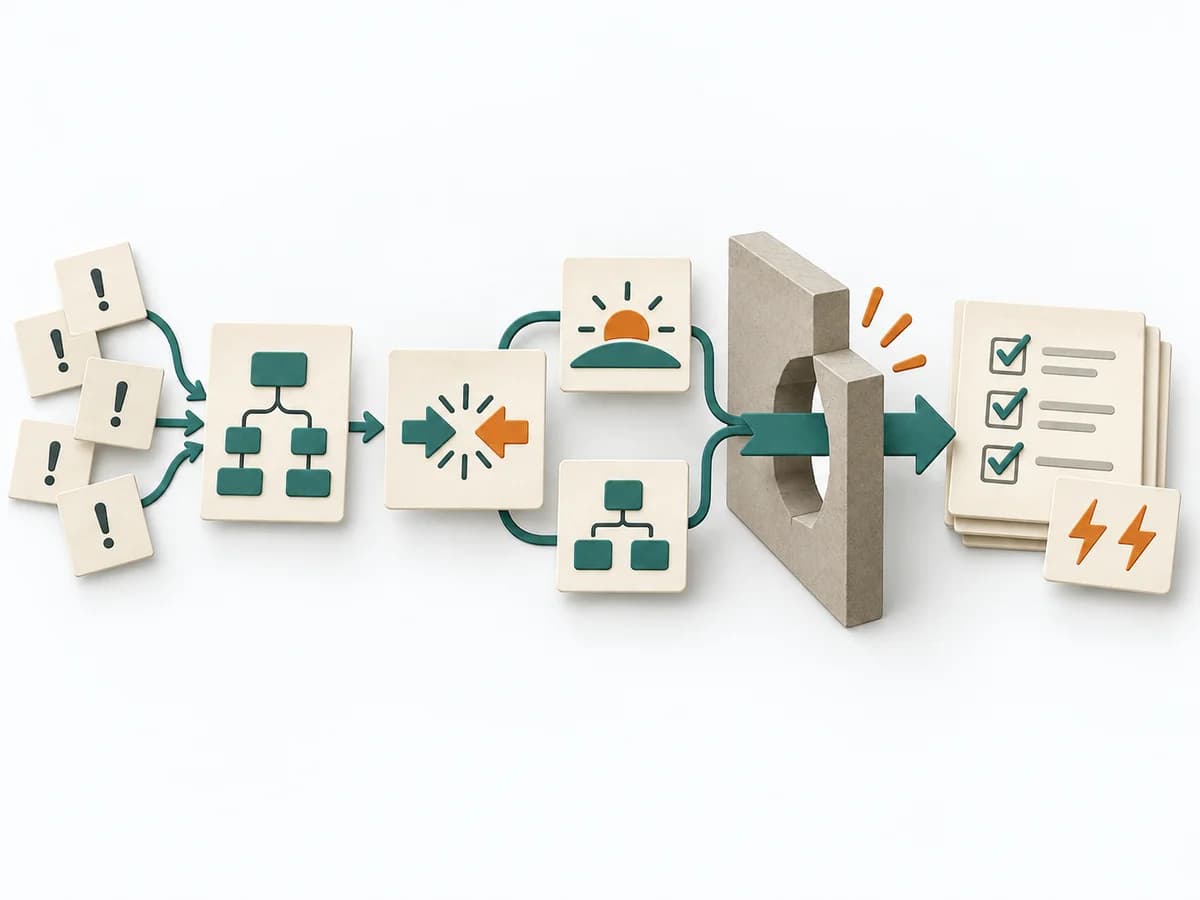
Moves from current problems through core conflicts and future logic to a viable path through a bottleneck.
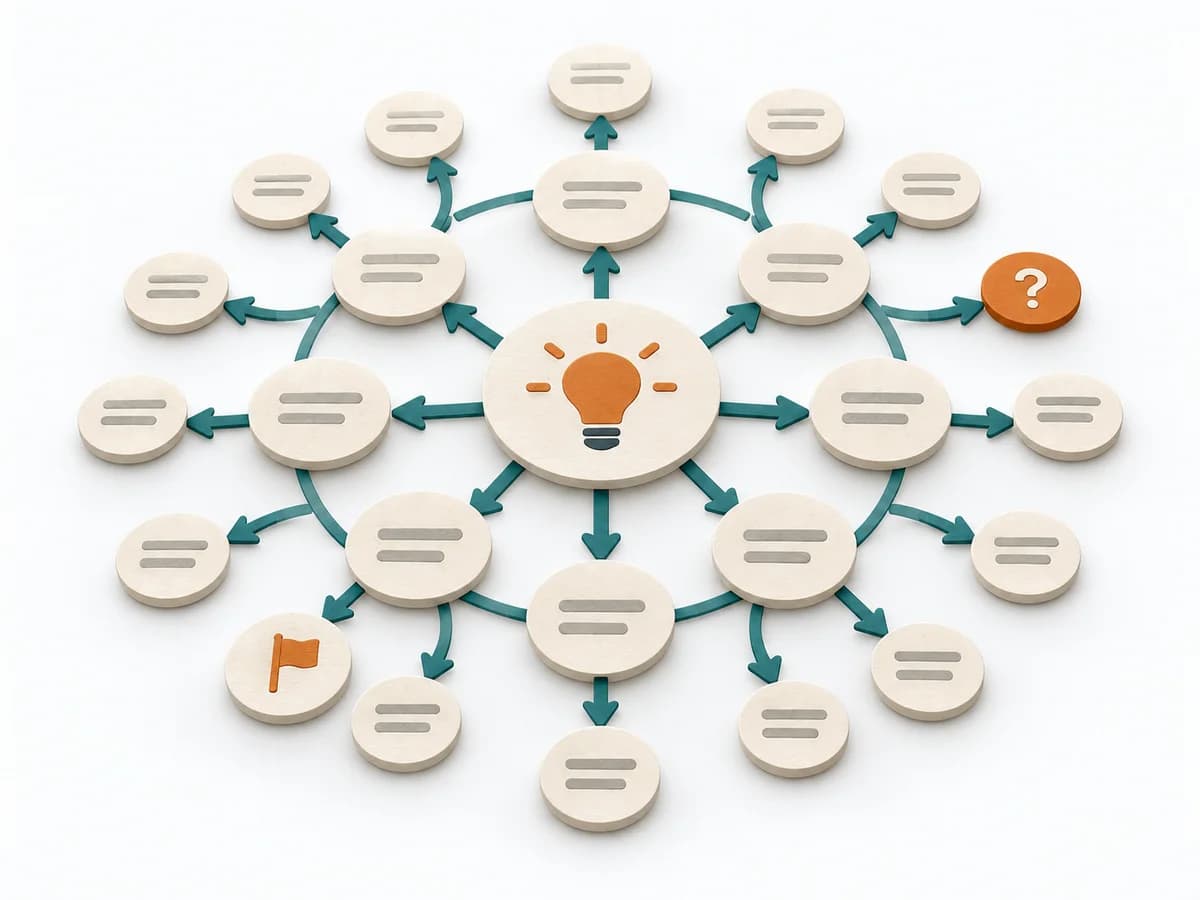
Arranges direct and indirect consequences of a change radially, so future impacts and cascades of consequences become visible.

Moves relationships, patterns, and leverage toward a concrete result through "introduce the twelve leverage points", "collect planned actions", and "formulate a strategy across multiple levers".
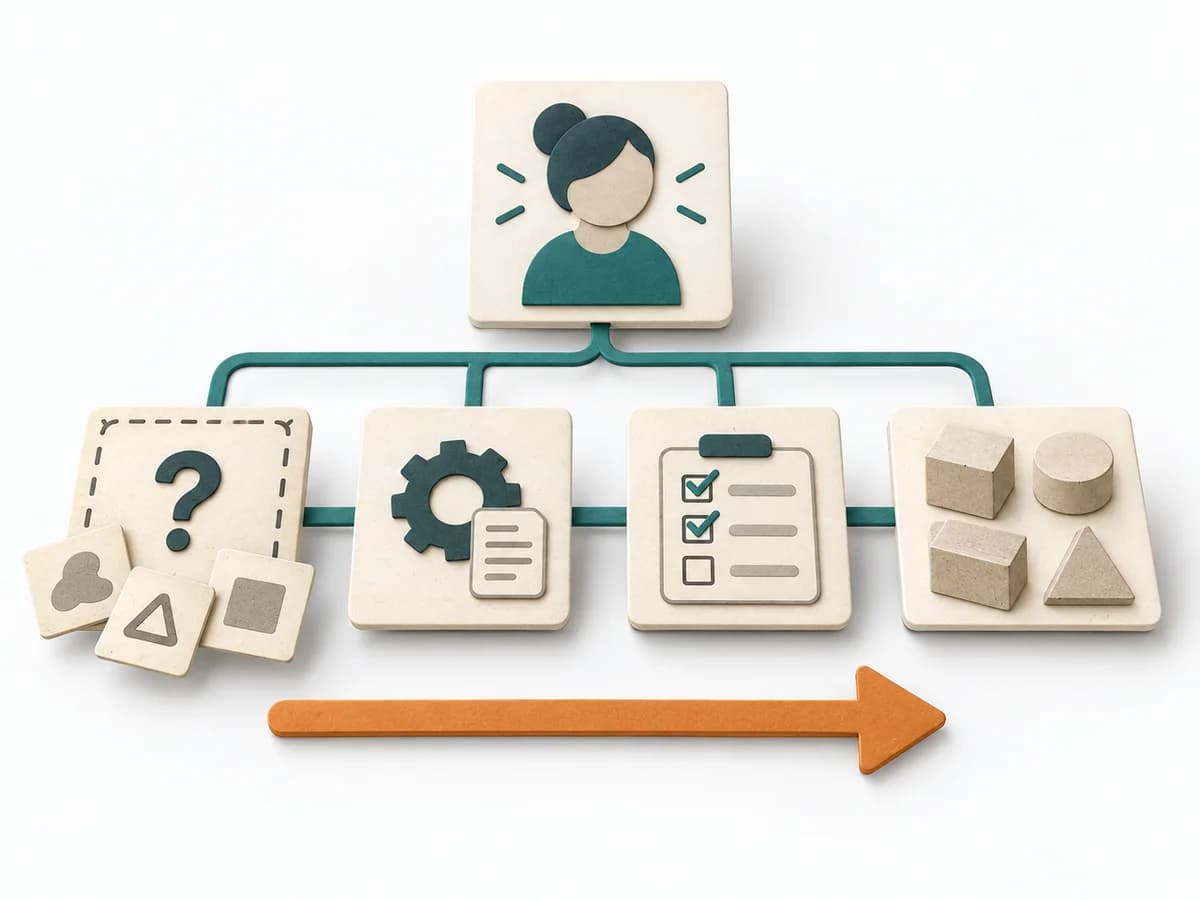
Maps value creation and evolution stages so strategic options, levers, and market movements become legible.