Purpose
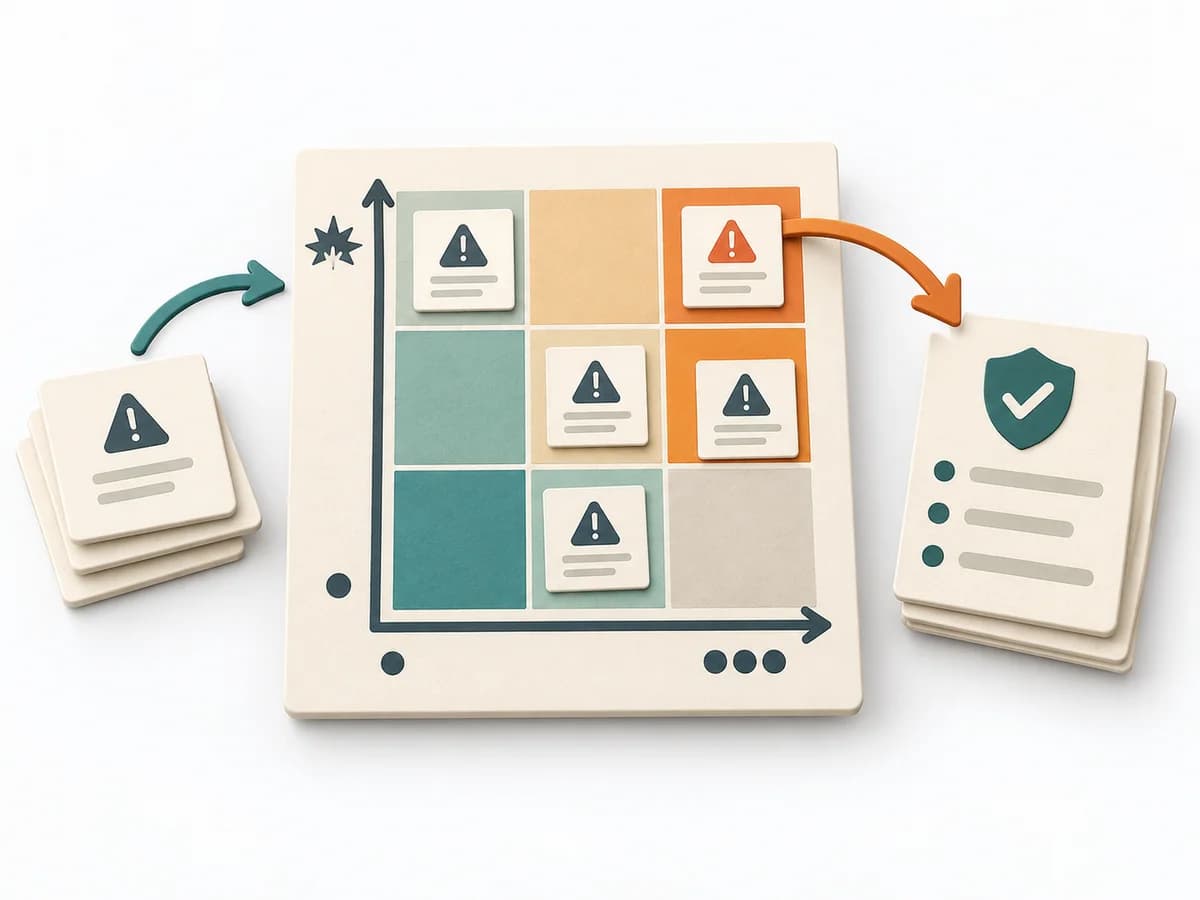
In early initiatives with many uncertainties, planning quickly turns too optimistic. A pre-mortem makes the expected failure visible in advance and sharpens the view of causes, gaps, and countermeasures.
Decision Making Decision method
Anticipates failure and makes prevention testable.
A hypothetical failure makes concrete risks, signals, and fitting mitigations visible.
Which plausible reasons could make this initiative fail at the assumed point, and how will we detect or reduce them?
Plausible failure reasons are assumptions; signals and prevention make them testable.
Frame
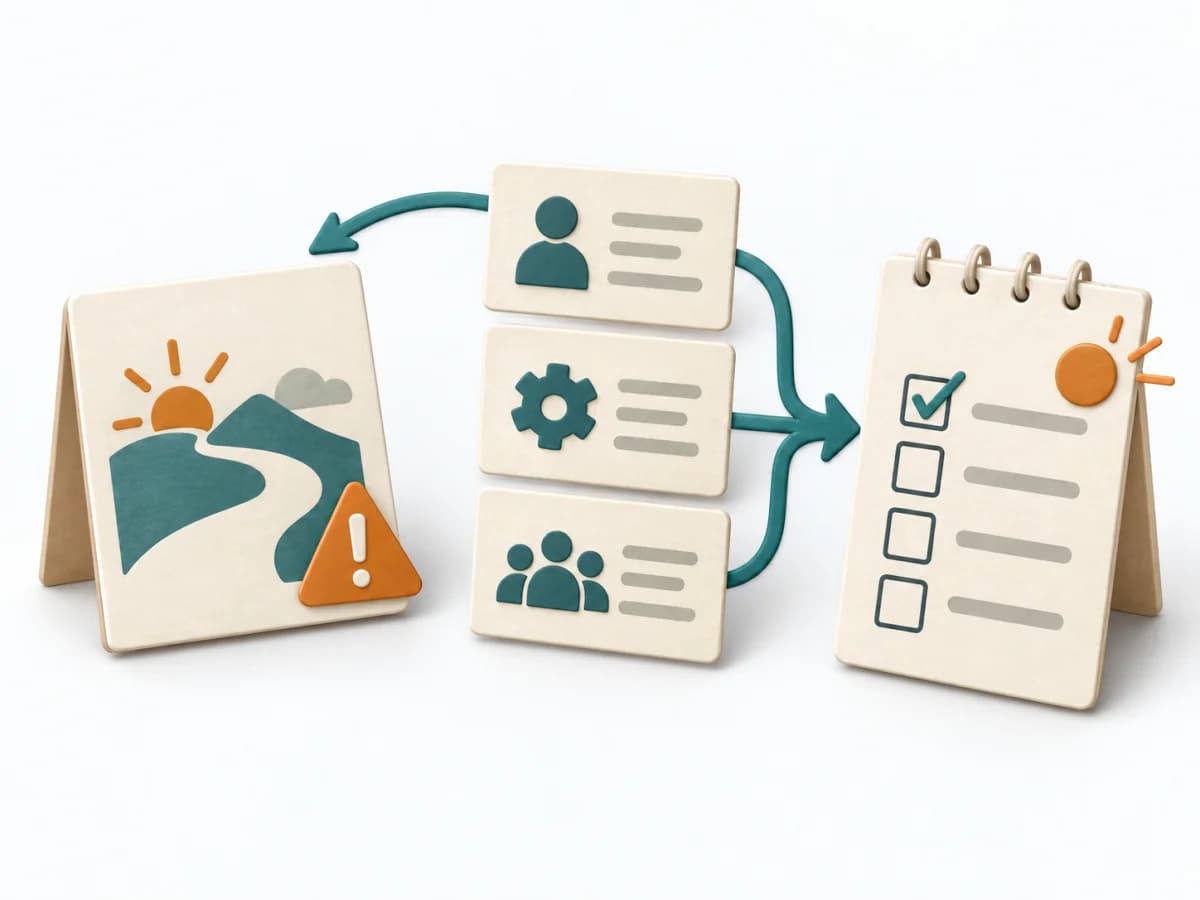
Define the initiative, success, and the assumed failure point.
Assume
Imagine the group after failure and state the hypothetical frame.
Surface
First collect concrete reasons, cascades, and leading signals silently.
Act
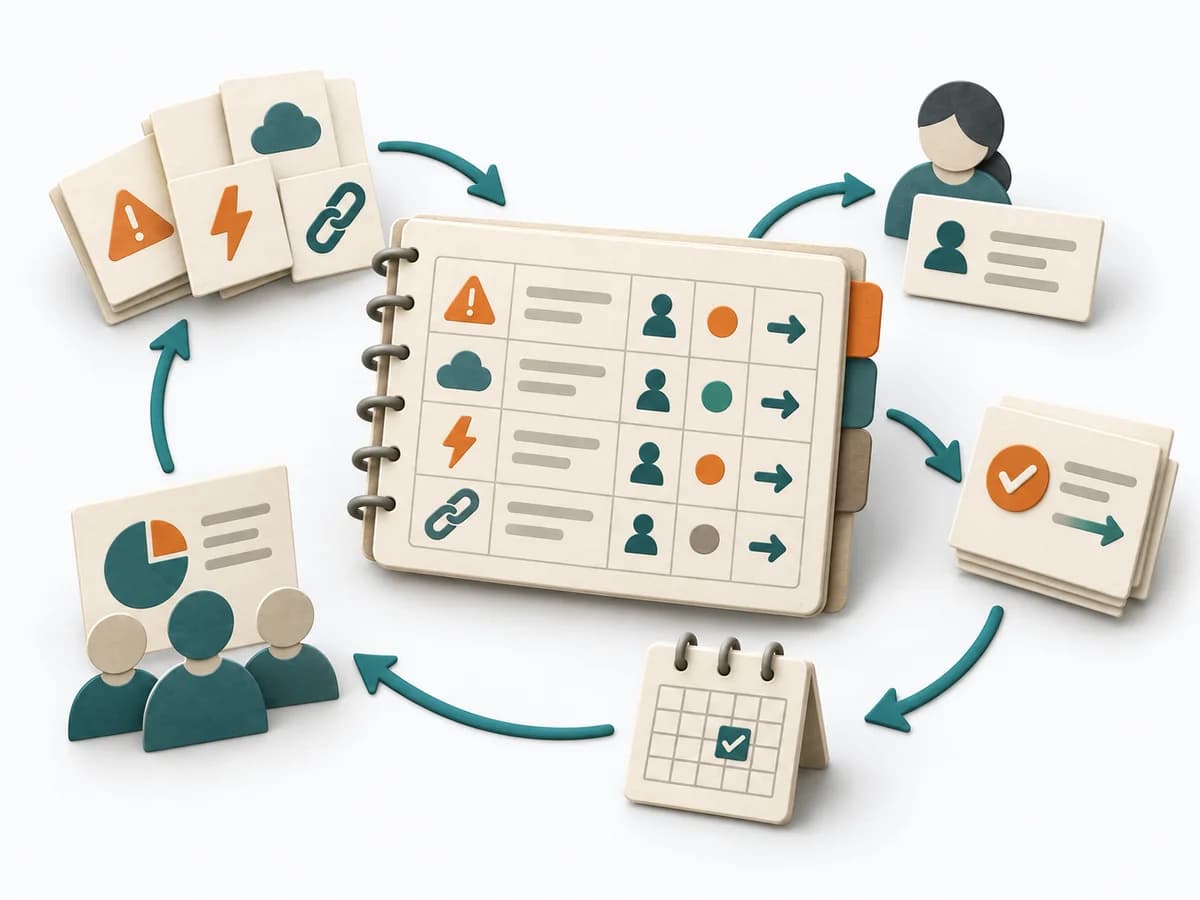
Prioritize actionable risks and link prevention, monitoring, contingency, owner, and review date.
Follow-up
Close by agreeing who observes which signals and by when. Evaluate actual effects after implementation.
Update when new observations, signals, or effects appear.
Use it before an uncertain initiative or decision where the team can act. It is a thought experiment, not a forecast or a demand to invent catastrophe.

Concrete outcomes with an owner, effect signal and agreed review date.
Fictional example
Structured board with a blank workspace and fictional example view.
Fictional: late inventory sync
Returns sync late; double bookings increase.
Fictional: two double bookings per week
Leading signal for inconsistent availability.
Fictional: sync spike
Sam checks the sync before the pilot; manual confirmation is the contingency.
Start with a clear period, goal, and safe frame.
In early initiatives with many uncertainties, planning quickly turns too optimistic. A pre-mortem makes the expected failure visible in advance and sharpens the view of causes, gaps, and countermeasures.
The scenario is mentally moved to the point where it has already gone wrong. From there, plausible triggers, chain effects, and blind spots are named until the most sensitive assumptions become visible. The resulting risk logic then guides deliberately into prevention, monitoring, and contingency paths.
A Pre-Mortem breaks up optimistic group dynamics by mentally viewing an initiative after it has failed. The method is strong when it produces concrete triggers, dependencies, and early warning signals, not just general worries. The benefit lies in manageable precaution: risks are described so that prevention, monitoring, or deliberate acceptance become possible.
Set the real decision, the most critical bet, and the boundary of the initiative in advance. The turning point comes when general fears turn into concrete early indicators and preventive measures. Close with responsibilities for safeguarding, monitoring, and escalation, not just a long list of risks.
The method guide walks execution through 5 phases, timing, 5 pitfalls, and clear stop criteria.
Open method guideYour perspective
Your feedback helps shape the next improvements to methodatlas.
Plan purpose, period, and the next work block.
To be confirmed
To be confirmed
Whole flow Time: In one session
Complete this worksheet on paper or in your own document during the work.
...
...
...
Stay hypothetical ...
How to Run Pre-Mortem Exercises | Atlassian
Expected artifact: Context, goal, horizon
Context, goal, horizon
Entry:
...
Expected artifact: Hypothetical outcome
Hypothetical outcome
Entry:
...
Expected artifact: Risks and signals
Risks and signals
Entry:
...
Expected artifact: Mitigation plan
Mitigation plan
Entry:
...
Expected artifact: Agreed follow-up plan
Action · owner · review date · signal · record location
Entry:
...
...
Method guide: https://methodatlas.meierhoff-systems.de/en/methods/pre-mortem/run-sheet
Fitting alternatives with decision guidance, followed by other related methods.

Instead of Pre-Mortem, when you want to work with multiple future scenarios instead of planning only one course of events.

Clarifies options, criteria, and risks by framing the initiative or decision, collecting implicit assumptions, and planning tests or research.
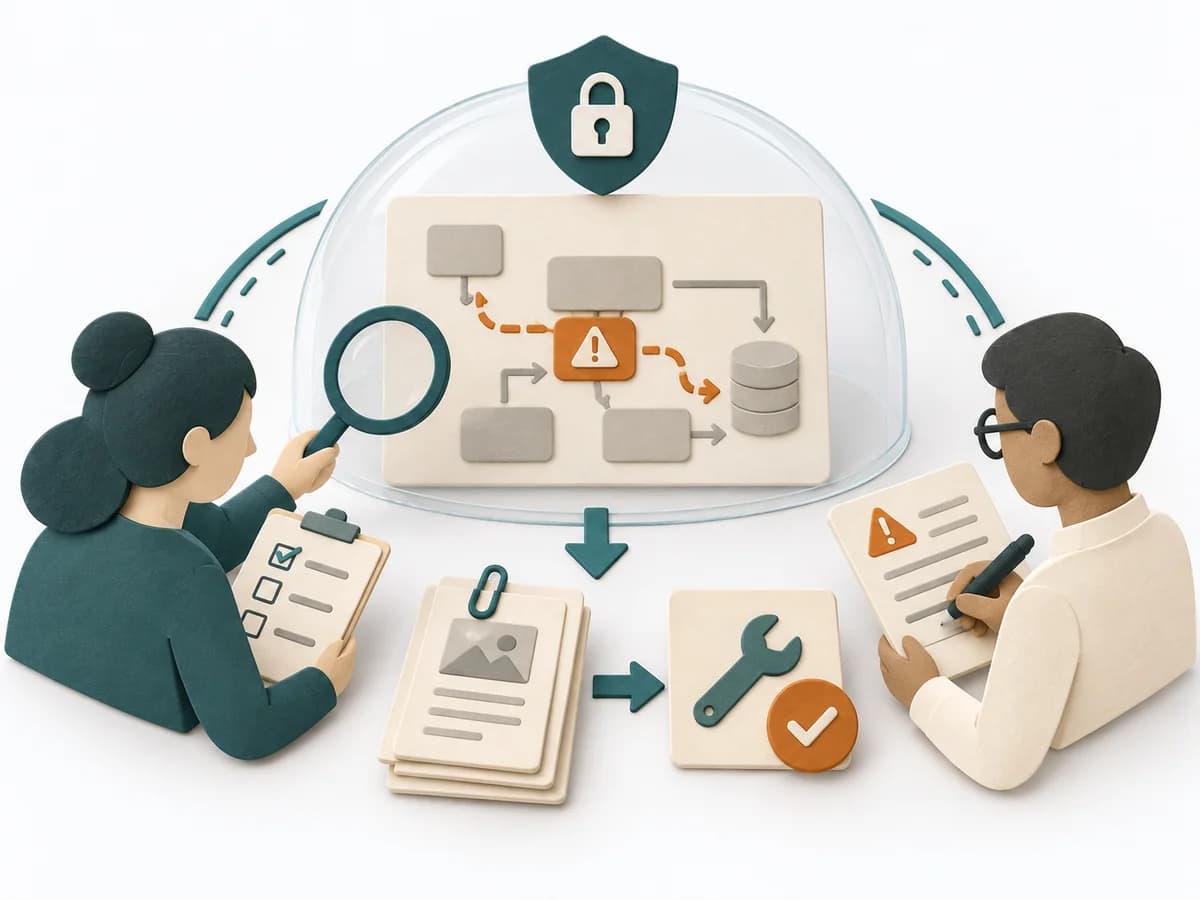
Examines an initiative from an opposing perspective, collects weaknesses, and derives prioritized mitigations.
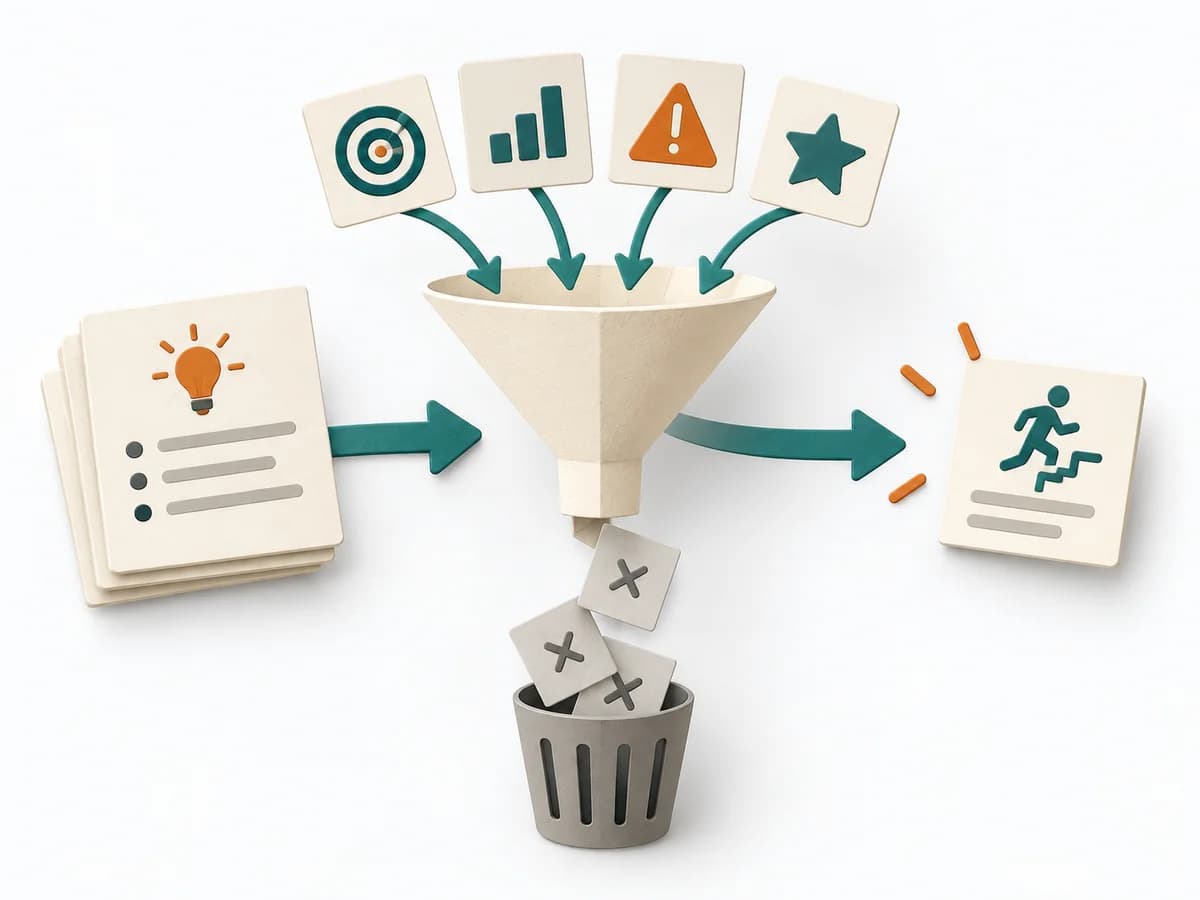
Sharpens a planned step through impact, success criteria, and risks down to the smallest sensible move.
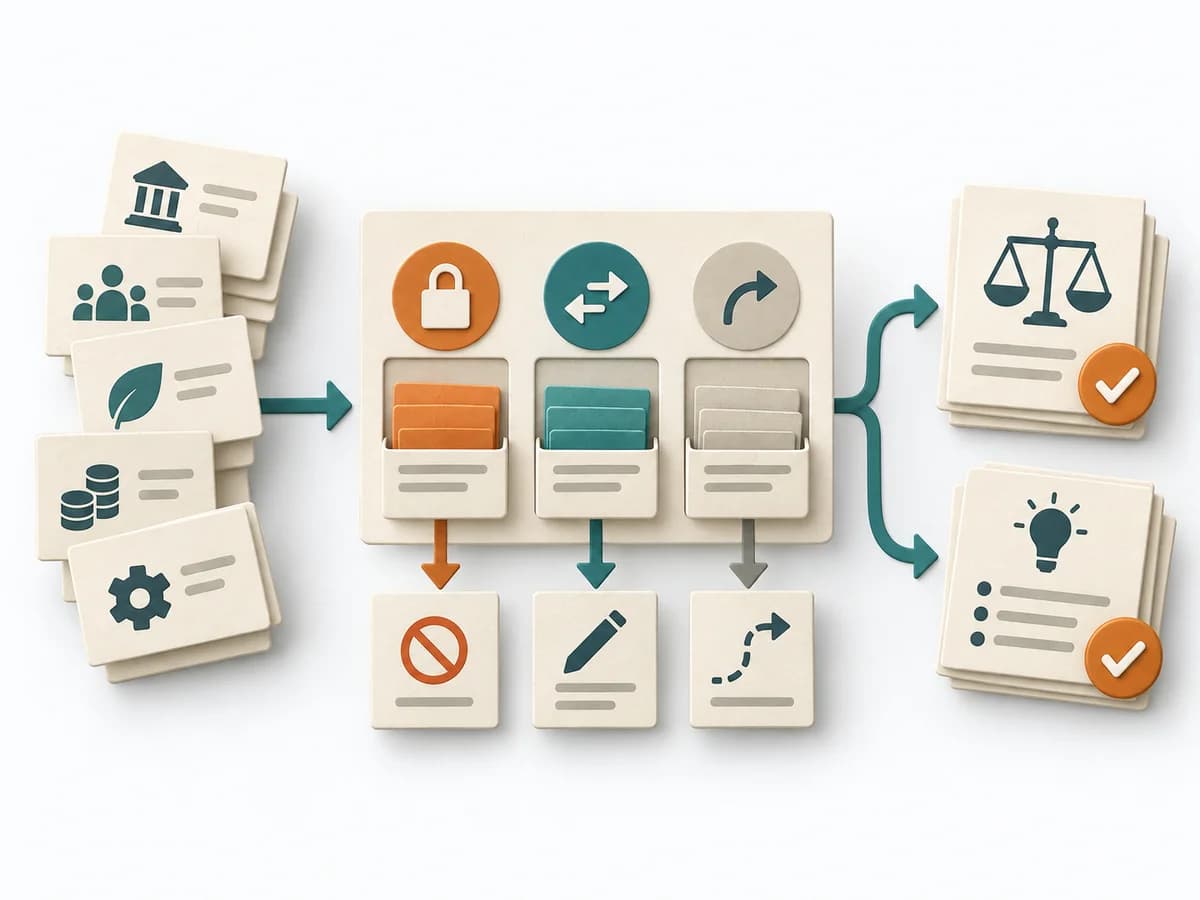
Makes hard and soft boundaries visible and turns them into decision rules and option impact notes.
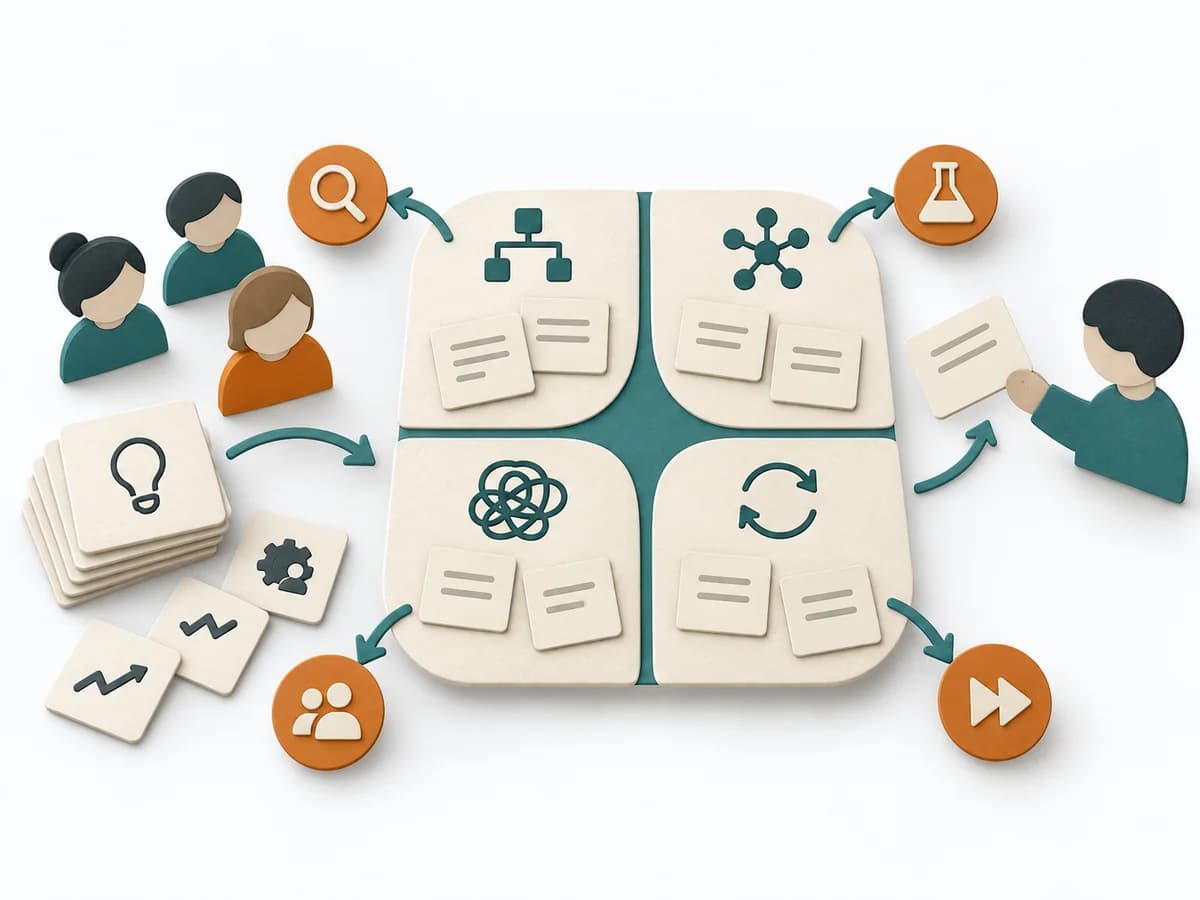
Sorts cases into the fitting domain and derives actions that match the degree of clarity or complexity.