Purpose
The method makes visible why two seemingly incompatible demands arise and which assumption must be tested to resolve the conflict.
Systems Thinking Mapping tool
The Evaporating Cloud makes an apparently irreconcilable goal conflict workable through needs and assumptions.
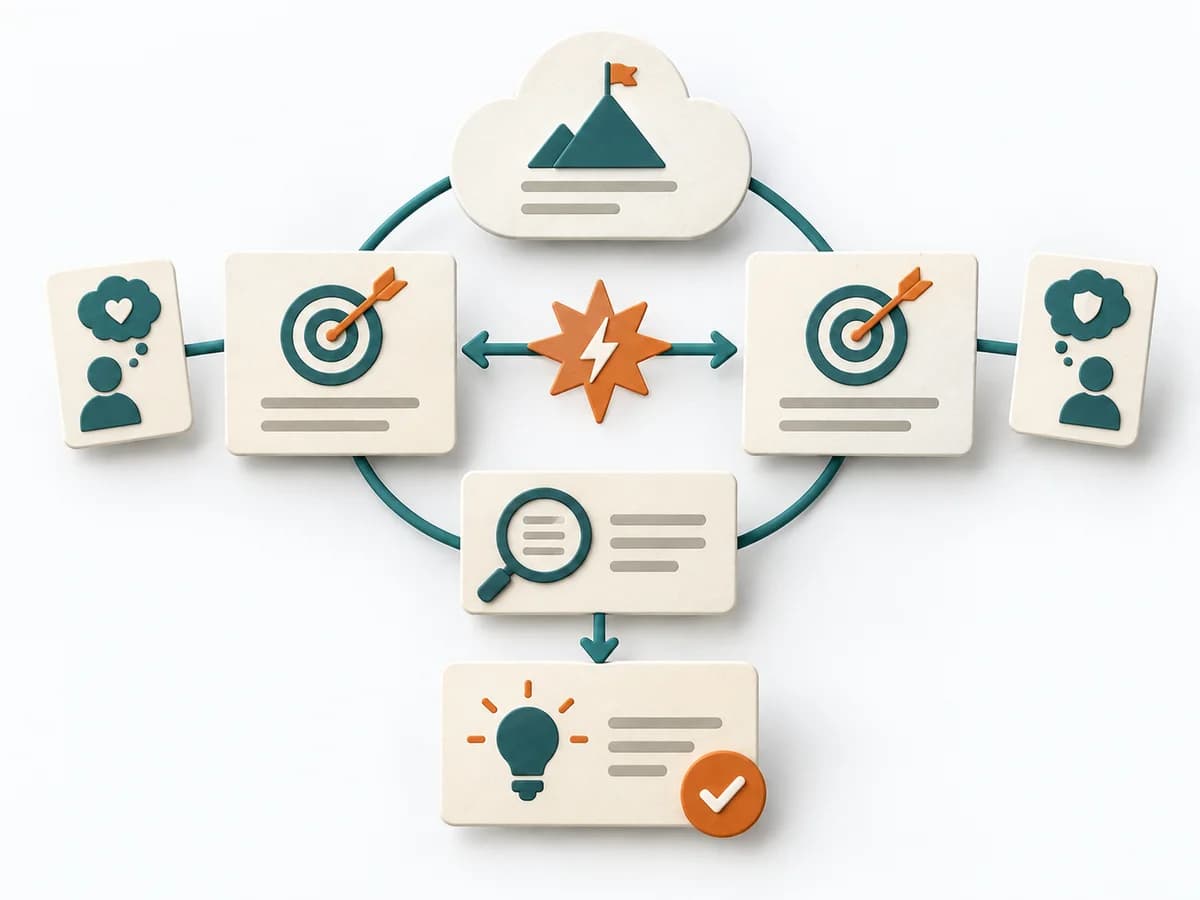
The Evaporating Cloud makes both goals, their underlying needs, and a shared higher purpose explicit. Tested assumptions support an injection that resolves the conflict rather than merely compensating for it.
Which assumption sustains the apparent conflict between two legitimate needs, and which injection resolves it without compromise?
The steps form one complete method run.
Demands
State opposing prerequisites D and D′ as concrete actions.
Needs
Identify necessary need B or C beneath each demand.
Goal
Phrase shared goal A for which both needs are necessary.
Assumptions
Make assumptions behind every necessity and conflict arrow explicit and challenge them.
Injection
Develop an injection that breaks an assumption and preserves B and C; test side effects.
Add new evidence at review and version decisions with the prior state.
Die Evaporating Cloud macht einen scheinbaren Zielkonflikt sichtbar und bearbeitbar. Sie liest Konflikte als Struktur aus Bedürfnissen und Annahmen, nicht als reinen Positionskampf.
Evaporating Cloud with A/B/C/D/D′, tested necessity assumptions, and justified injection.
Fictional example
Fictional values show the actual method fields.
State opposing prerequisites D and D′ as concrete actions.
D promise express anytime; D′ promise express only in capacity windows.
Identify necessary need B or C beneath each demand.
B fast customer commitment; C stable safe warehouse flow.
Phrase shared goal A for which both needs are necessary.
A reliable pickup with strong customer retention.
Make assumptions behind every necessity and conflict arrow explicit and challenge them.
D needed for B because customers only see anytime as fast; data show accepted 30-minute windows.
Develop an injection that breaks an assumption and preserves B and C; test side effects.
Capacity-visible express windows plus emergency slot provide fast commitment and stable flow.
All values are fictional.
Choose one recurring conflict with two apparently incompatible actions and a shared goal.
The method makes visible why two seemingly incompatible demands arise and which assumption must be tested to resolve the conflict.
First the two opposing demands are written down. Then their underlying needs and the shared objective are added. After that, the team checks the assumptions between the objective, the needs, and the demands and looks for a solution that disproves at least one of those assumptions.
The Evaporating Cloud treats conflicts not as a struggle between people, but as a logical tension between needs. Two incompatible wants are translated into the underlying needs and a shared objective. Then the assumptions that keep the conflict stable are tested. If an assumption is broken or changed, the conflict can disappear without a bad compromise.
Frame both sides fairly and avoid winner-loser language. Work cleanly from wants to needs and test assumptions explicitly. Good facilitation protects psychological safety because conflicts otherwise get personalized quickly.
The method guide walks execution through 5 phases, timing, 5 pitfalls, and clear stop criteria.
Open method guideYour perspective
Your feedback helps shape the next improvements to methodatlas.
Set subject, evidence, roles, flow, and review.
To be confirmed
To be confirmed
Complete run Time: 60–120 minutes per core conflict.
Complete this worksheet on paper or in your own document during the work.
State opposing prerequisites D and D′ as concrete actions.
...
Identify necessary need B or C beneath each demand.
...
Phrase shared goal A for which both needs are necessary.
...
Make assumptions behind every necessity and conflict arrow explicit and challenge them.
...
Develop an injection that breaks an assumption and preserves B and C; test side effects.
...
The blank worksheet contains prompts only.
Reference · original teaching example
Expected artifact: D and D′
State opposing prerequisites D and D′ as concrete actions.
Entry:
...
Expected artifact: B and C
Identify necessary need B or C beneath each demand.
Entry:
...
Expected artifact: Shared goal
Phrase shared goal A for which both needs are necessary.
Entry:
...
Expected artifact: Assumption map
Make assumptions behind every necessity and conflict arrow explicit and challenge them.
Entry:
...
Expected artifact: Win-win injection
Develop an injection that breaks an assumption and preserves B and C; test side effects.
Entry:
...
...
Method guide: https://methodatlas.meierhoff-systems.de/en/methods/evaporating-cloud/run-sheet
Fitting alternatives with decision guidance, followed by other related methods.

Instead of Evaporating Cloud, choose Force Field Analysis when you want to weigh the driving and restraining forces of a change against each other.

Instead of Evaporating Cloud, choose Six Thinking Hats when you want to guide a group through different modes of thinking one after another.
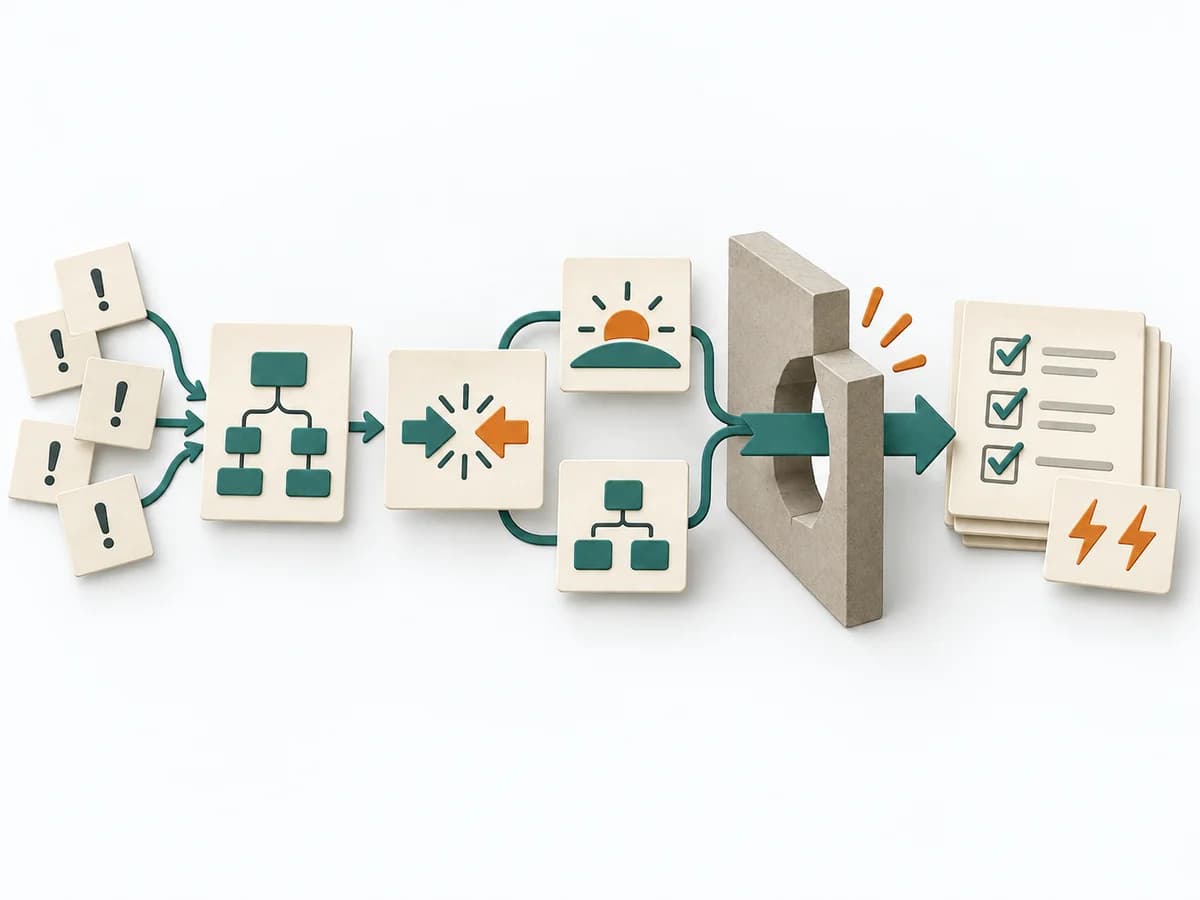
Moves from current problems through core conflicts and future logic to a viable path through a bottleneck.

Sharpens an ambiguous problem situation through perspectives, transformation, and boundaries up to a root definition.
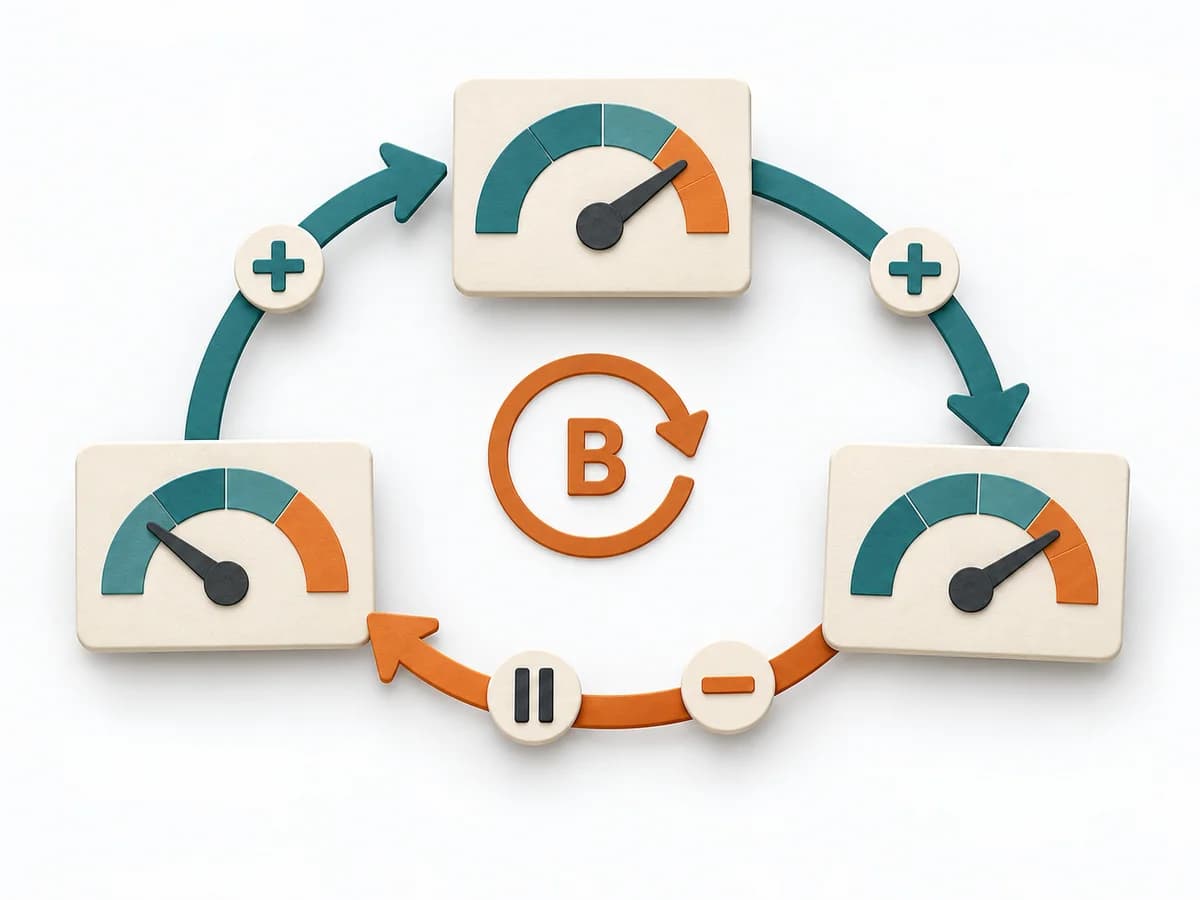
Draws feedback, reinforcement, and balance so patterns, levers, and side effects become understandable.
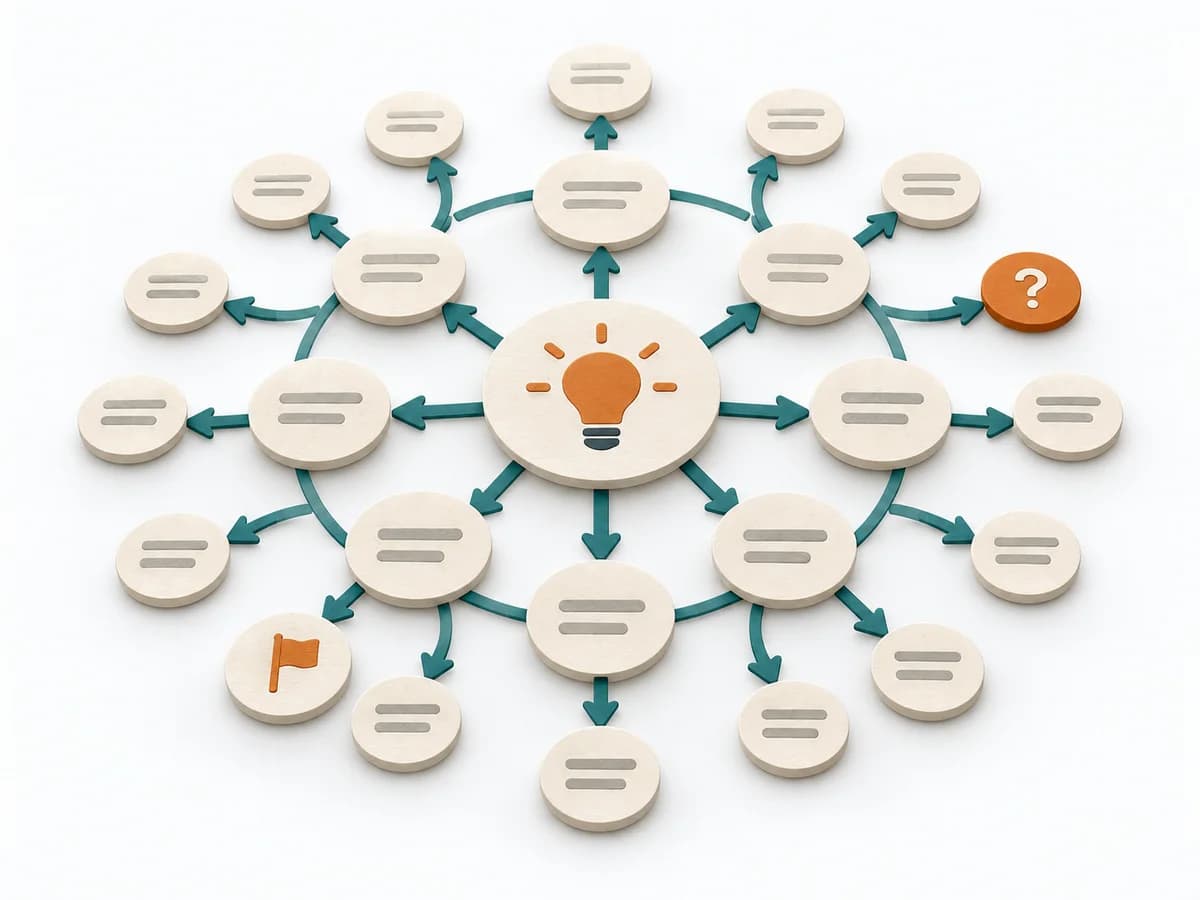
Arranges direct and indirect consequences of a change radially, so future impacts and cascades of consequences become visible.