
Purpose
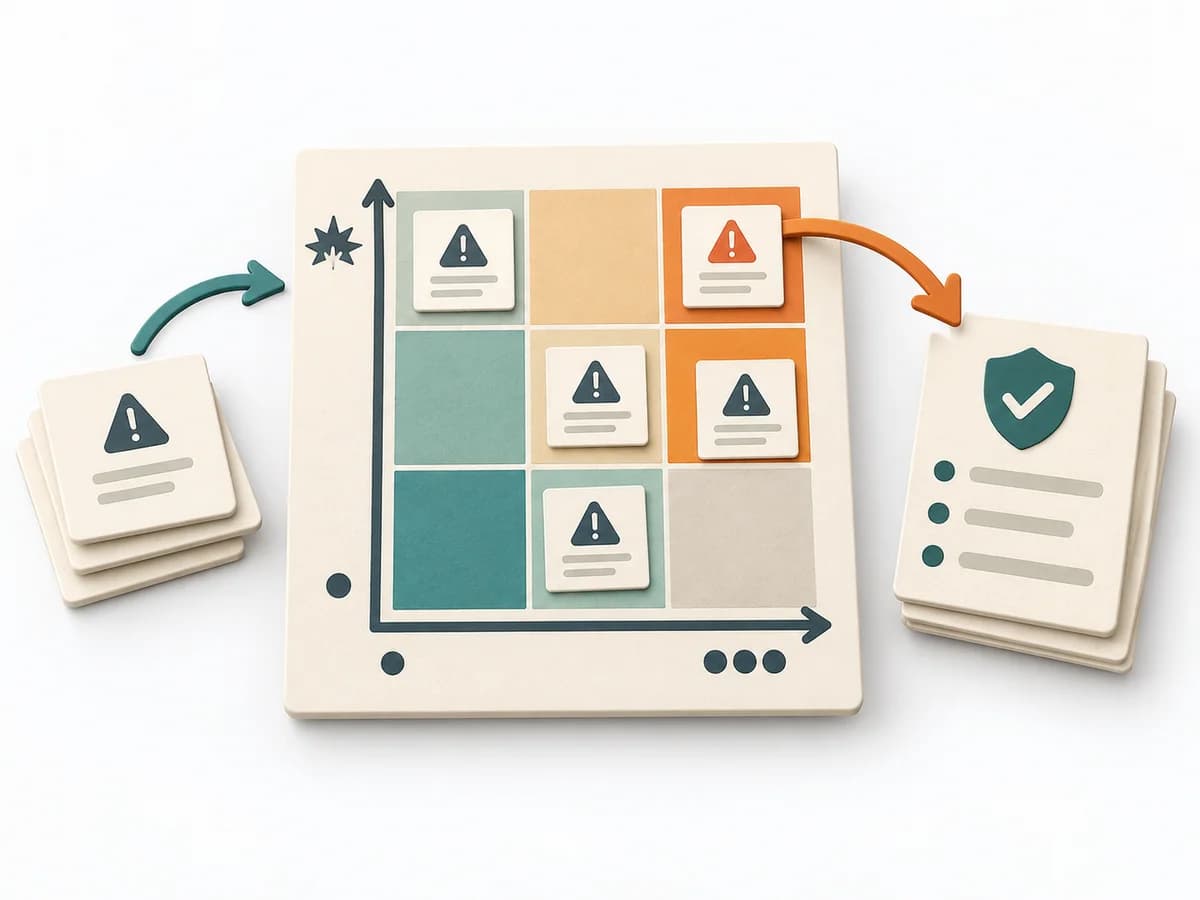
For a process, product, or service with noticeable failure risks, the method assesses possible failure modes in advance. It directs attention to combinations of occurrence, effect, and detectability.
Operations Analysis method
Examines possible failure modes, effects, and causes and prioritizes actions for later effectiveness checks.
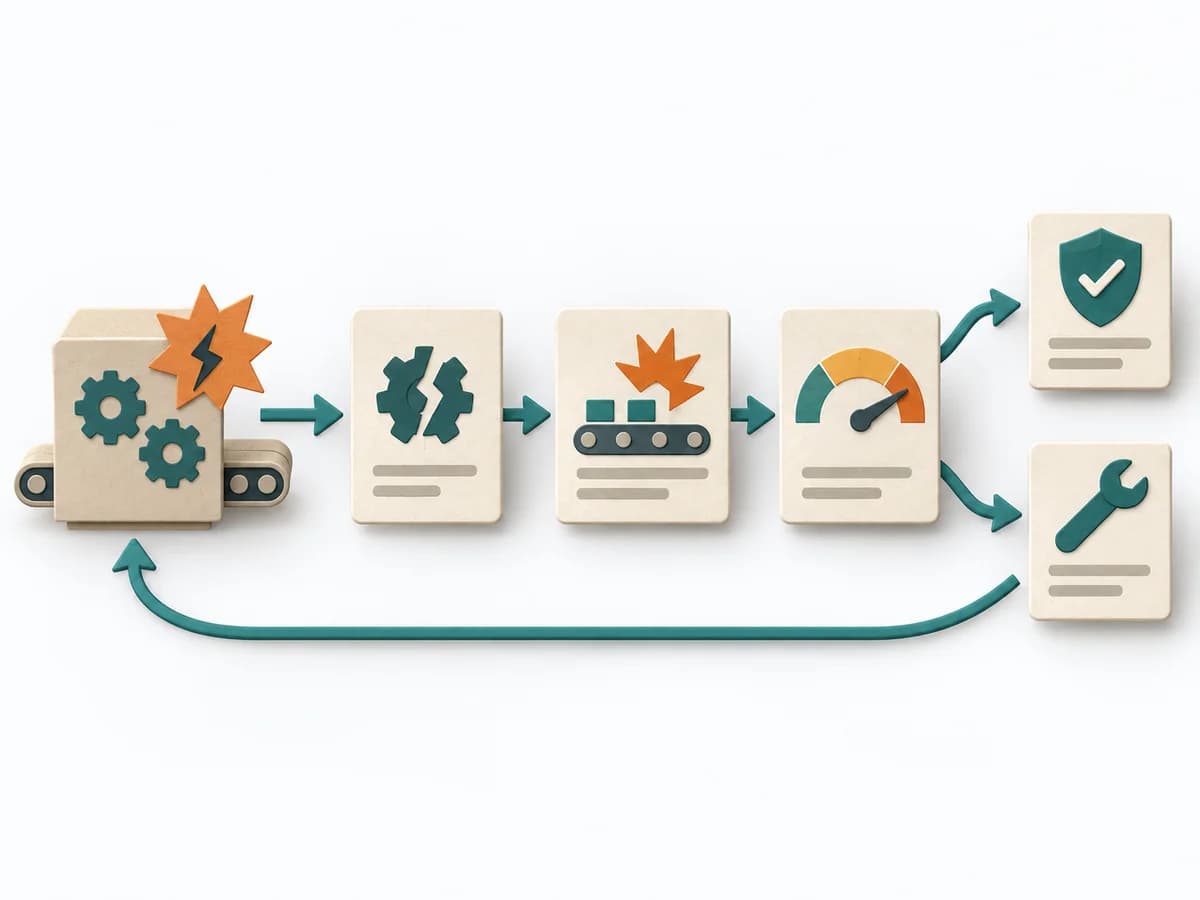
FMEA proactively examines functions for failure modes, effects and causes. Existing prevention and detection controls are assessed; prioritised improvements are implemented and then reassessed.
How can a function fail, what effects follow and which actions demonstrably reduce risk?
Functions
Clarify system boundary and functions; record possible failure modes and effects for affected users.
Controls
Name potential causes and current prevention and detection controls.
Rating
S = severity, O = occurrence, D = poor detectability; RPN = S × O × D. Anchor scales beforehand.
Actions
Prefer preventing causes, then improve detection; agree owner, date and evidence.
Effectiveness
Evidence implementation and effect; reassess S/O/D and record remaining needs.
After verified action implementation, reassess S, O and D with rationale; update the FMEA after changes.
For concrete products, processes or services with known functions and cross-functional knowledge.
FMEA matrix with function, failure mode, effect, cause, controls, S/O/D, RPN, and actions with effectiveness evidence.
The record preserves before and after assessments separately and states the next review date.
Fictional example
FMEA proactively examines functions for failure modes, effects and causes. Existing prevention and detection controls are assessed; prioritised improvements are implemented and then reassessed.
| Failure chain | Function | Failure mode | Effect | Cause | Current controls | S | O | D | RPN | Action / owner | Evidence / residual rating |
|---|---|---|---|---|---|---|---|---|---|---|---|
| 1Enter function, failure chain, current controls and justified ratings; distinguish actions and evidence. | Send confirmation | No confirmation | Participants unsure of status | Transient sending failure without retry | Prevention: none. Detection: log entry without alert. | 6 | 4 | 7 | 168 | Jan by Friday: add queue retry and alert. | Fictionally after test and operational observation: S6/O2/D3 = 36; severity unchanged. |
Fictional teaching ratings, scale 1–10: higher is worse. S6 significant service disruption; O4 occasional, O2 rare; D7 weak detection, D3 reliable alerting in tests. 6 × 4 × 7 = 168; after verified action 6 × 2 × 3 = 36.
Define scope, functions and agreed rating rules; prepare existing controls and failure data.
For a process, product, or service with noticeable failure risks, the method assesses possible failure modes in advance. It directs attention to combinations of occurrence, effect, and detectability.
Every potential failure is considered together with its effect and its impact in the process context. This creates a distinction between harmless weaknesses and critical high-priority vulnerabilities. The review makes prevention plannable before real damage occurs.
FMEA thinks through possible failure modes before damage occurs and prioritizes them by risk. Concrete functions, realistic causes, existing controls, and traceable assessment of severity, occurrence, and detection are decisive. The table has value when design, process, or control actually get improved.
At the start, function, failure boundary, and the rating scales for severity, occurrence, and detection must be jointly understood. The real value shows when high risks are recognized not from individual scores but from problematic combinations. Close with preventive measures for the most critical cases and clear responsibility for following up on them.
The method guide walks execution through 5 phases, timing, 5 pitfalls, and clear stop criteria.
Open method guideYour perspective
Your feedback helps shape the next improvements to methodatlas.
Define scope, functions and agreed rating rules; prepare existing controls and failure data.
To be confirmed
To be confirmed
Complete cycle Time: Multiple work sessions; verify actions after implementation
Complete this worksheet on paper or in your own document during the work.
| Failure chain | Function | Failure mode | Effect | Cause | Current controls | S | O | D | RPN | Action / owner | Evidence / residual rating |
|---|---|---|---|---|---|---|---|---|---|---|---|
| 1 |
Define your own rating anchors first. S = severity, O = occurrence, D = poor detectability; RPN = S × O × D. Examine high severity separately; no universal RPN acceptance threshold. Reassess only after effectiveness evidence.
Expected artifact: Failure chains
Are failure mode and effect distinct?
Entry:
...
Expected artifact: Control picture
Do controls exist and work today?
Entry:
...
Expected artifact: Reasoned priority
Does high D mean poor detection?
Entry:
...
Expected artifact: Action plan
Does the action change a specific risk driver?
Entry:
...
Expected artifact: Verified residual state
Is reassessment based on evidence?
Entry:
...
...
Method guide: https://methodatlas.meierhoff-systems.de/en/methods/fmea/run-sheet
Fitting alternatives with decision guidance, followed by other related methods.

Instead of Failure Mode and Effects Analysis, when you want to think from failure in advance and make risks visible early.
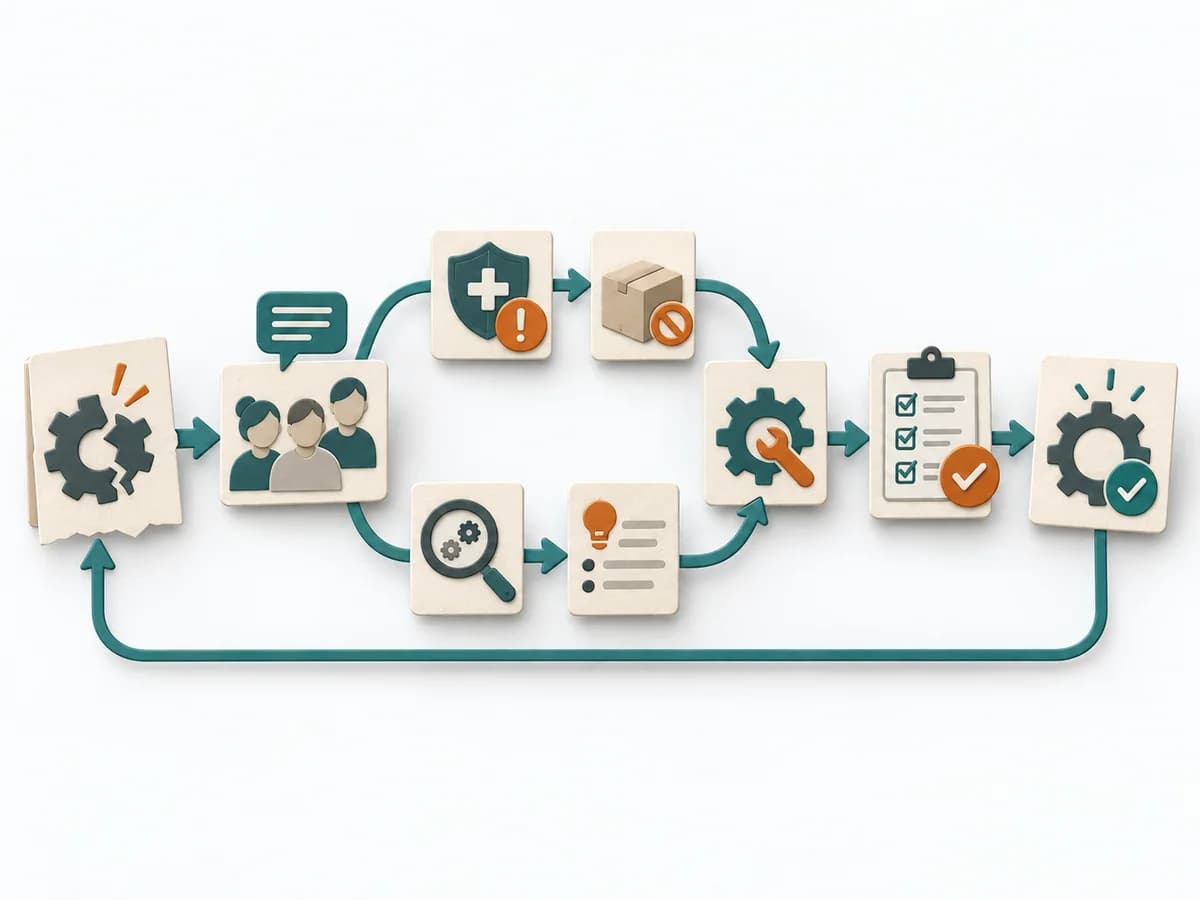
Coordinates team, immediate actions, root cause analysis, and prevention across eight steps to a verified solution.
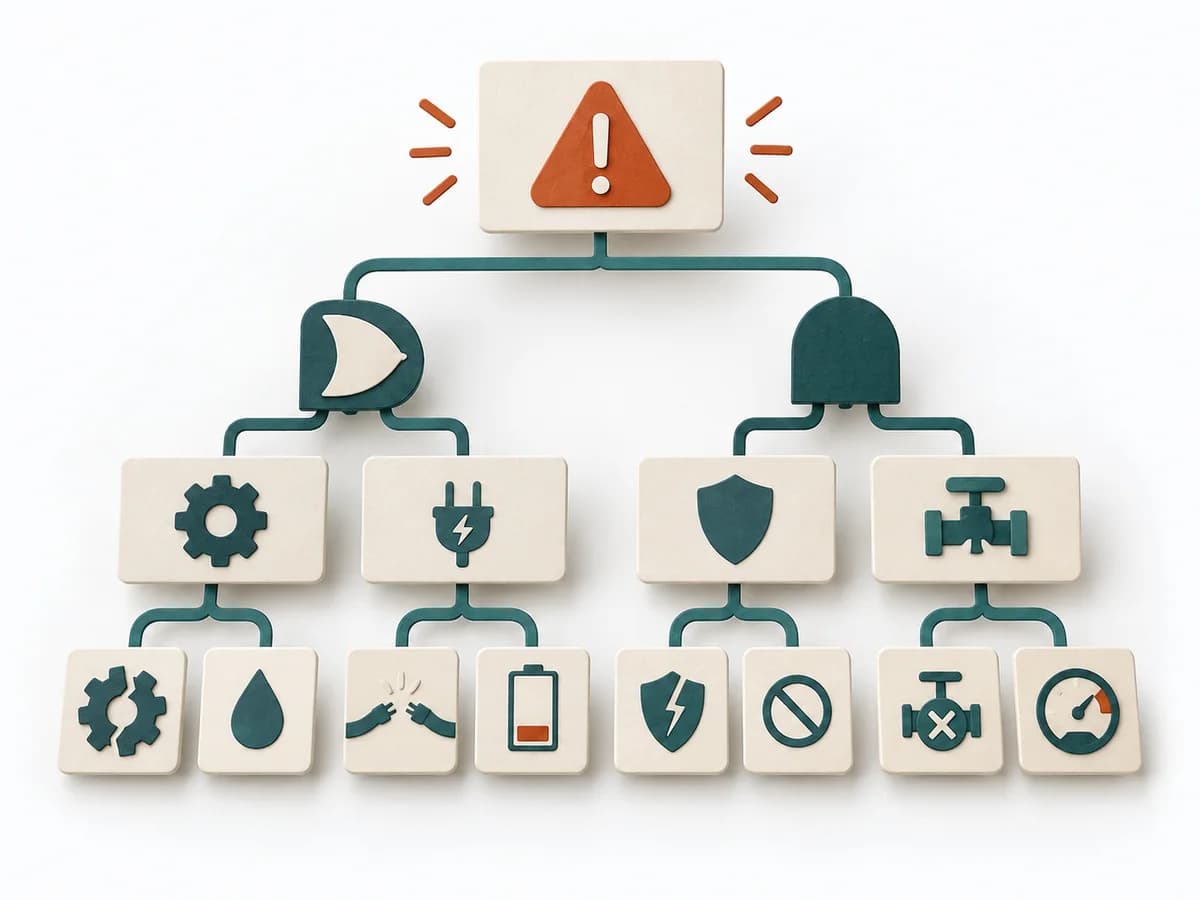
Models a top event with AND and OR branches to make critical paths and causes visible.

Clarifies workflows, data, causes, and improvements by framing the situation, analyzing the problem with is/is not, and planning risks and actions.

Separates events, evidence, confirmed causes, and fitting actions so analysis does not turn into blame-finding.
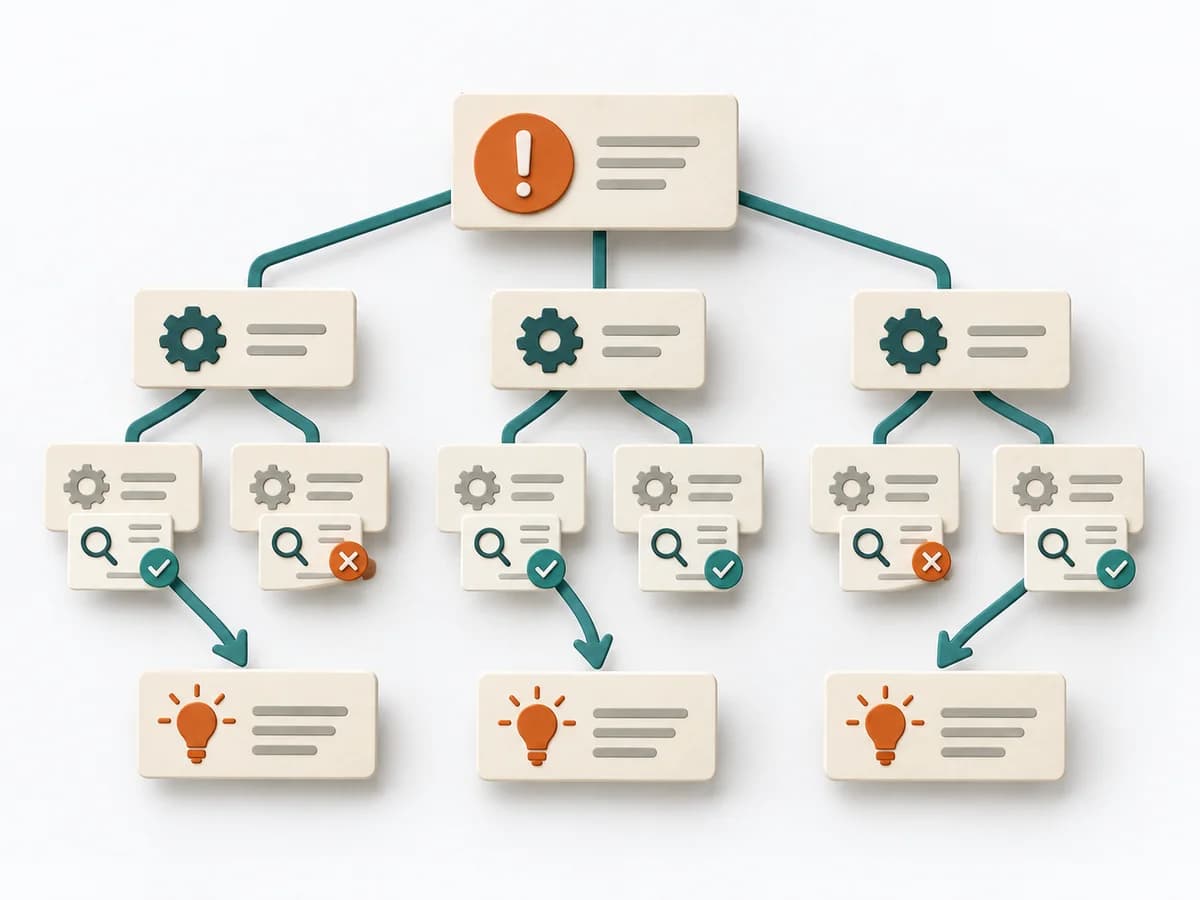
Clarifies workflows, data, causes, and improvements by framing the problem precisely, branching possible causes, and defining countermeasures.