
Purpose
For a disturbance that's hard to pin down, the method cleanly separates problem, cause, and decision. It reduces mixing when symptoms allow several interpretations.
Operations Analysis method
Clarifies whether situation appraisal, cause analysis, a decision, or safeguards for a plan are needed.
Kepner-Tregoe provides distinct thinking processes for situation appraisal, problem analysis, decision analysis and safeguarding plans. Situation Appraisal identifies the needed process; not every concern passes through all of them.
Do we need situation appraisal, cause analysis, a decision or safeguards for a plan?

Situation
Separate concerns and prioritise by current impact, urgency and development.
Problem
Describe the deviation by What, Where, When and Extent as IS and IS NOT.
Decision
State the decision objective; screen must criteria and compare eligible alternatives on weighted wants.
Plan risks
Name critical plan steps and potential problems with causes; define preventive actions.
Examine new facts in the appropriate process; confirm causes only after verification and later check action effects.
For complex concerns where deviation, choice and future risk become confused.
Prioritised analysis brief and appropriate outputs: verified cause, reasoned decision or safeguarded plan.
Agreed contingency, trigger, and owner for the occurrence of the problem.
Fictional example
Kepner-Tregoe provides distinct thinking processes for situation appraisal, problem analysis, decision analysis and safeguarding plans. Situation Appraisal identifies the needed process; not every concern passes through all of them.
What concerns exist and which analysis route fits each?
Fictional: registrations fail since Tuesday; cause unknown. Problem Analysis first, choice of correction afterwards.
What, where, when and to what extent does the deviation occur or not occur?
IS: mobile Safari, form version 4, since Tuesday, 18 of 60 attempts. IS NOT: desktop, version 3, Monday.
Which change explains all facts and how is it verified?
Hypothesis: new date field. Reverting only that field removes failure in a reproducible test; review remaining distinctions.
Which options pass must criteria and differ in benefits and risk?
Must: no data loss, deploy today. Rollback passes; full redesign fails. Want: low operating effort; risk: old usability issue returns.
Which problem do we prevent and what trigger starts which response?
Test data compatibility before rollback. If failure rate rises after deployment, Jan stops rollout and activates the tested prior version.
All example details are fictional and illustrate the application.
Collect concerns, facts, impact and ownership; first choose the needed analysis route.
For a disturbance that's hard to pin down, the method cleanly separates problem, cause, and decision. It reduces mixing when symptoms allow several interpretations.
The analysis systematically compares what is present, what is missing, and how cases differ. This narrows down causes along testable characteristics rather than guessing them. The decision then follows clear criteria rather than just the most plausible story.
Kepner Tregoe disciplines the separation of problem clarification, cause verification, and decision. Sharp distinction between is and is-not, documented differences, and cautious hypothesis testing are central. The approach pays off in situations where premature solutions would produce costly wrong decisions.
Keep clearly apart whether you're currently handling situation clarification, problem analysis, a decision question, or contingency planning, so nothing blurs together. The method gains depth when only the question that genuinely needs answering next gets worked on. Close with a clearly formulated work order for the next section and the facts needed for it.
The method guide walks execution through 4 phases, timing, 4 pitfalls, and clear stop criteria.
Open method guideYour perspective
Your feedback helps shape the next improvements to methodatlas.
Collect concerns, facts, impact and ownership; first choose the needed analysis route.
To be confirmed
To be confirmed
Complete cycle Time: Multiple analysis blocks as needed; 45–90 minutes each
Complete this worksheet on paper or in your own document during the work.
What concerns exist and which analysis route fits each?
...
What, where, when and to what extent does the deviation occur or not occur?
...
Which change explains all facts and how is it verified?
...
Which options pass must criteria and differ in benefits and risk?
...
Which problem do we prevent and what trigger starts which response?
...
Answer the prompts with your own information. Explicitly mark unknowns and assumptions.
Expected artifact: Analysis briefs
Is the needed thinking process clear per concern?
Entry:
...
Expected artifact: Verified cause
Does the cause explain IS and IS NOT consistently?
Entry:
...
Expected artifact: Reasoned choice
Does the selected option meet all must criteria?
Entry:
...
Expected artifact: Safeguarded plan
Are prevention and response with trigger distinct?
Entry:
...
...
Method guide: https://methodatlas.meierhoff-systems.de/en/methods/kepner-tregoe/run-sheet
Fitting alternatives with decision guidance, followed by other related methods.

Instead of Kepner-Tregoe, when problem, cause, countermeasure, and learning should be kept compactly on one page.
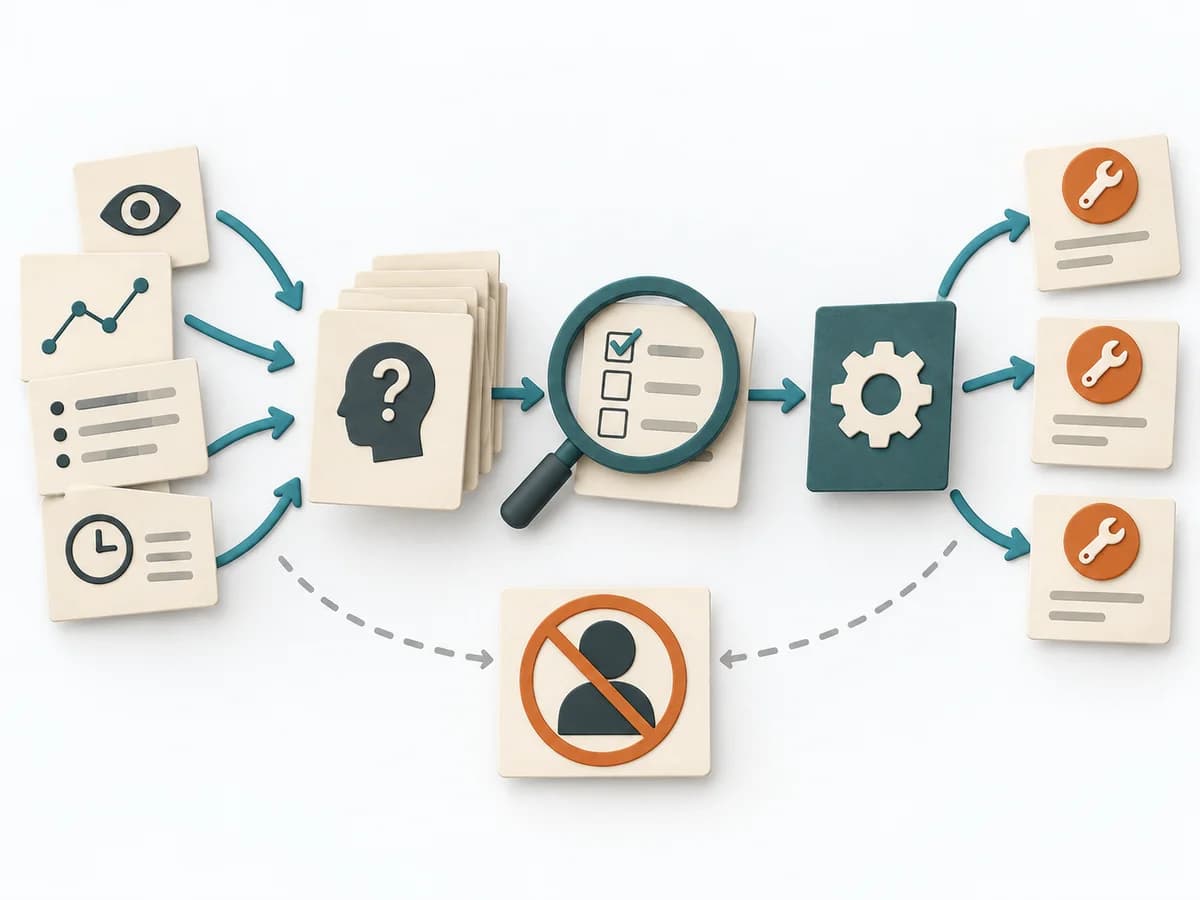
Separates events, evidence, confirmed causes, and fitting actions so analysis does not turn into blame-finding.

Clarifies workflows, data, causes, and improvements by defining scope and process, collecting failure modes, and assigning actions and owners.
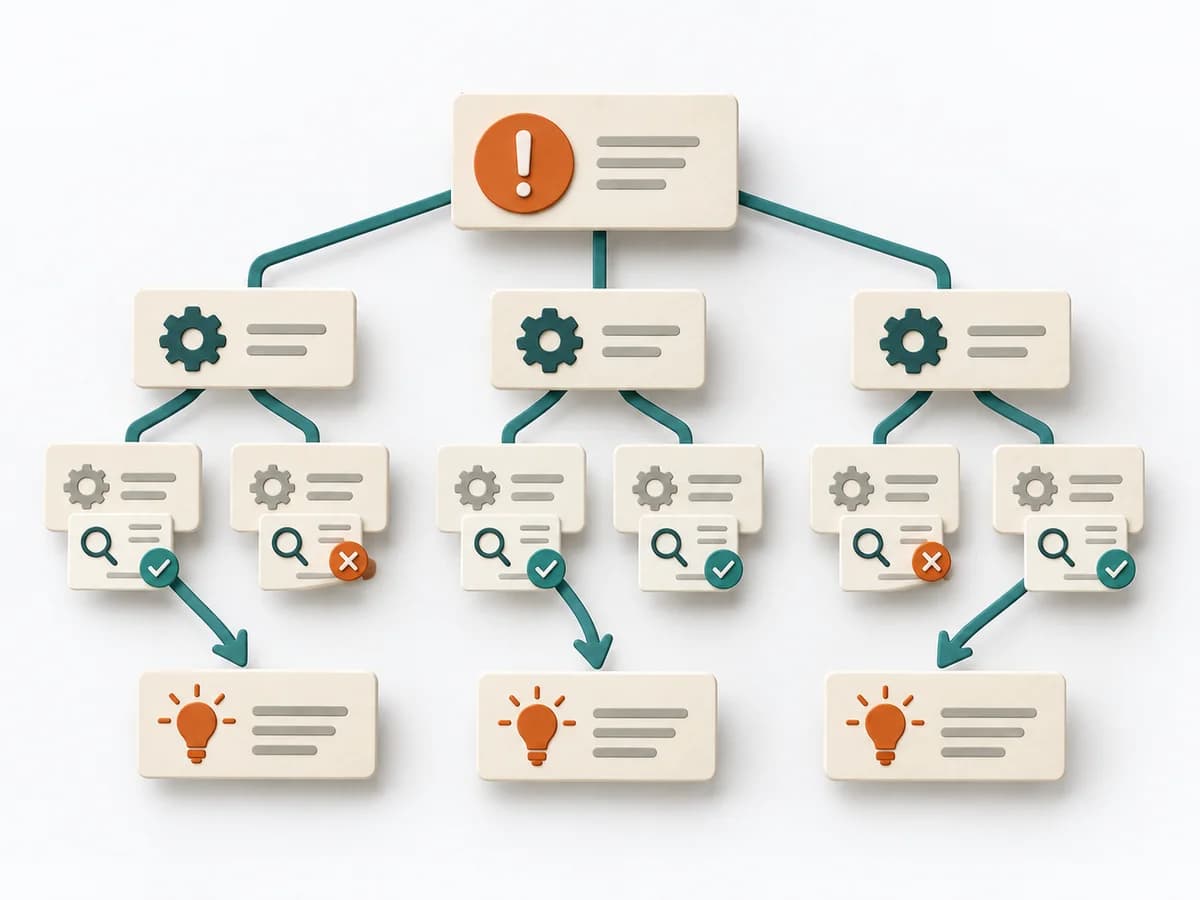
Clarifies workflows, data, causes, and improvements by framing the problem precisely, branching possible causes, and defining countermeasures.
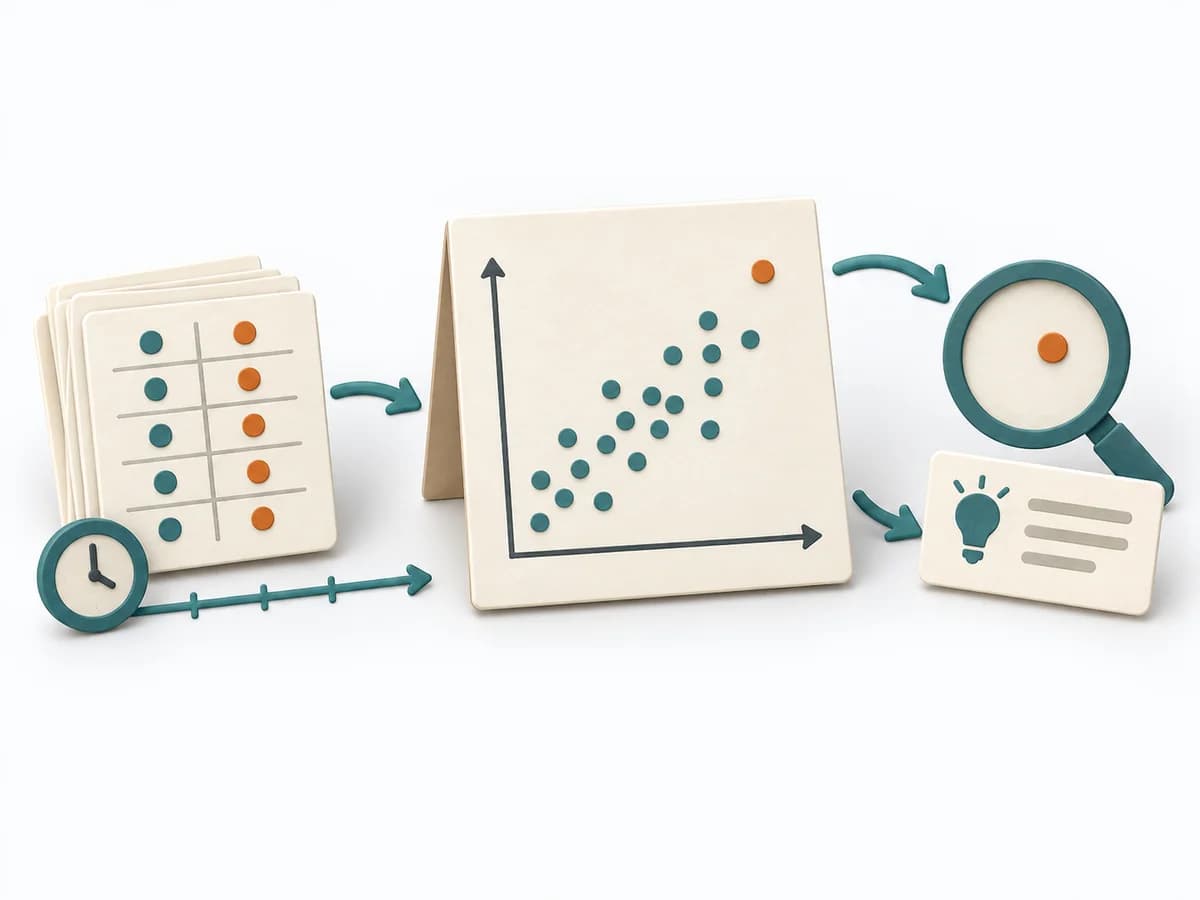
Paired data points reveal whether two variables move together and where a suspected relationship needs deeper proof.
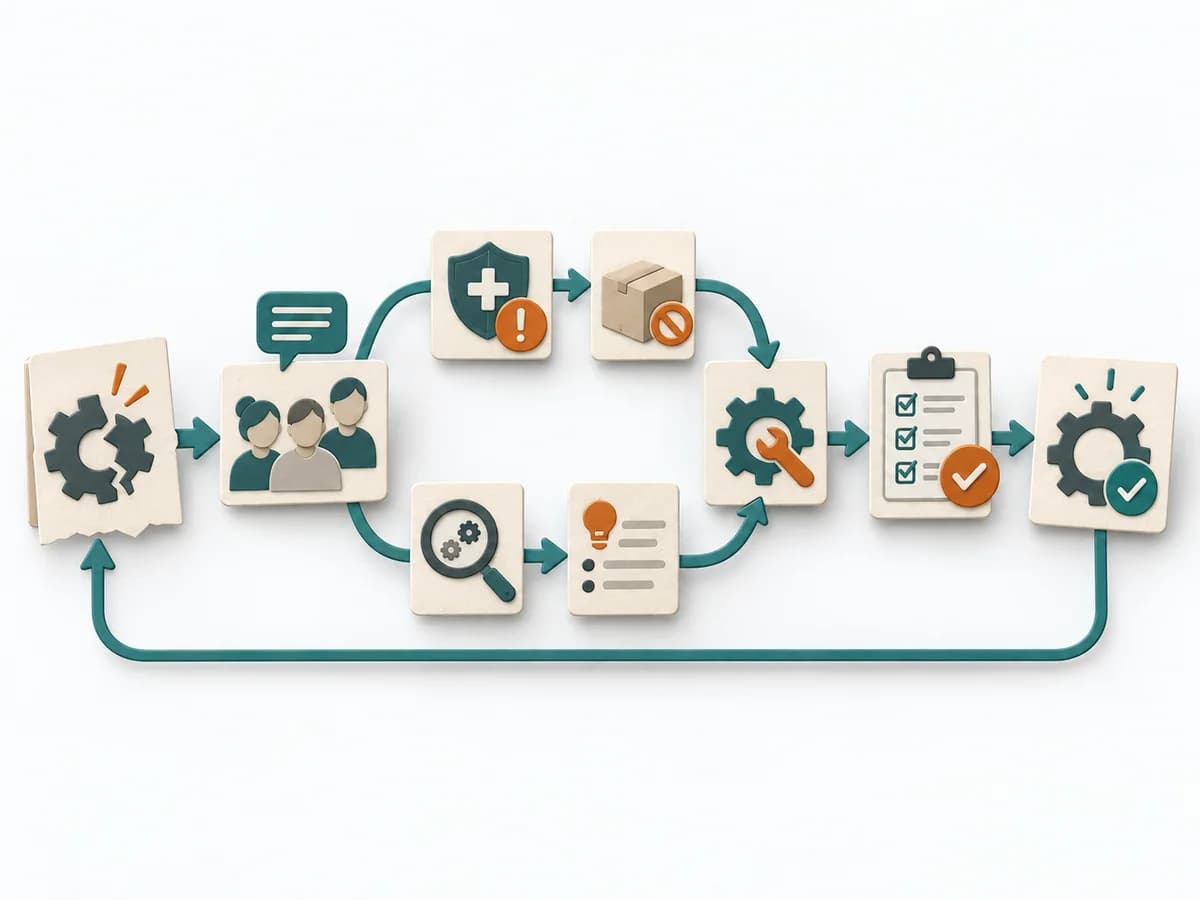
Coordinates team, immediate actions, root cause analysis, and prevention across eight steps to a verified solution.