Purpose
Plans often contain assumptions that were never openly stated and remain dangerous precisely because of that. Assumption Surfacing makes these silent premises visible and prioritizes which of them carry the initiative or could sink it.
Decision Making Decision method
Assumption Surfacing turns hidden conditions for success into testable assumptions and explicit learning moves.
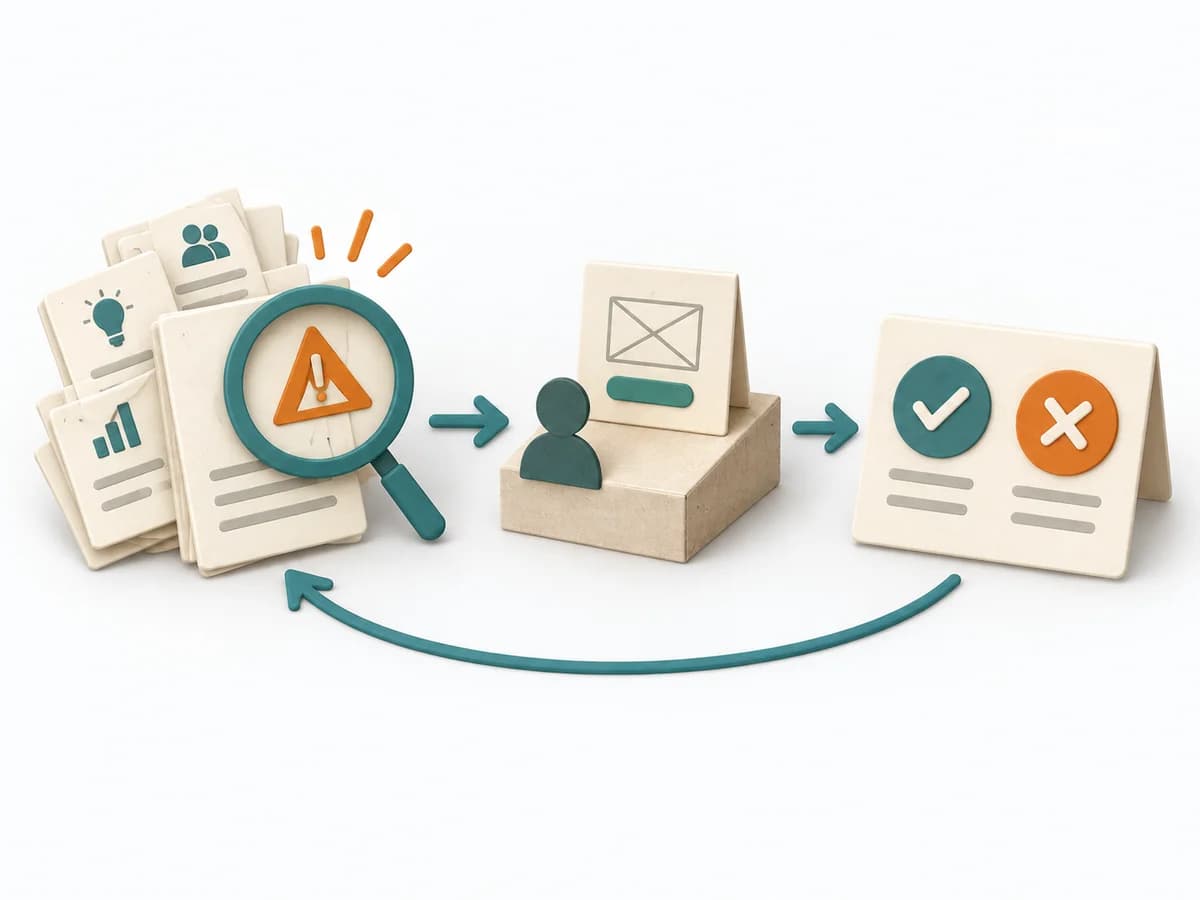
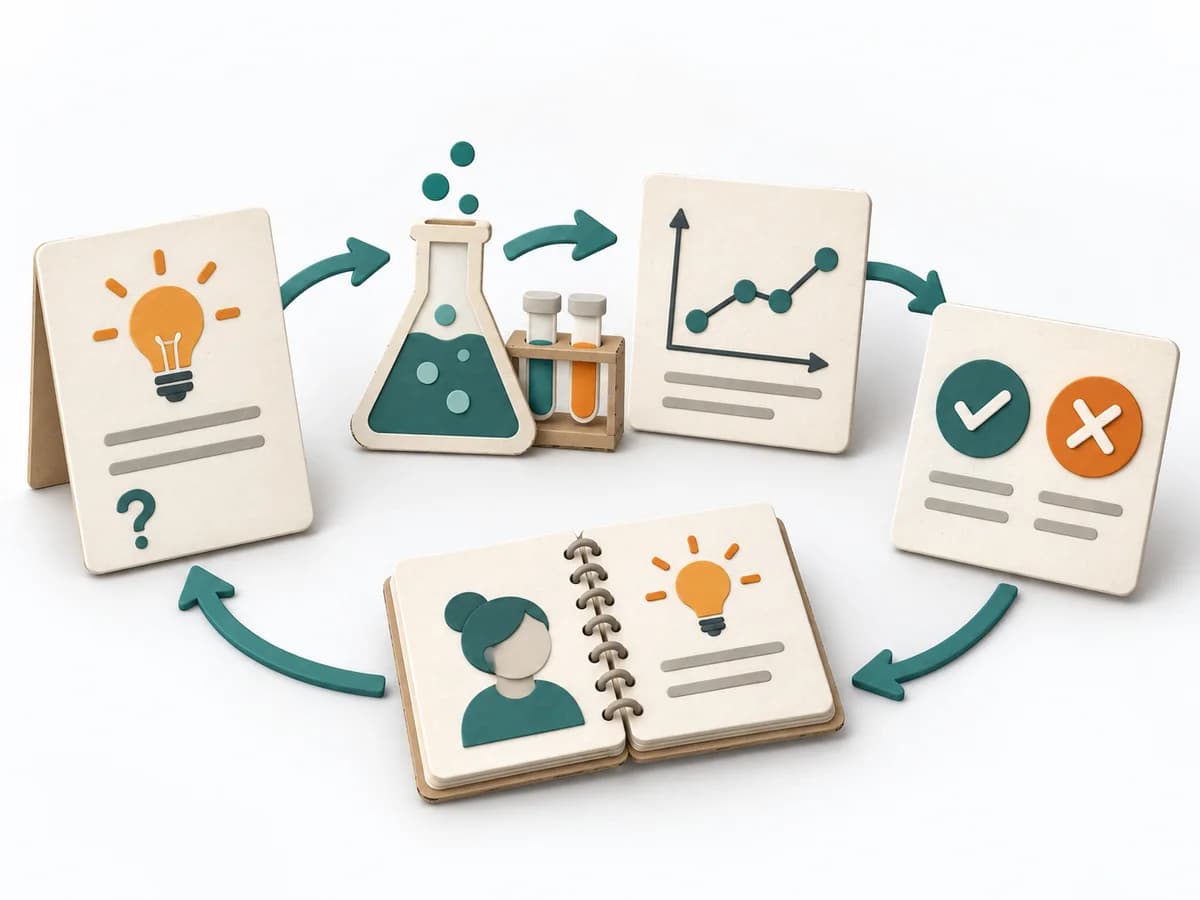
Assumption Surfacing identifies statements that must be true for an initiative to succeed. The team separates assumptions from evidence, scores impact and uncertainty, then selects the riskiest assumptions for testing.
Which unproven assumption would endanger the initiative most if it were false?

Frame
Establish success, scope and the central decision as the shared reference.
Surface
Expose hidden conditions as specific statements that evidence could disprove.
Score
Assess impact if false and current uncertainty as separate dimensions.
Prioritise
Choose high-impact, high-uncertainty assumptions as immediate learning risks.
Test
Specify evidence, threshold and decision consequence before testing.
After each test, update evidence and uncertainty; a disproved assumption triggers a change or stop decision.
For new products, strategies or decisions whose success depends on unproven beliefs about people, markets, feasibility or operations.
Categorised statements with evidence status, impact and uncertainty.
Prioritised tests with signal, threshold, owner, date and decision consequence.
Fictional example
The table separates assumption, evidence, impact, uncertainty and next learning move.
| Item | Assumption | Evidence status | Impact | Uncertainty | Next test |
|---|---|---|---|---|---|
| A-07State a falsifiable assumption and add scores plus the learning move. | 60% of weekend visitors want audio on their own phone. | No direct evidence | 5/5: production decision affected | 5/5: internal belief only | 30 interviews plus QR prototype; threshold 18 interested and 25% starts |
Scores are fictional judgements on a 1–5 scale, not measured values.
Bound the initiative and success so participants can complete the sentence “For this to work, it must be true that …”.
Plans often contain assumptions that were never openly stated and remain dangerous precisely because of that. Assumption Surfacing makes these silent premises visible and prioritizes which of them carry the initiative or could sink it.
Implicit assumptions are collected and sorted by uncertainty and influence. The sorting separates mere expectations from statements that need to be checked with data, experiments, or research. This makes uncertainty manageable before it becomes expensive.
Assumption Surfacing makes the silent beliefs behind plans, options, or conflicts visible. Assumptions must be distinguished by significance and uncertainty rather than just collected. Value emerges when the riskiest assumptions turn into tests, decisions, or deliberate bets.
Write assumptions down as testable statements and separate the obvious from the risky premises while doing so. The insight leap comes when hidden premises with high impact and low certainty lie openly on the table. End the pass with a sequence for validation, observation, or deliberate acceptance.
The method guide walks execution through 5 phases, timing, 5 pitfalls, and clear stop criteria.
Open method guideYour perspective
Your feedback helps shape the next improvements to methodatlas.
Bound the initiative and success so participants can complete the sentence “For this to work, it must be true that …”.
To be confirmed
To be confirmed
Complete workflow Time: 60–90 minutes for surfacing and prioritisation; tests follow separately
Complete this worksheet on paper or in your own document during the work.
| Item | Assumption | Available evidence | Impact if false | Uncertainty | Test, threshold and consequence |
|---|---|---|---|---|---|
| A-07 |
Use one assumption per row. Justify impact and uncertainty separately; examples stay out of the blank worksheet.
RAND: Assumption-Based Planning
Expected artifact: Test frame
Initiative, success, scope and decision
Entry:
...
Expected artifact: Assumption cards
Statement, category and current evidence
Entry:
...
Expected artifact: Scored assumption matrix
Impact, uncertainty and rationale
Entry:
...
Expected artifact: Prioritised assumptions
Rank, decision link and owner
Entry:
...
Expected artifact: Assumption test plan
Method, signal, threshold, owner and consequence
Entry:
...
...
Method guide: https://methodatlas.meierhoff-systems.de/en/methods/assumption-surfacing/run-sheet
Fitting alternatives with decision guidance, followed by other related methods.

Instead of Assumption Surfacing, when you want to make assumptions visibly prioritized before starting with solutions.
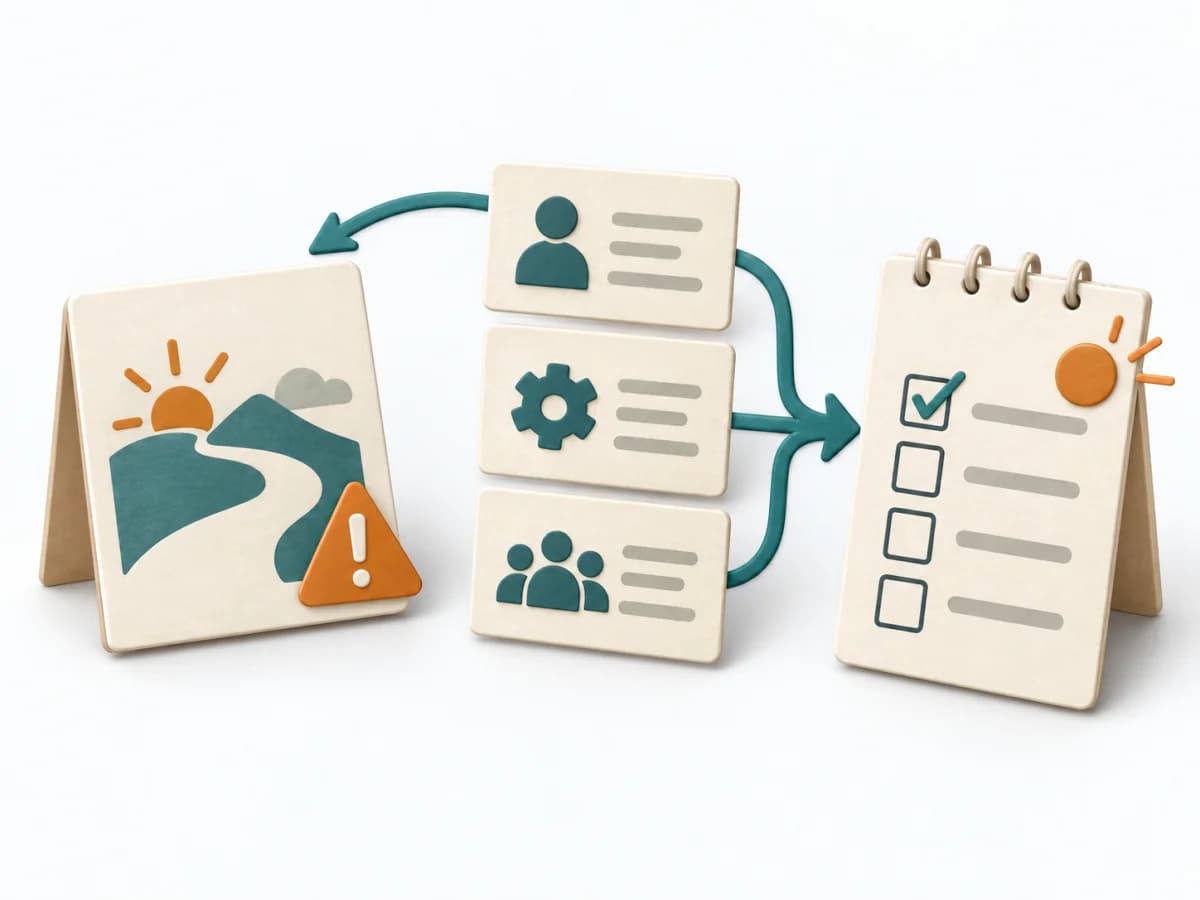
Thinks through failure in advance to surface risks, countermeasures, and critical assumptions early.
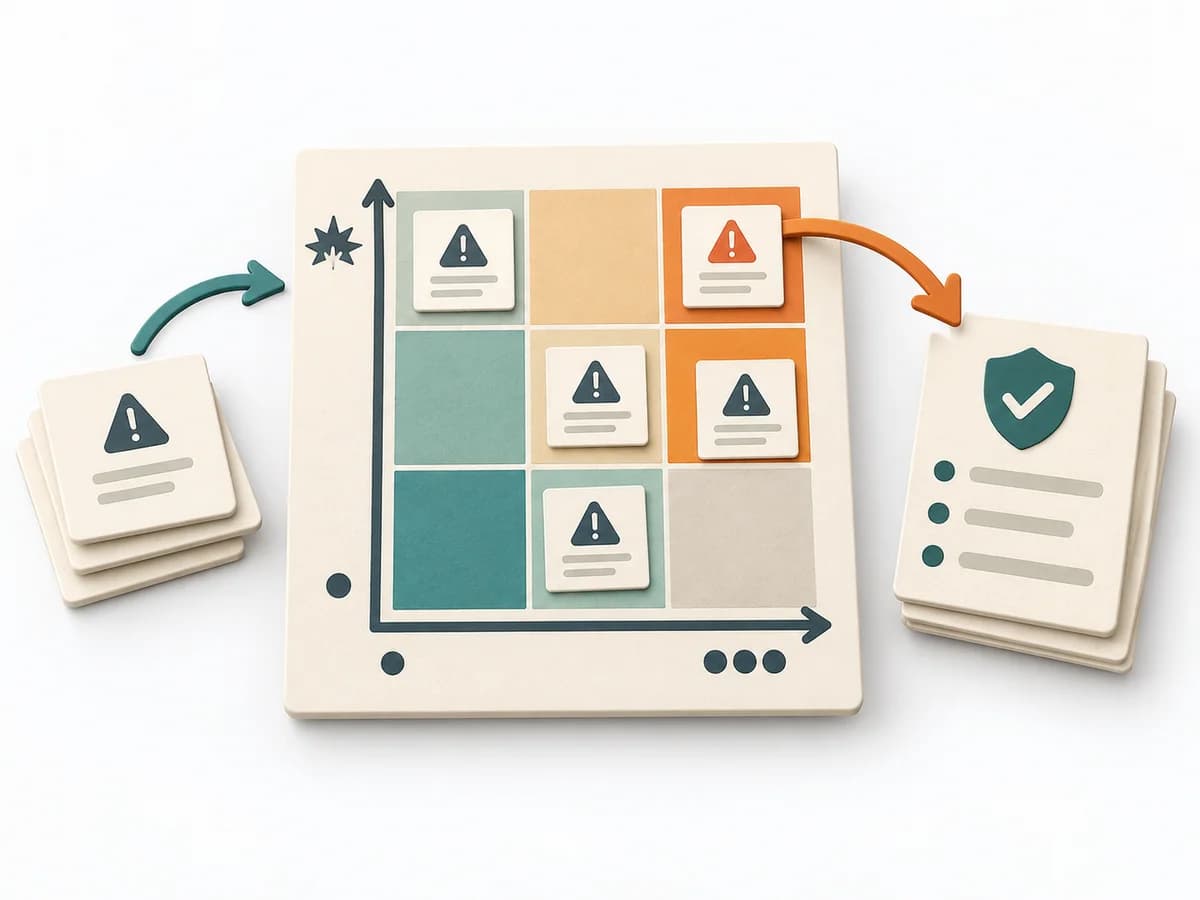
Moves options, criteria, and risks toward a concrete result through "set the scales for likelihood and impact", "collect risks or carry them over from earlier identification", and "define actions for each high-risk item".
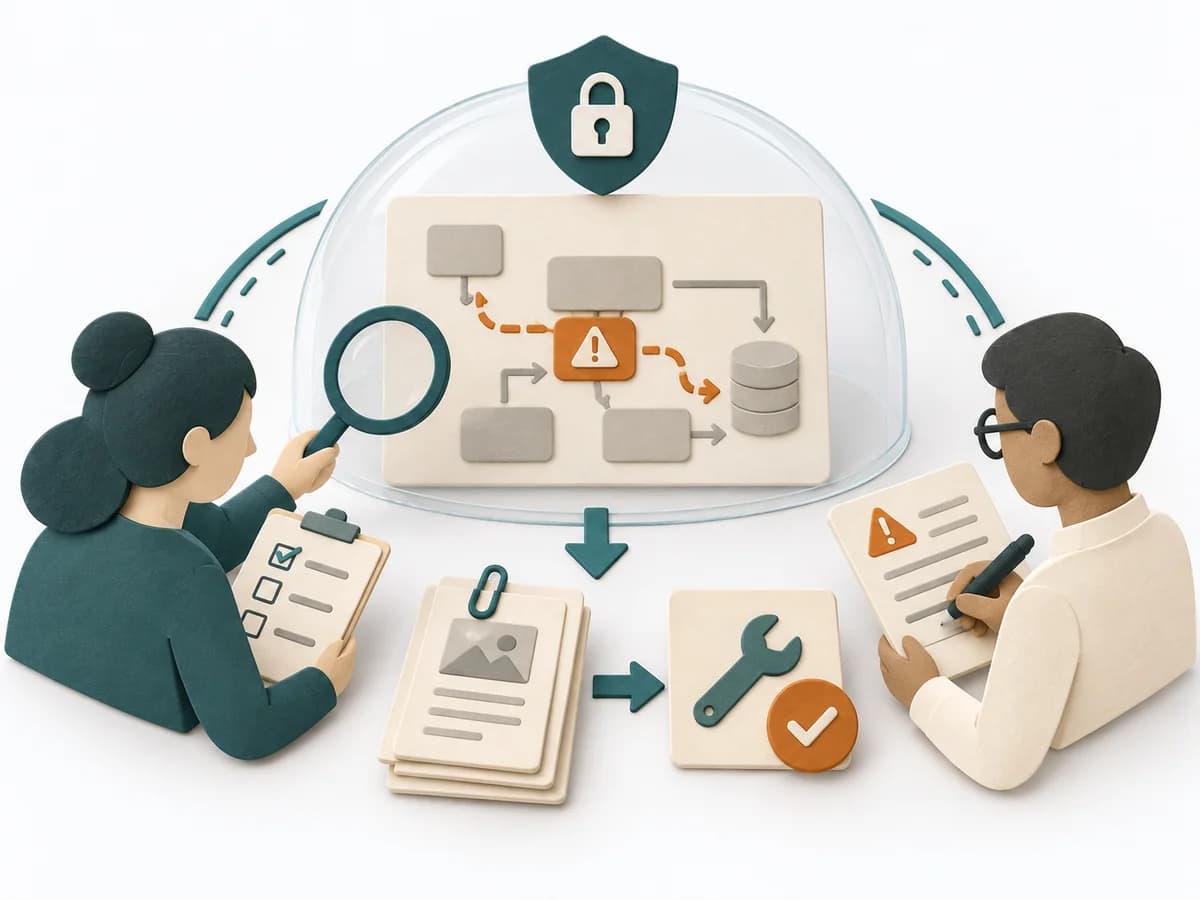
Examines an initiative from an opposing perspective, collects weaknesses, and derives prioritized mitigations.
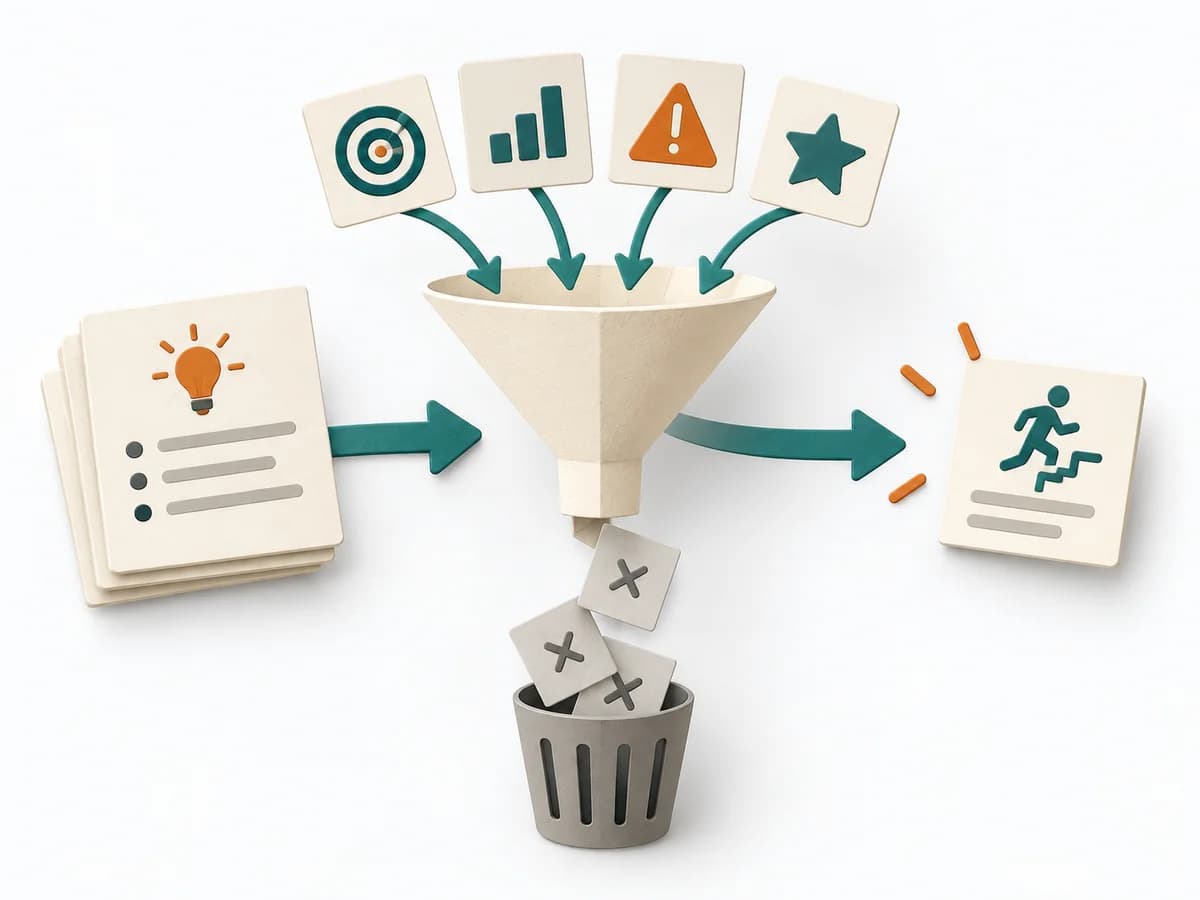
Sharpens a planned step through impact, success criteria, and risks down to the smallest sensible move.
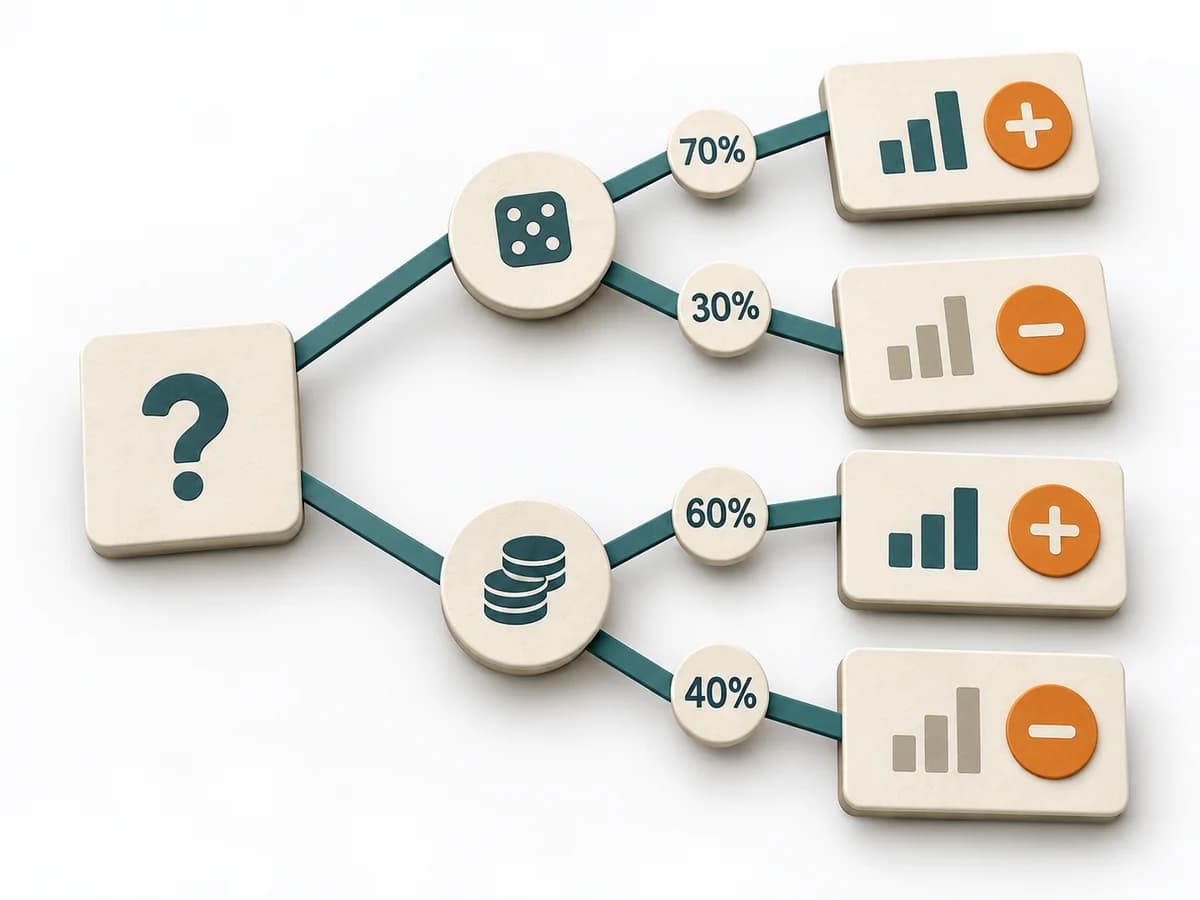
Draws decisions as branching paths so options, conditions, and consequences become clearer in comparison.