Complete firstCustomer segment
One specific segment and usage context are selected.
Different profiles should not be averaged into one fictional customer.
A practical method guide: clarify prerequisites and materials, understand the complete process, and look up outputs, pitfalls, and stop criteria.
What needs to be finished first
One specific segment and usage context are selected.
Statements, observations or data are available; gaps remain visible.
What needs to be ready before start
Large canvas or digital board, evidence and assumption labels, interviews or customer observations and the current offer description.
Product, design and business roles with customer access; customers help evaluate fit hypotheses.
Bound the segment and context. Gather customer statements, behavior and the existing offer, keeping sources distinct.
About 90–120 minutes for a focused first draft; customer testing and validation follow separately.
Develop the Customer Profile first. Highlight important jobs, pains and gains. Then add the Value Map and mark specific connections.
The one question this method answers
Which jobs, pains and gains matter to this segment, and how could our offer address them?
Phases with goal, actions, output and pitfall
The Value Proposition Canvas pairs a Customer Profile of jobs, pains and gains with a Value Map of products and services, pain relievers and gain creators. The proposed fit must be tested.
Fictional teaching example
The Value Map on the left contains products and services, pain relievers and gain creators; the Customer Profile on the right contains jobs, pains and gains. Their fit remains a hypothesis until evidence supports it.
Which functional, social and emotional jobs does the segment want to get done?
Fictional: A person needs a drill for a one-off repair.
Which products and services support the jobs?
Fictional: A local tool library with a catalog and collection.
Which risks, difficulties, unwanted costs or feelings arise?
Fictional: Availability is unclear before traveling.
How does the offer reduce prioritized obstacles or risks?
Fictional: A firm reservation confirmation shows the collection time and status.
Which outcomes does the segment expect, desire or value?
Fictional: Access to a suitable tool without buying and storing it.
How does the offer create desired outcomes?
Fictional: Brief usage guidance at collection.
Customer segment
Goal
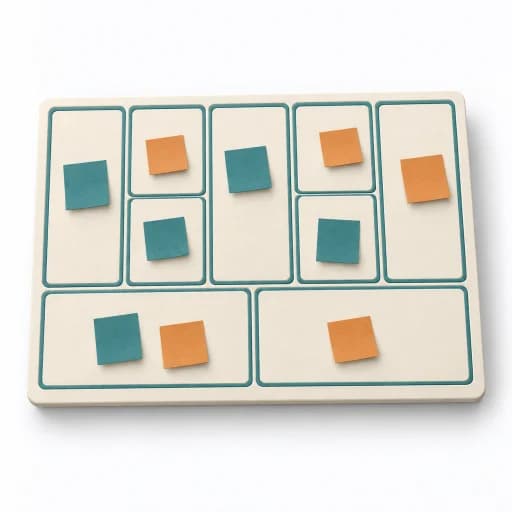
The canvas represents one specific customer group and context.
Inputs for this step
Actions
Output
Focused Customer Profile
Segment · context · customer jobs
Quality check
Does the customer profile describe one group and context?
Pitfall
Different segments or roles are combined in one profile. Separate profiles or keep segment assumptions explicit until tested.
Timing: About 20 minutes.
Pains and gains

Goal
Important customer problems and desired outcomes are prioritized rather than merely listed.
Inputs for this step
Actions
Output
Customer Profile with jobs, pains and gains
Job · pain · gain · evidence
Quality check
Are pains and gains connected to jobs and situations?
Pitfall
The team describes product features as if they were customer gains. Rephrase them as customer outcomes and label assumptions.
Timing: About 25 minutes.
Value map
Goal
Each proposed value contribution connects to an important customer job, pain or gain.
Inputs for this step
Actions
Output
Value Map with justified contributions
Offer · pain reliever · gain creator · connection
Quality check
Does each value contribution connect to a prioritized profile item?
Pitfall
The Value Map lists features without a connection to customer outcomes. Connect each contribution to a concrete job, pain or gain.
Timing: About 25 minutes.
Plan a fit test
Goal
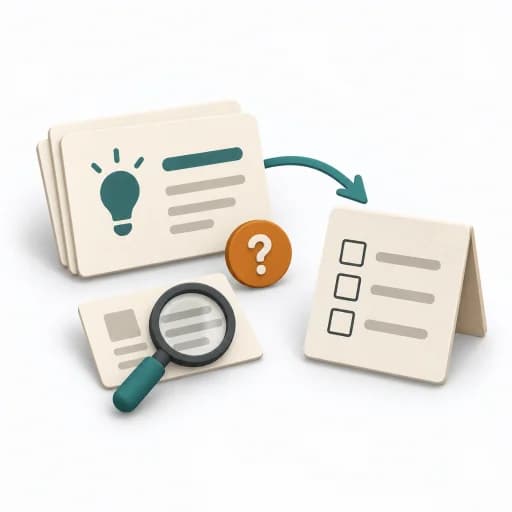
The workshop ends with a prioritized test plan for an important fit hypothesis.
Inputs for this step
Actions
Output
Test plan with hypothesis, customer group, signal, owner and review date
Customer group · hypothesis · test · signal · owner
Quality check
Is fit labeled as supported or still assumed? Are execution and the later decision scheduled?
Pitfall
A completed canvas is mistaken for validated fit. Mark untested connections as assumptions and plan an appropriate follow-up test.
Timing: About 15 minutes for test planning; execution and customer validation follow separately.
What comes out at the end
Sketch: what the artifact looks like
A dated canvas for one segment with prioritized profile items, corresponding offer contributions, evidence and explicit fit hypotheses.
Record the segment, date and canvas version. Link profile items to sources and track changes to the offer.
Plan a focused canvas for one segment and follow-up on fit assumptions.
To be confirmed
To be confirmed
Develop a Value Proposition Canvas Time: About 90–120 minutes; research is additional
Complete this worksheet on paper or in your own document during the work.
Which functional, social and emotional jobs does the segment want to get done?
...
Which products and services support the jobs?
...
Which risks, difficulties, unwanted costs or feelings arise?
...
How does the offer reduce prioritized obstacles or risks?
...
Which outcomes does the segment expect, desire or value?
...
How does the offer create desired outcomes?
...
Expected artifact: Focused Customer Profile
Segment · context · customer jobs
Entry:
...
Expected artifact: Customer Profile with jobs, pains and gains
Job · pain · gain · evidence
Entry:
...
Expected artifact: Value Map with justified contributions
Offer · pain reliever · gain creator · connection
Entry:
...
Expected artifact: Test plan with hypothesis, customer group, signal, owner and review date
Customer group · hypothesis · test · signal · owner
Entry:
...
...
Method guide: https://methodatlas.meierhoff-systems.de/en/methods/value-proposition-canvas/run-sheet
Concrete filled scenario, fictional example
Fictional example for orientation. Counts and timings describe this case and are not universal requirements.
Concrete filled scenario, fictional example
All entries are invented; they do not establish real customer expectations or product-market fit.
Segment: Households with occasional repair needs.
Job: Get a suitable tool for a one-off repair without buying and storing it.
Pain: Availability is unclear before travel. Gain: Use the right tool at the planned time.
Offer: A local tool library with a catalog and collection. Pain reliever: Firm status and time confirmation. Gain creator: Brief usage guidance.
Fit hypothesis: Clear reservation confirmation reduces planning uncertainty. This must be tested with customers; a completed canvas is not validation.
Recognize symptoms and steer against them
Quick overview, the full text is in the matching phase in the flow
Different segments or roles are combined in one profile.
Separate profiles or keep segment assumptions explicit until tested.
The team describes product features as if they were customer gains.
Rephrase them as customer outcomes and label assumptions.
The Value Map lists features without a connection to customer outcomes.
Connect each contribution to a concrete job, pain or gain.
A completed canvas is mistaken for validated fit.
Mark untested connections as assumptions and plan an appropriate follow-up test.
When to pause, resolve prerequisites, or choose another approach
Go to the profile for purpose, similar methods, and sources or continue to the next method in the catalog.