Three-Point Estimation: Worksheet
Question
To be confirmed
Desired outcome
To be confirmed
Scope
Complete run
Time: 30–60 minutes per work-package group; evidence collection extra.
Complete this worksheet on paper or in your own document during the work.
Preparation for this scope
Method setup
- Materials: Clear scope, historical analogies, O/M/P scenario sheet, calculation sheet, and assumption log
- Roles: Work owner · delivery experts · data/risk expert · facilitator
- Advance information: Close work package, unit, Done criterion, and dependencies; define O, M, and P as scenarios rather than target values.
- Overall time needed: 30–60 minutes per work-package group; evidence collection extra.
- Setup: Prepare a workspace with Scope · Scenarios · Calculate · Drivers · Use; separate example from live data.
Prepare for the work steps
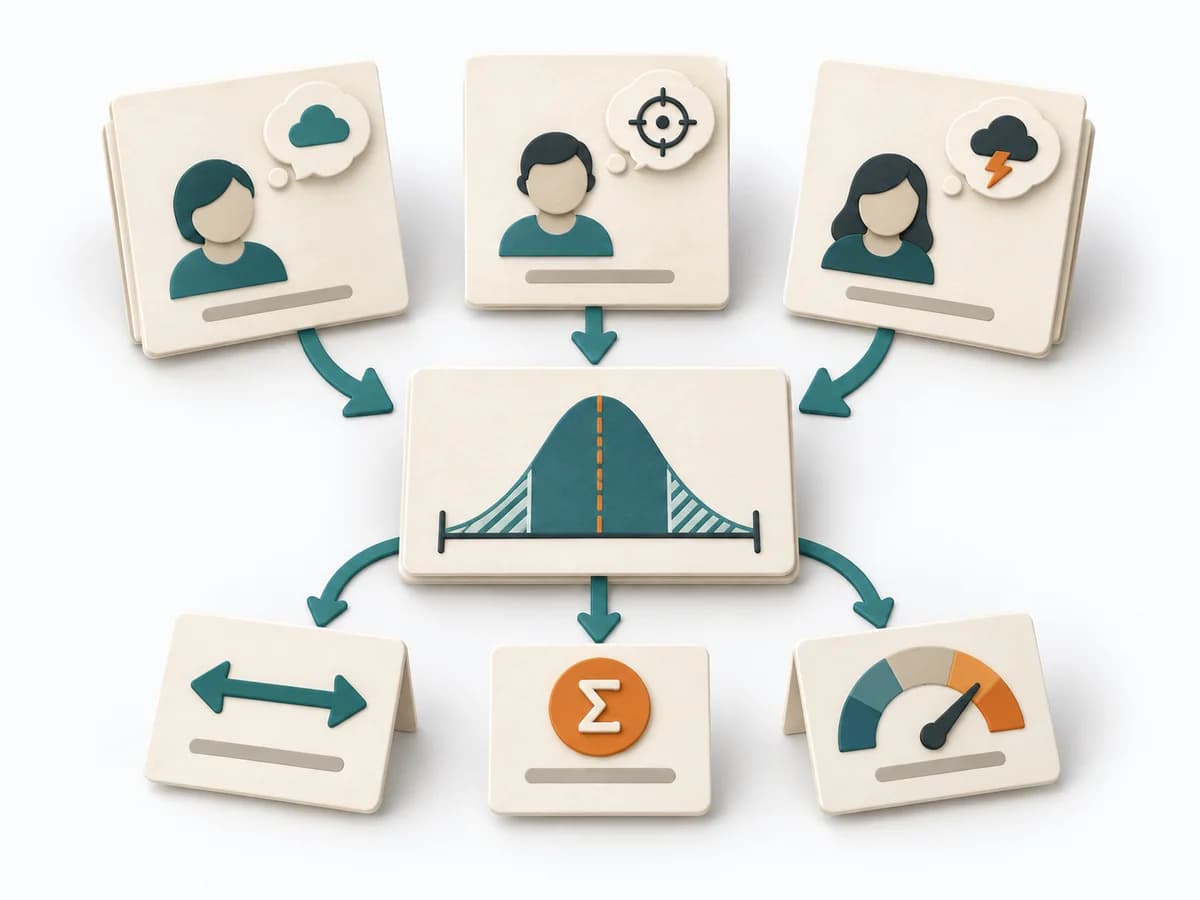
Scope: Estimate frame
- Close work package, unit, Done criterion, and dependencies; define O, M, and P as scenarios rather than target values.
- Clear scope, historical analogies, O/M/P scenario sheet, calculation sheet, and assumption log
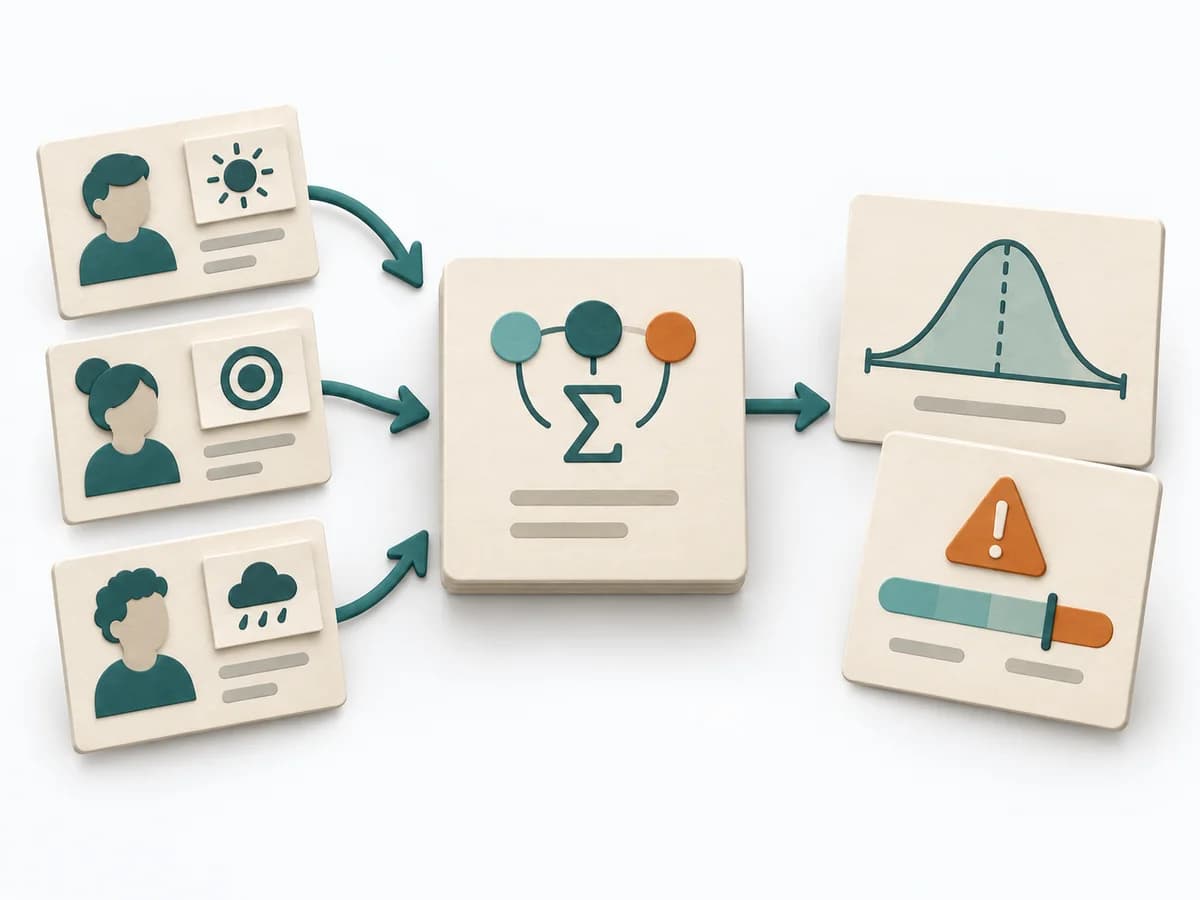
Scenarios: Three values
Calculate: Expected value
Drivers: Uncertainty view
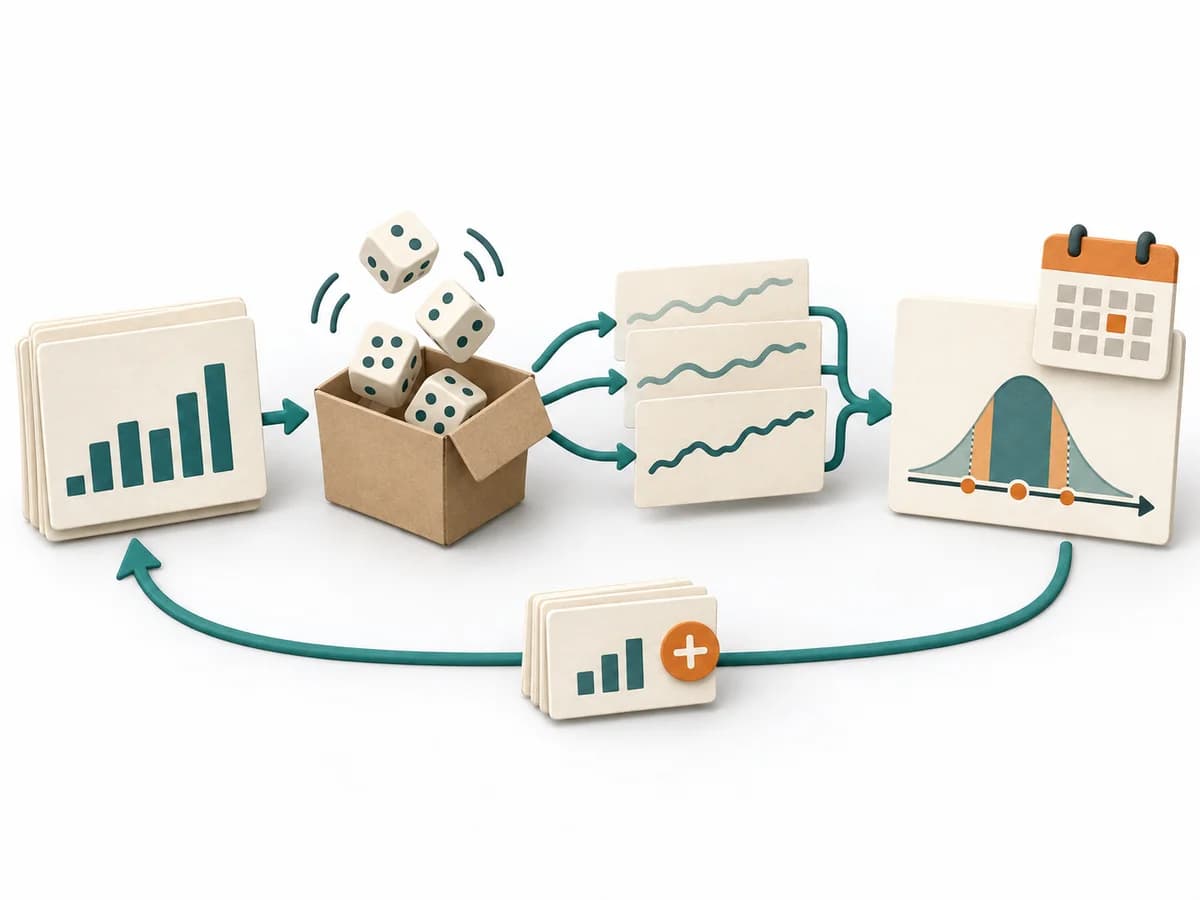
Use: Planning range
Three-Point Estimation · working structure
| Work package | O · optimistic | M · most likely | P · pessimistic | Calculation | Range | Driver | Review |
|---|
| Provider token | | | | | | | |
- Provider token: Add evidence and rationale.
The blank worksheet contains prompts only.
Reference · original teaching example
Scope: Estimate frame
Expected artifact: Estimate frame
Define work, unit, Done, and included risks unambiguously.
Entry:
...
Scenarios: Three values
Expected artifact: Three values
Derive O, M, and P from concrete conditions and analogies; verify O ≤ M ≤ P.
Entry:
...
Calculate: Expected value
Expected artifact: Expected value
Compute triangular expected value E=(O+M+P)/3 and preserve the range separately.
Entry:
...
Drivers: Uncertainty view
Expected artifact: Uncertainty view
Inspect M→P and O→M gaps for dominant uncertainty and controllable actions.
Entry:
...
Use: Planning range
Expected artifact: Planning range
Use the estimate for a named decision and schedule review after scope or evidence changes.
Entry:
...
Open questions and next steps
...
Method guide: https://methodatlas.meierhoff-systems.de/en/methods/three-point-estimation/run-sheet