NoEstimates: Worksheet
Question
To be confirmed
Desired outcome
To be confirmed
Scope
Whole initiative
Time: Half-day setup plus weekly replenishment, flow, and forecast reviews.
Complete this worksheet on paper or in your own document during the work.
Preparation for this scope
Method setup
- Materials: Small value-oriented items, explicit Ready/Done policies, WIP limits, throughput and cycle-time history, probabilistic forecast
- Roles: Product/service owner · delivery team · flow manager · data owner · stakeholders
- Advance information: Close decision need, service boundary, and Done; slice work so items flow comparably; check historical data quality.
- Overall time needed: Half-day setup plus weekly replenishment, flow, and forecast reviews.
- Setup: Prepare a workspace with Purpose · Slice · Control · Measure · Forecast · Learn; separate example from live data.
Prepare for the work steps
Purpose: Planning question
- Close decision need, service boundary, and Done; slice work so items flow comparably; check historical data quality.
- Small value-oriented items, explicit Ready/Done policies, WIP limits, throughput and cycle-time history, probabilistic forecast
Slice: Flowable items
Control: Flow system
Measure: Flow data
Forecast: Delivery forecast
Learn: Flow decision
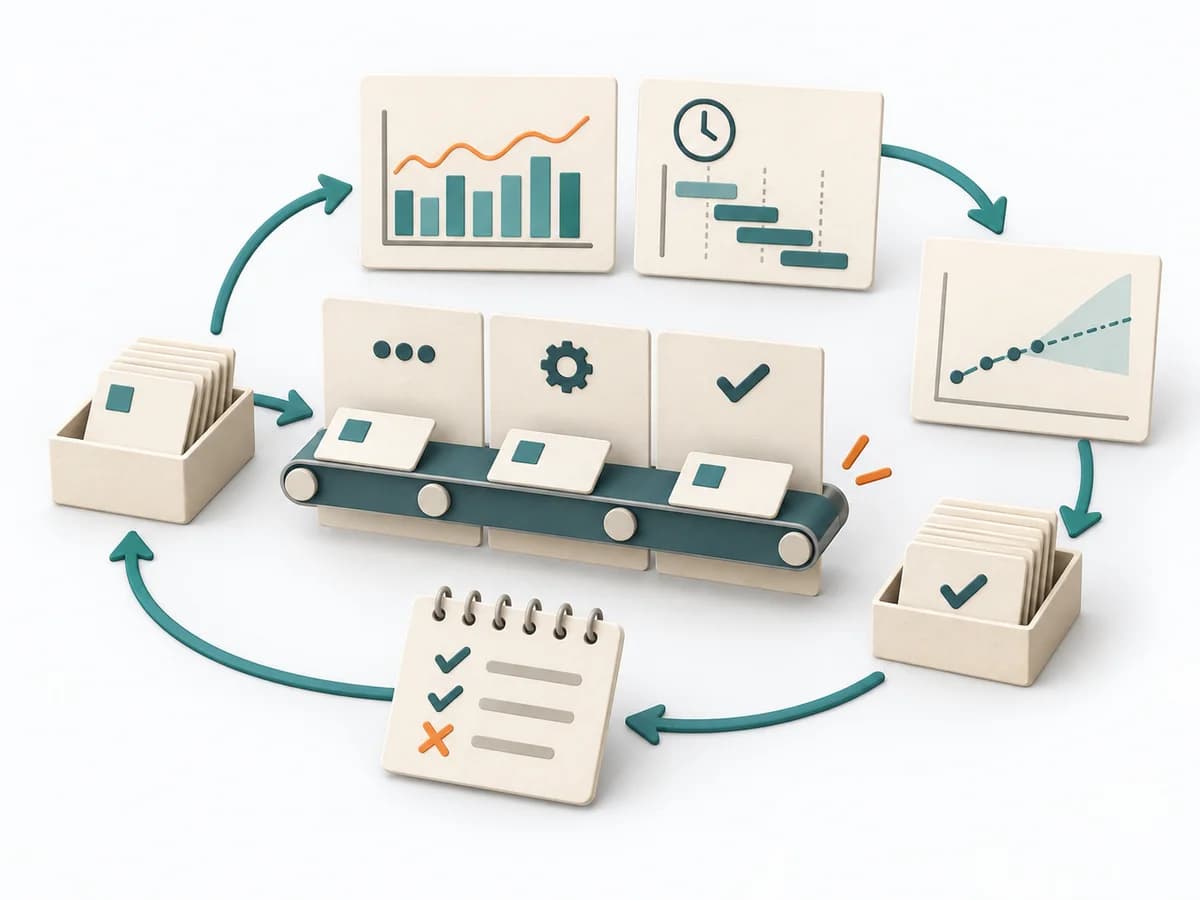
NoEstimates · working structure
| System element | Policy/data | Fictional state | Decision signal | Action | Owner | Review |
|---|
| Item slicing | | | | | | |
| WIP/pull | | | | | | |
| Flow data | | | | | | |
| Forecast | | | | | | |
- Item slicing: Add evidence and rationale.
- WIP/pull: Add evidence and rationale.
- Flow data: Add evidence and rationale.
- Forecast: Add evidence and rationale.
The blank worksheet contains prompts only.
Reference · original teaching example
Purpose: Planning question
Expected artifact: Planning question
Set which decisions will be supported without item estimates and define service boundary.
Entry:
...
Slice: Flowable items
Expected artifact: Flowable items
Shape work into small valuable items with one Done and explicit split policy.
Entry:
...
Control: Flow system
Expected artifact: Flow system
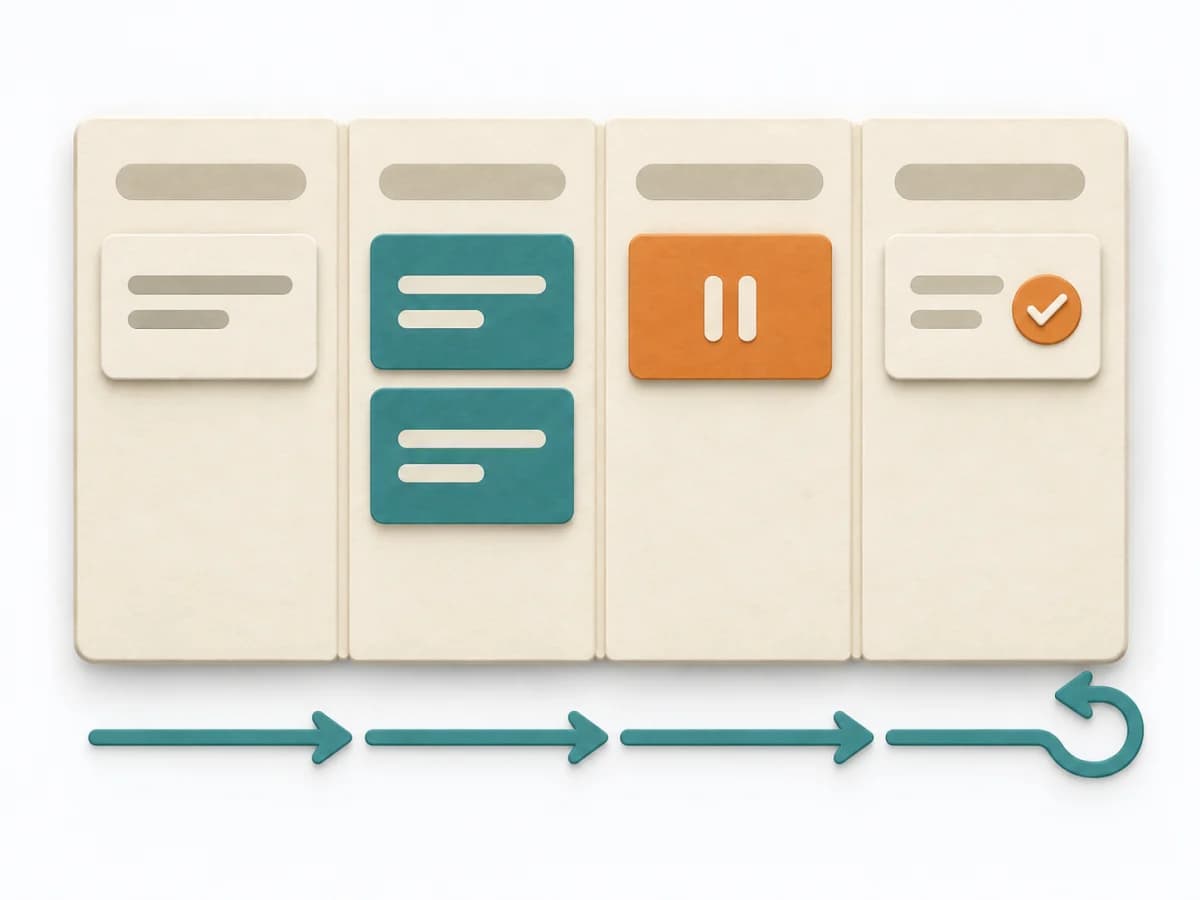
Operate pull, WIP limits, replenishment, and blocker policy; reprioritise scope continuously.
Entry:
...
Measure: Flow data
Expected artifact: Flow data
Capture throughput, cycle time, WIP, and item age from consistent start/Done events.
Entry:
...
Forecast: Delivery forecast
Expected artifact: Delivery forecast
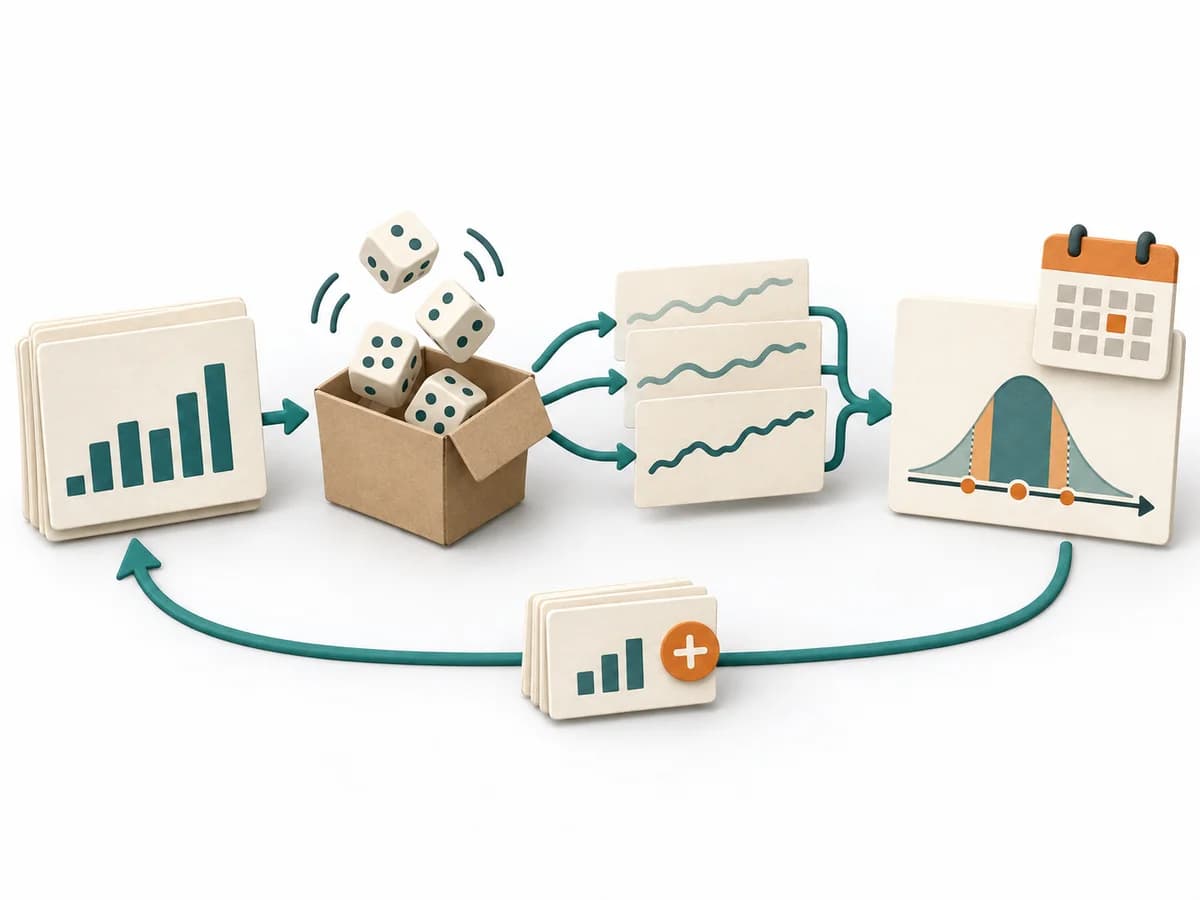
Forecast remaining count probabilistically from historical flow and test scope/WIP scenarios.
Entry:
...
Learn: Flow decision
Expected artifact: Flow decision
Compare forecast to actual, decide scope/policies, and justify new data window after system change.
Entry:
...
Open questions and next steps
...
Method guide: https://methodatlas.meierhoff-systems.de/en/methods/no-estimates/run-sheet