Purpose
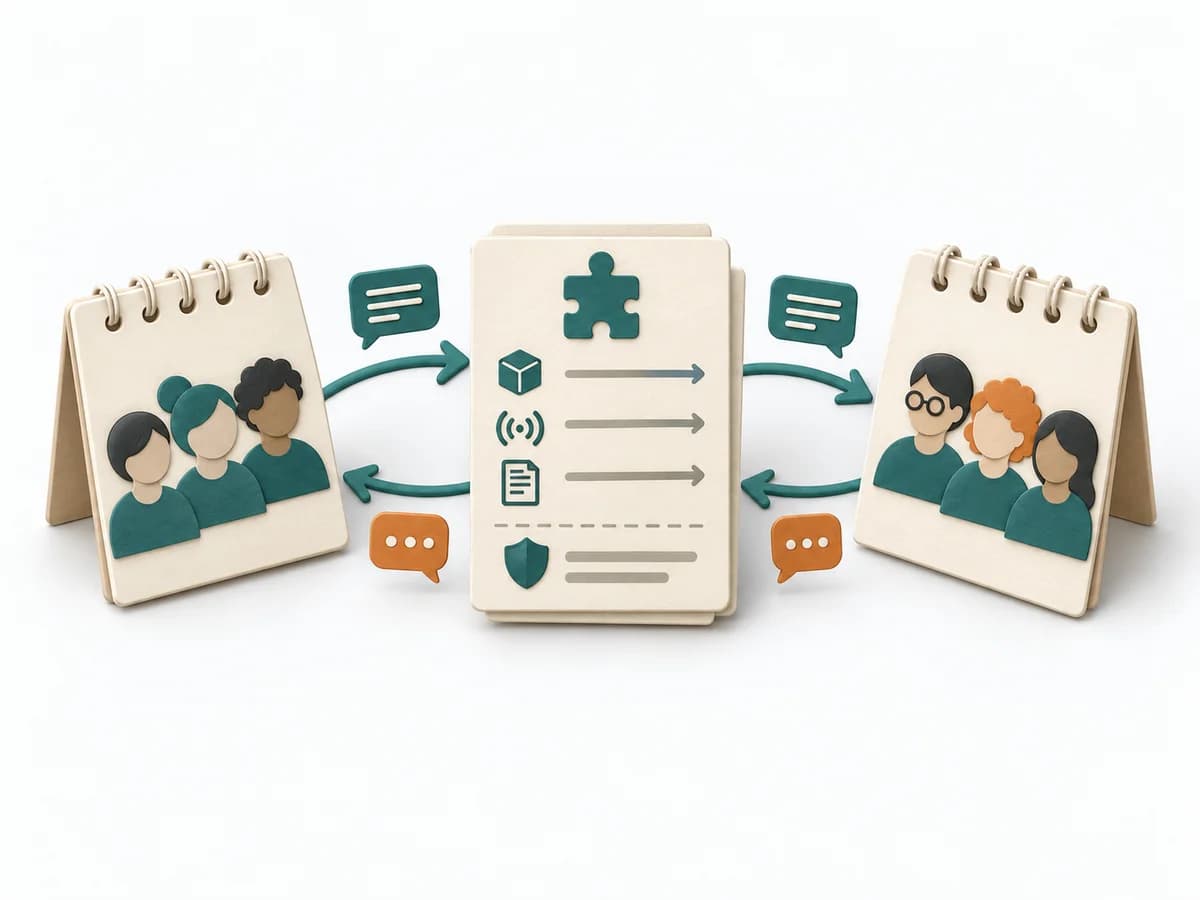
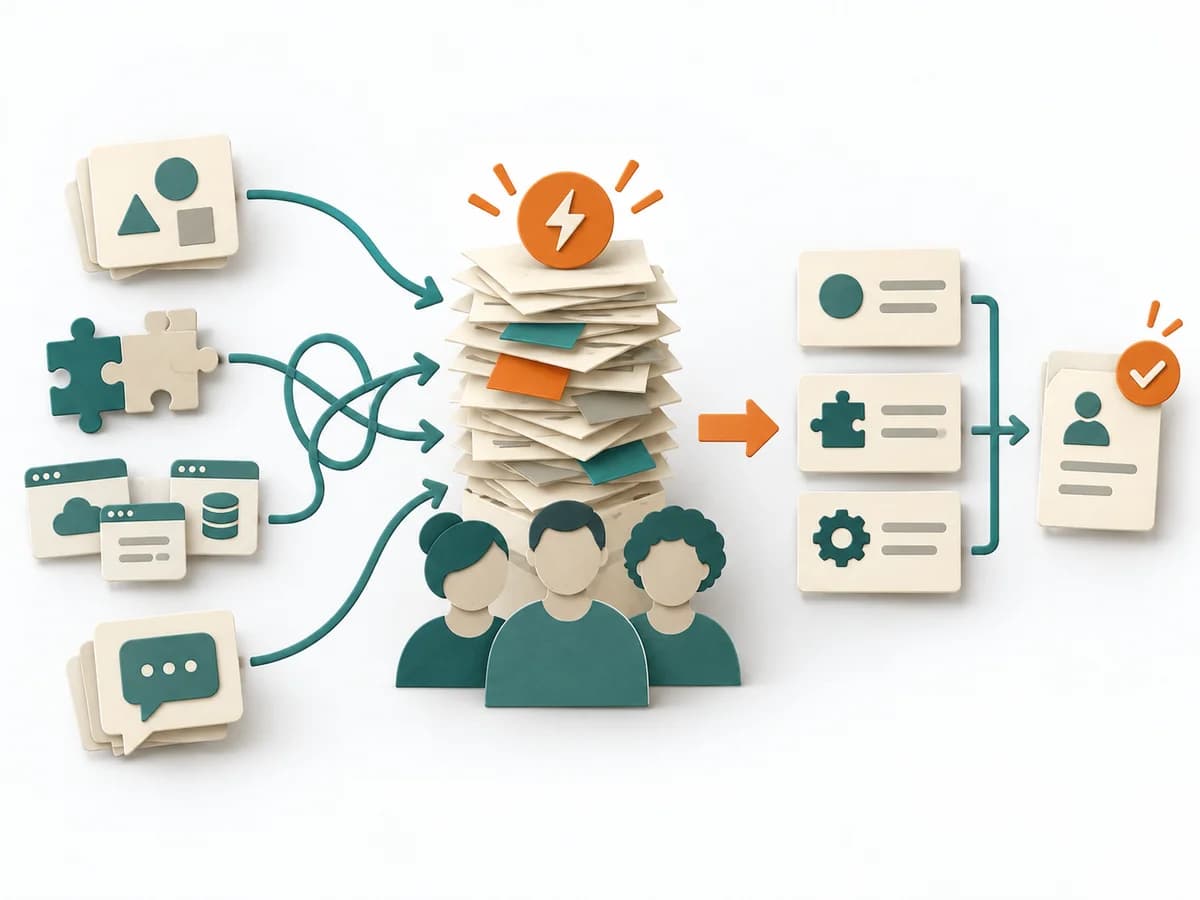
When a team landscape has grown without clear grouping, it maps roles and relationships onto the Spotify model. It clarifies responsibility, interaction, and load between teams. The result is captured as a Spotify model map and action list.
Team Design Mapping tool
Maps squads, tribes, chapters, and guilds to diagnose local organisational needs.
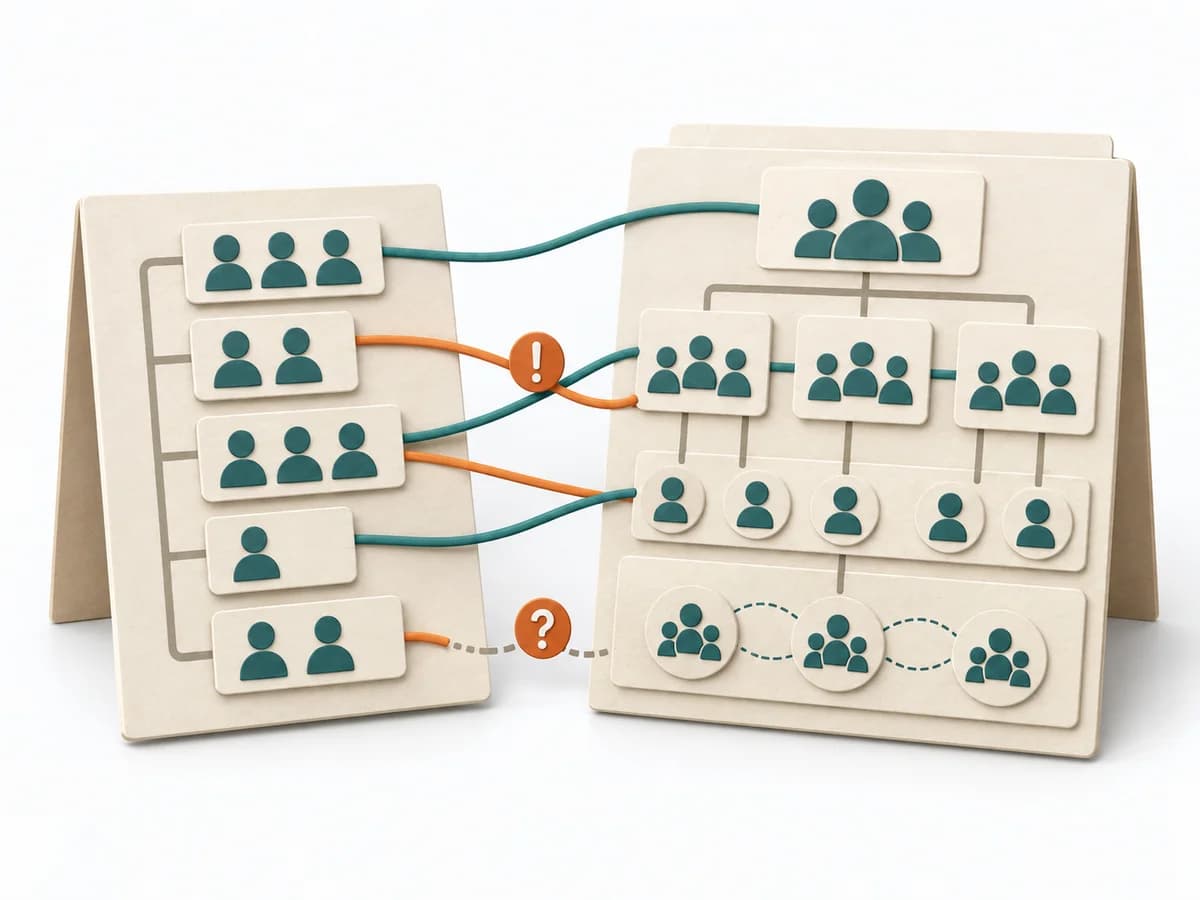
The published Spotify model describes a historical context, not a copyable framework. Mapping translates terms into local purposes, decision rights, and risks and marks deviations.
Which local structures do we need for autonomy, alignment, and craft exchange?
Spotify Model Mapping uses map Spotify terms as hypotheses onto local product flows, communities, and leadership needs. Assessments remain justified and context-bound.
Establish context
Make the historical Spotify context and local differences explicit.
Map product flow
Map long-lived teams to products and value streams.
Map communities
Clarify chapter and guild needs, mandate, and participation.
Test hypothesis
Test the mapping against real decisions and dependencies.
After each organisational change, review flow, autonomy, and craft quality.
For organisational diagnosis with clear product flows; not as reorganisation by label.
organisation mapping with traceable sources, assumptions, and domain decisions.
Owners, dates, and next review for organisation mapping.
Fictional worked example
map Spotify terms as hypotheses onto local product flows, communities, and leadership needs as a precise working structure with a fictional example.
Team/community · purpose · product flow
Billing product team; long-lived product flow.
Squad · tribe · chapter · guild · none
Partly squad; no tribe.
Decision right · leadership · participation
Security chapter with people responsibility.
Misapplication · measure · review
Review hand-offs per feature after eight weeks.
Start with the core question: Which local structures do we need for autonomy, alignment, and craft exchange?
When a team landscape has grown without clear grouping, it maps roles and relationships onto the Spotify model. It clarifies responsibility, interaction, and load between teams. The result is captured as a Spotify model map and action list.
The current organization is mirrored against squads, tribes, chapters, and guilds, so that formal and lived structure can be told apart. This makes overlaps, gaps, and unnecessary coupling visible. The model serves as a conversation frame for adjustment, not as a rigid target picture.
Spotify Model Mapping brings the terms Squad, Tribe, Chapter, and Guild, made popular by Spotify's engineering culture, onto one shared map. It is often used critically because the myth around the model is often larger than the reality at Spotify itself. The method helps make chosen structures explicit and question them.
Define the four terms briefly and consistently. Ask what the terms should mean in your organization. Avoid copying them blindly.
The method guide walks execution through 4 phases, timing, 4 pitfalls, and clear stop criteria.
Open method guideYour perspective
Your feedback helps shape the next improvements to methodatlas.
Plan Spotify Model Mapping around its domain steps and the concrete decision question.
To be confirmed
To be confirmed
Full initiative Time: 2 × 90 minutes
Complete this worksheet on paper or in your own document during the work.
Team/community · purpose · product flow
...
Squad · tribe · chapter · guild · none
...
Decision right · leadership · participation
...
Misapplication · measure · review
...
Spotify Engineering Culture, part 1
Expected artifact: context boundaries
context boundaries · source · uncertainty · next decision
Entry:
...
Expected artifact: flow map
flow map · source · uncertainty · next decision
Entry:
...
Expected artifact: community map
community map · source · uncertainty · next decision
Entry:
...
Expected artifact: change hypothesis
change hypothesis · source · uncertainty · next decision
Entry:
...
...
Method guide: https://methodatlas.meierhoff-systems.de/en/methods/spotify-model-mapping/run-sheet
Fitting alternatives with decision guidance, followed by other related methods.
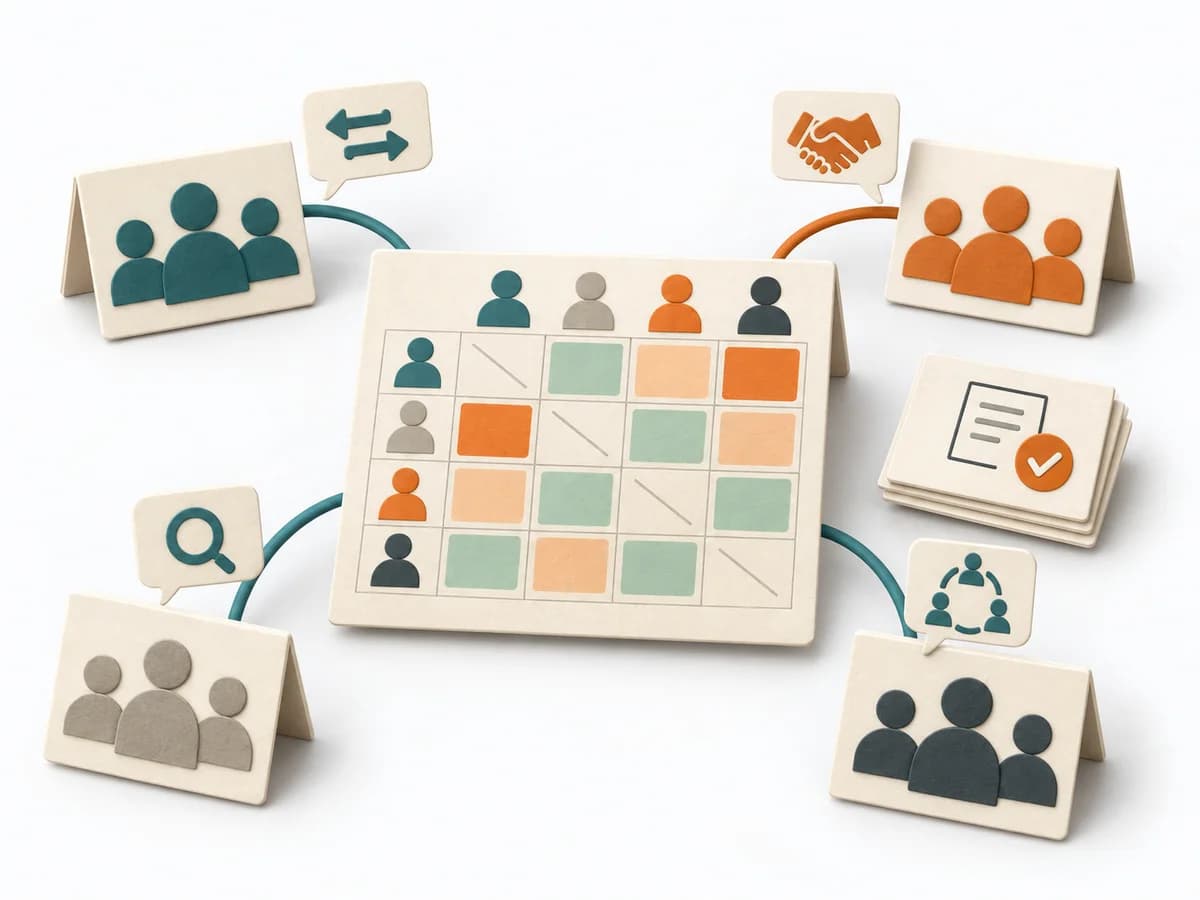
Instead of Spotify Model Mapping, choose Team Topologies Interaction Modes when you want to shape collaboration between teams as a lasting interaction mode.
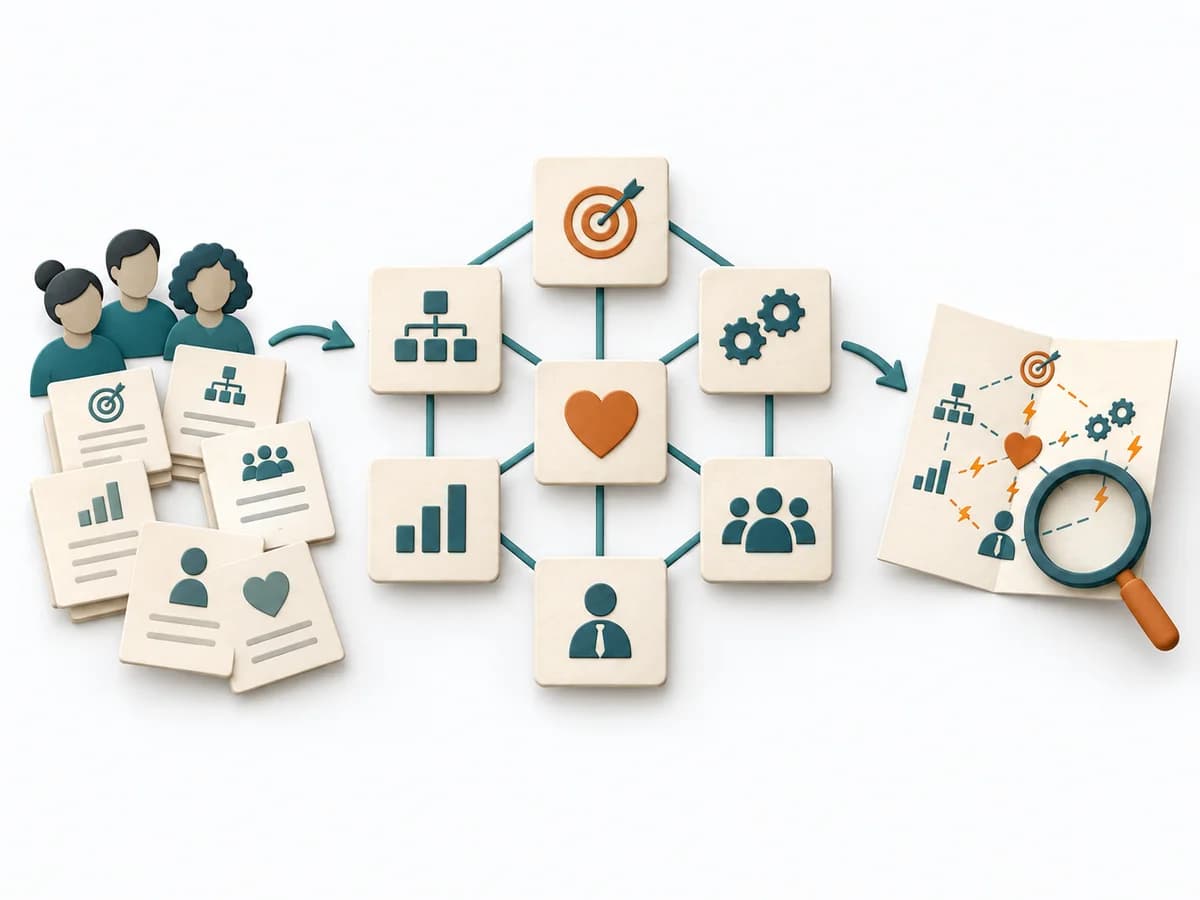
Clarifies starting point, opportunities, and strategic options by framing the scope and target state, capturing the seven elements, and deriving change actions.
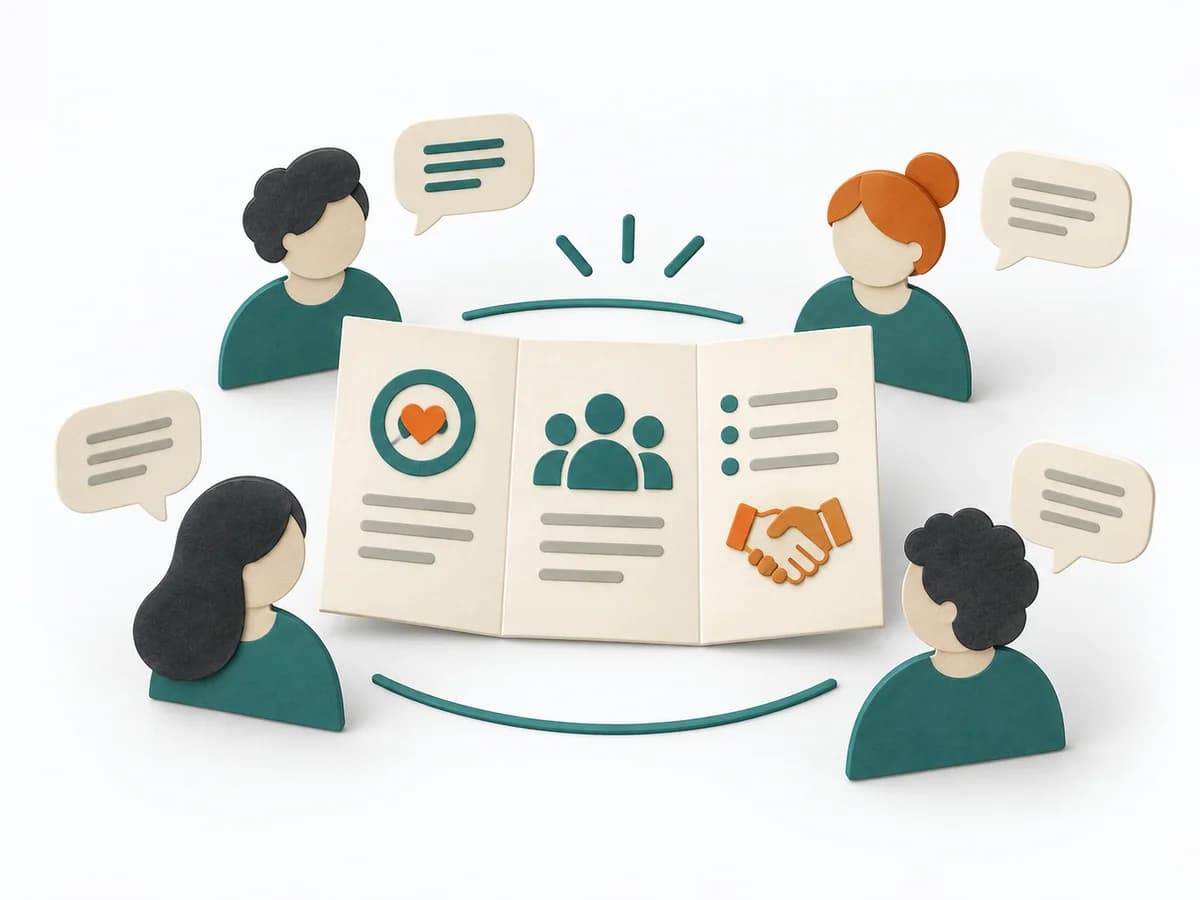
Clarifies purpose, roles, and working rules in a charter that makes collaboration tangible and verifiable.
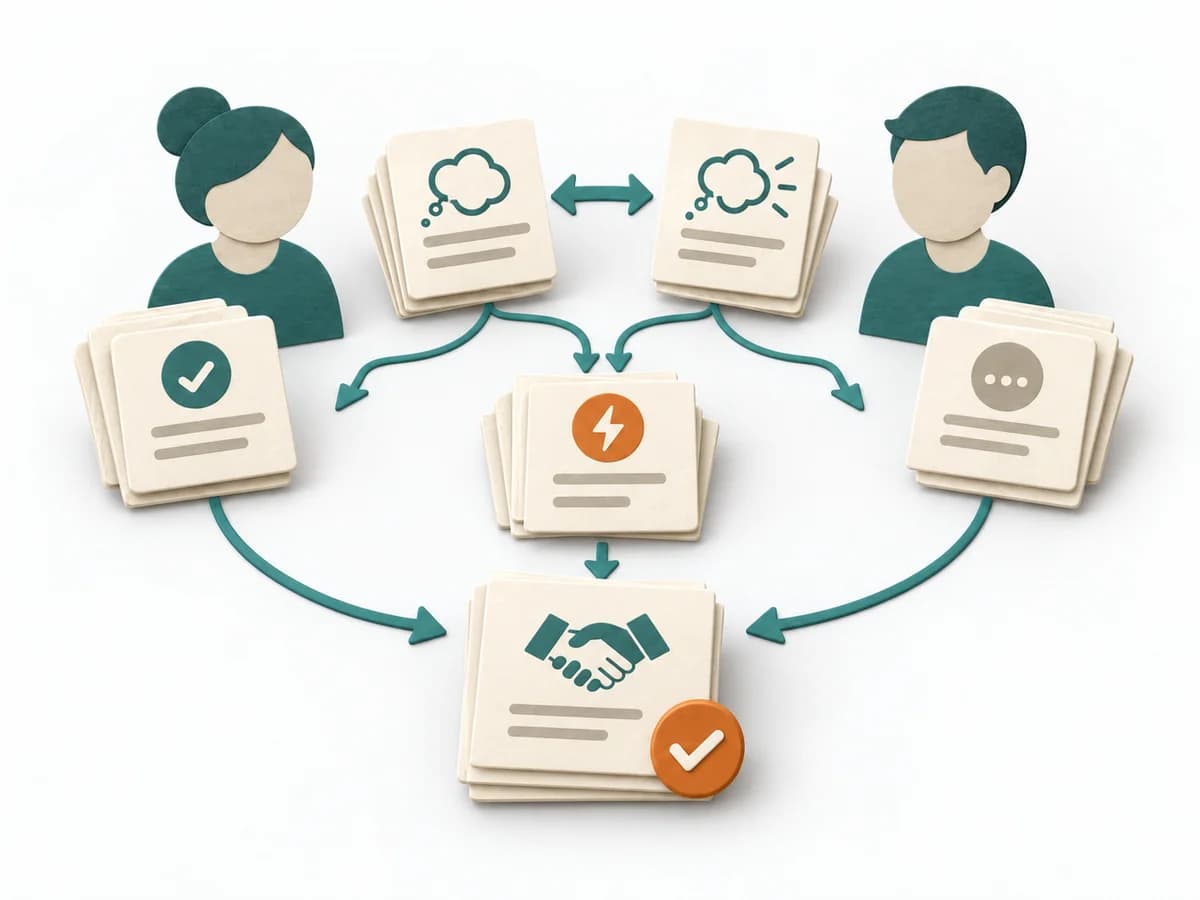
Surfaces stakeholder expectations, clusters conflicts, and turns them into concrete agreements.

Makes goals, concerns, and open gaps visible so clarification steps can be planned deliberately.
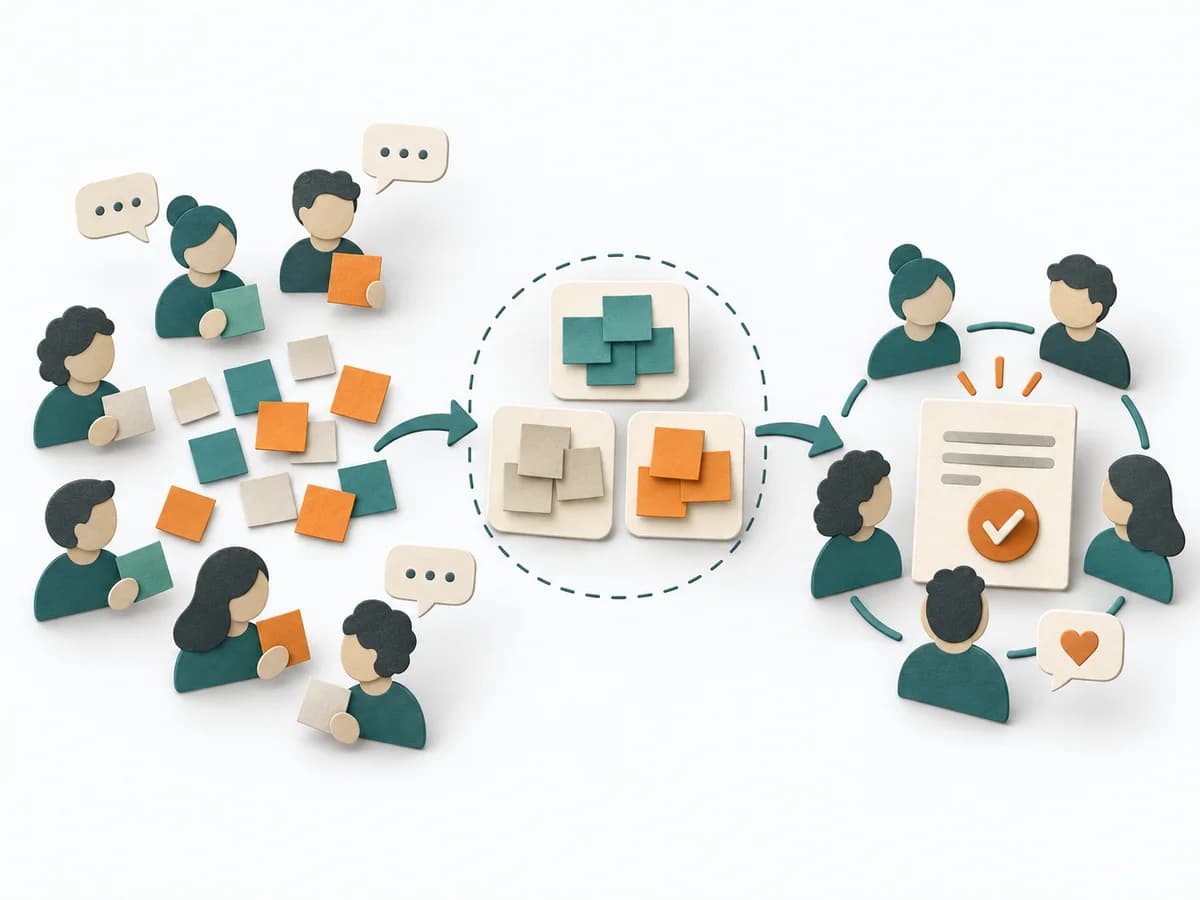
Condenses individual ideas into clusters, themes, and priorities so consensus grows out of individual contributions.