
Purpose
McKinsey 7S checks whether Strategy, Structure, Systems, Shared Values, Skills, Style, and Staff fit together. Organizational misalignments become visible across multiple levers as a result.
Business Strategy Analysis method
Assesses organizational change across seven interdependent elements and makes concrete alignment gaps actionable.
The 7S Framework treats Strategy, Structure, Systems, Shared Values, Skills, Style and Staff as an interconnected organisational system. It compares evidenced current state with the required target state and exposes contradictions among elements.
Which inconsistencies among the seven elements prevent the intended outcome?
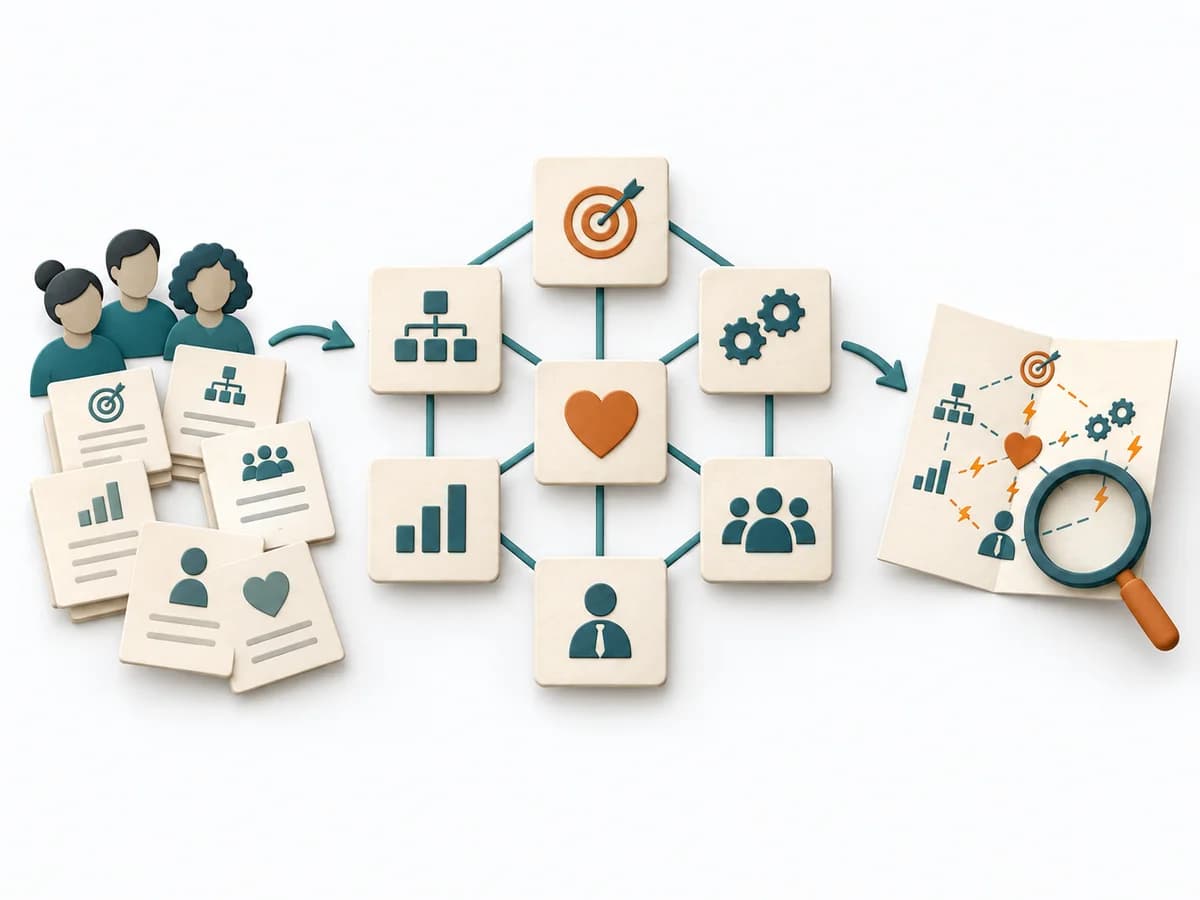
Scope
Bound unit, outcome, horizon and stakeholders.
Current state
Capture formal design and lived practice for each S separately.
Target state
Define the minimum state of every S needed for the change outcome.
Alignment
Test current-target gaps and contradictions as causal relationships among elements.
Actions
Set a small number of levers with dependencies, owners, signals and reviews.
After interventions, reassess relevant 7S relationships and connect every change to effects on the other elements.
For transformations, reorganisations, operating-model reviews, mergers and strategy shifts with organisational dependencies.
Current and target states with evidenced relationships and gaps.
Priority levers with dependencies, owners, signals, side effects and reviews.
Fictional example
The seven elements are evidenced separately and assessed through their relationships.
Which choices and priorities should produce the outcome?
Recurring corporate programmes instead of individual-course sales.
How are accountability, coordination and decision rights organised?
Sales still organised by individual product.
Which processes, data, incentives and routines govern work?
CRM has no renewal pipeline.
Which beliefs shape actual decisions?
“Every course counts” dominates long-term impact.
Which institutional and individual capabilities exist or are needed?
Consultative selling limited to two people.
Which leadership and collaboration behaviour is actually practised?
Monthly control rewards closing rather than retention.
Which roles, capacity and development paths support the model?
Customer-success role is missing.
Set the organisational unit, change outcome, horizon and executive sponsor.
McKinsey 7S checks whether Strategy, Structure, Systems, Shared Values, Skills, Style, and Staff fit together. Organizational misalignments become visible across multiple levers as a result.
First, the team describes the seven areas separately and without premature judgment. It then looks for inconsistencies, dependencies, and areas that slow down strategic change. The result is an organizational view that makes alignment verifiable instead of merely asserted.
McKinsey 7S helps because it treats strategy, structure, systems, style, staff, skills, and shared values as an interconnected organizational fabric. The approach becomes valuable when each S is not optimized in isolation but inconsistencies between them are made visible. The focus is on real behavior patterns, hidden tensions, and consequences of change, so the analysis exposes concrete levers for organizational effectiveness.
Set a clear scope, such as a unit or a transformation initiative, so the organization does not become too large for the group. The critical moment lies in contradictions between the formal target picture and lived practice; persistent probing pays off there. Close with a few prioritized tensions and an agreement on which S to change or examine more closely first.
The method guide walks execution through 5 phases, timing, 5 pitfalls, and clear stop criteria.
Open method guideYour perspective
Your feedback helps shape the next improvements to methodatlas.
Set the organisational unit, change outcome, horizon and executive sponsor.
To be confirmed
To be confirmed
Complete workflow Time: Half-day synthesis plus interviews, document analysis and implementation reviews
Complete this worksheet on paper or in your own document during the work.
Which choices and priorities should produce the outcome?
...
How are accountability, coordination and decision rights organised?
...
Which processes, data, incentives and routines govern work?
...
Which beliefs shape actual decisions?
...
Which institutional and individual capabilities exist or are needed?
...
Which leadership and collaboration behaviour is actually practised?
...
Which roles, capacity and development paths support the model?
...
McKinsey: Enduring Ideas, The 7-S Framework
Expected artifact: Assessment brief
Scope, target, horizon and sponsor
Entry:
...
Expected artifact: 7S current profiles
Fact, practice, source and uncertainty
Entry:
...
Expected artifact: 7S target profiles
Target condition and dependencies
Entry:
...
Expected artifact: Alignment Map
Gap, affected S, evidence and effect
Entry:
...
Expected artifact: 7S change plan
Lever, dependency, owner, signal and review
Entry:
...
...
Method guide: https://methodatlas.meierhoff-systems.de/en/methods/mckinsey-7s/run-sheet
Fitting alternatives with decision guidance, followed by other related methods.

Instead of McKinsey 7S, choose GAP Analysis when you want to compare the current state and the target state with concrete gaps and causes.
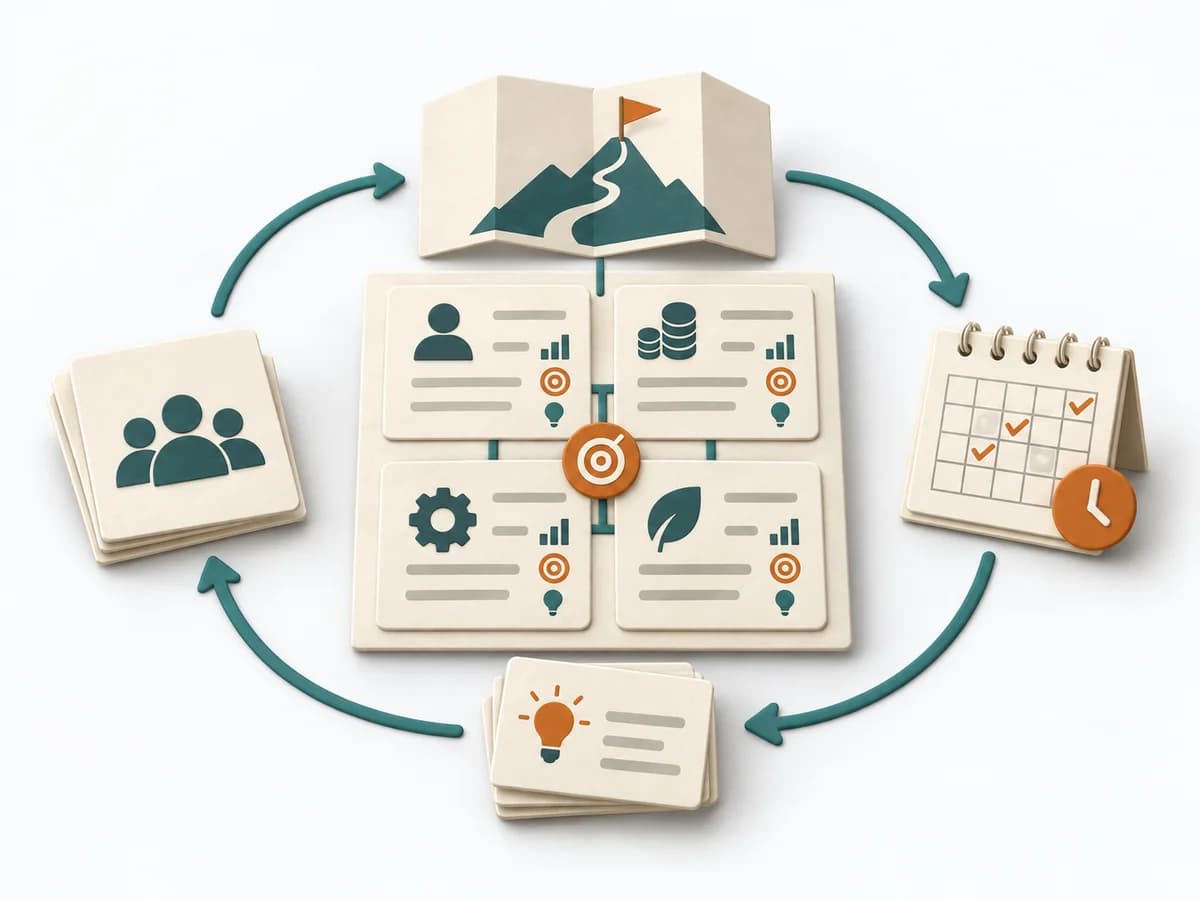
Links perspectives, metrics, and initiatives into a scorecard that makes strategy traceable in daily work.
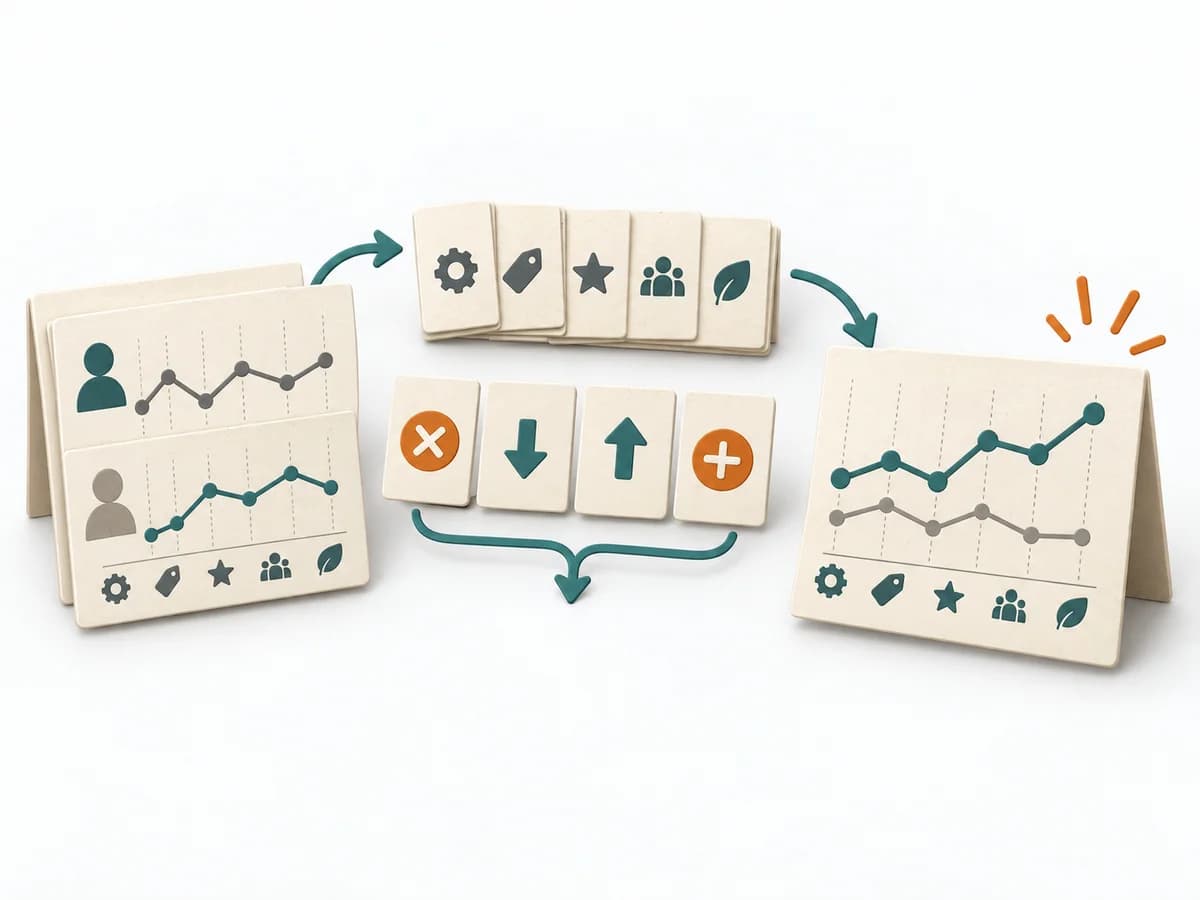
Clarifies starting point, opportunities, and strategic options by defining the competitive factors, drawing the current value curve, and testing a new value curve.
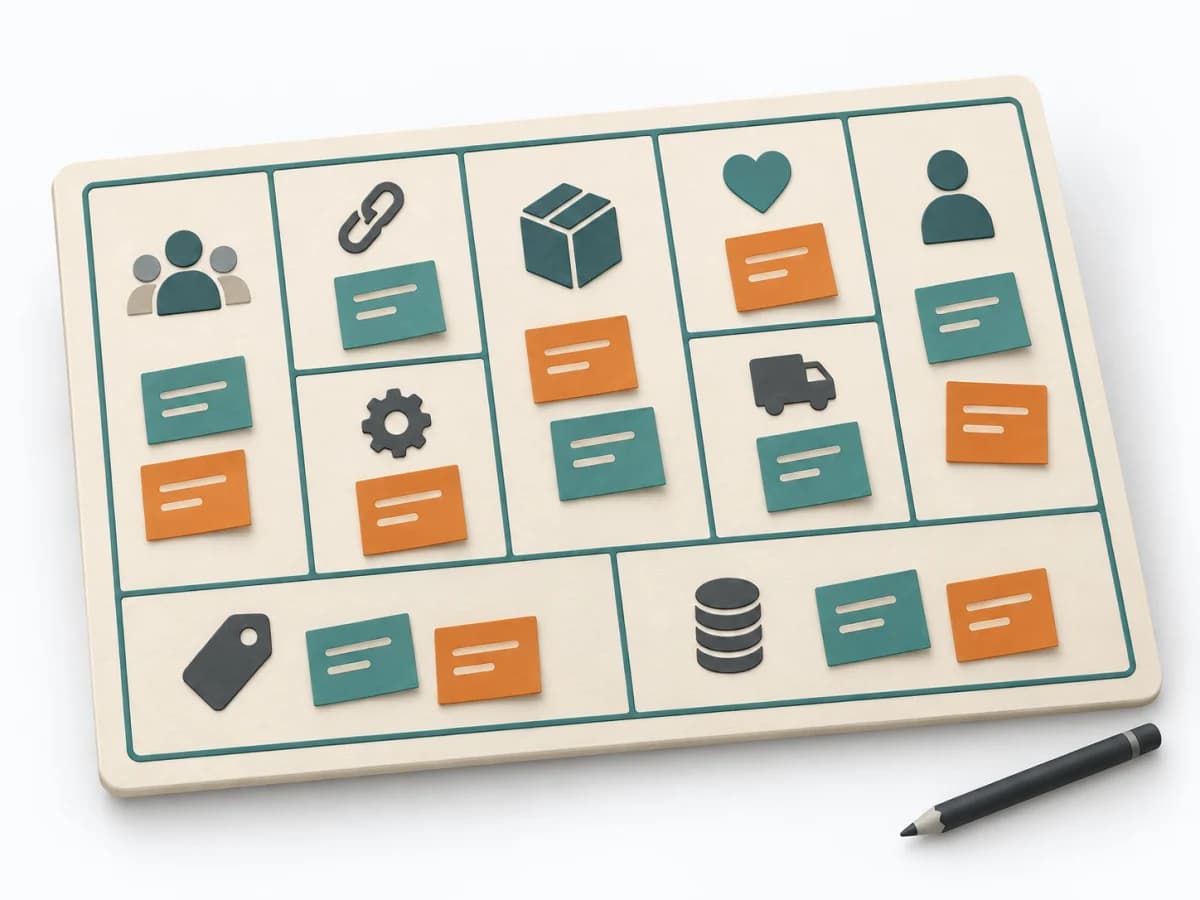
Arranges business building blocks, assumptions, and hypotheses so model variants become more clearly comparable.
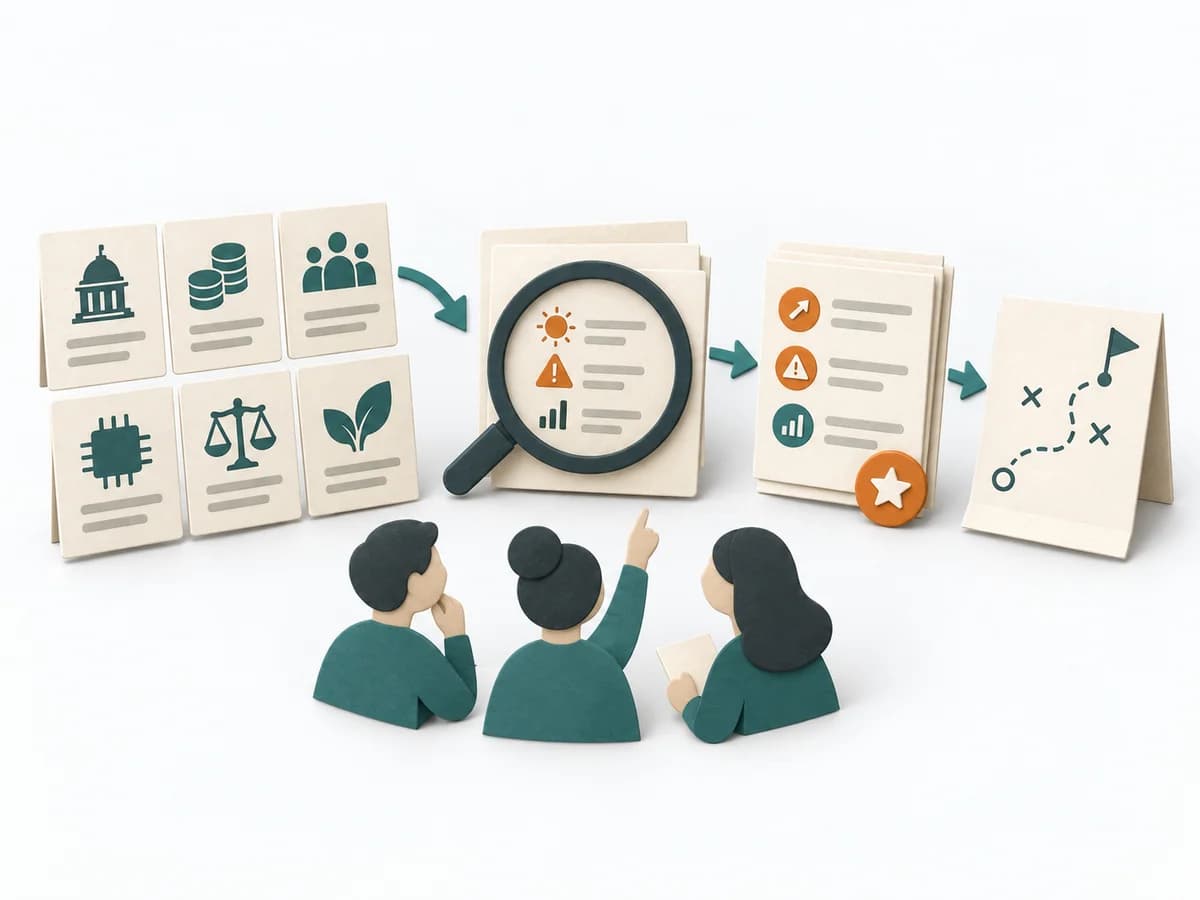
Clarifies starting point, opportunities, and strategic options by defining the scope and market, gathering factors by category, and formulating strategic questions.
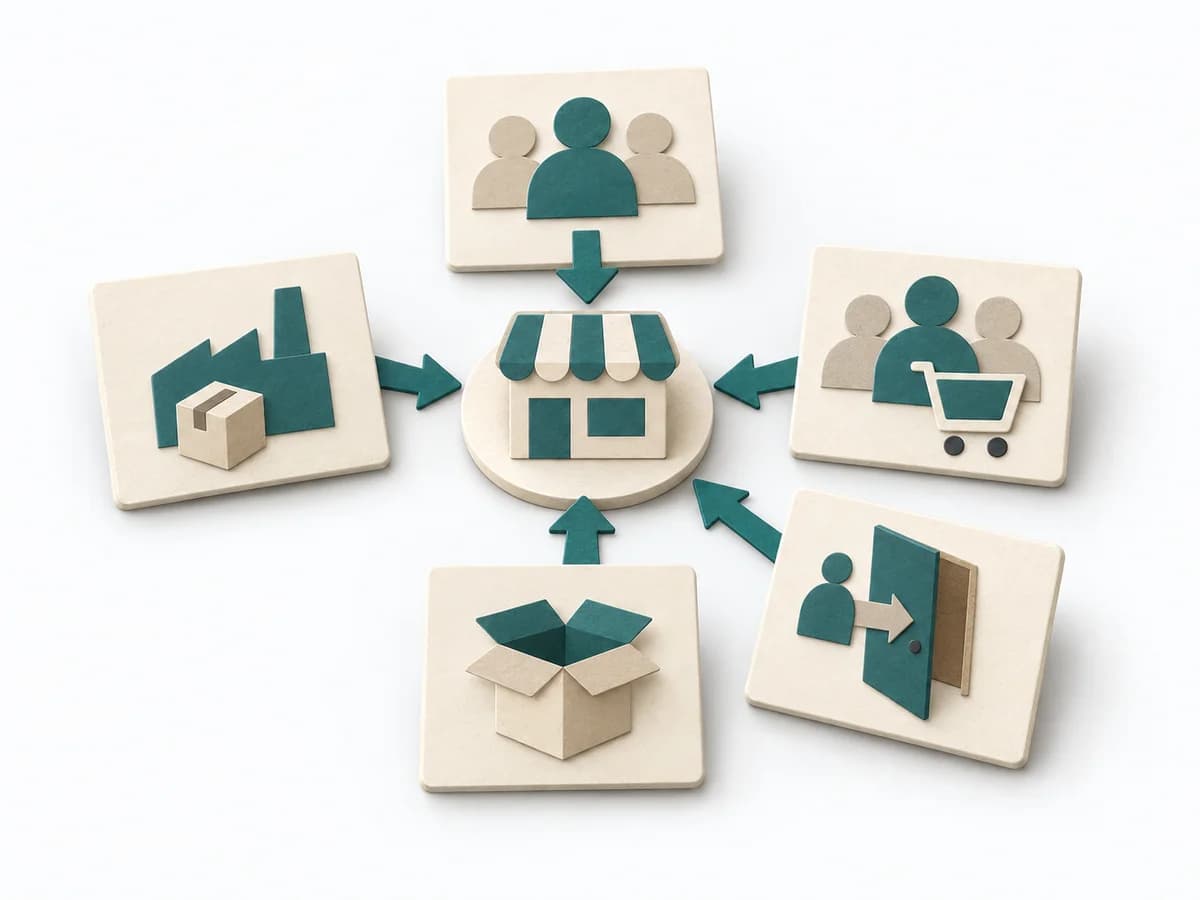
Clarifies starting point, opportunities, and strategic options by defining the industry scope, analyzing the five forces, and formulating strategic options.
