Spotify Model Mapping: Worksheet
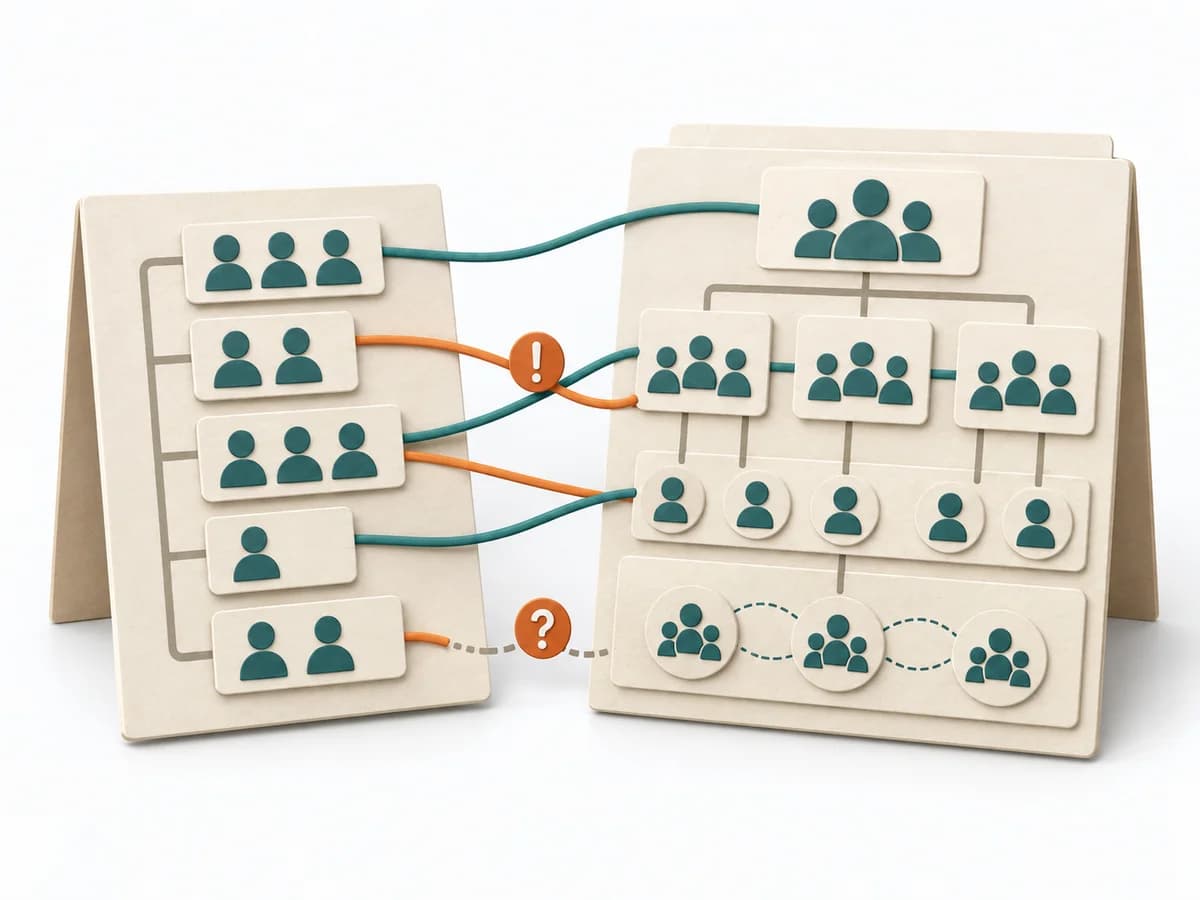
Plan Spotify Model Mapping around its domain steps and the concrete decision question.
# Spotify Model Mapping: Worksheet

## Question
To be confirmed

## Desired outcome
To be confirmed

## Scope
Full initiative
Time: 2 × 90 minutes

Complete this worksheet on paper or in your own document during the work.

## Preparation for this scope

### Method setup
- **Materials:** Product and value flows, current teams and communities, decision and dependency data, shared workspace, source links, and decision log.
- **Roles:** Leadership · team representatives · Product · People/Organisation
- **Advance information:** Collect Product and value flows, current teams and communities, decision and dependency data in advance and mark open assumptions.
- **Overall time needed:** 2 × 90 minutes
- **Setup:** Prepare map Spotify terms as hypotheses onto local product flows, communities, and leadership needs visibly and calibrate assessment terms before starting.

### Prepare for the work steps

#### Establish context: Establish context
- Product and value flows
- current teams and communities
- decision and dependency data

#### Map product flow: Map product flow
- context boundaries
- current teams and communities
- decision and dependency data

#### Map communities: Map communities
- flow map
- current teams and communities
- decision and dependency data

#### Test hypothesis: Test hypothesis
- community map
- current teams and communities
- decision and dependency data


## organisation mapping

### Local unit
Team/community · purpose · product flow

...

### Spotify analogy
Squad · tribe · chapter · guild · none

...

### Mandate
Decision right · leadership · participation

...

### Risk and test
Misapplication · measure · review

...

[Spotify Engineering Culture, part 1](https://blog.crisp.se/wp-content/uploads/2012/11/SpotifyScaling.pdf)


## Establish context: Establish context
Expected artifact: context boundaries

context boundaries · source · uncertainty · next decision

Entry:

...

- [ ] Are terms marked as analogies?

## Map product flow: Map product flow
Expected artifact: flow map

flow map · source · uncertainty · next decision

Entry:

...

- [ ] Does the boundary minimise hand-offs?

## Map communities: Map communities
Expected artifact: community map

community map · source · uncertainty · next decision

Entry:

...

- [ ] Are people responsibility and voluntary exchange distinct?

## Test hypothesis: Test hypothesis
Expected artifact: change hypothesis

change hypothesis · source · uncertainty · next decision

Entry:

...

- [ ] Is a measurable flow improvement named?

## Open questions and next steps

...

Method guide: https://methodatlas.meierhoff-systems.de/en/methods/spotify-model-mapping/run-sheet
Team Topologies Interaction Modes: Worksheet
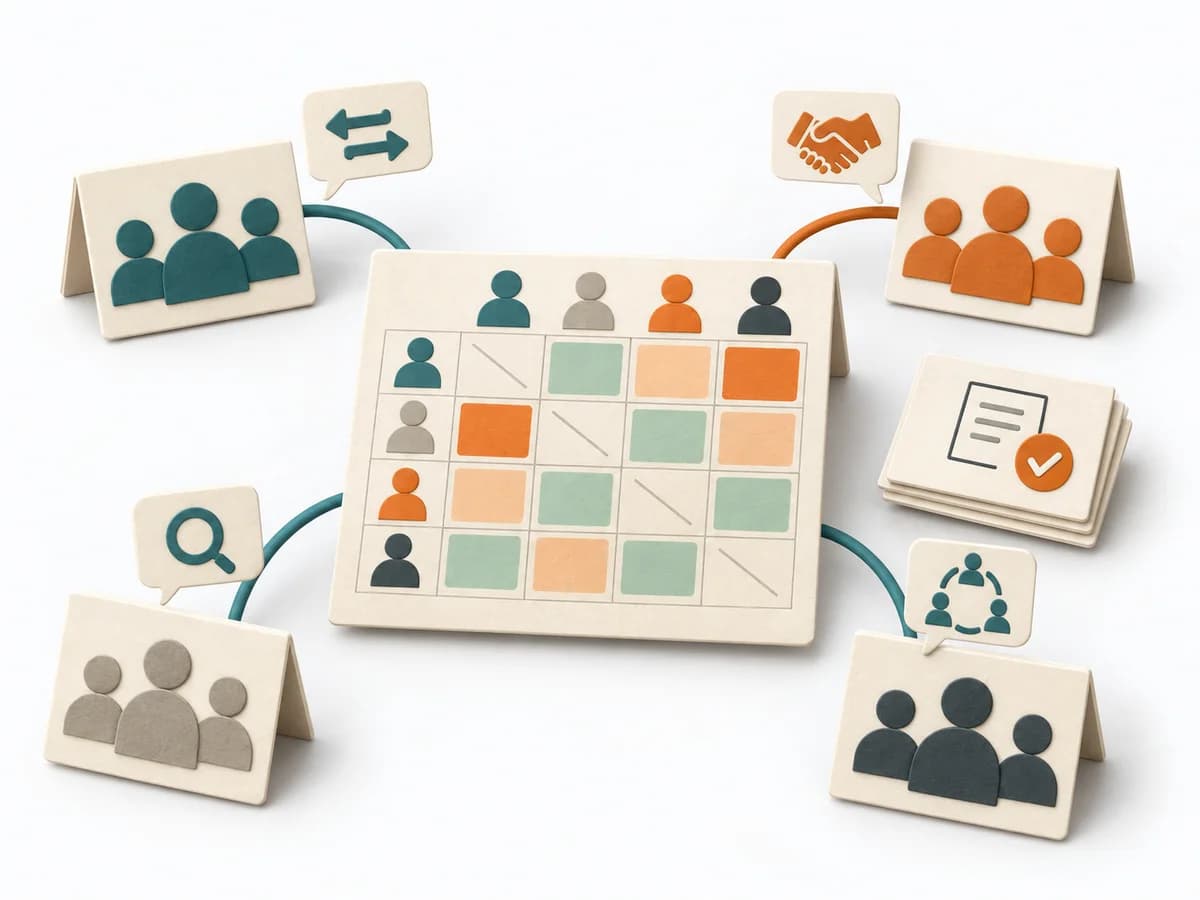
Plan Team Topologies Interaction Modes around its domain steps and the concrete decision question.
# Team Topologies Interaction Modes: Worksheet

## Question
To be confirmed

## Desired outcome
To be confirmed

## Scope
Establish and review the practice
Time: 60 minutes

Complete this worksheet on paper or in your own document during the work.

## Preparation for this scope

### Method setup
- **Materials:** Team boundaries and APIs, concrete shared outcomes, dependency and flow data, shared workspace, source links, and decision log.
- **Roles:** Representatives of both teams · team leads · enabling team if needed
- **Advance information:** Collect Team boundaries and APIs, concrete shared outcomes, dependency and flow data in advance and mark open assumptions.
- **Overall time needed:** 60 minutes
- **Setup:** Prepare assign a team relationship to one of three modes using outcome, knowledge flow, and desired coupling visibly and calibrate assessment terms before starting.

### Prepare for the work steps

#### Bound relationship: Bound relationship
- Team boundaries and APIs
- concrete shared outcomes
- dependency and flow data

#### Choose mode: Choose mode
- relationship profile
- concrete shared outcomes
- dependency and flow data

#### Frame interaction: Frame interaction
- mode decision
- concrete shared outcomes
- dependency and flow data

#### Review mode: Review mode
- interaction contract
- concrete shared outcomes
- dependency and flow data


## interaction mode map

| Subject | Team A · team B · outcome | Collaboration · XaaS · Facilitating + reason | Timebox · interface · responsibilities | Criterion · next mode · review |
| --- | --- | --- | --- | --- |
| interaction mode map |   |   |   |   |

- **interaction mode map:** Worked example

Enter only real input, sources, and decisions.

[Team Topologies: Team Interaction Modeling](https://teamtopologies.com/key-concepts-content/team-interaction-modeling-with-team-topologies)


## Bound relationship: Bound relationship
Expected artifact: relationship profile

relationship profile · source · uncertainty · next decision

Entry:

...

- [ ] Is a concrete outcome named rather than generic cooperation?

## Choose mode: Choose mode
Expected artifact: mode decision

mode decision · source · uncertainty · next decision

Entry:

...

- [ ] Does the mode fit the type of uncertainty?

## Frame interaction: Frame interaction
Expected artifact: interaction contract

interaction contract · source · uncertainty · next decision

Entry:

...

- [ ] Are start, end, and expected capability clear?

## Review mode: Review mode
Expected artifact: review decision

review decision · source · uncertainty · next decision

Entry:

...

- [ ] Does the next mode prevent unnecessary coupling?

## Open questions and next steps

...

Method guide: https://methodatlas.meierhoff-systems.de/en/methods/team-topologies-interaction-modes/run-sheet
Team API: Worksheet
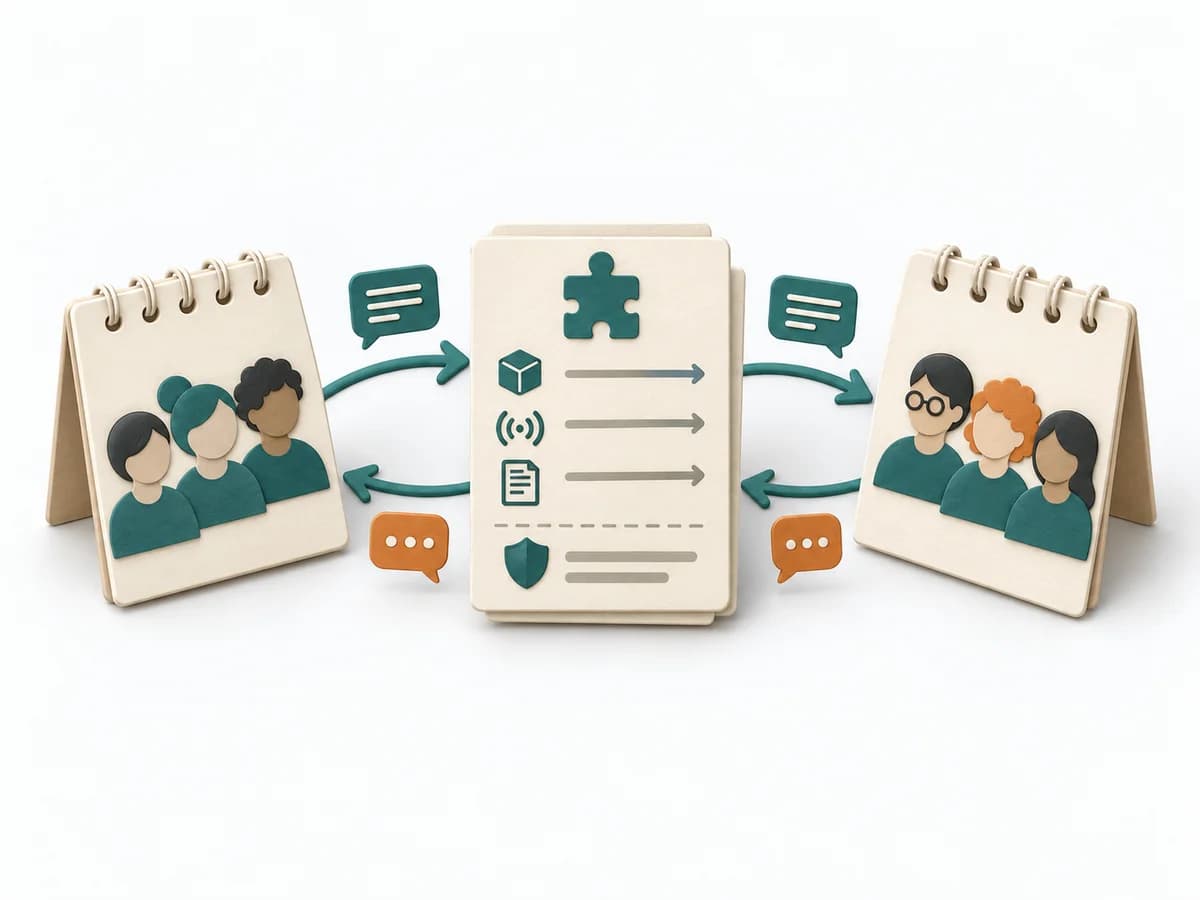
Plan Team API around its domain steps and the concrete decision question.
# Team API: Worksheet

## Question
To be confirmed

## Desired outcome
To be confirmed

## Scope
Establish and review the practice
Time: 90 minutes initially; 30-minute review

Complete this worksheet on paper or in your own document during the work.

## Preparation for this scope

### Method setup
- **Materials:** Team mission and services, dependencies and contact routes, work and support data, shared workspace, source links, and decision log.
- **Roles:** Whole team · team lead · key consuming teams
- **Advance information:** Collect Team mission and services, dependencies and contact routes, work and support data in advance and mark open assumptions.
- **Overall time needed:** 90 minutes initially; 30-minute review
- **Setup:** Prepare explicit team contract covering mission, ownership, interfaces, and working preferences visibly and calibrate assessment terms before starting.

### Prepare for the work steps

#### Mission: Mission/ownership
- Team mission and services
- dependencies and contact routes
- work and support data

#### Interfaces: Interfaces
- ownership profile
- dependencies and contact routes
- work and support data

#### Ways of working: Ways of working
- interaction catalogue
- dependencies and contact routes
- work and support data

#### Consumer review: Consumer review
- collaboration rules
- dependencies and contact routes
- work and support data


## team API

### Mission and services
Purpose · outcomes · ownership

...

### Consumers and interaction
Need · mode · contact

...

### Ways of working
Support · response · preference

...

### Boundaries and review
Out of scope · review date · owner

...

Enter only real input, sources, and decisions.

[Team Topologies: Team API template](https://github.com/TeamTopologies/Team-API-template)


## Mission: Mission/ownership
Expected artifact: ownership profile

ownership profile · source · uncertainty · next decision

Entry:

...

- [ ] Are responsibilities expressed as services or outcomes?

## Interfaces: Interfaces
Expected artifact: interaction catalogue

interaction catalogue · source · uncertainty · next decision

Entry:

...

- [ ] Is there one clear route for every need?

## Ways of working: Ways of working
Expected artifact: collaboration rules

collaboration rules · source · uncertainty · next decision

Entry:

...

- [ ] Are commitments realistic and measurable?

## Consumer review: Consumer review
Expected artifact: validated team API

validated team API · source · uncertainty · next decision

Entry:

...

- [ ] Can consumers find ownership and contact without asking?

## Open questions and next steps

...

Method guide: https://methodatlas.meierhoff-systems.de/en/methods/team-api/run-sheet
Team Cognitive Load Assessment: Worksheet
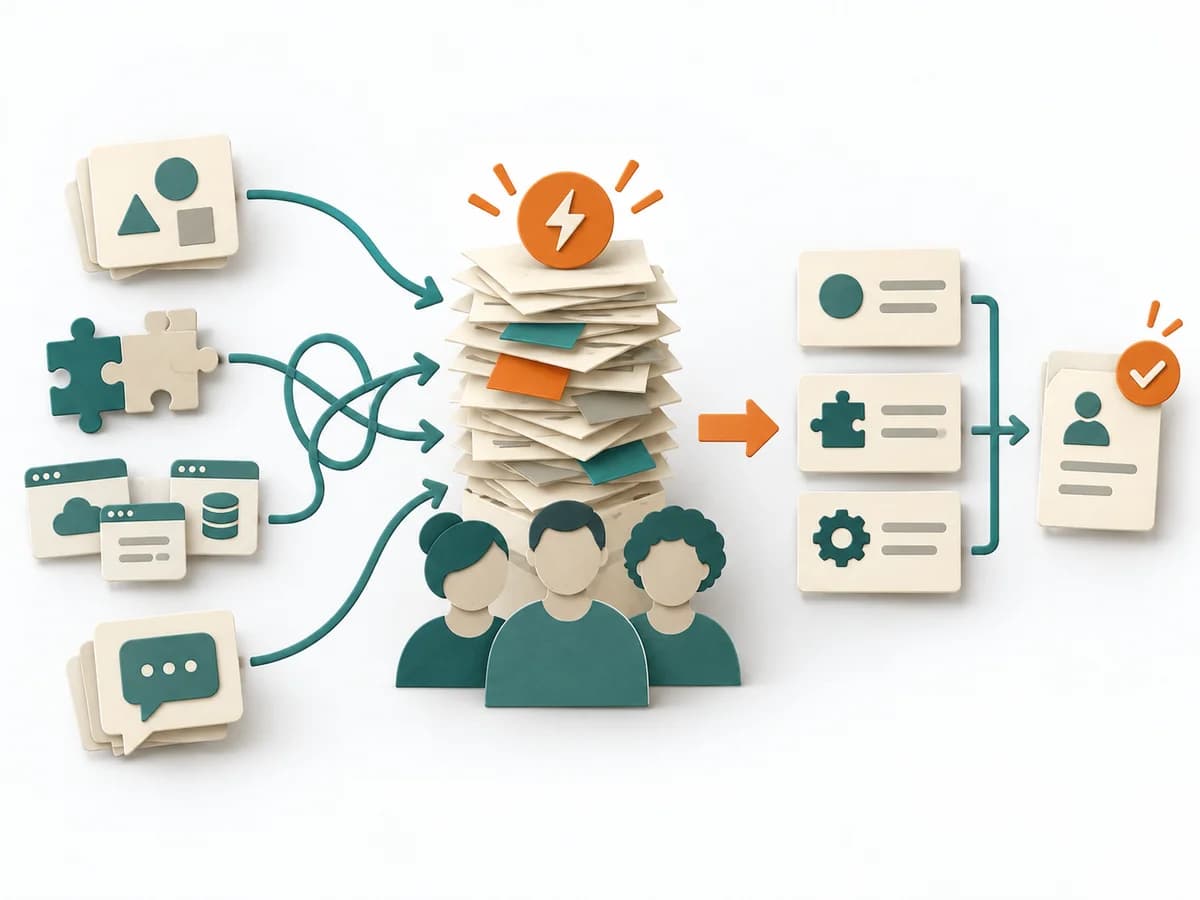
Plan Team Cognitive Load Assessment around its domain steps and the concrete decision question.
# Team Cognitive Load Assessment: Worksheet

## Question
To be confirmed

## Desired outcome
To be confirmed

## Scope
Establish and review the practice
Time: 75 minutes

Complete this worksheet on paper or in your own document during the work.

## Preparation for this scope

### Method setup
- **Materials:** Examples from the last four weeks, interrupt and flow data, team boundaries and services, shared workspace, source links, and decision log.
- **Roles:** Whole team · facilitator · platform or leadership role as needed
- **Advance information:** Collect Examples from the last four weeks, interrupt and flow data, team boundaries and services in advance and mark open assumptions.
- **Overall time needed:** 75 minutes
- **Setup:** Prepare classify concrete load episodes as intrinsic, extraneous, or germane load visibly and calibrate assessment terms before starting.

### Prepare for the work steps

#### Collect episodes: Collect episodes
- Examples from the last four weeks
- interrupt and flow data
- team boundaries and services

#### Classify load: Classify load
- episode list
- interrupt and flow data
- team boundaries and services

#### Test boundary: Test boundary
- load map
- interrupt and flow data
- team boundaries and services

#### Design relief: Design relief
- boundary diagnosis
- interrupt and flow data
- team boundaries and services


## cognitive load map

| Subject | Situation · trigger · effect | Intrinsic · extraneous · germane + rationale | Team boundary · tool · process · dependency | Action · owner · indicator |
| --- | --- | --- | --- | --- |
| cognitive load map |   |   |   |   |

- **cognitive load map:** Worked example

Enter only real input, sources, and decisions.

[Team Topologies: Cognitive Load](https://teamtopologies.com/key-concepts)


## Collect episodes: Collect episodes
Expected artifact: episode list

episode list · source · uncertainty · next decision

Entry:

...

- [ ] Does each entry include situation, trigger, and effect?

## Classify load: Classify load
Expected artifact: load map

load map · source · uncertainty · next decision

Entry:

...

- [ ] Is classification based on cause rather than feeling?

## Test boundary: Test boundary
Expected artifact: boundary diagnosis

boundary diagnosis · source · uncertainty · next decision

Entry:

...

- [ ] Does the load sit in the right team?

## Design relief: Design relief
Expected artifact: relief experiment

relief experiment · source · uncertainty · next decision

Entry:

...

- [ ] Does the indicator measure real flow improvement?

## Open questions and next steps

...

Method guide: https://methodatlas.meierhoff-systems.de/en/methods/team-cognitive-load-assessment/run-sheet