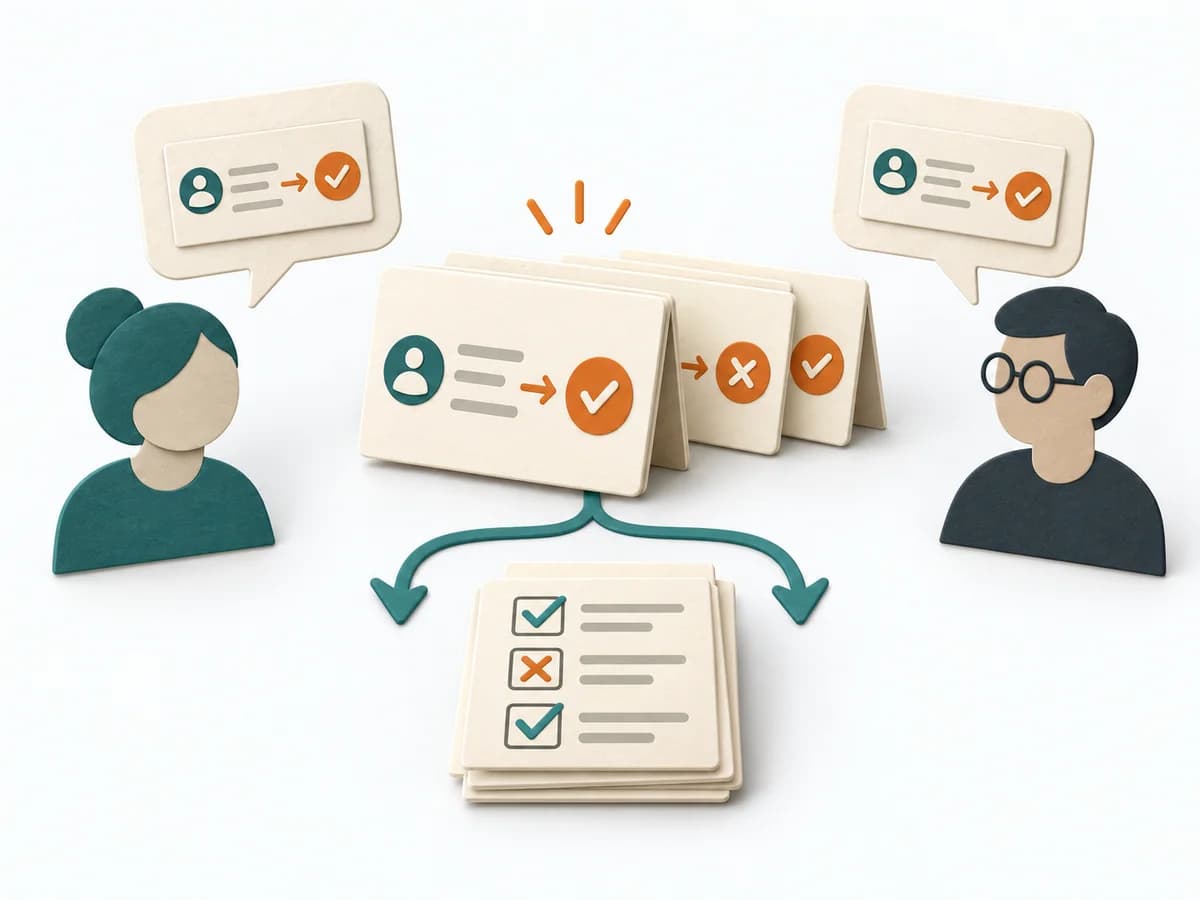

Purpose
When a story carries business rules and exceptions, it brings clarity before implementation. It makes examples, open questions, and boundaries visible enough that the logic becomes jointly sound.
Agile Workshop method
Clarifies a story for implementation through business rules, concrete examples, and open questions.
Example Mapping is a short BDD-oriented team conversation before implementation. The group starts from concrete examples, summarizes business rules and records questions, assumptions and newly discovered stories.
Which rules and cases must be clear so this story can be understood and tested?
One focused map per story; colors are common conventions and can be replaced digitally.
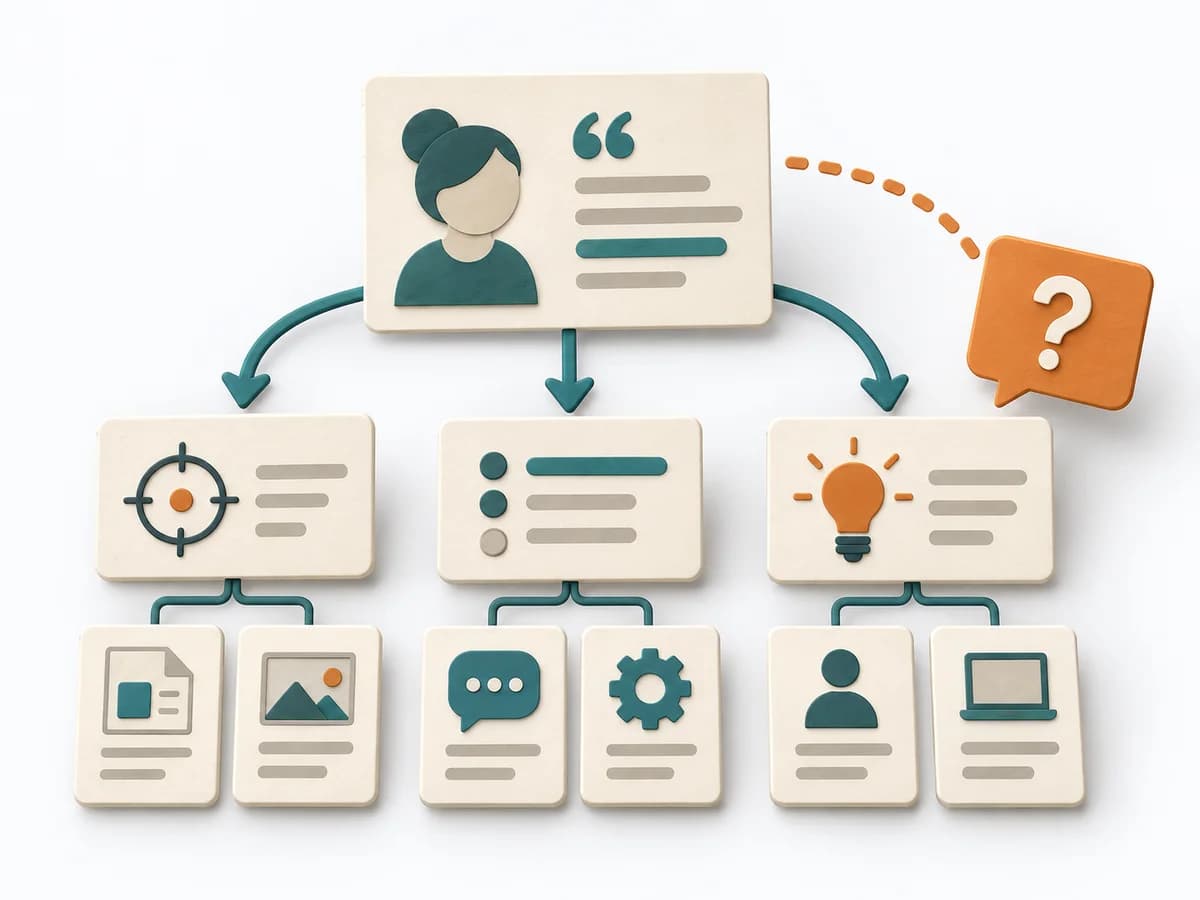
Focus
A clear user story frames the clarification.
Rules
Describe general conditions that constrain the intended behavior.
Examples
Concrete cases show how a rule applies in typical and variant situations.
Questions
Unanswerable questions stay visible and become actionable follow-up.
Update the story and examples when domain decisions or new learning arrive. Keep open questions visible with an owner and due date.
Use it when a user story needs clarification and examples that can guide acceptance tests.

A bounded change as the shared focus.
Testable behavior rules with concrete examples and counterexamples.

Unresolved points with an owner, due date and follow-up decision.
Fictional teaching example
One story with rules, concrete examples and unresolved questions. Card colors follow Cucumber’s documented convention.
Which single change are we clarifying?
As a member, I want to reserve a tool so it is available for my repair.
Which general business condition applies?
R1: A confirmed reservation states the tool and collection time. R2: If the tool is unavailable in the requested window, no reservation is confirmed. (Both rules fictional)
Which concrete precondition, action and outcome illustrate the rule?
F1: A person reserves on Monday for Wednesday. The confirmation names Wednesday as the collection day. (Fictional)
What remains unresolved, and who will clarify it by when?
Fictional open question: What happens if the previous loan is returned late? Add an owner and due date before implementation.
The examples are fictional. Yellow for story, blue for rule, green for example and red for open question follow Cucumber’s documented card convention; digital labels also work.
Choose one suitably small story and include people who understand its domain rules, implementation and testing.
When a story carries business rules and exceptions, it brings clarity before implementation. It makes examples, open questions, and boundaries visible enough that the logic becomes jointly sound.
It places rules and concrete examples side by side and checks where behavior is clear or contradictory. This makes acceptance criteria more precise and surfaces misunderstandings earlier.
Example Mapping works because rules only become reliable once they are checked against concrete cases and exceptions get their place. Good facilitation keeps the discussion tightly bound to observable examples and leaves questions open until their relevance is clear. This shrinks the room for interpretation in stories without letting the team slide into premature detail planning.
Bring a story with recognizable business logic and at least one edge case so the conversation has substance right away. The key moment comes when an example breaks a rule that seemed clear. Close with a few precise rules, open questions for later clarification, and a result that can feed directly into implementation.
The method guide walks execution through 4 phases, timing, 4 pitfalls, and clear stop criteria.
Open method guideYour perspective
Your feedback helps shape the next improvements to methodatlas.
Plan a focused conversation around one story, including decision ownership and follow-up.
To be confirmed
To be confirmed
Clarify one story together Time: About 25 minutes per story
Complete this worksheet on paper or in your own document during the work.
Which single change are we clarifying?
...
Which general business condition applies?
...
Which concrete precondition, action and outcome illustrate the rule?
...
What remains unresolved, and who will clarify it by when?
...
Blank worksheet: keep story, rules, examples and questions distinct. Record examples as concrete cases; assign an owner and date to unanswered questions.
Expected artifact: A focused story with a shared context
Story · actor · intended change
Entry:
...
Expected artifact: Rule cards for the story
One rule per card · unambiguous condition
Entry:
...
Expected artifact: Rules with examples and counterexamples
Given · when · expected result
Entry:
...
Expected artifact: Example map and agreed next action
Rules · examples · open questions
Entry:
...
...
Method guide: https://methodatlas.meierhoff-systems.de/en/methods/example-mapping/run-sheet
Fitting alternatives with decision guidance, followed by other related methods.

Instead of Example Mapping, when you want product, development, and testing to align early on the same story.
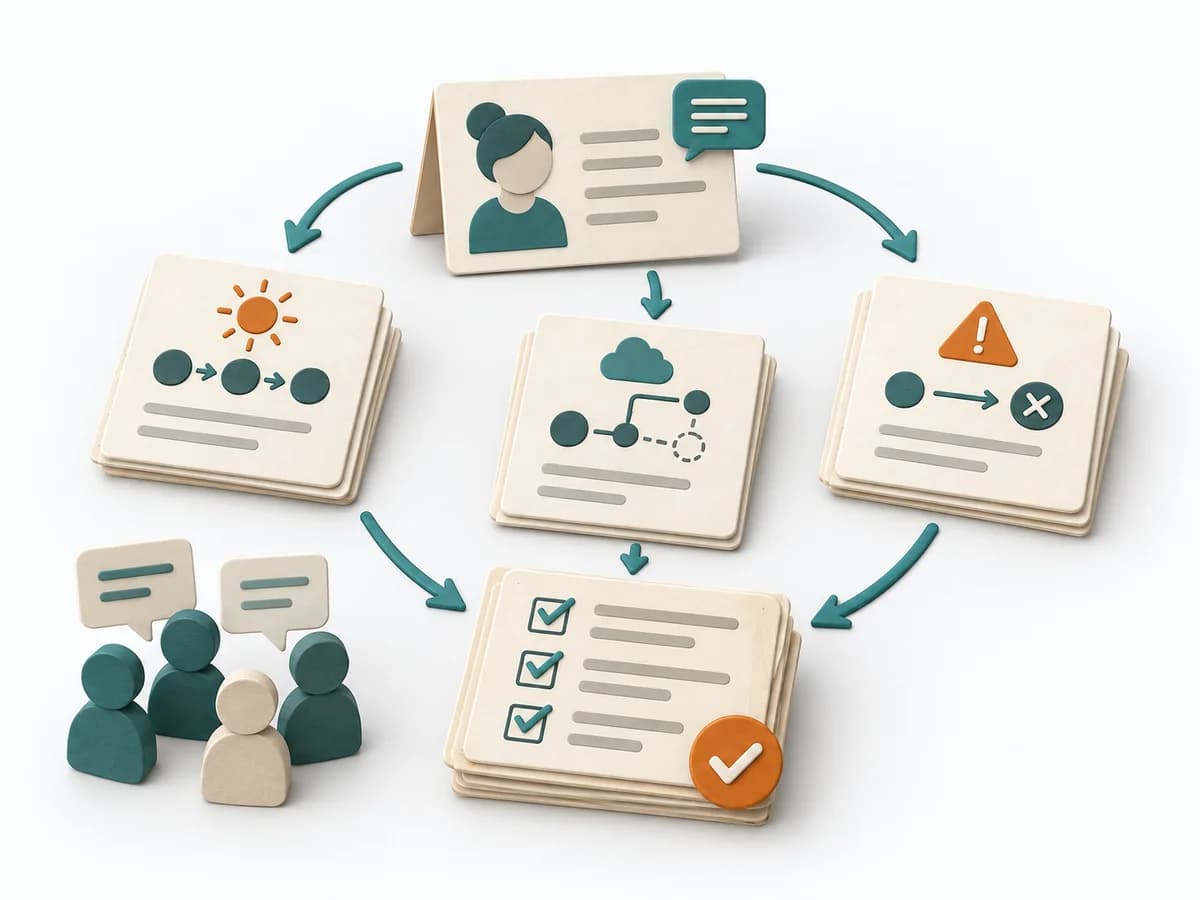
Moves backlog, sprint work, and team flow toward a concrete result through "pin the story summary to the whiteboard", "write the happy path as Given-When-Then", and "copy the criteria into the story tool".
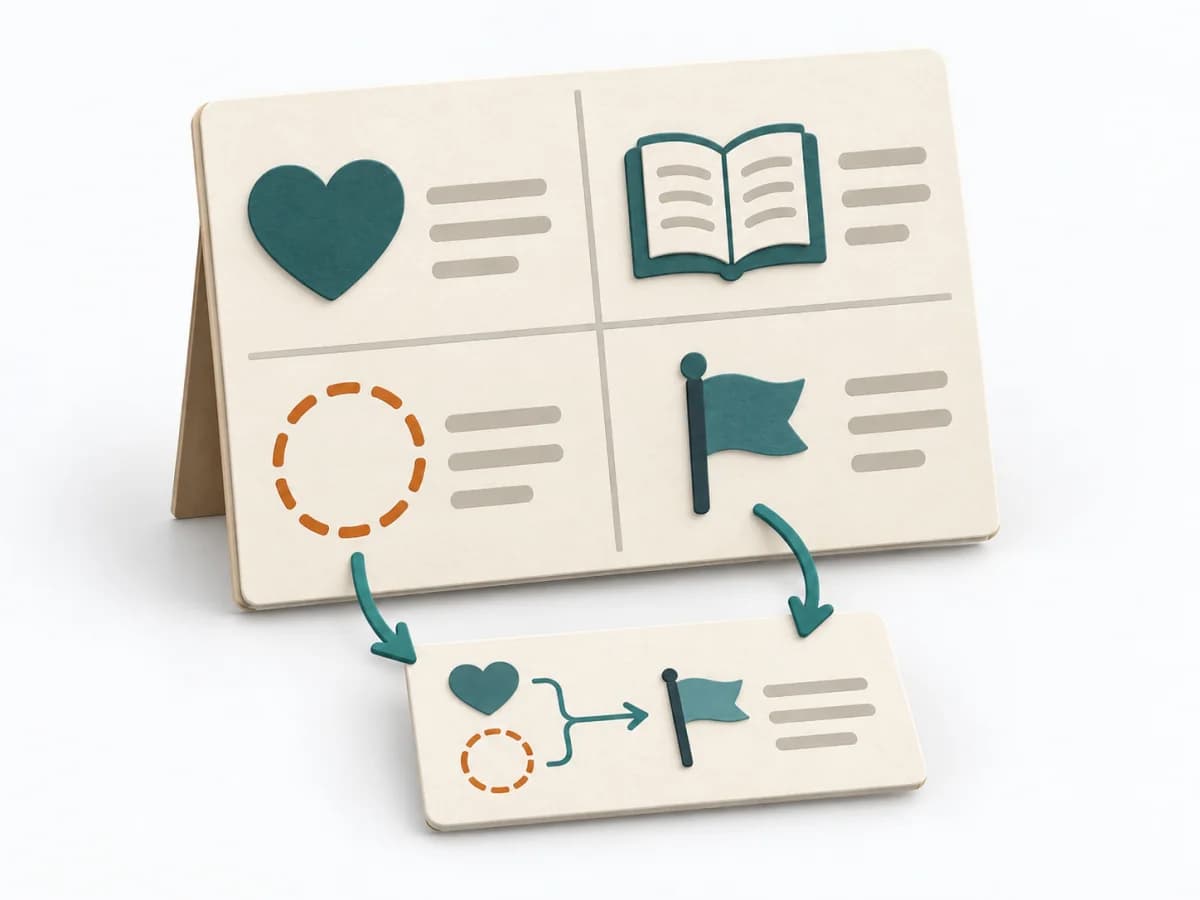
Sorts review, learning points, and friction into Liked, Learned, Lacked, and Longed For for concrete improvements.

Moves backlog, sprint work, and team flow toward a concrete result through "explain the ideal day unit", "calibrate with a reference item", and "do not confuse it with calendar days".
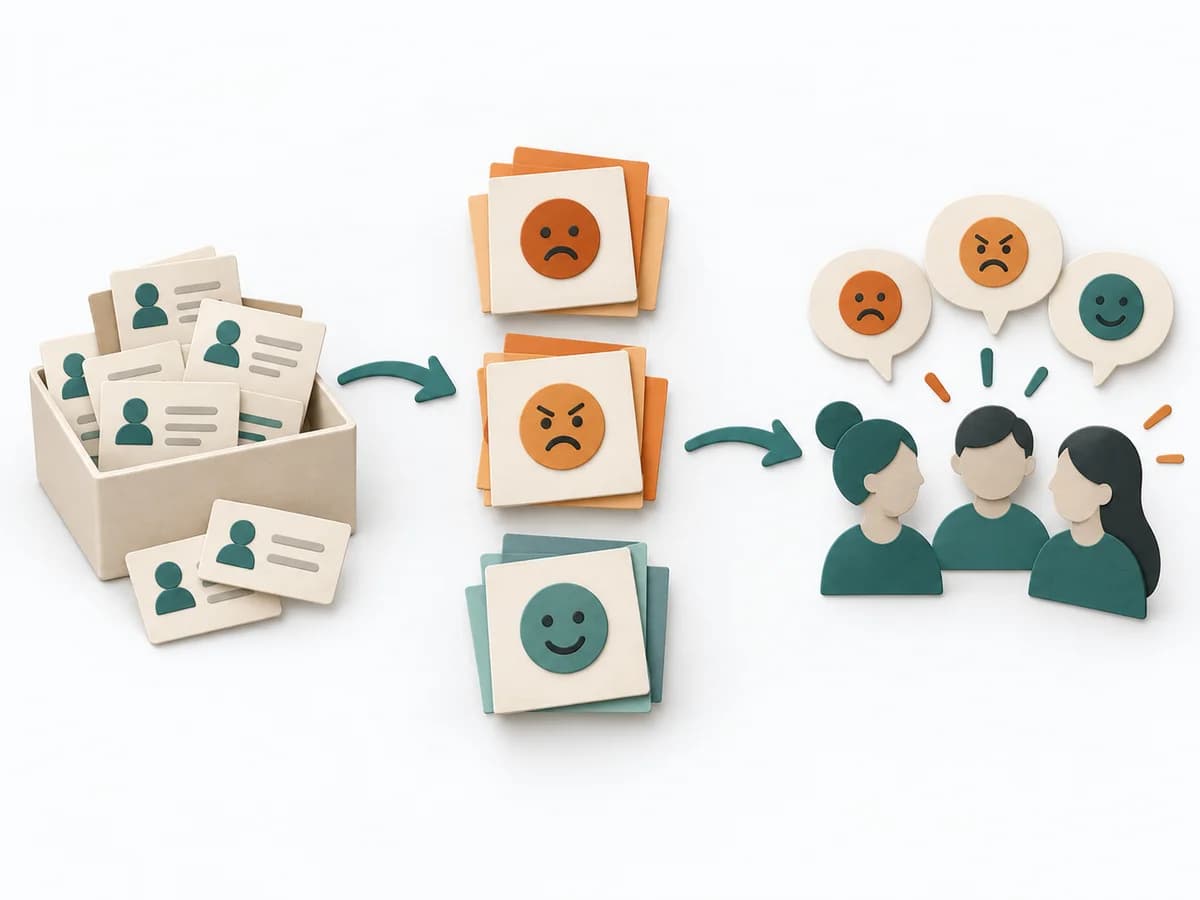
Collects emotional signals from the team, clusters them into themes, and makes real conversation topics visible.

Compares stories relatively, surfaces knowledge gaps, and produces a shared estimate with traceable assumptions.