Purpose
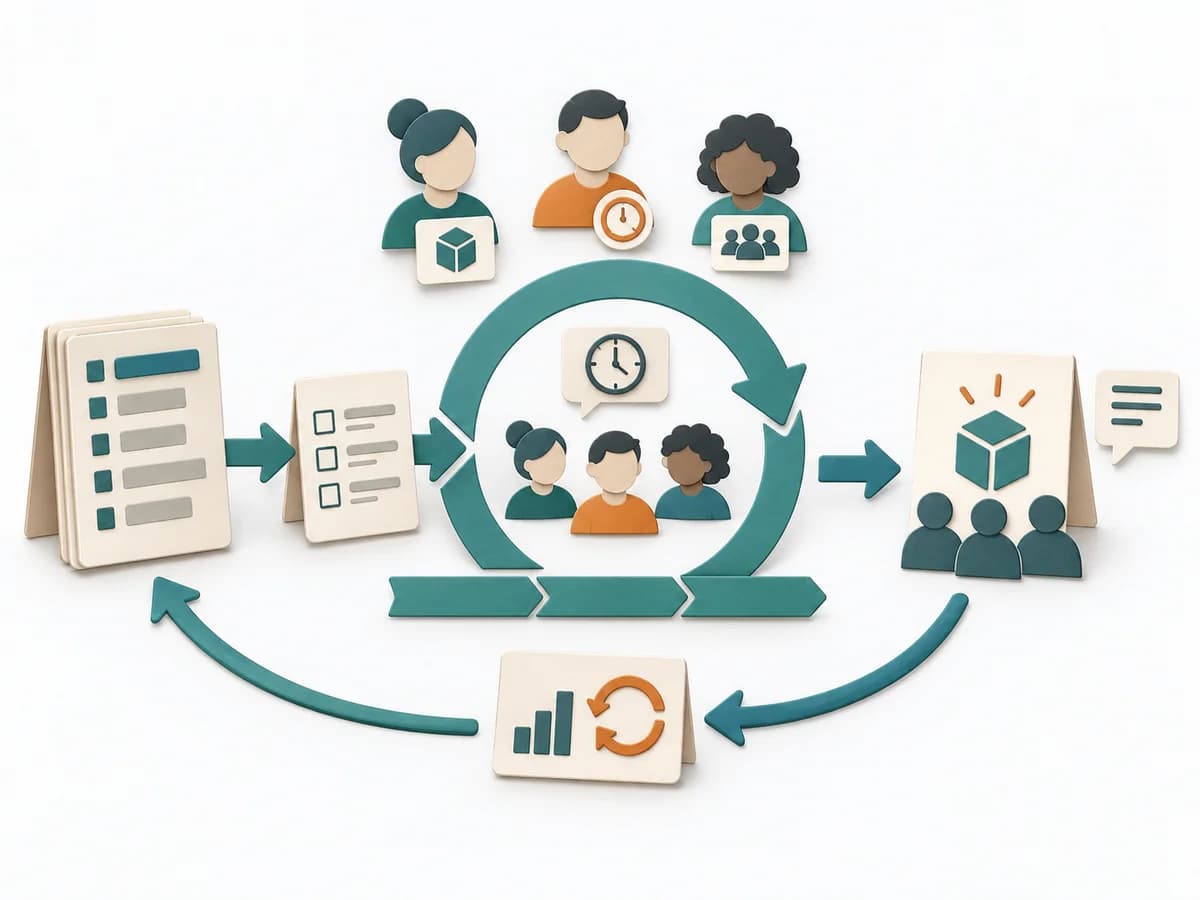
When a story needs clear checkpoints before implementation, it sharpens expectation and scope together. It sorts work by value, risk, and delivery ability. The result is captured as Acceptance Criteria and a Story Update.
Agile Workshop method
The acceptance criteria workshop clarifies a small story through rules, concrete examples, and open questions until scope and acceptance are shared.
The workshop uses a Three Amigos perspective and Example Mapping: story, rules, examples, and questions remain distinct. Acceptance criteria describe observable business behaviour rather than premature UI steps.
Which rules and examples must hold for this story to be accepted from a business perspective?
Keep story, rules, examples, and questions distinct. Many rules or red questions indicate a need to slice or clarify.
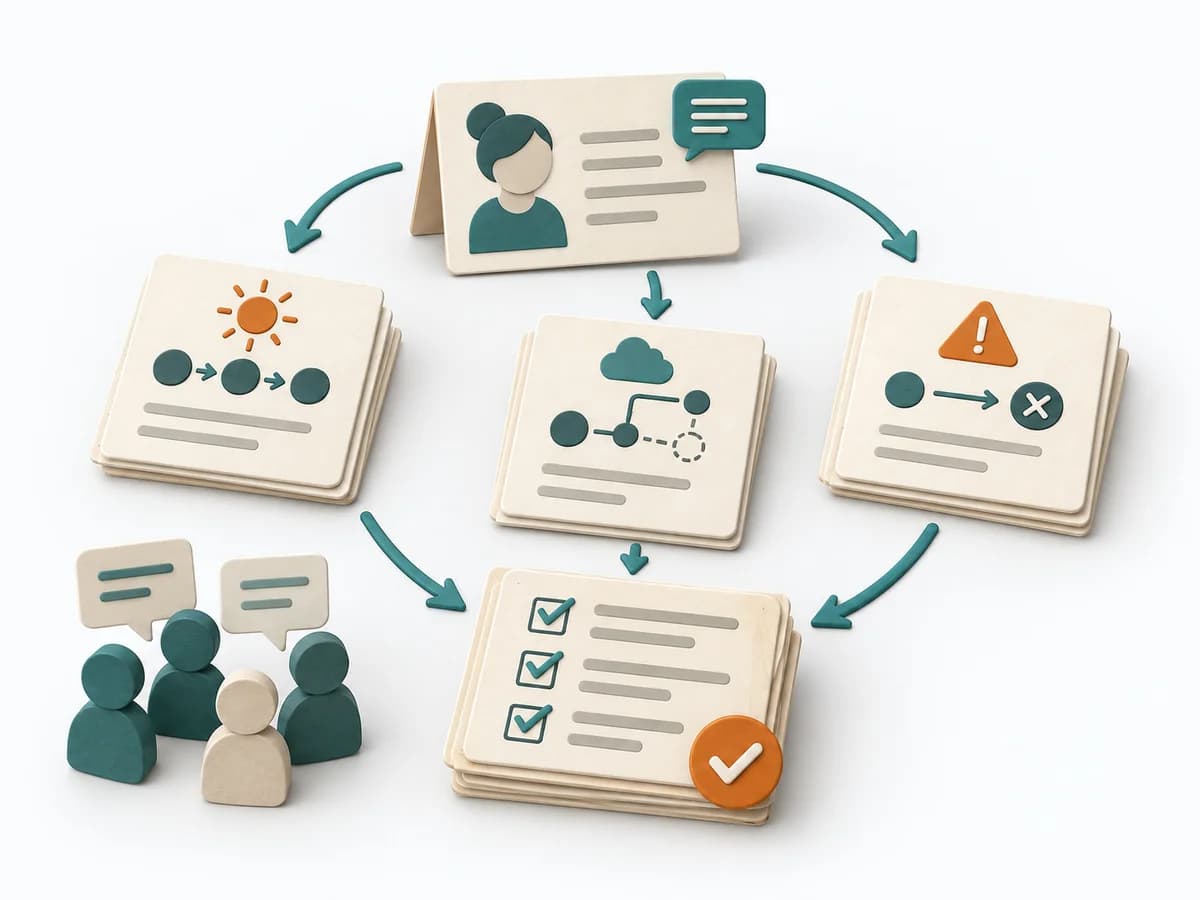
Story
Select a small story with audience, value, and clear scope boundary.
Rules
Name the business rules and constraints that govern the story.
Examples
Explore happy path, boundaries, negative cases, and relevant exceptions.
Decide
Decide together whether the story is small and clear enough to implement.
Run short workshops frequently; assign owners to questions, then update criteria and examples after answers.
Useful shortly before implementing a small story. Many rules or unanswered questions indicate that the story needs slicing or further discovery.
Small story with business rules, typical and boundary examples, and open questions.
Ready, Rework, or Defer with owners, story slices, and clarification dates.
Fictional worked example
Keep story, rules, examples, questions, and readiness decision as distinct information types.
Who wants to achieve what, why, and what is outside scope?
As a customer, I cancel an appointment online so I can plan without a phone call.
Which business rules and constraints apply?
Cancellation is free until and including 24 hours before start; later cancellation costs €20.
Which typical, boundary, and negative cases illustrate each rule?
25h before: full refund. Exactly 24h: full refund. 23:59h: €20 fee.
Which outcome is undecided, and who resolves it?
Which timezone applies to international appointments? Owner Product, due 18 June.
Ready, rework, or defer? Which slices or follow-ups result?
Rework: resolve timezone and update criteria before implementation.
Questions are not acceptance criteria. They stay open until an authorised person makes the business decision.
Start with the core question: Which rules and examples must hold for this story to be accepted from a business perspective?
When a story needs clear checkpoints before implementation, it sharpens expectation and scope together. It sorts work by value, risk, and delivery ability. The result is captured as Acceptance Criteria and a Story Update.
It condenses business expectations into unambiguous criteria and records them so that testing and implementation share the same reading. This makes handoff clearer and rework rarer, without locking down scope too early.
The Acceptance Criteria Workshop is a focused follow-up format to Example Mapping and Specification by Example. For each story, the moderator guides rounds that produce concrete, testable criteria, often in Given-When-Then format. The result bridges discovery and implementation and reduces follow-up questions.
Write the criteria where everyone can see them. Keep each round focused on one story. Do not accept vague criteria such as fast or simple.
The method guide walks execution through 4 phases, timing, 4 pitfalls, and clear stop criteria.
Open method guideYour perspective
Your feedback helps shape the next improvements to methodatlas.
Plan Acceptance Criteria Workshop with real scope, suitable roles, and a clear decision objective.
To be confirmed
To be confirmed
Plan the full workshop Time: 25–40 minutes per small story
Complete this worksheet on paper or in your own document during the work.
Who wants to achieve what, why, and what is outside scope?
...
Which business rules and constraints apply?
...
Which typical, boundary, and negative cases illustrate each rule?
...
Which outcome is undecided, and who resolves it?
...
Ready, rework, or defer? Which slices or follow-ups result?
...
Complete story, rules, examples, questions, and decision separately.
Cucumber: Introducing Example Mapping
Expected artifact: Focused story
Who · goal · value · scope
Entry:
...
Expected artifact: Rule set
Story · rules · scope
Entry:
...
Expected artifact: Example map
Rules · examples · questions
Entry:
...
Expected artifact: Readiness decision
Status · questions · owners · sliced scope
Entry:
...
...
Method guide: https://methodatlas.meierhoff-systems.de/en/methods/acceptance-criteria-workshop/run-sheet
Fitting alternatives with decision guidance, followed by other related methods.
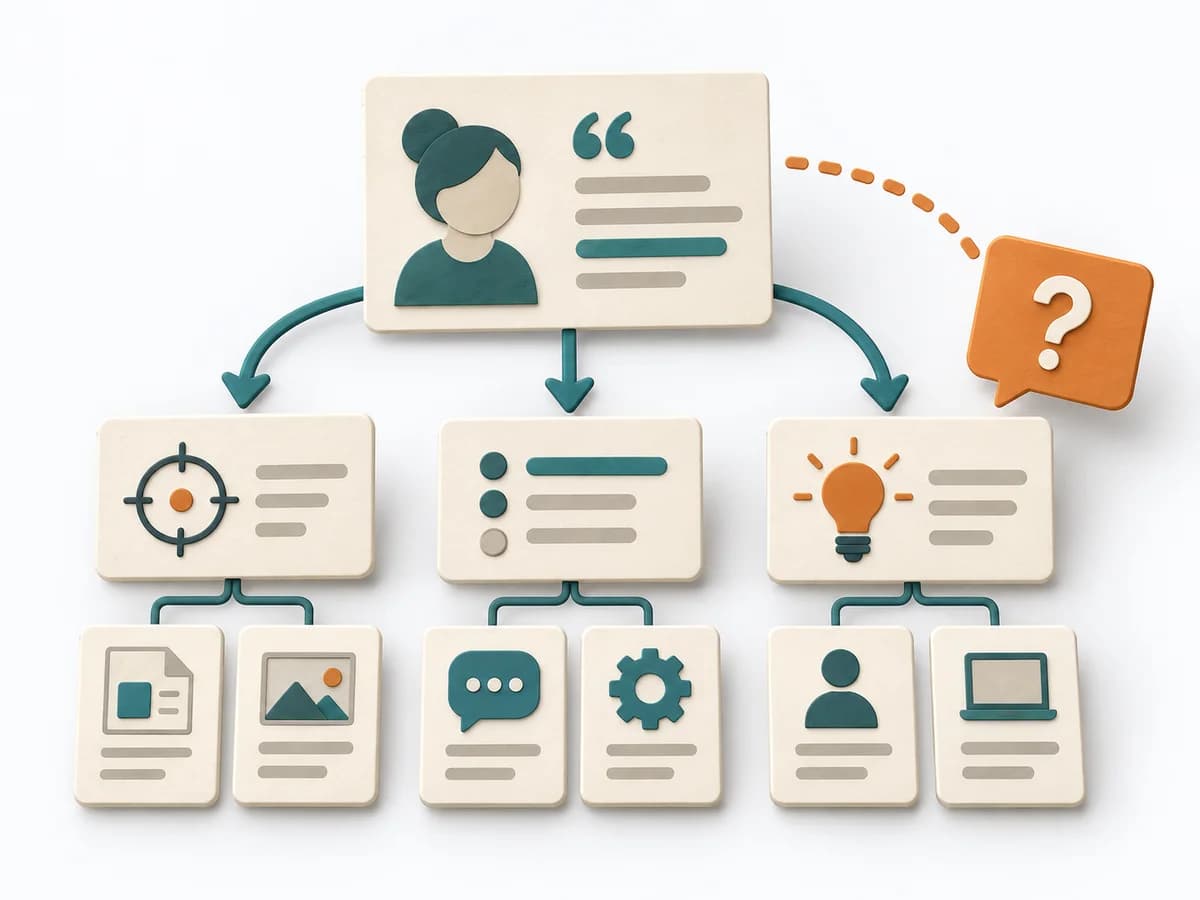
Instead of Acceptance Criteria Workshop, choose Example Mapping when rules, examples, and open questions should be sorted together before criteria are formulated.

Brings business, development, and testing together before implementation to clarify a story's examples, rules, and edge cases.
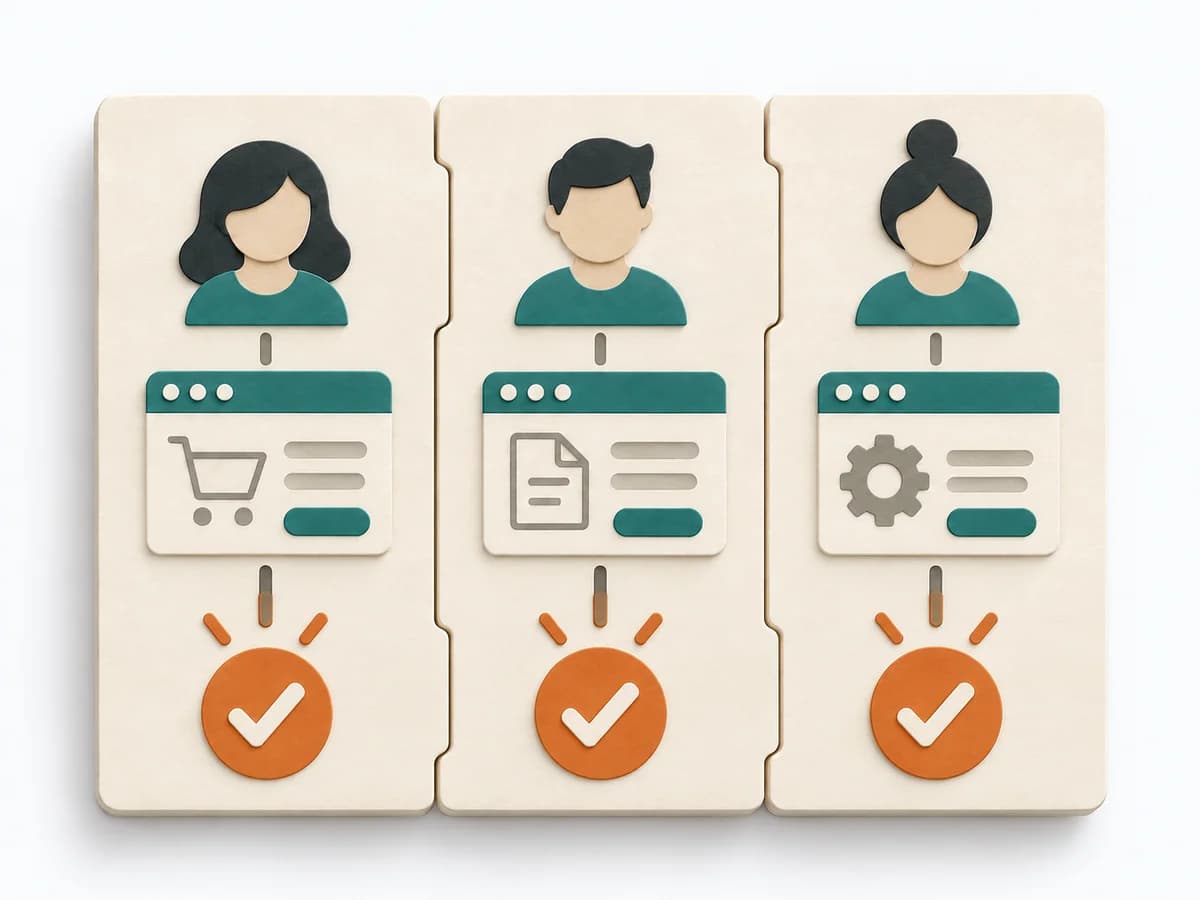
Splits stories that are too large into smaller testable slices while keeping value, dependencies, and interfaces in view.

Moves backlog, sprint work, and team flow toward a concrete result through "explain the ideal day unit", "calibrate with a reference item", and "do not confuse it with calendar days".

Moves backlog, sprint work, and team flow toward a concrete result through "create a board with the four columns Resolved, Owned, Accepted, Mitigated", "carry over risks from earlier stages such as Risk Storming", and "update the board at every review".

Sorts backlog items roughly by reference sizes and flags early on which items will later need splitting or clarification.