methodatlas
Playbook

Create Backlog Readiness

Move from rough ideas to shippable stories with examples, acceptance criteria, and estimation.

Steps5 methods
Time1-3 h
FormatWorkshop
Outcome

A set of actionable stories with acceptance criteria, examples, and rough effort view.

At the end you have

Story MapSplit StoriesAcceptance CriteriaExample MapEstimates

Decision point

You can decide which stories are ready for delivery and which questions must be clarified first.

Next step

Move stories into sprint or flow and clarify open questions intentionally.
Ideal for

  • Refinement before delivery
  • unclear requirements
  • Teams with many questions during sprint

Not good for

  • Early discovery without a solution hypothesis
  • strategic portfolio planning
Preparation

What should be clear before you start

Roles

  • Product owner
  • Development team
  • QA or domain experts

Inputs

  • rough feature ideas or epics
  • user goal or process context
  • known rules and acceptance risks

Setup

  • Clarify the goal of refinement
  • Make oversized items visible
  • Collect examples and open questions
Flow

Method path

5 methods
  1. 1Product DiscoveryStory Map

    User Story Mapping

    How do users move from their starting point to their goal, and which smallest coherent deliveries support them?

    Why this step?

    User Story Mapping makes user activities and release slices visible before individual stories are discussed in isolation.

    The map shows which stories can be sliced and prepared for delivery.

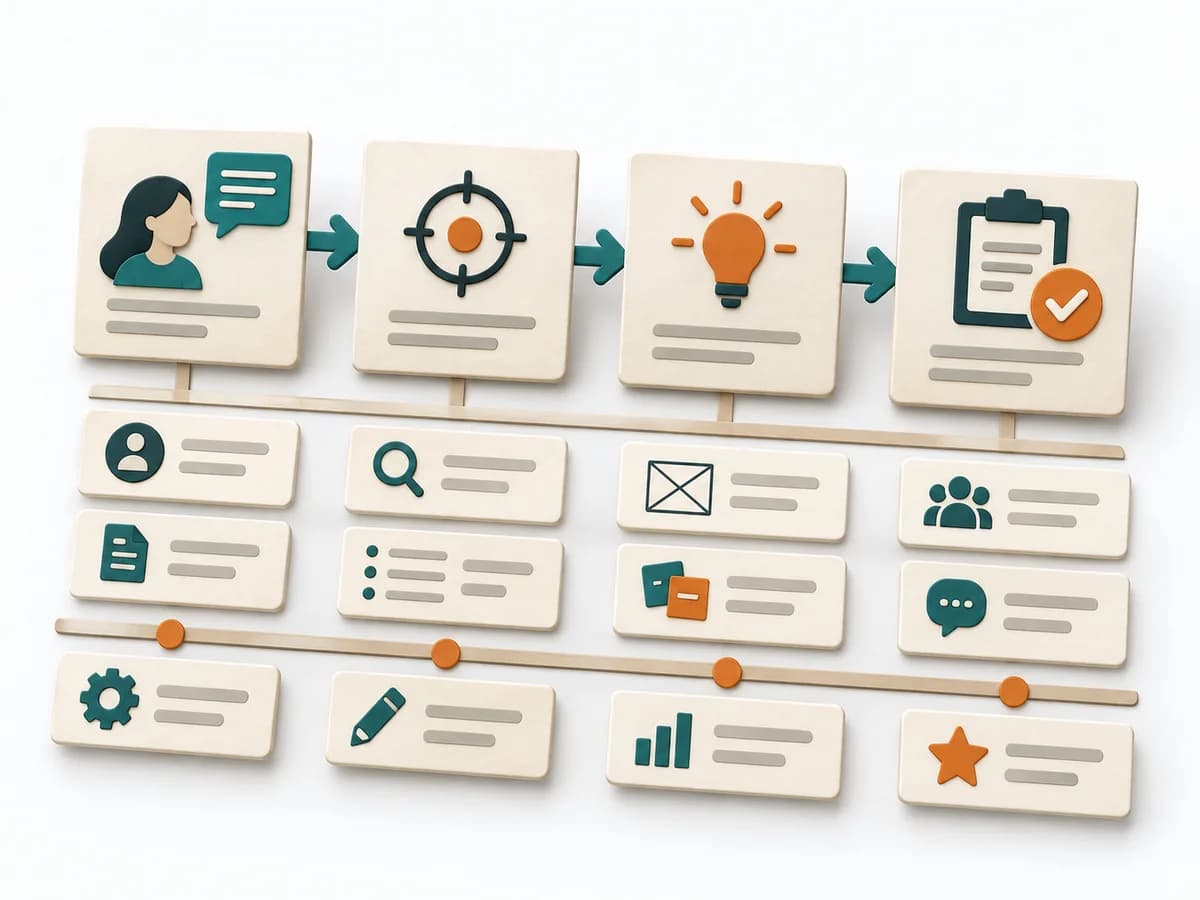
    Paper illustration of a horizontal story map with an activity backbone, task cards below it and a cross-map release line.
  2. 2AgileSplit Stories

    Story Splitting

    How can we create smaller, independently testable slices while retaining useful value?

    Why this step?

    Story Splitting breaks large stories into smaller, valuable, and shippable units.

    The sliced stories then need testable acceptance criteria.

    Story Splitting method illustration showing its working structure
  3. 3AgileAcceptance Criteria

    Acceptance Criteria Workshop

    Which rules and examples must hold for this story to be accepted from a business perspective?

    Why this step?

    The workshop makes expected behavior and done criteria explicit.

    Critical rules and examples are then concretized in example mapping.

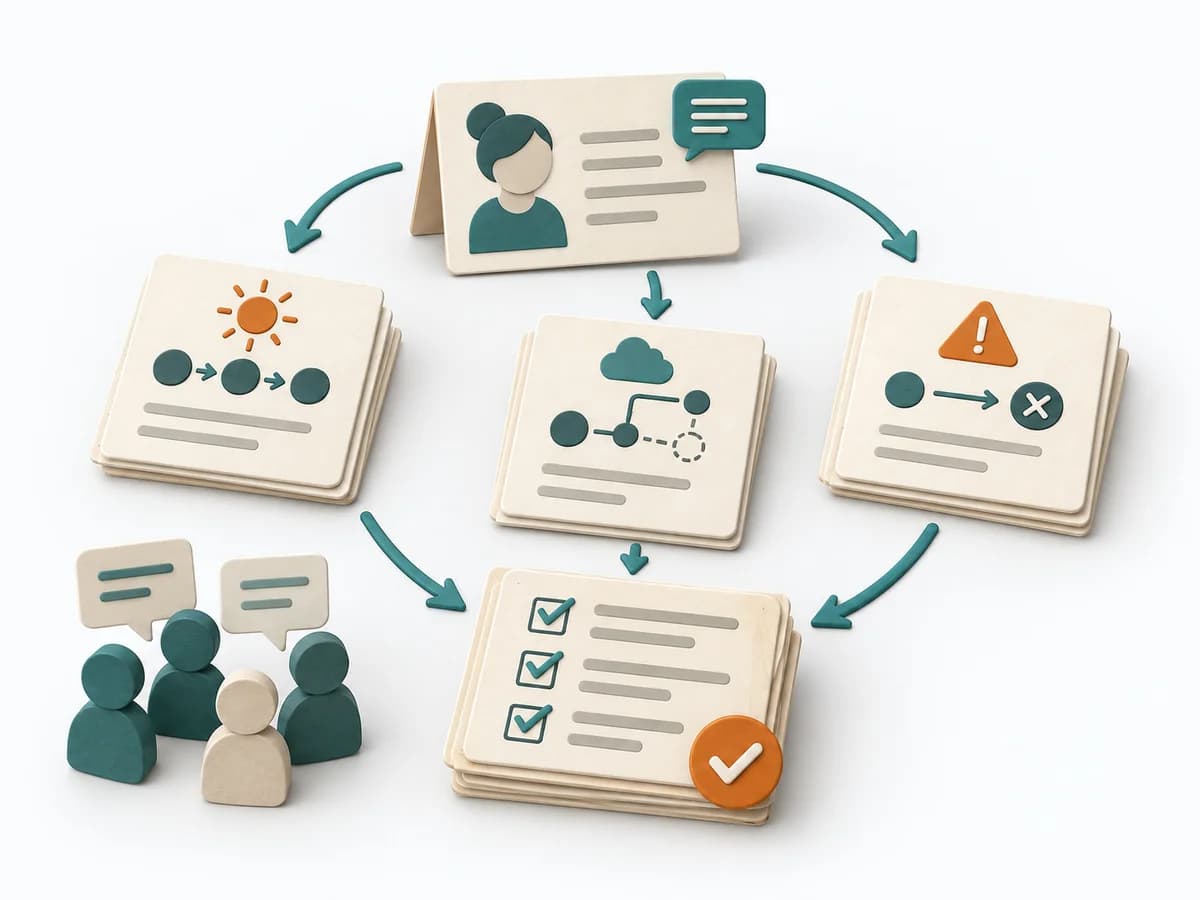
    Paper illustration of Acceptance Criteria Workshop with a method-specific labelled workspace.
  4. 4AgileExample Map

    Example Mapping

    Which rules and cases must be clear so this story can be understood and tested?

    Why this step?

    Example mapping connects rules, examples, and open questions and reduces misunderstandings before implementation.

    The clarified stories can then be estimated together.

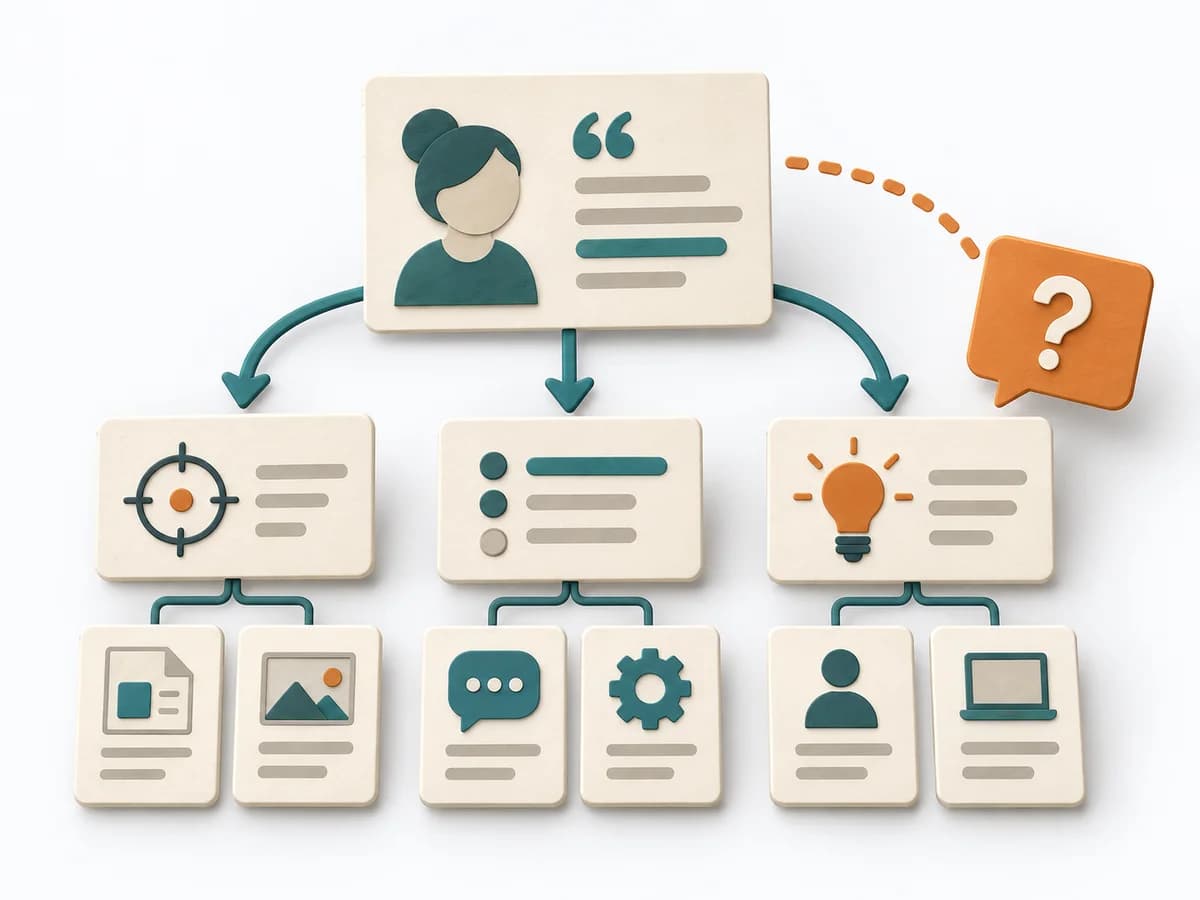
    Paper illustration of a yellow story card, blue rule cards, green example cards and a red question card on a light workspace.
  5. 5AgileEstimates

    Planning Poker

    Which relative size can the delivery team support after independent selection, simultaneous reveal, and clarification of the highest and lowest assumptions?

    Why this step?

    Planning Poker makes team effort, uncertainty, and different mental models visible.

    Estimation then feeds sprint planning, forecasting, or further clarification.

    Paper illustration for Planning Poker.
Completion criteria
Templates

Artifacts for this playbook

Artifacts stay collapsed until you actually need them.

AgendaShow template

Workshop Agenda

Compact agenda template for method sequences with timebox, purpose, and output.

# Workshop Agenda

**Goal:** ...
**Participants:** ...
**Duration:** ...

| Time | Method | Purpose | Output |
|---|---|---|---|
| 00:00 | Check-in | Set focus | Shared start |
| 00:10 | How Might We | Ideation questions | HMW list |
| 00:35 | Brainwriting | Generate ideas | Idea pool |
| 01:10 | Dot Voting | Prepare selection | Prioritized ideas |
| 01:30 | Storyboarding | Make the concept tangible | Storyboard |

## Close-out

Decision, owner, next test.