Purpose
The method protects energy and attention for the task that creates the largest progress and is often postponed.
Operations Personal productivity method
Eat the Frog shows which important postponed task deserves undivided attention first today.
Brian Tracy’s focus principle puts an important, often postponed task ahead of readily available minor tasks. A clear completion condition and protected early work block make starting concrete.
Which important postponed task deserves my undivided attention first today?
Prioritise impact
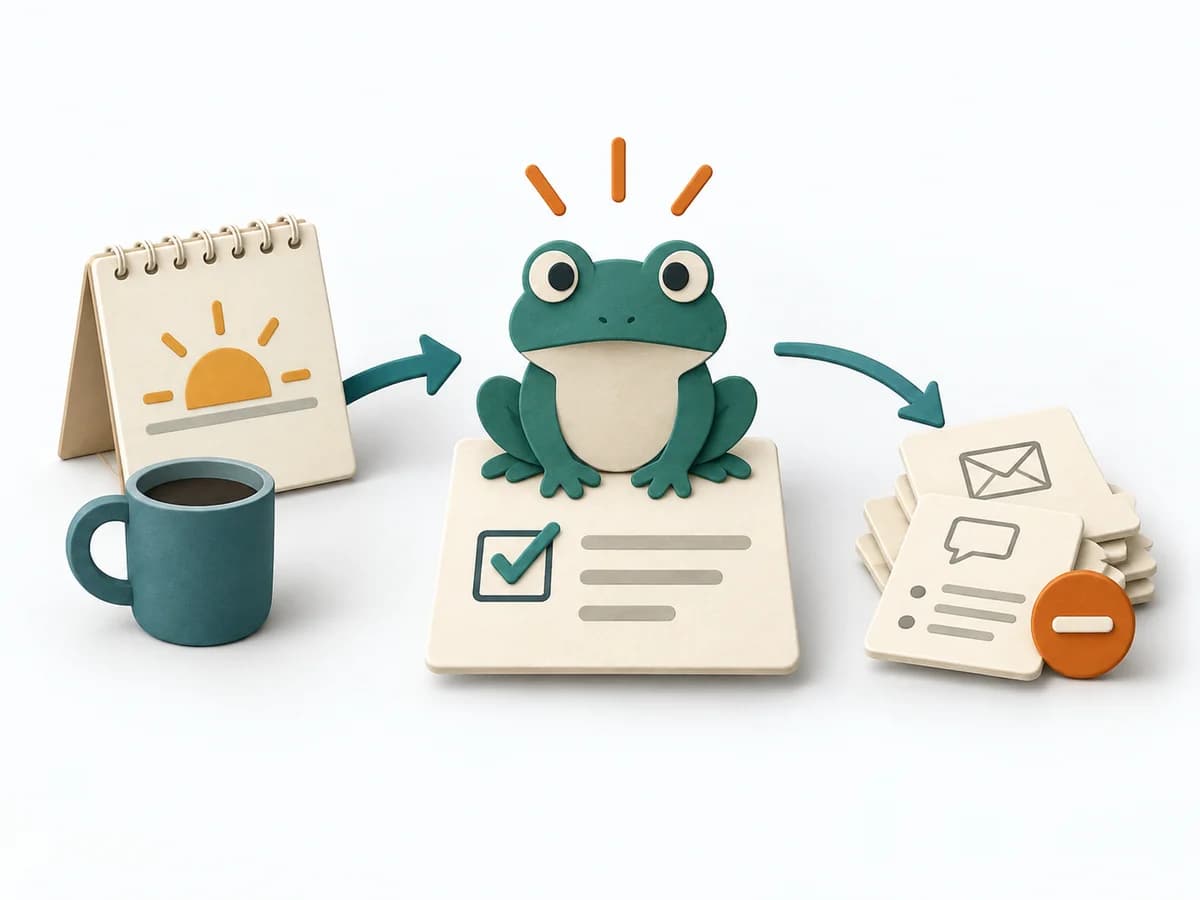
Select the most consequential postponed task using commitments, value and consequences.
Prepare start and finish
Define a visible result and first concrete action; prepare required materials.
Work with focus first
Protect the first suitable focus block and begin with the prepared action.
Outcome and continuation
Check the completion criterion and mark completed work visibly.
Review impact and obstacles daily; change the task, prerequisites or capacity if repeatedly blocked.
For self-directed work when a consequential task keeps being postponed despite its importance.
One prioritised frog with visible outcome, prepared starting point, focus block and progress note.
The progress note contains the next entry point or needed support for remaining work and the selection reviewed for tomorrow.
Fictional example
Brian Tracy’s focus principle puts an important, often postponed task ahead of readily available minor tasks. A clear completion condition and protected early work block make starting concrete.
Which postponed task has the greatest relevant consequences?
Fictional: an overdue customer proposal blocks a decision for next week.
What achievable outcome marks completion today?
Scope and three pricing items are detailed enough for Lea to review.
How does work start, what must be ready and what is closed?
Open needs notes and calculation, create the proposal outline, close email.
When is the first suitable protected period and how are interruptions handled?
09:00–10:30 reserved; enquiries go to the agreed backup until then.
What was achieved and which next step is needed?
Draft complete; Lea reviews by 14:00. One unresolved volume value is visibly marked as an assumption.
All example details are fictional and illustrate the application.
Review important commitments and consequences; select a task that can actually be started and meaningfully advanced today.
The method protects energy and attention for the task that creates the largest progress and is often postponed.
First, the one task that is important and uncomfortable is selected. Then it is scheduled before reactive work and started without side tasks. Only after this focus block, smaller tasks are added.
Eat the Frog turns prioritization into a simple daily rule: choose one task that is important but creates resistance and start with it. The task should be small enough to begin, but important enough that its progress meaningfully improves the day. Instead of spreading energy across many small to-dos, the most difficult lever is moved first. Routine, communication, and smaller tasks can follow afterward, without letting the most important work keep applying pressure in the background.
Keep the frog task visible and concrete, for example "write first version of decision options" instead of "think more about strategy." Set a protected time window at the start of the workday and remove common diversion channels. If the task feels too large, start with a clear 15-minute entry instead of rescheduling it.
The method guide walks execution through 4 phases, timing, 4 pitfalls, and clear stop criteria.
Open method guideYour perspective
Your feedback helps shape the next improvements to methodatlas.
Review important commitments and consequences; select a task that can actually be started and meaningfully advanced today.
To be confirmed
To be confirmed
Complete cycle Time: 5–10 minutes selection; work duration follows the task
Complete this worksheet on paper or in your own document during the work.
Which postponed task has the greatest relevant consequences?
...
What achievable outcome marks completion today?
...
How does work start, what must be ready and what is closed?
...
When is the first suitable protected period and how are interruptions handled?
...
What was achieved and which next step is needed?
...
Answer the prompts with your own information. Explicitly mark unknowns and assumptions.
Brian Tracy: Eat That Frog Report
Expected artifact: Selected frog
Is the task important rather than merely unpleasant?
Entry:
...
Expected artifact: Ready-to-start task
Do I know how to start without more planning?
Entry:
...
Expected artifact: Progress on the important outcome
Is the selected outcome progressing?
Entry:
...
Expected artifact: Progress note and next entry point
Is remaining work deliberately handled rather than silently delayed?
Entry:
...
...
Method guide: https://methodatlas.meierhoff-systems.de/en/methods/eat-the-frog/run-sheet
Fitting alternatives with decision guidance, followed by other related methods.
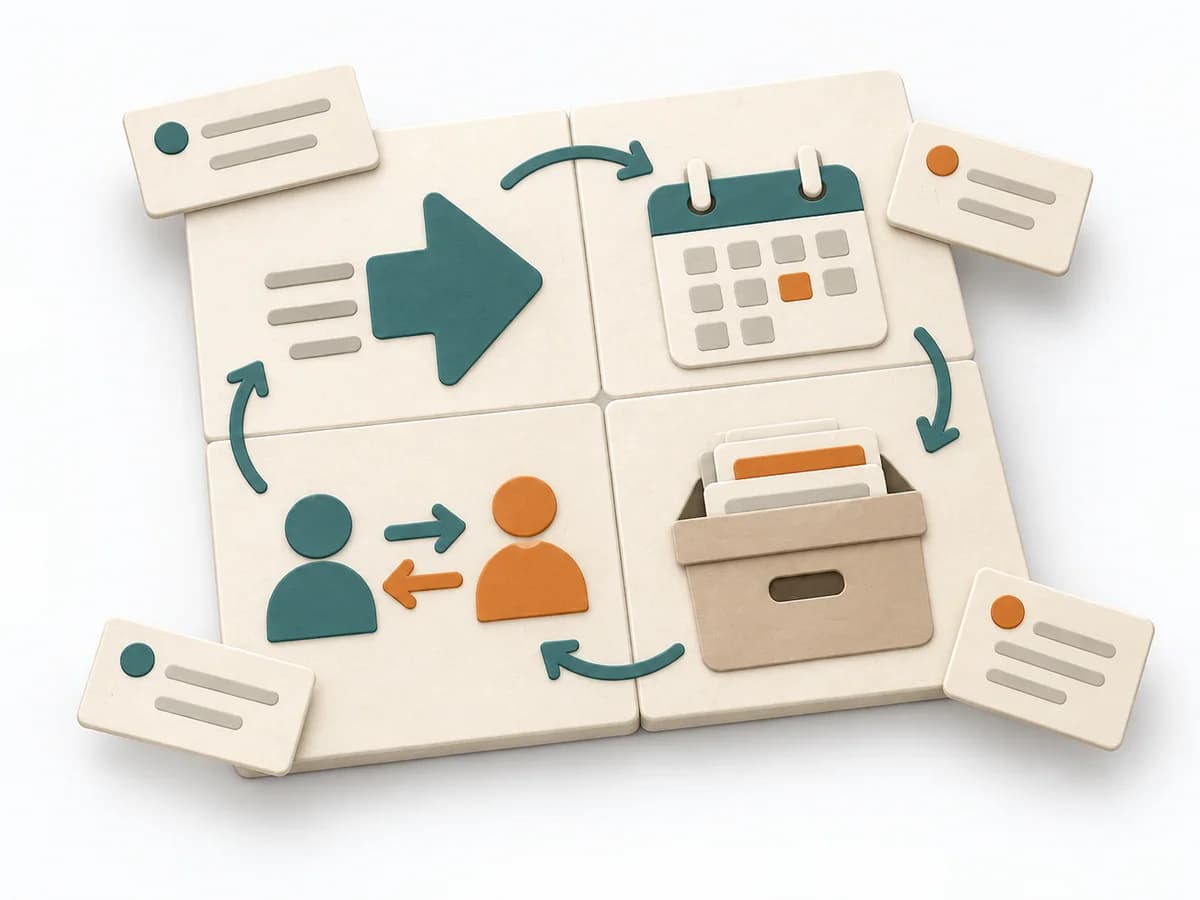
Instead of Eat the Frog, when you want to sort and prioritize tasks by urgency and importance.
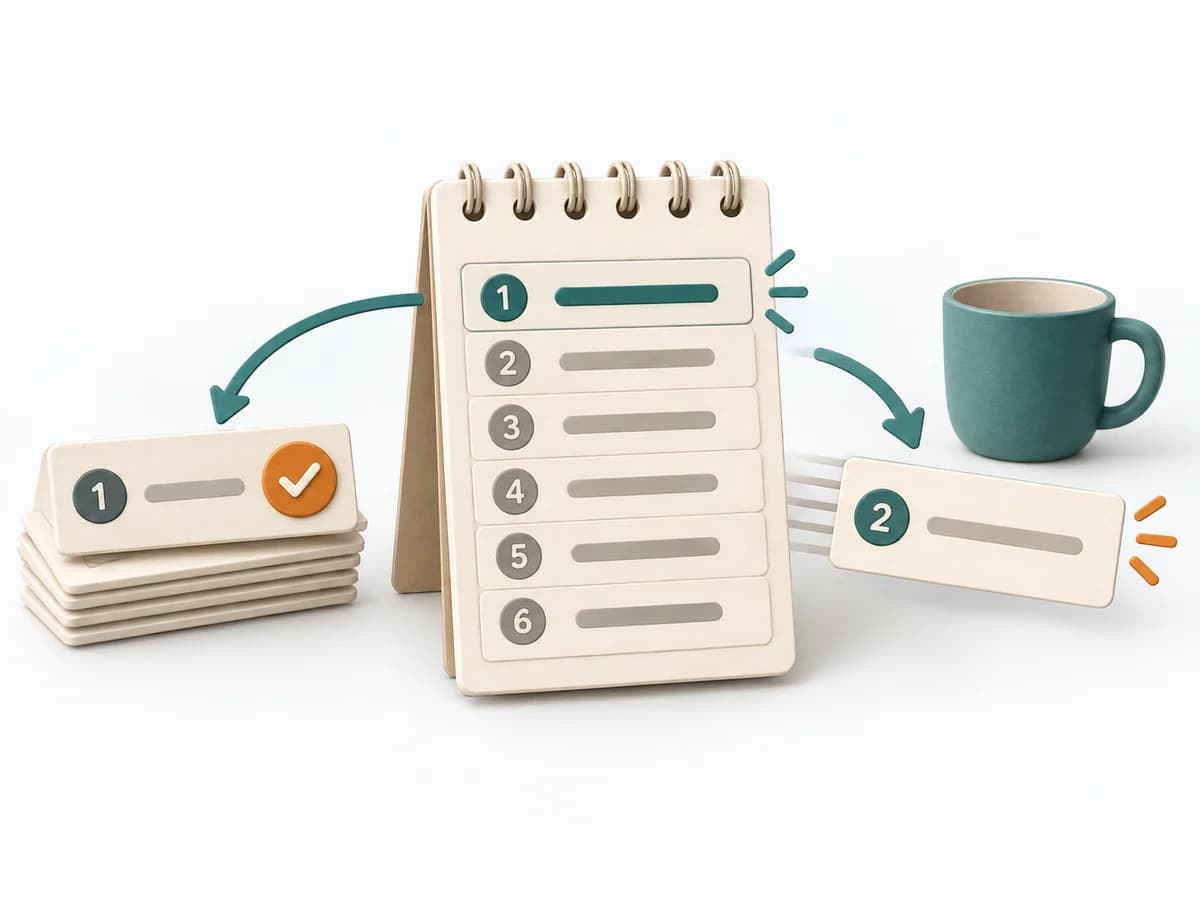
Limits daily focus to a few prioritized tasks and forces a clear order.

Reserves fixed calendar blocks for tasks and buffer and makes available capacity easier to steer.
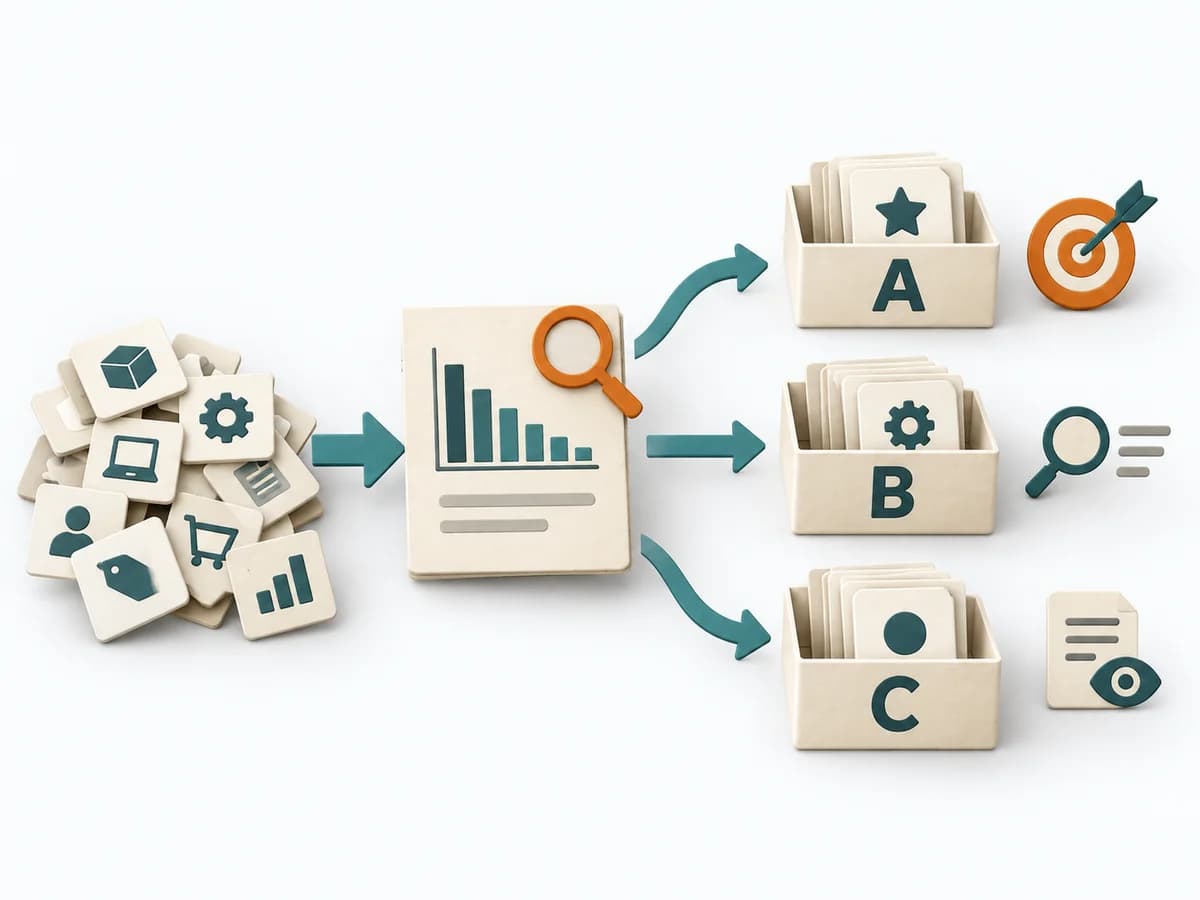
Splits items into A, B, and C by value or effect and directs focus to the most impactful ones.
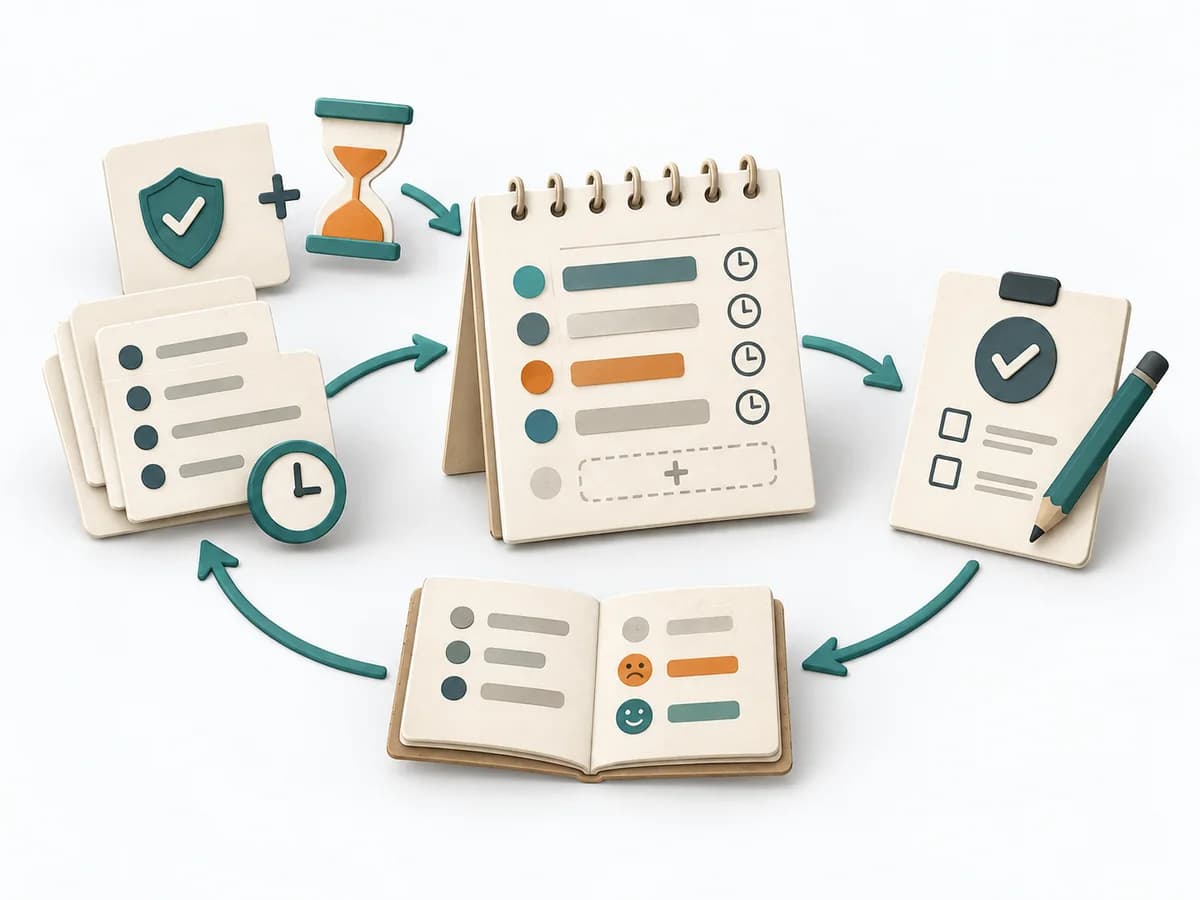
Plans the day through tasks, effort, buffer, and control so priorities stay realistically checkable.

Asks its way step by step to a controllable cause and stops only once an effective countermeasure is within reach.