Purpose
With many open commitments and ideas in daily life, a reliable external storage system emerges. The method relieves the mind so priority and context don't have to compete in memory.
Operations Personal productivity method
Moves open commitments out of memory into a trusted action system.
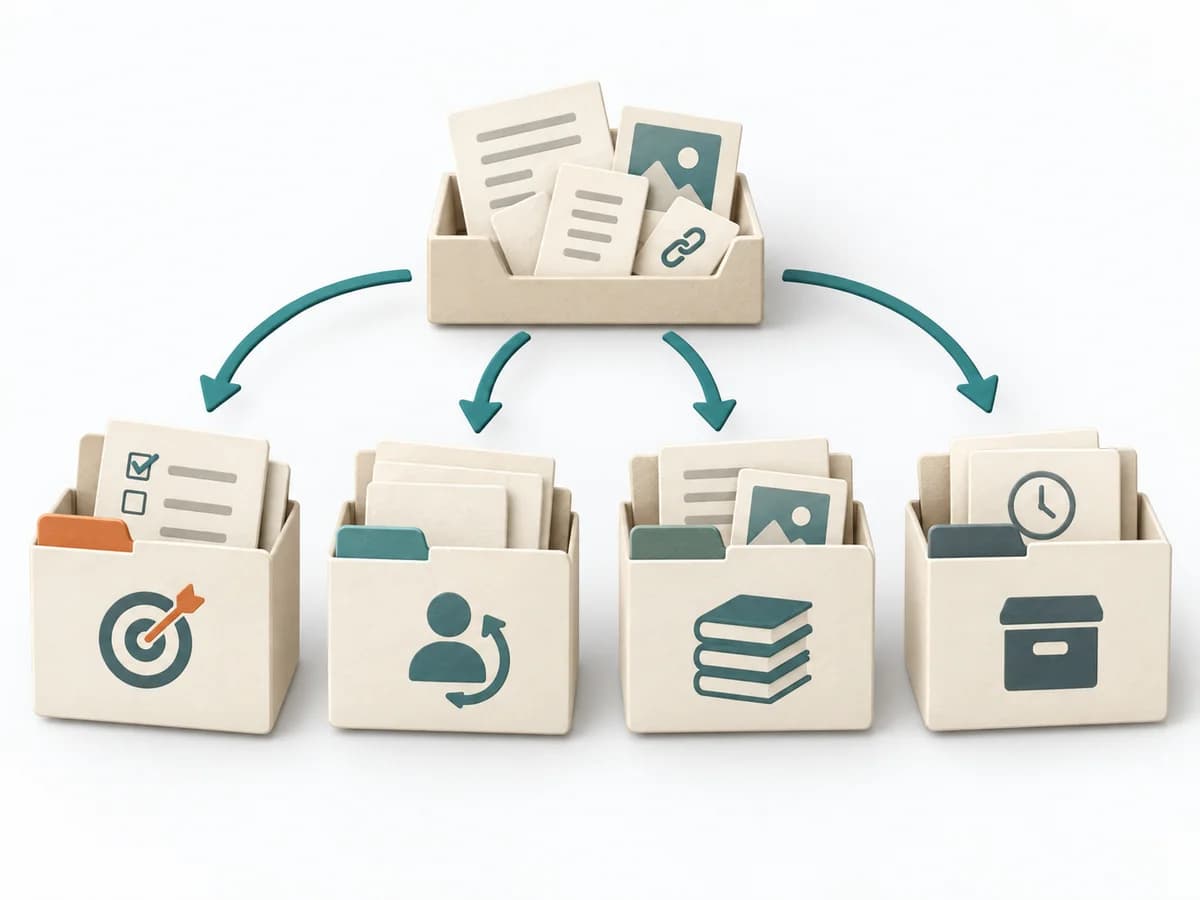
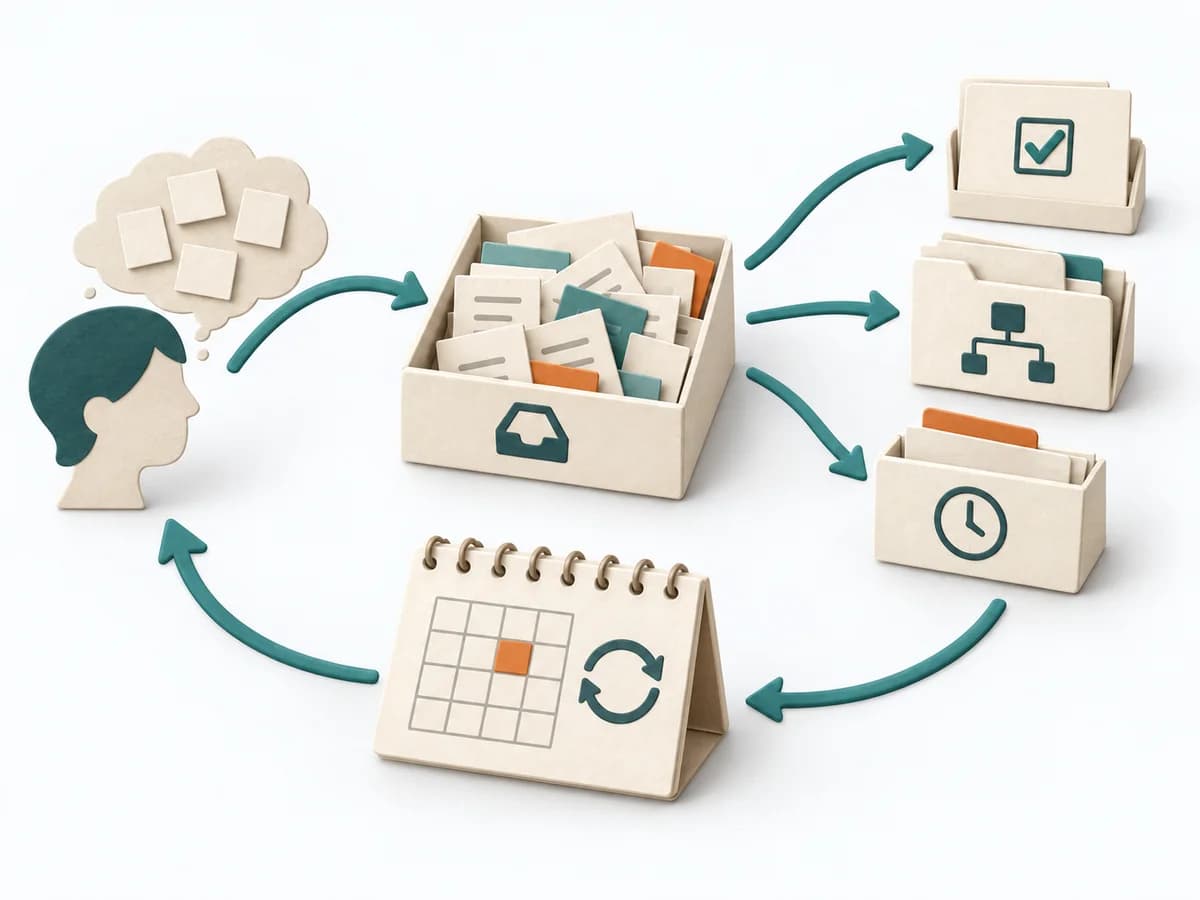
Getting Things Done separates capturing, clarifying, organizing, reflecting and engaging. Every open item receives a deliberate disposition. Projects track desired outcomes; action lists hold the next visible step.
What next action is available now while all other commitments remain reliably recorded?
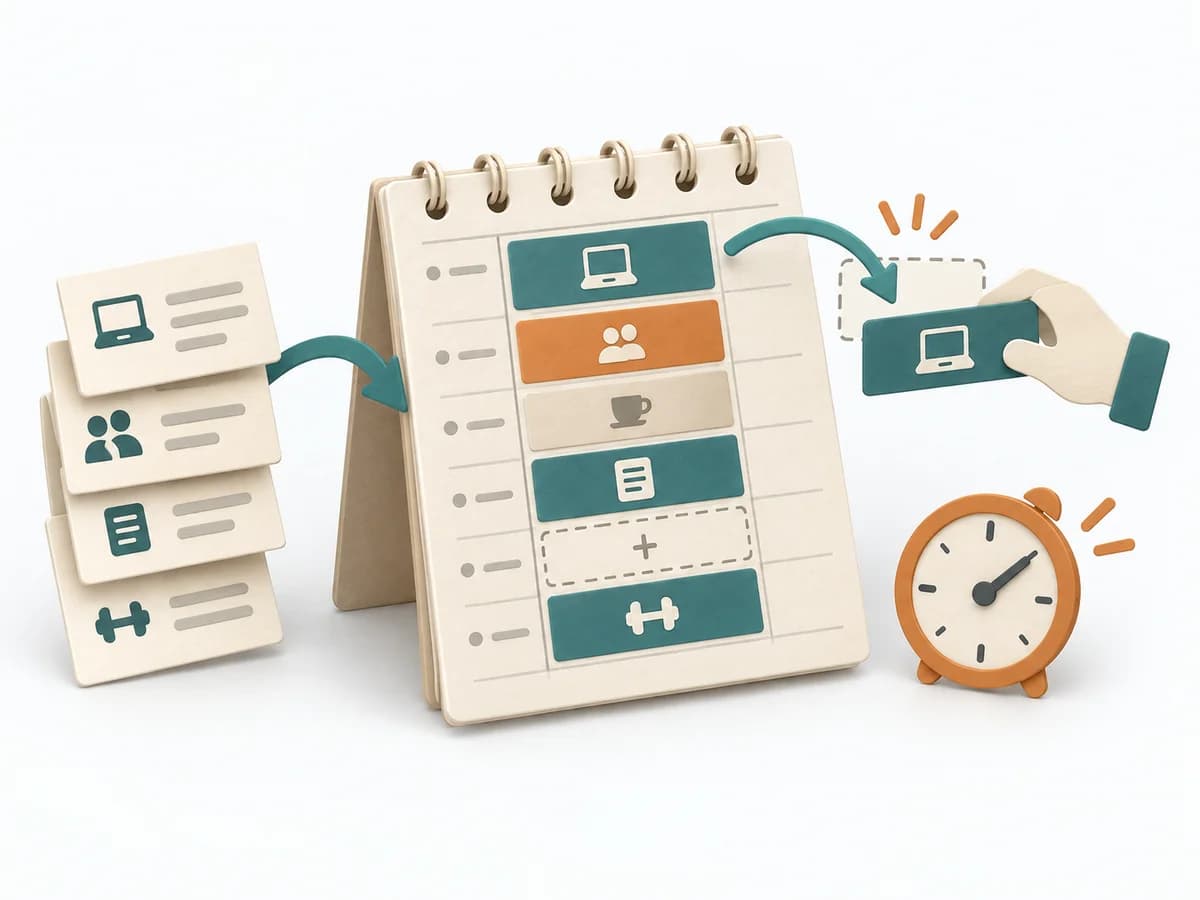
An ongoing personal practice. Repeat the five steps regularly; reserve the calendar for actual date or time commitments.
Capture
Collect thoughts, messages and paper in a small number of trusted inboxes. Use one entry per open item.
Clarify
Decide whether each item requires action. Without action: discard, file as reference or incubate for later.
Organize
Group your next actions by useful context; record delegated commitments under Waiting for with person and date.
Reflect
Clear inboxes, review past and upcoming calendar entries and capture follow-up work.
Engage
Honor calendar commitments; then choose available actions by context, time, energy and importance.
Clarify inboxes regularly; refresh projects, next actions, waiting-for lists and calendar in a weekly review.
For many concurrent commitments distributed across contexts, dates and people.
Current commitments with outcomes, next actions, real dates and delegated responses.
Fictional example
Clarify an input through its next action and appropriate storage.
Which open item needs attention?
Update the website for the course launch.
What does done look like; are several actions required?
Course page published with correct dates; a multi-action project.
What visible action can happen next?
Send Mira the three unconfirmed course dates.
Action list, calendar, Waiting for, reference or Someday/maybe?
After sending: Waiting for Mira; follow up Friday.
When will the commitment be checked again?
Jon checks the response on Friday and adds the publication action.
All situations and people are fictional.
Gather all inboxes and reserve uninterrupted time for clarification.
With many open commitments and ideas in daily life, a reliable external storage system emerges. The method relieves the mind so priority and context don't have to compete in memory.
Inputs are first pulled out of the head and sorted by next action, project reference, and later relevance. This keeps attention on the current decision rather than on remembering. Regular upkeep keeps the system trustworthy and prevents unclear items from landing back in the head.
Getting Things Done moves open commitments out of the head into a reliable external system. Clearly named next actions, maintained contexts, and regular review matter more than perfectly sorted lists. The system helps when trust builds and cognitive load noticeably drops in daily life.
For self-application, a reliable collection point is decisive, or the system quickly falls apart into half lists and mental notes. The payoff shows when every open item turns into a physical next action or a clear waiting status. Close every application with a fixed weekly reset, so trust in the system is maintained.
The method guide walks execution through 5 phases, timing, 5 pitfalls, and clear stop criteria.
Open method guideYour perspective
Your feedback helps shape the next improvements to methodatlas.
Move open commitments out of memory into a trusted action system.
To be confirmed
To be confirmed
Plan the practice Time: Capture and clarify daily; allow about 30–60 minutes for a weekly review and more for initial setup.
Complete this worksheet on paper or in your own document during the work.
Which open item needs attention?
...
What does done look like; are several actions required?
...
What visible action can happen next?
...
Action list, calendar, Waiting for, reference or Someday/maybe?
...
When will the commitment be checked again?
...
Enter your own information; connect open commitments to a next action.
David Allen Company · What is GTD
Expected artifact: Complete inbox collection
Open commitments become visible.
Entry:
...
Expected artifact: Clarified outcomes and next actions
A project is an outcome requiring multiple actions.
Entry:
...
Expected artifact: Action lists, projects and calendar
Place each reminder where it supports execution.
Entry:
...
Expected artifact: Current trusted system
Do not leave active projects without a next action.
Entry:
...
Expected artifact: Completed action and updated commitments
Update status and follow-up after completion.
Entry:
...
...
Method guide: https://methodatlas.meierhoff-systems.de/en/methods/getting-things-done/run-sheet
Fitting alternatives with decision guidance, followed by other related methods.
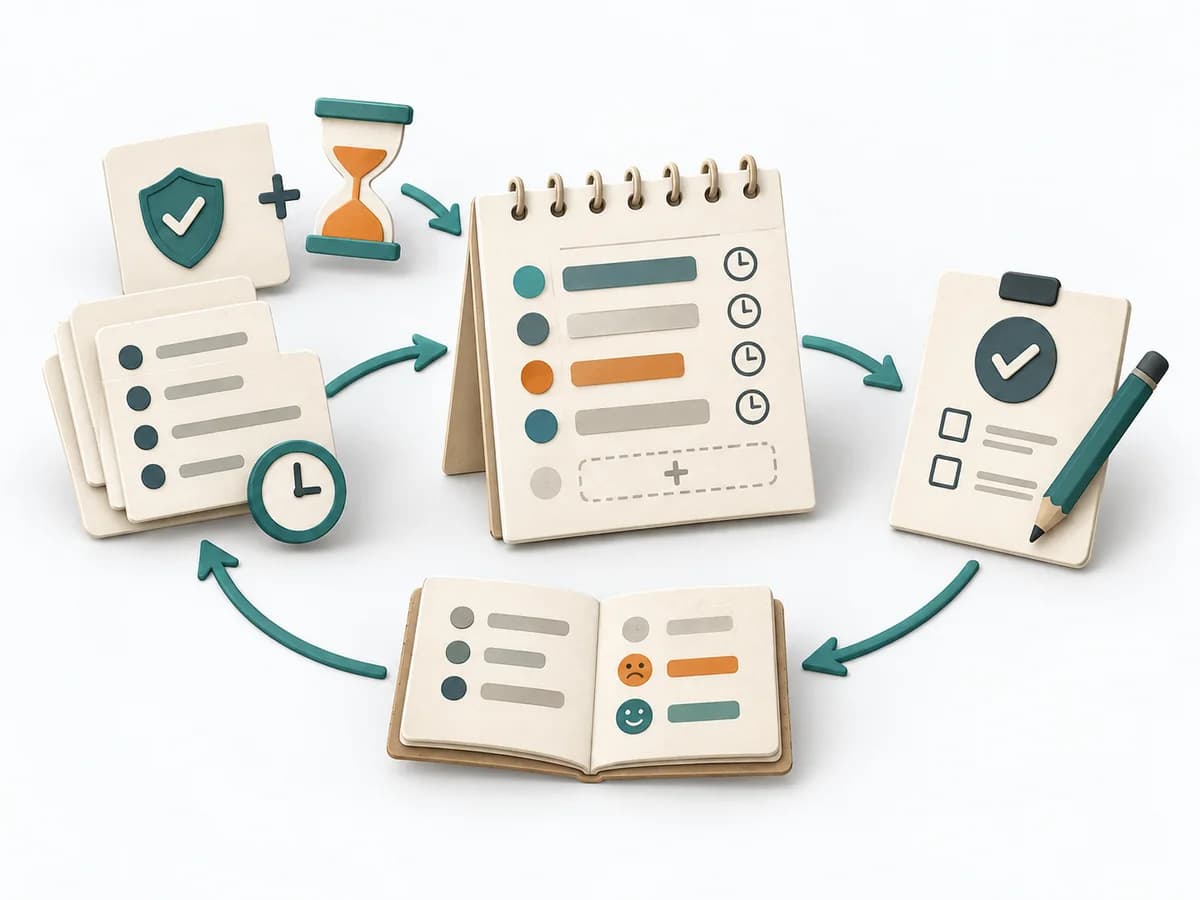
Instead of Getting Things Done, when you want to organize your day as a realistic work plan with buffer and follow-up.
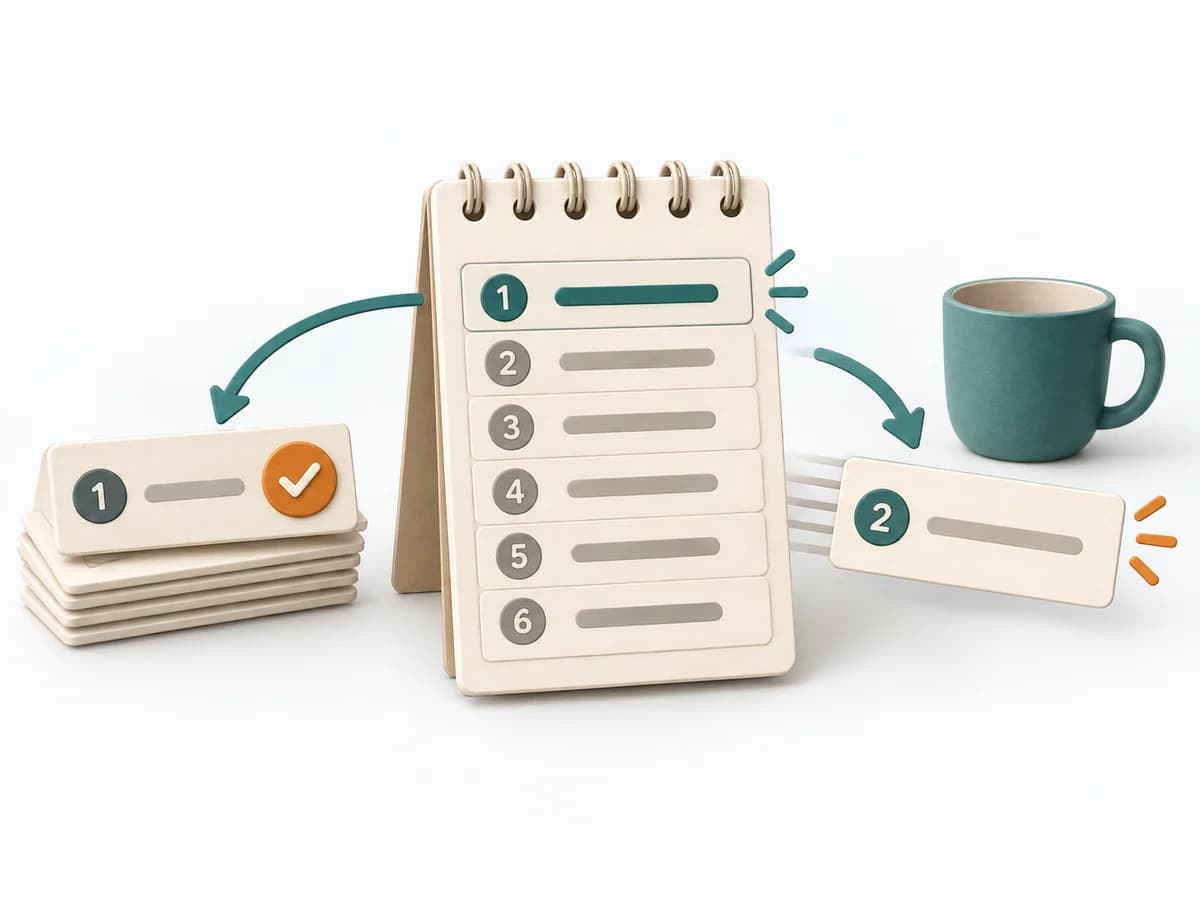
Instead of Getting Things Done, when you want to reduce the next day to an extremely short, hard priority list.
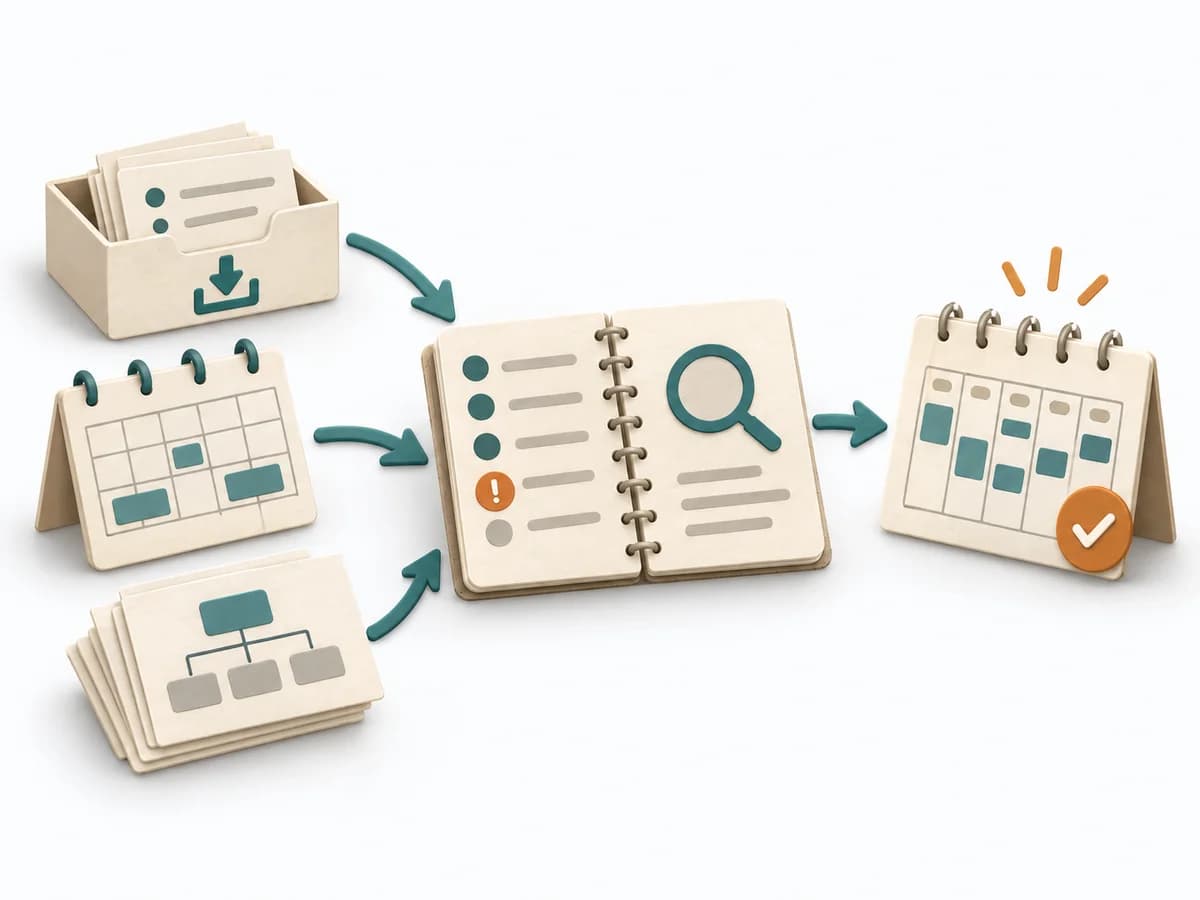
Collects open items, checks calendar and projects, and sets a clear focus for the coming week.
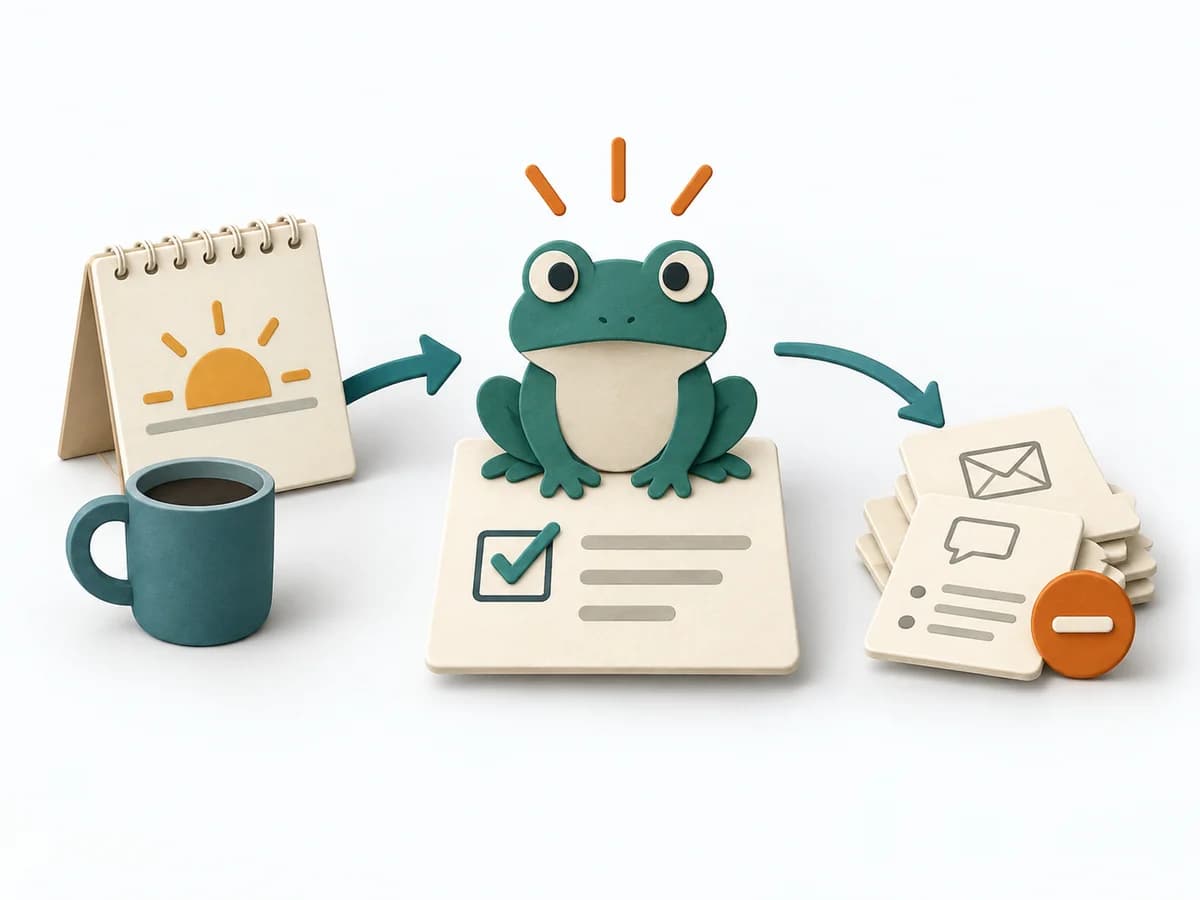
Locks the most important and uncomfortable task into the first focused work block of the day.

Splits focused work into short sprints with breaks and makes progress, interruptions, and energy use visible.
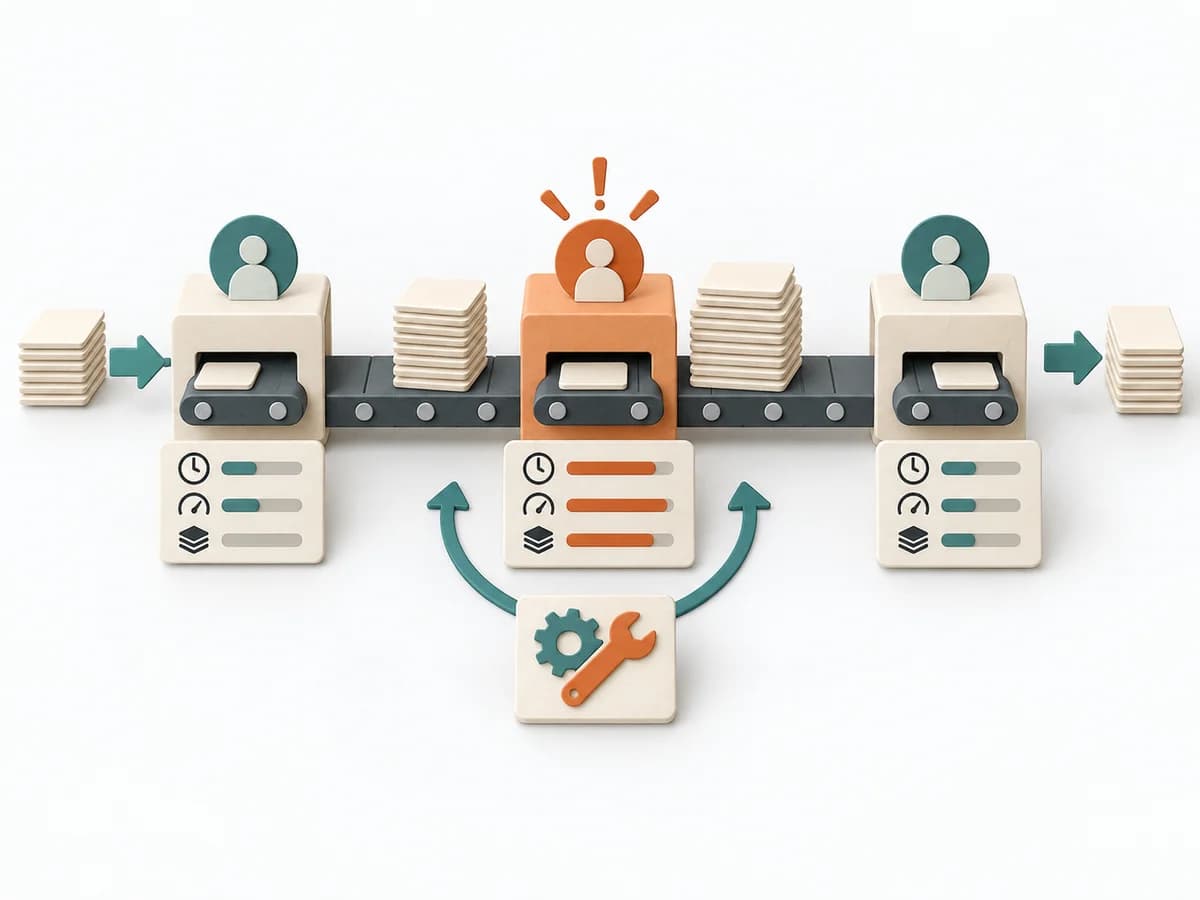
Measures flow, wait times, and WIP to find the bottleneck and derive relief options.