Purpose
With an overloaded day full of too many tasks, a realistic picture of the day emerges. The method connects estimating, deciding, and buffer thinking so planning fits available energy and time.
Operations Personal productivity method
The Alpen method shows which tasks fit the available time with realistic buffers.
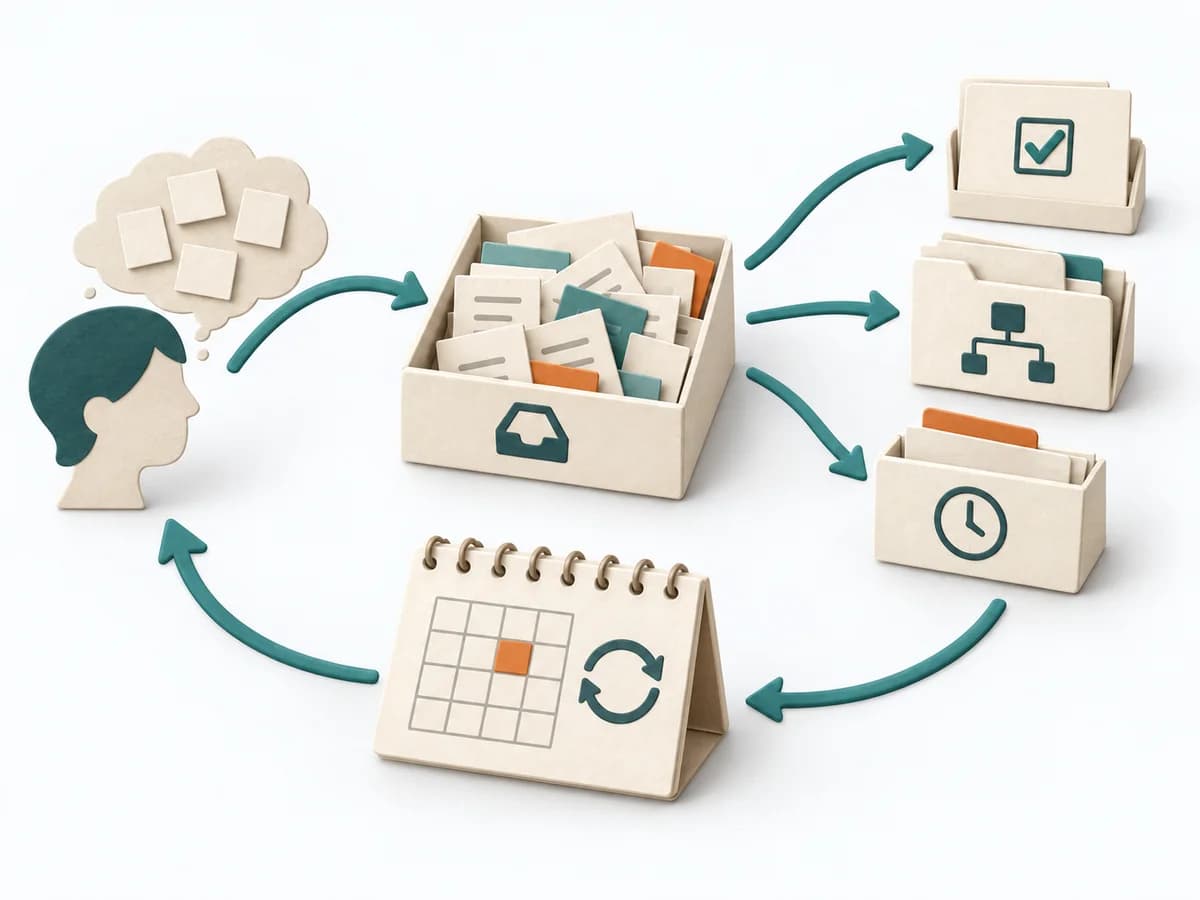
Lothar Seiwert’s daily planning method connects listing tasks, estimating duration, reserving buffers, deciding priorities and reviewing results. The five German initials form a daily learning cycle between plans and actual effort.
Which tasks fit into today’s available time including realistic buffers?

A: Tasks
Collect tasks, appointments and outstanding commitments; name a visible result for each task.
L: Duration
Estimate minutes per task and include fixed appointments.
P: Buffer
Leave part of available time unallocated; 60% planned and 40% buffer is an adjustable starting rule.
E: Decide
Select important outcomes and keep planned duration within planning capacity.
N: Review
At day’s end review completion and actual duration; note causes of variance and deliberately reconsider leftovers.
Plan in the morning or previous evening; review actual time and interruptions at day’s end and use them for the next plan.
For personal daily planning with limited available time and at least some control over tasks.
Daily plan with task, estimated duration, protected buffer, priority decision and actual-time comparison.
The learning note records observations about buffers and estimates and contains adjusted values for the next day.
Fictional example
Lothar Seiwert’s daily planning method connects listing tasks, estimating duration, reserving buffers, deciding priorities and reviewing results. The five German initials form a daily learning cycle between plans and actual effort.
What tasks, appointments and commitments are due today?
Fictional: write proposal, client call, invoices, filing.
How long does each task take including preparation?
Proposal 120, call 60, invoices 60, filing 90 minutes: 330 minutes.
How much working time is available and how much remains free?
400 minutes excluding breaks; 240 planned and 160 buffer.
What fits in planned capacity and what is deliberately changed?
Proposal, call and invoices remain; 90 minutes of filing are deferred.
What was completed, how long did it take and what follows for tomorrow?
Proposal 140, call 60, invoices 50, interruptions 80 minutes. 330 of 400 minutes used; increase future proposal estimates.
All example details are fictional and illustrate the application.
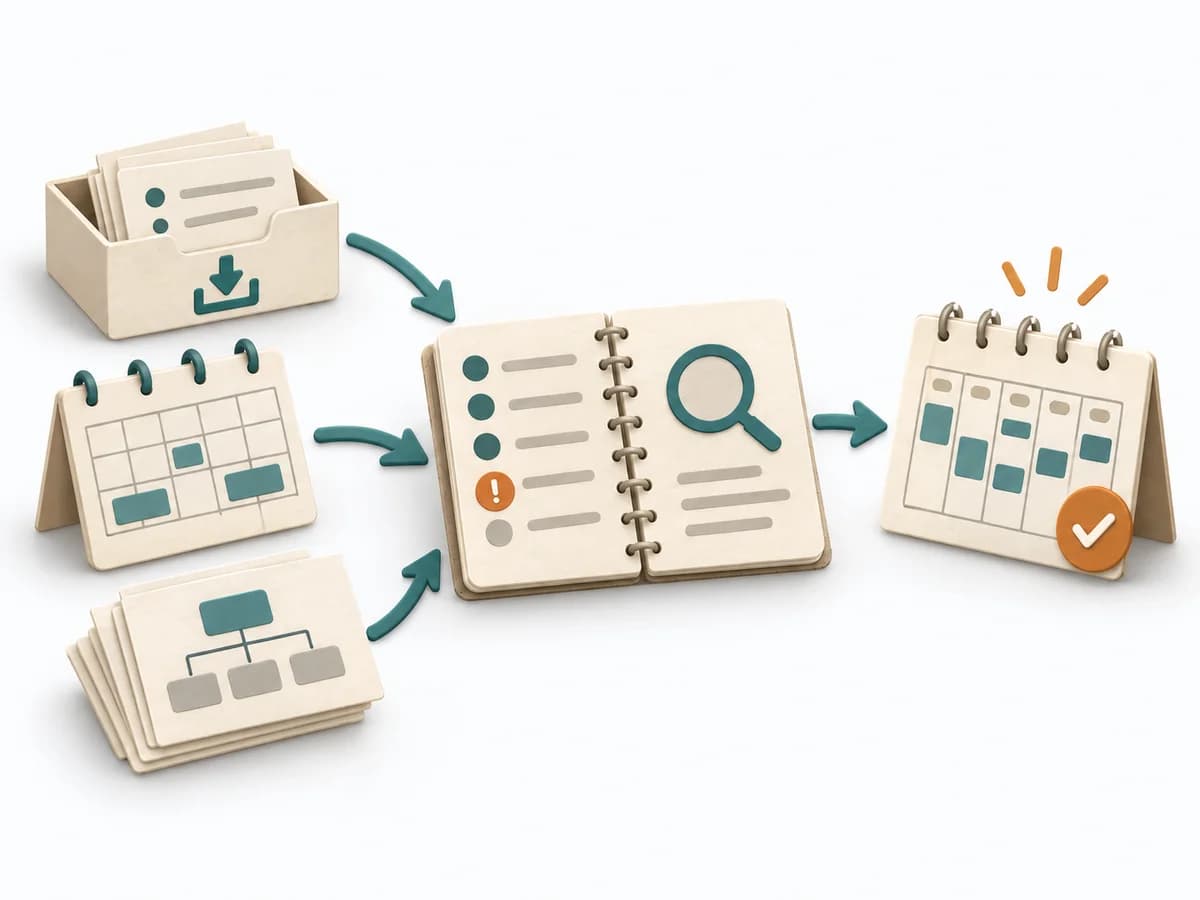
Bring together calendar, open commitments and task list; calculate available working time excluding breaks.
With an overloaded day full of too many tasks, a realistic picture of the day emerges. The method connects estimating, deciding, and buffer thinking so planning fits available energy and time.
Tasks are condensed with rough durations and a safety margin into a workable day plan. Short decisions at the margins prevent the plan from remaining wishful thinking. The later review shows where estimates were too optimistic and where reserves are missing.
The ALPEN Method brings day planning into a realistic order because effort, buffer, and priority are considered together. The day must not be filled completely, or there's no room left for remaining uncertainty. It becomes more than a to-do list once planning, calendar, and actual energy fit together.
Plan based on a real course of the day with appointments, energy, and unavoidable interruptions rather than an ideal picture of productivity. The lever lies in an honest buffer decision, not an overloaded list. Close with a streamlined day plan where something was deliberately cut or postponed.
The method guide walks execution through 5 phases, timing, 5 pitfalls, and clear stop criteria.
Open method guideYour perspective
Your feedback helps shape the next improvements to methodatlas.
Bring together calendar, open commitments and task list; calculate available working time excluding breaks.
To be confirmed
To be confirmed
Complete cycle Time: 5–10 minutes planning plus a brief review; daily practice
Complete this worksheet on paper or in your own document during the work.
What tasks, appointments and commitments are due today?
...
How long does each task take including preparation?
...
How much working time is available and how much remains free?
...
What fits in planned capacity and what is deliberately changed?
...
What was completed, how long did it take and what follows for tomorrow?
...
Answer the prompts with your own information. Explicitly mark unknowns and assumptions.
Deutsche Umweltakademie: ALPEN-Methode
Expected artifact: Daily list
Are appointments and carried-over tasks included?
Entry:
...
Expected artifact: Estimates
Do estimates match similar completed tasks?
Entry:
...
Expected artifact: Capacity
Is the buffer actually unallocated?
Entry:
...
Expected artifact: Daily plan
Does the sum of commitments fit including buffer?
Entry:
...
Expected artifact: Learning note
Did a variance lead to a concrete adjustment?
Entry:
...
...
Method guide: https://methodatlas.meierhoff-systems.de/en/methods/alpen-method/run-sheet
Fitting alternatives with decision guidance, followed by other related methods.

Instead of ALPEN Method, when you want to sort and prioritize tasks by urgency and importance.
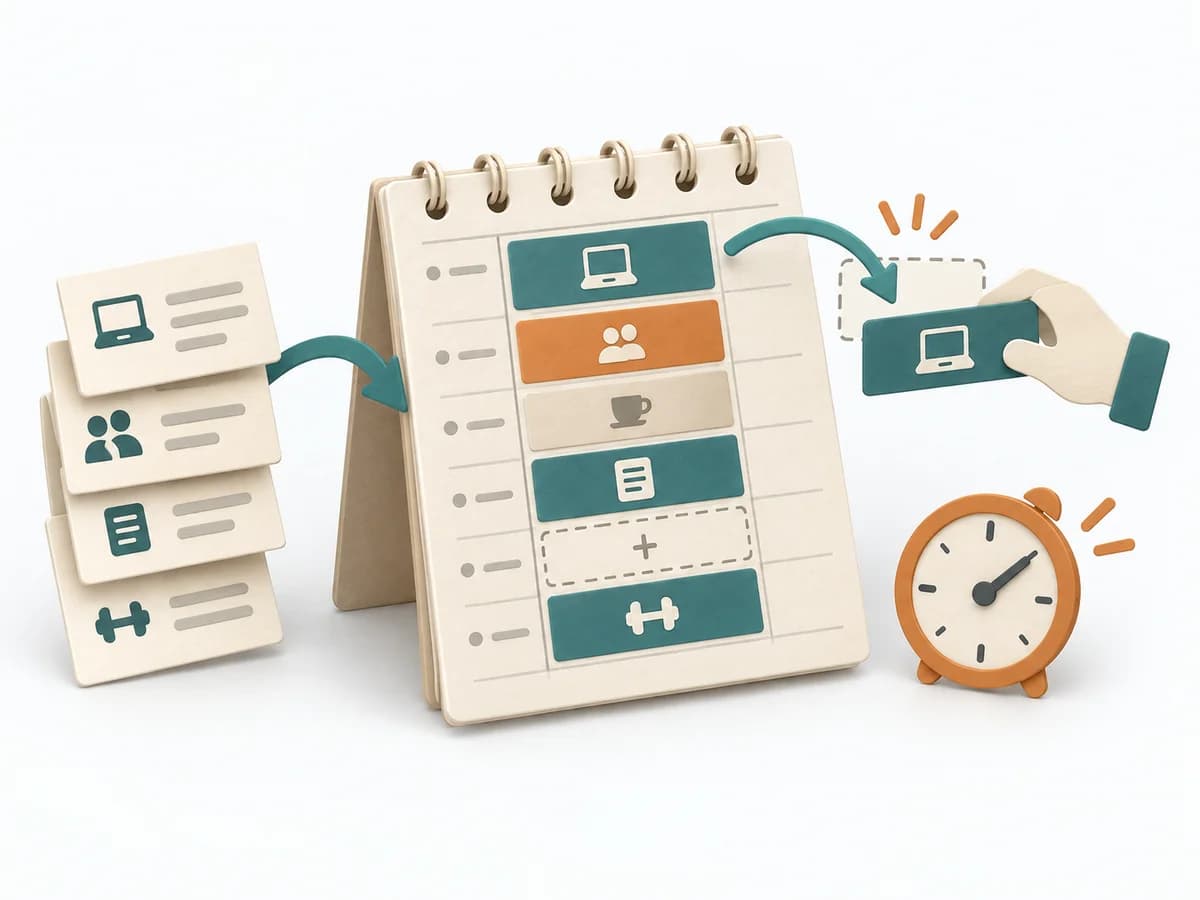
Reserves fixed calendar blocks for tasks and buffer and makes available capacity easier to steer.

Splits items into A, B, and C by value or effect and directs focus to the most impactful ones.
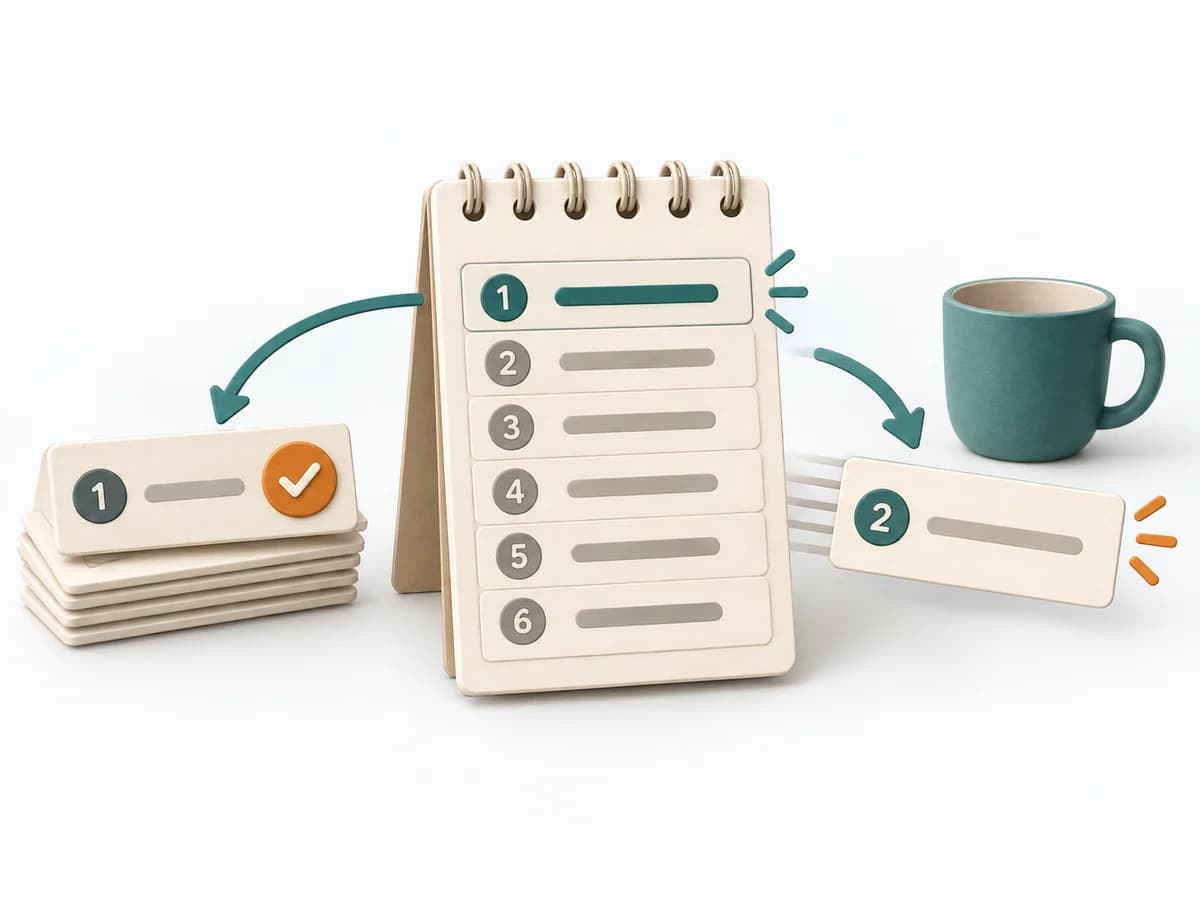
Limits daily focus to a few prioritized tasks and forces a clear order.

Makes status, exceptions, and signals recognizable at a glance so teams can react faster.

Finds a system's bottleneck, aligns work around it, and cyclically checks whether flow improves.