Purpose
In a week with many open loops, the method creates distance from operational noise. It organizes commitments, calendar, and projects so the next week becomes workable.
Operations Personal productivity method
Collects open items, reviews calendars and projects, and sets a clear focus for the coming week.
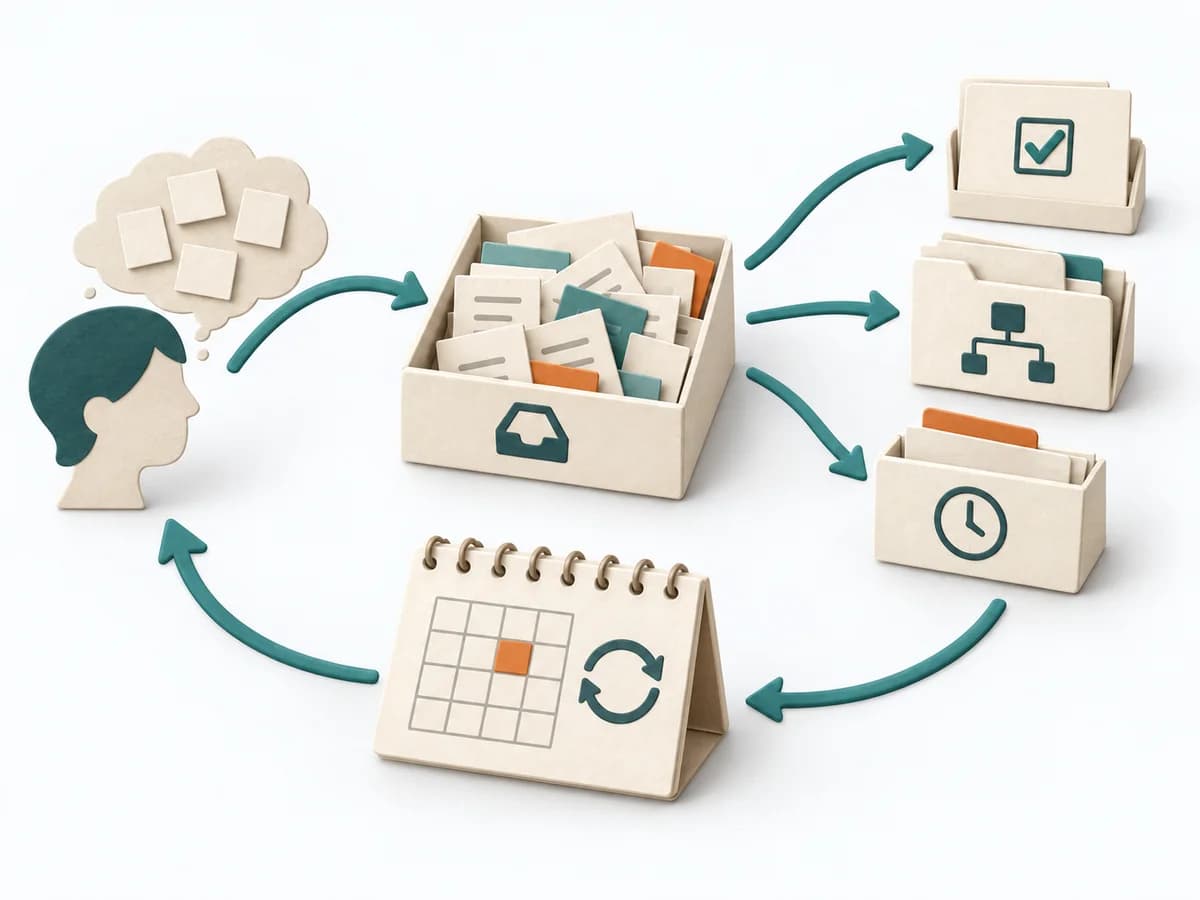
The review connects incoming items, commitments, and available time into a new overall picture. Open points are reduced to real capacity for action. This creates a calm starting point for the next phase.
Is my complete commitment system clear, current, and complete enough to trust for the coming week?
The steps form one complete method run.

Collect
Bring loose notes, receipts, messages, and thoughts into their designated inboxes.
Clarify
Process every inbox to zero by deciding meaning, desired outcome, and next visible action.
Update
Review Next Actions, past and upcoming calendar, Waiting For, Projects, and relevant checklists completely.
Explore
Review Someday/Maybe and look creatively for new, bold, or simplifying possibilities.
Focus
Check available capacity, fixed calendar, and key outcomes for the week; record review completion.
Add new evidence at review and version decisions with the prior state.
Bei einer Woche mit vielen offenen Schleifen schafft die Methode Abstand zum operativen Lärm. Sie ordnet Zusagen, Kalender und Projekte so, dass die nächste Woche tragfähig wird.
Updated personal system with cleared inboxes, complete projects, next actions, and a deliberate weekly focus.
Fictional example
Fictional values show the actual method fields.
Bring loose notes, receipts, messages, and thoughts into their designated inboxes.
Three paper notes, two voice notes, and “review warehouse contract” enter the inboxes.
Process every inbox to zero by deciding meaning, desired outcome, and next visible action.
Warehouse contract becomes project “decide by 30 Nov”; next action: mark notice period in PDF.
Review Next Actions, past and upcoming calendar, Waiting For, Projects, and relevant checklists completely.
Saturday pickup gets “ask Lea for slot data”; waiting for Murat gets a Tuesday follow-up.
Review Someday/Maybe and look creatively for new, bold, or simplifying possibilities.
Pickup locker is activated; build our own app is deleted; partner warehouse remains Someday.
Check available capacity, fixed calendar, and key outcomes for the week; record review completion.
Appointments use 60%; focus: prepare slot pilot and decide contract; next review Friday 15:00.
All values are fictional.
Reserve an uninterrupted review window and obtain access to every inbox, list, calendar, and project support file.
In a week with many open loops, the method creates distance from operational noise. It organizes commitments, calendar, and projects so the next week becomes workable.
The review connects inbox, commitments, and available time into a new overall picture. Open items are not just collected but broken down to real actionability. This creates a calm starting point for the next phase instead of a scattered restart.
Weekly Review creates a fixed rhythm to bring scattered commitments back into a trusted system. Inputs, tasks, projects, and the calendar are not only reviewed but clarified and updated. That makes open loops visible and helps choose next steps for the coming week more consciously. The method links reflection with concrete execution planning.
Set a fixed appointment, a checklist, and access to the calendar, task lists, and notes. Move from collecting to clarifying to focus instead of jumping straight into individual tasks. A common trap is skipping the review when things get busy; that is exactly when it matters most.
The method guide walks execution through 5 phases, timing, 5 pitfalls, and clear stop criteria.
Open method guideYour perspective
Your feedback helps shape the next improvements to methodatlas.
Set subject, evidence, roles, flow, and review.
To be confirmed
To be confirmed
Complete run Time: 45–90 minutes every 7–10 days; split into two blocks when backlog is large.
Complete this worksheet on paper or in your own document during the work.
Bring loose notes, receipts, messages, and thoughts into their designated inboxes.
...
Process every inbox to zero by deciding meaning, desired outcome, and next visible action.
...
Review Next Actions, past and upcoming calendar, Waiting For, Projects, and relevant checklists completely.
...
Review Someday/Maybe and look creatively for new, bold, or simplifying possibilities.
...
Check available capacity, fixed calendar, and key outcomes for the week; record review completion.
...
The blank worksheet contains prompts only.
Reference · original teaching example
Expected artifact: Complete inboxes
Bring loose notes, receipts, messages, and thoughts into their designated inboxes.
Entry:
...
Expected artifact: Cleared inboxes
Process every inbox to zero by deciding meaning, desired outcome, and next visible action.
Entry:
...
Expected artifact: Current lists
Review Next Actions, past and upcoming calendar, Waiting For, Projects, and relevant checklists completely.
Entry:
...
Expected artifact: Deliberate options
Review Someday/Maybe and look creatively for new, bold, or simplifying possibilities.
Entry:
...
Expected artifact: Trusted week view
Check available capacity, fixed calendar, and key outcomes for the week; record review completion.
Entry:
...
...
Method guide: https://methodatlas.meierhoff-systems.de/en/methods/weekly-review/run-sheet
Fitting alternatives with decision guidance, followed by other related methods.

Instead of Weekly Review, choose Time Blocking when you want to cut the day into fixed work blocks instead of open lists.

Locks the most important and uncomfortable task into the first focused work block of the day.

Splits focused work into short sprints with breaks and makes progress, interruptions, and energy use visible.
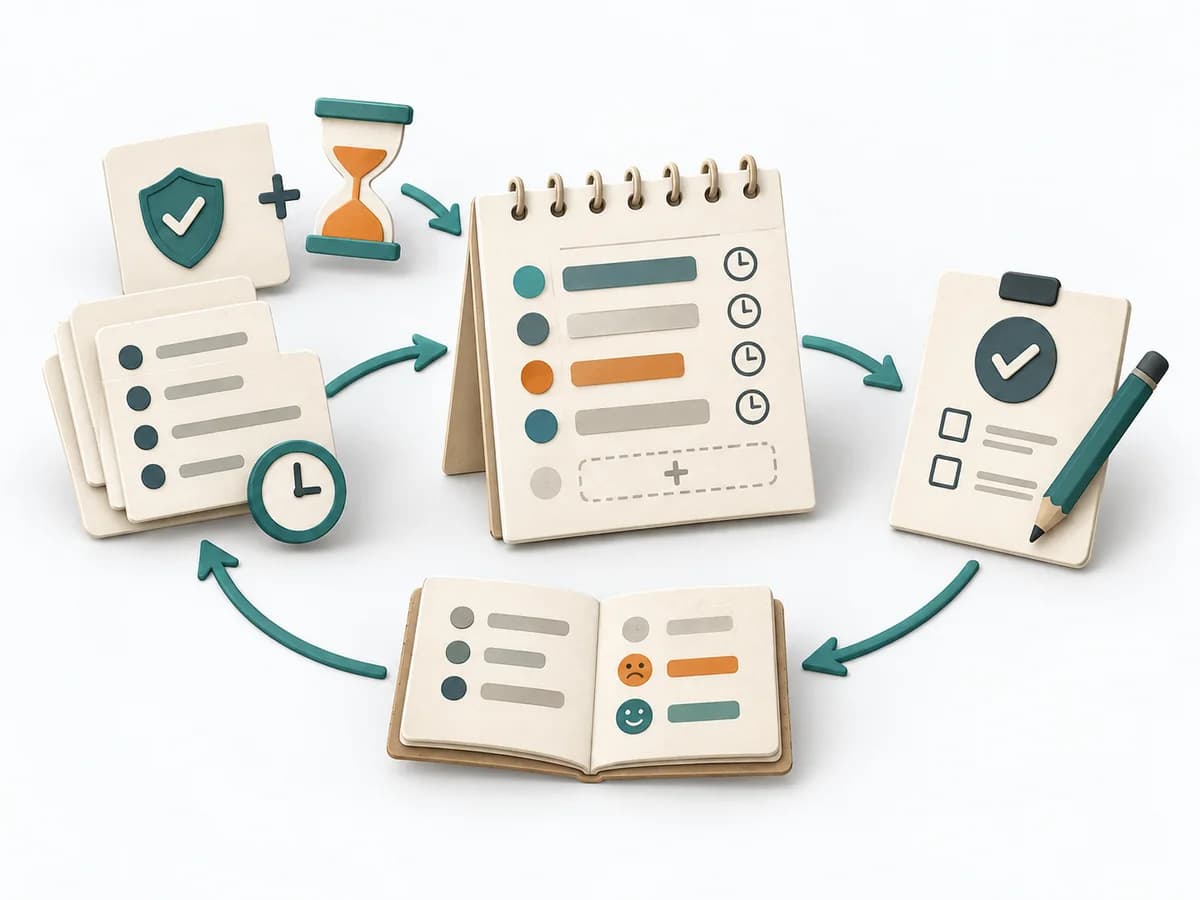
Plans the day through tasks, effort, buffer, and control so priorities stay realistically checkable.

Asks its way step by step to a controllable cause and stops only once an effective countermeasure is within reach.

Splits items into A, B, and C by value or effect and directs focus to the most impactful ones.