Purpose
With many similar objects of differing economic significance, the method prioritizes effort by effect. It separates what needs regular steering from what rarely needs attention.
Operations Decision method
ABC analysis shows which level of control each item receives given its value contribution.
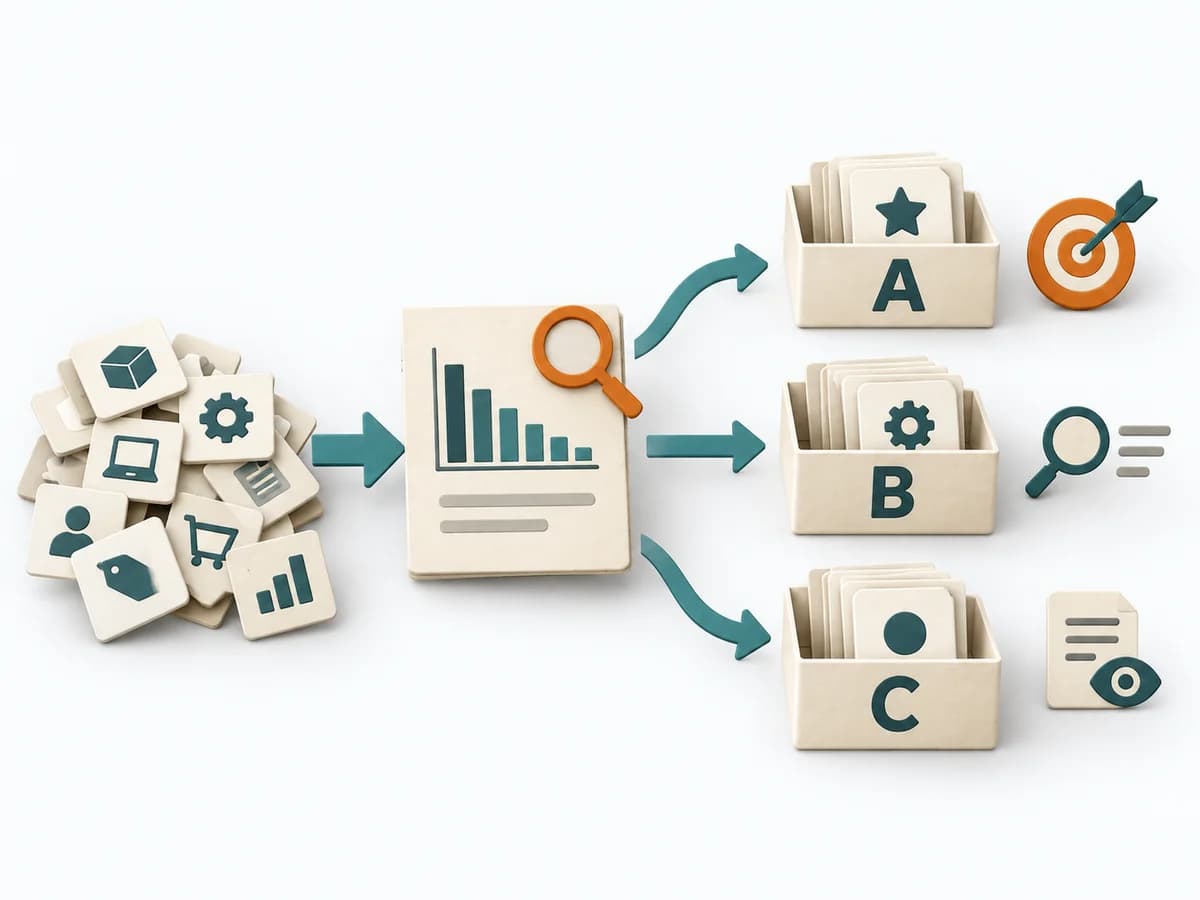
ABC analysis sorts items by a consistent value contribution and assigns A, B and C using agreed cumulative thresholds. Each class receives a different level of control.
What level of control does each item need given its value contribution?
Value
Calculate usage × unit value for each item and sum all values.
Rank
Sort items descending; share = item value / total × 100, cumulative = running value sum / total × 100.
Classify
Apply cumulative thresholds and the boundary rule; record each assignment.
Control
Set review intervals and owners per class; also flag critical or volatile items.
Reclassify after price or demand changes; document cadence and exceptions.
For inventory or comparable portfolios with reliable usage or contribution data.
Item-class matrix with annual usage value, share, cumulative share, class and control policy.
The policy defines the next valuation period and triggers for early reclassification.
Fictional example
ABC analysis sorts items by a consistent value contribution and assigns A, B and C using agreed cumulative thresholds. Each class receives a different level of control.
| Rank | Item | Annual usage value (€) | Share (%) | Cumulative (%) | Class | Control policy |
|---|---|---|---|---|---|---|
| 1Enter category and measurements; calculate from unrounded values. | Motor | 6,000 | 60 | 60 | A | Review weekly |
| 2Enter category and measurements; calculate from unrounded values. | Sensor | 2,000 | 20 | 80 | A | Review weekly |
| 3Enter category and measurements; calculate from unrounded values. | Housing | 1,500 | 15 | 95 | B | Review monthly |
| 4Enter category and measurements; calculate from unrounded values. | Label | 500 | 5 | 100 | C | Review quarterly |
Fictional: 100 × €60 = €6,000, 200 × €10 = €2,000, 300 × €5 = €1,500, 1,000 × €0.50 = €500; total €10,000. A through 80%, B through 95%, then C.
Define the item population, valuation period, price unit and intended control decision.
With many similar objects of differing economic significance, the method prioritizes effort by effect. It separates what needs regular steering from what rarely needs attention.
A fitting metric orders the set by contribution or value, making the distribution visible rather than individual values. This produces classes that apply different intensities of steering and control depth. Attention flows to where it has the greatest effect.
ABC Analysis tiers large sets by economic or operational significance. Thresholds, data basis, and handling rules must be transparent so the classes don't seem arbitrary. List sorting becomes steering once A, B, and C classes get different attention, stock levels, upkeep, or control.
Use real consumption, value, or volume data and disclose the logic by which the classes are formed. The analysis becomes interesting where the classification leads to different steering rules and depths of attention. In the end, clear handling rules per class and a date for reassessing the classification are needed.
The method guide walks execution through 4 phases, timing, 4 pitfalls, and clear stop criteria.
Open method guideYour perspective
Your feedback helps shape the next improvements to methodatlas.
Define the item population, valuation period, price unit and intended control decision.
To be confirmed
To be confirmed
Complete cycle Time: 30–60 minutes analysis; regular reclassification
Complete this worksheet on paper or in your own document during the work.
| Rank | Item | Annual usage value (€) | Share (%) | Cumulative (%) | Class | Control policy |
|---|---|---|---|---|---|---|
| 1 | ||||||
| 2 | ||||||
| 3 | ||||||
| 4 |
Record metric, period and total. Share = value / total × 100; cumulative = running sum / total × 100. Sort descending; for ABC also define thresholds and the boundary rule.
Oracle Inventory: Overview of ABC Analysis
Expected artifact: Comparable item values
Are usage and price complete and comparable?
Entry:
...
Expected artifact: Cumulative value distribution
Do the total and cumulative 100% reconcile?
Entry:
...
Expected artifact: Traceable ABC classes
Is a boundary-crossing item assigned unambiguously?
Entry:
...
Expected artifact: Control and review policies
Does every class have a practical control policy?
Entry:
...
...
Method guide: https://methodatlas.meierhoff-systems.de/en/methods/abc-analysis/run-sheet
Fitting alternatives with decision guidance, followed by other related methods.
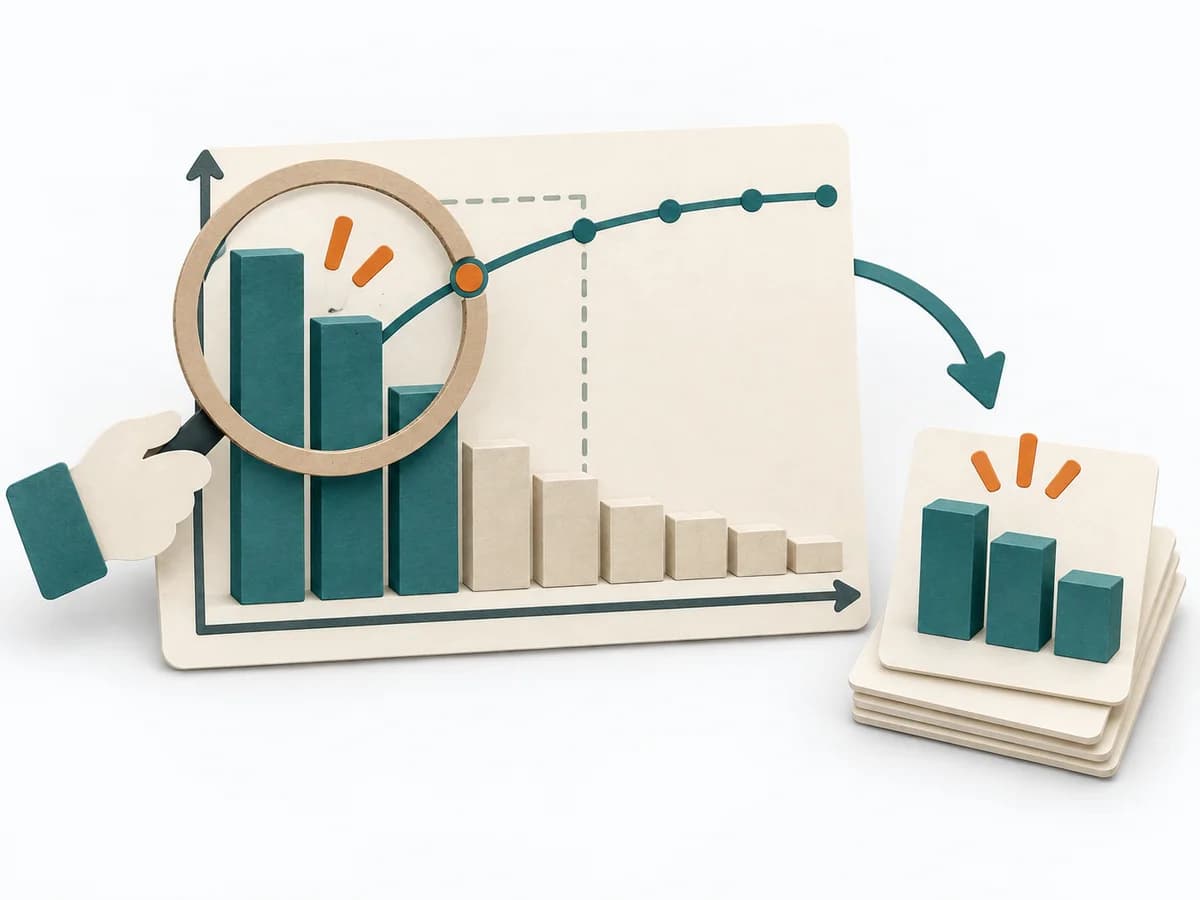
Instead of ABC Analysis, when you want to prioritize the few most important drivers behind a result first.

Sorts tasks by urgency and importance and turns them into a simple action decision.

Plans the day through tasks, effort, buffer, and control so priorities stay realistically checkable.
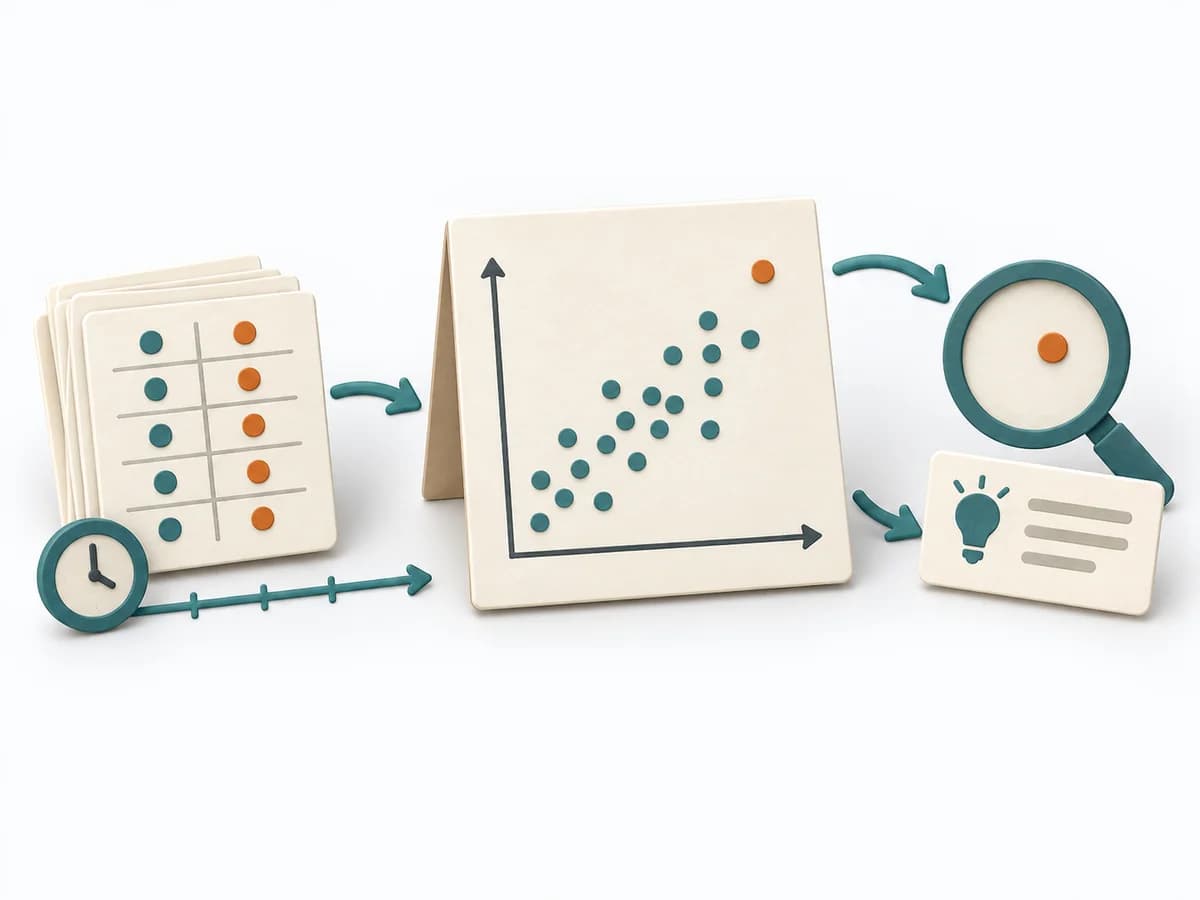
Paired data points reveal whether two variables move together and where a suspected relationship needs deeper proof.

Compares goal and actual course, identifies deviations, and records concrete learning steps.

Guides improvement work from problem definition through measurement and analysis to controls and lasting transfer.