Purpose
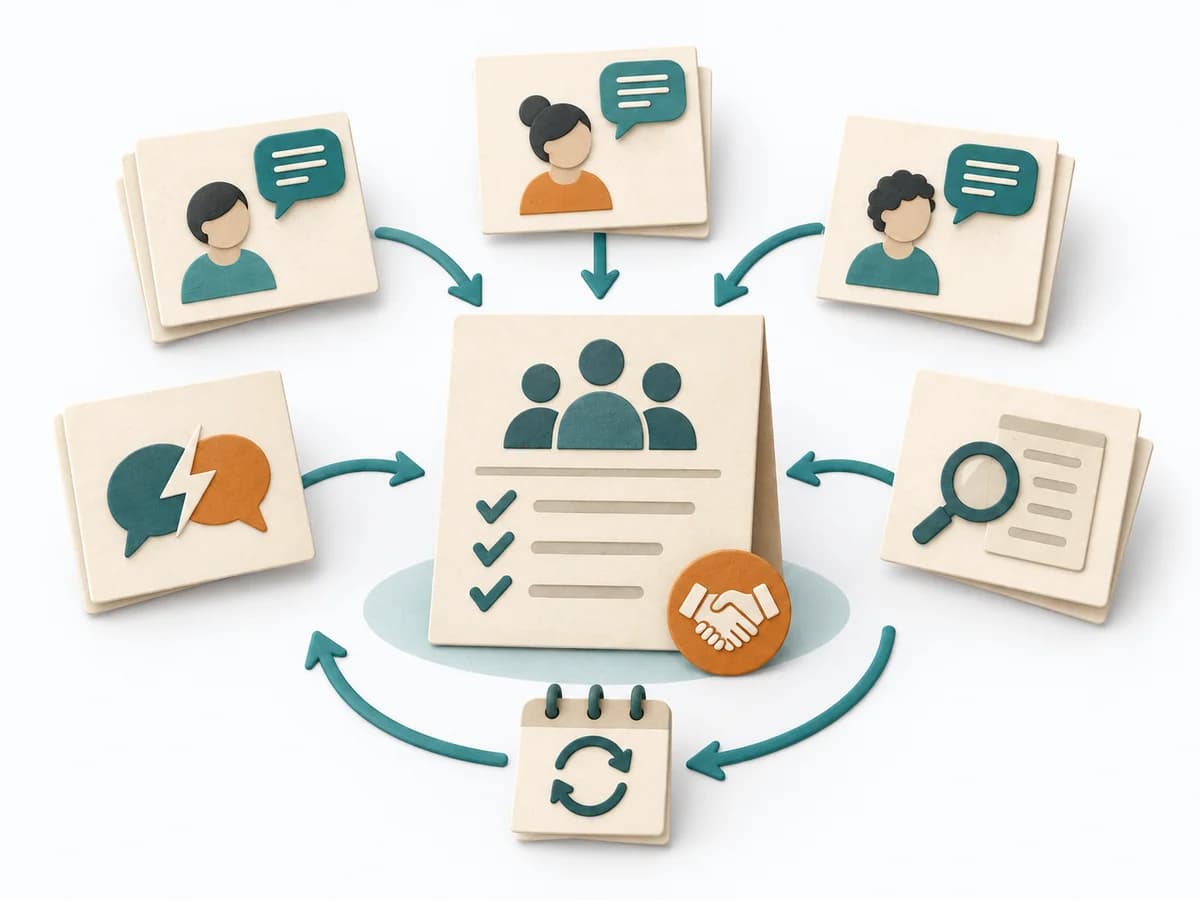
When decisions get stuck between leadership and team, Delegation Poker clarifies the desired scope of autonomy. It shows how much decision-making latitude a role should actually get in practice.
Facilitation Facilitation method
Delegation Poker makes decision authority visible through seven delegation levels and supports a deliberate agreement.
Delegation Poker lets participants simultaneously choose a level from Tell to Delegate for a concrete decision. Discussion clarifies context, risk, and a workable level; the result is recorded on a Delegation Board.
Which delegation level fits this decision given current capability, risk, and boundaries?
Each step produces a concrete domain result for the complete run.

Decisions
List recurring decisions with context, risk, and affected roles.
Levels
Clarify Tell, Sell, Consult, Agree, Advise, Inquire, and Delegate with one example.
Reveal
Leader and team choose face down and explain after revealing.
Reconcile
Discuss differences using capability, risk, information needs, and guardrails.
Board
Record level, conditions, information path, and review date on the Delegation Board.
Replay decision cases after practical experience and adjust level and conditions gradually.
Use it for recurring decisions where authority between leadership and team is unclear or overly constrained.
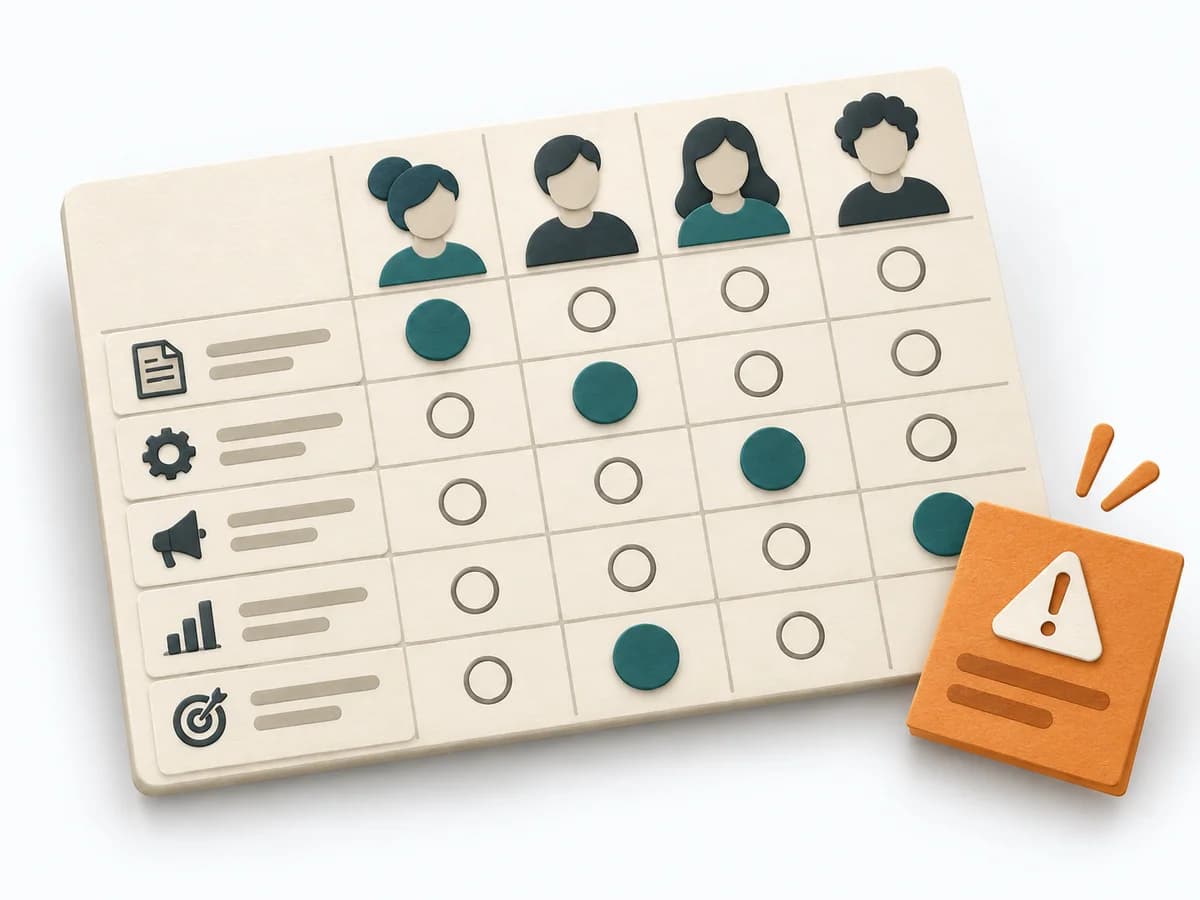
Delegation board with decision area, agreed level, conditions, information path, guardrails, and review date.
Fictional example
Fictional example for one concrete work case.
| Case | Decision area | Current state | Agreed level | Conditions and review |
|---|---|---|---|---|
| Example caseWhich delegation level fits this decision given current capability, risk, and boundaries? | Monitoring-tool selection | Manager decides after consultation | 5 · Advise: team decides after advice | Budget up to €5,000, security check, review after two decisions |
The example is fictional and must be adapted to mandate and context.
Choose concrete decisions with a named leader and executing team.
When decisions get stuck between leadership and team, Delegation Poker clarifies the desired scope of autonomy. It shows how much decision-making latitude a role should actually get in practice.
Participants place a concrete decision along graduated degrees of freedom and speak openly about reasoning, risk, and maturity. This produces a more precise balance of control and ownership that holds up in daily work.
Delegation Poker helps because it negotiates leadership and decision-making latitude concretely along graduated delegation levels. The method works when the levels do not stay abstract but are tied to real decisions, risks, and skill building. The focus is on trust, maturity, and feedback, so delegation becomes clearer and fosters neither micromanagement nor overload.
Start with decisions that occur regularly and are noticeable for several people involved, rather than hypothetical edge cases. Care is needed when the same level means different things to different people; then the practical consequence must be spelled out clearly. Close with a few fixed delegation levels and an agreement on when to review them again.
The method guide walks execution through 5 phases, timing, 5 pitfalls, and clear stop criteria.
Open method guideYour perspective
Your feedback helps shape the next improvements to methodatlas.
Plan the question, inputs, complete run, and review with clear ownership.
To be confirmed
To be confirmed
Complete run Time: 60–90 minutes for 5–8 decision areas; review the delegation board regularly afterwards.
Complete this worksheet on paper or in your own document during the work.
| Case | Decision area | Current state | Agreed level | Conditions and review |
|---|---|---|---|---|
| Example case |
Use one specifically bounded case per row.
Reference source · original teaching example
Expected artifact: Bounded decision cases
Bounded decision cases
Entry:
...
Expected artifact: Shared understanding of seven levels
Shared understanding of seven levels
Entry:
...
Expected artifact: Independent level choices
Independent level choices
Entry:
...
Expected artifact: Agreed delegation boundaries
Agreed delegation boundaries
Entry:
...
Expected artifact: Current delegation board
Current delegation board
Entry:
...
...
Method guide: https://methodatlas.meierhoff-systems.de/en/methods/delegation-poker/run-sheet
Fitting alternatives with decision guidance, followed by other related methods.
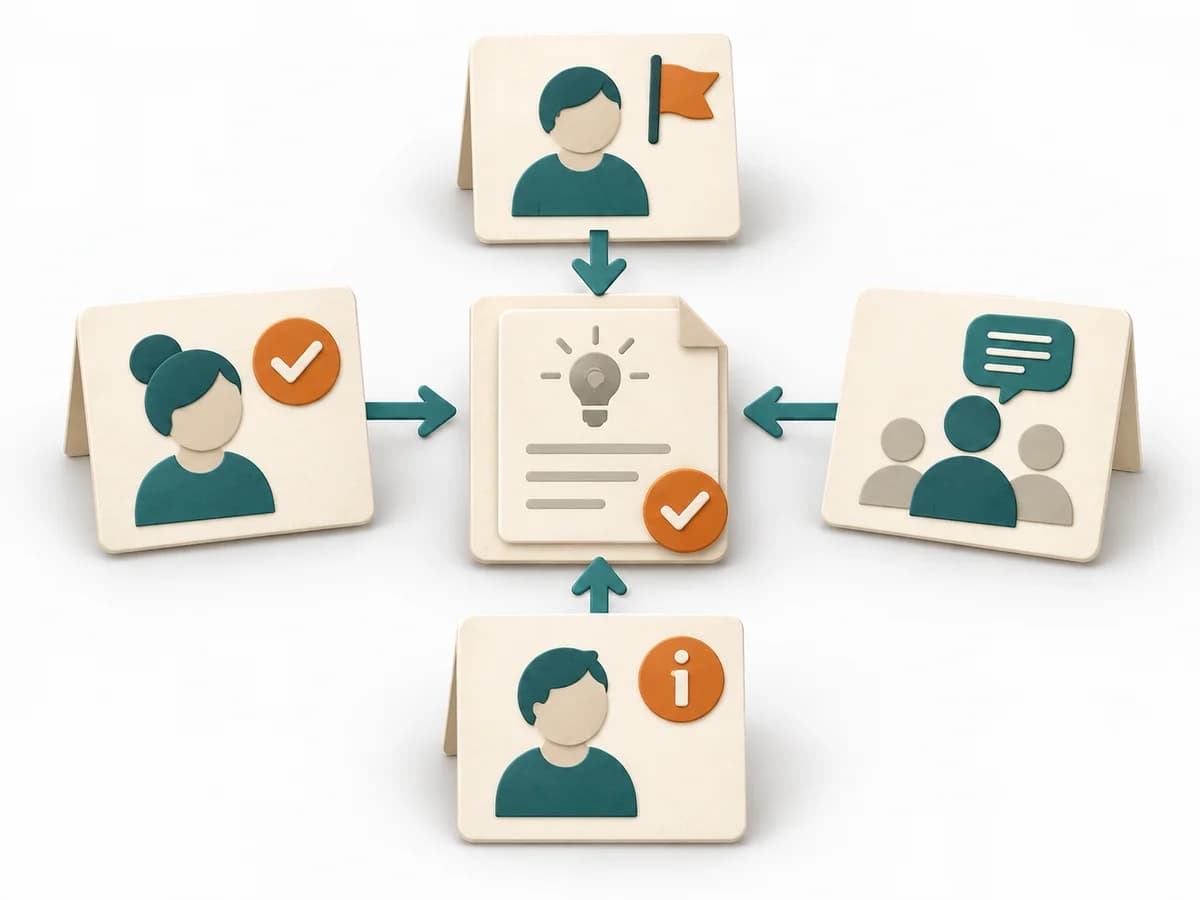
Instead of Delegation Poker, choose DACI when it is not delegation levels but Driver, Approver, Contributors, and Informed that need to be clarified.

Makes accountability negotiable and visible, helping negotiate roles, expectations, and open questions cleanly.
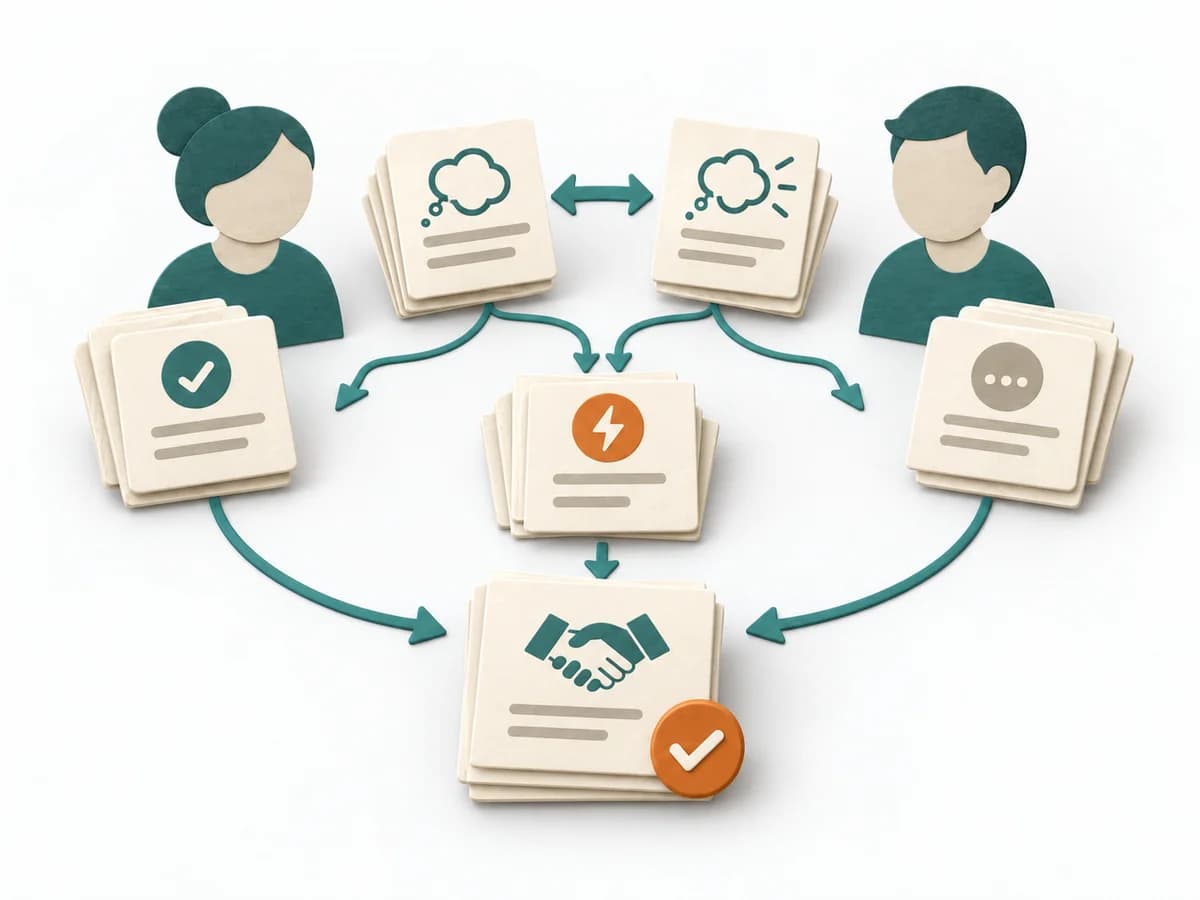
Surfaces stakeholder expectations, clusters conflicts, and turns them into concrete agreements.
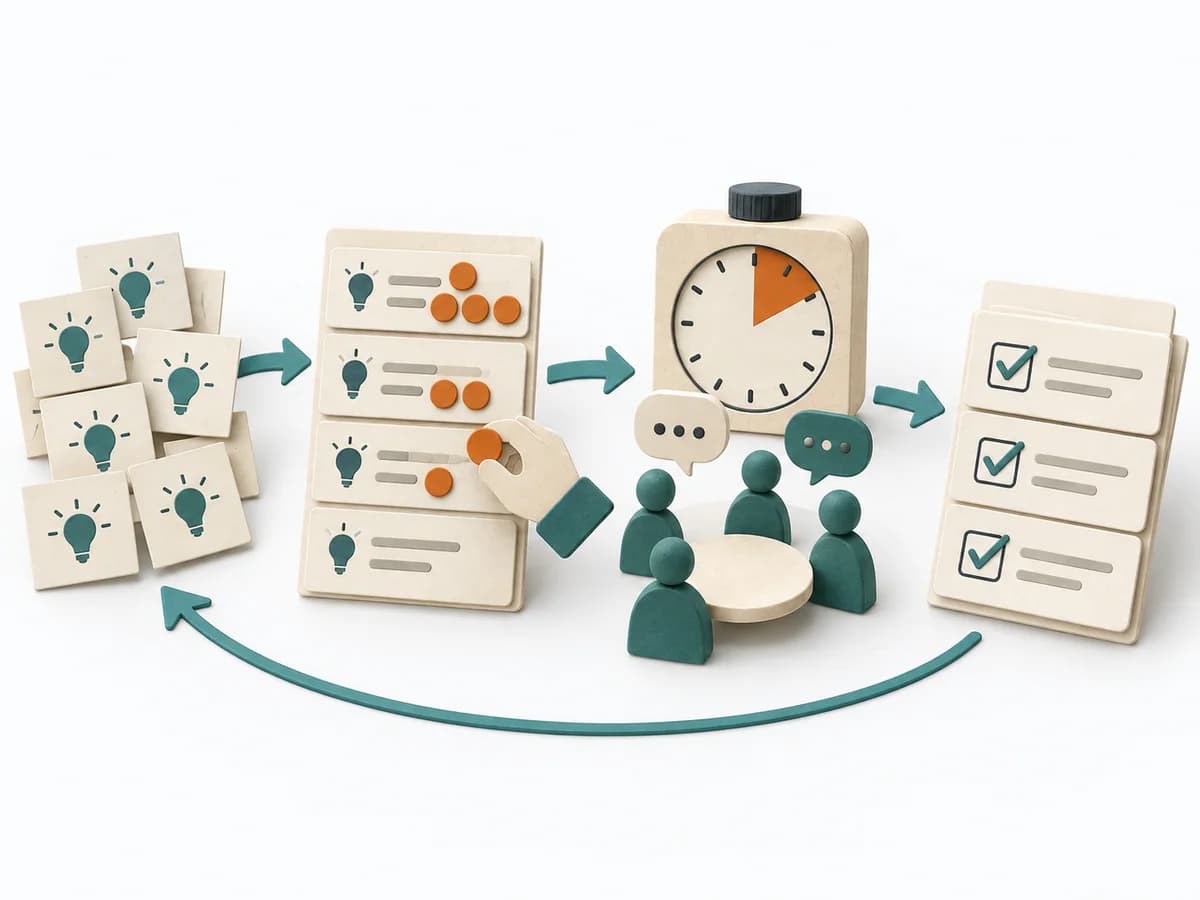
Prioritizes topics by voting and timeboxed discussion, so many points turn into clear action items.

Enables self-organized sessions where the agenda, proceedings, and action topics emerge from actual need.

Moves ideas from silent reflection through pair exchange into the group and condenses patterns.