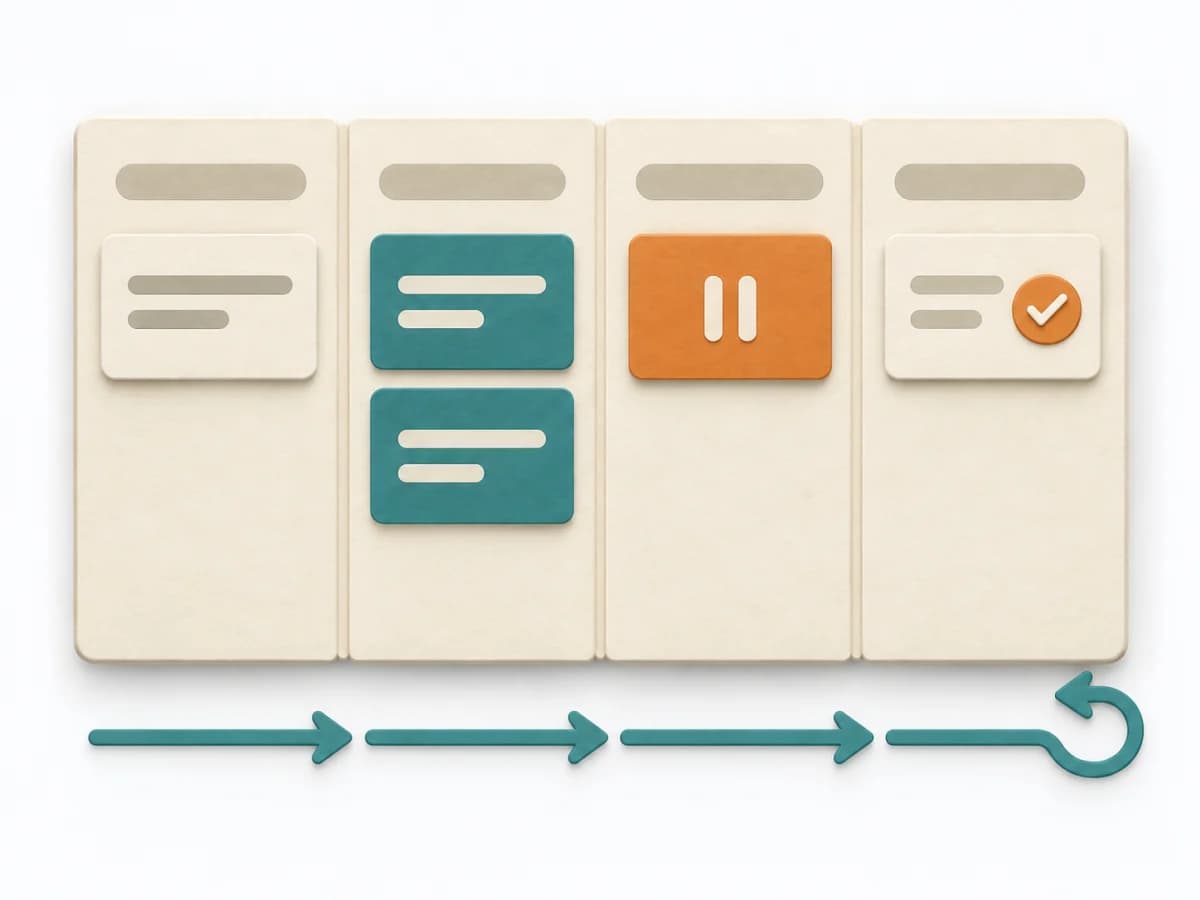
Purpose
When a complex topic does not yet have a fitting agenda, Open Space Technology hands topic ownership back to the participants. The format suits questions that only move forward when real interest determines the order.
Facilitation Facilitation method
Enables self-organized sessions whose agenda, proceedings, and actions emerge from participants’ needs.
Die Teilnehmenden setzen selbst Schwerpunkte, bilden dazu Sessions und wechseln dort dorthin, wo ihre Aufmerksamkeit am meisten Nutzen verspricht. So entsteht ein offenes Arbeitsfeld, in dem relevante Fragen statt vorgefertigter Programmpunkte die Energie lenken.
Which topics must participants put on the agenda themselves to act on the theme?
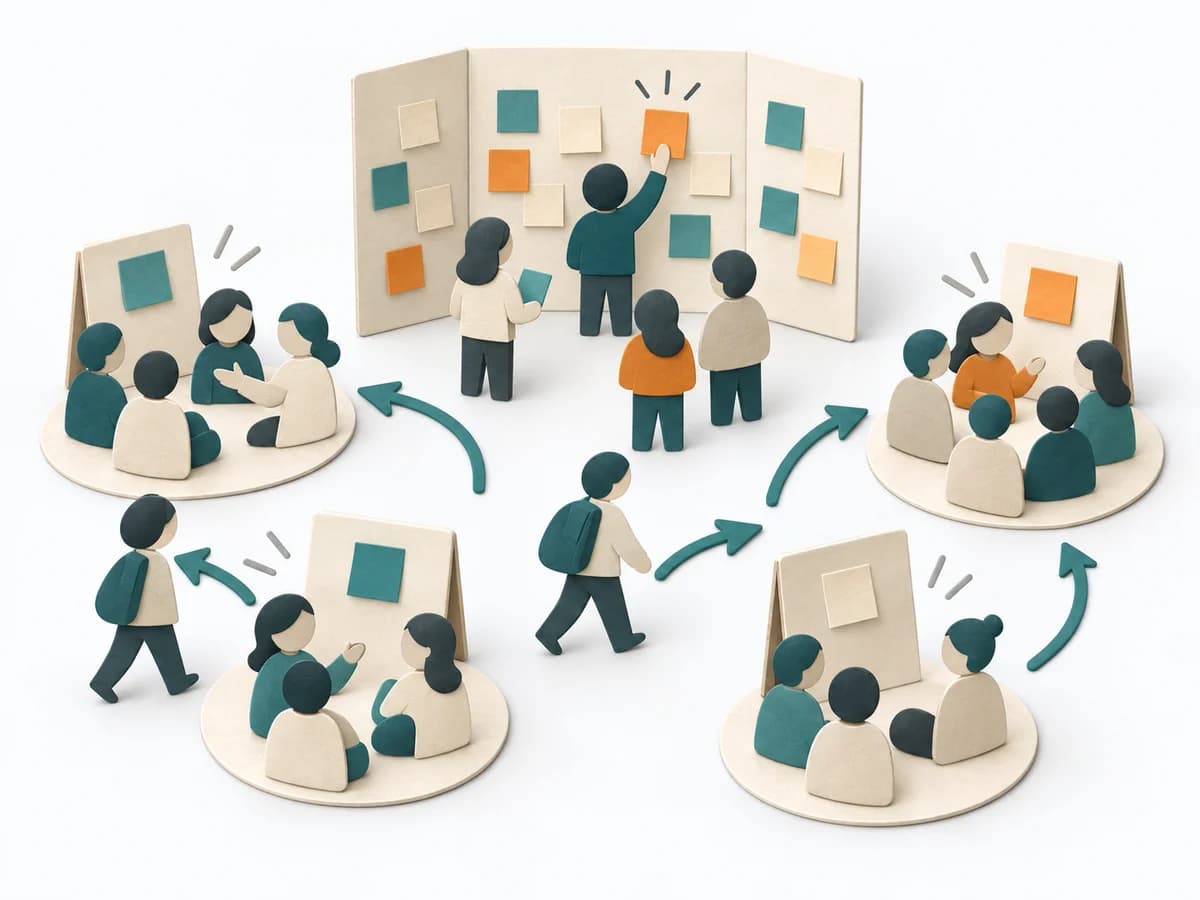
The steps express the method mechanics in one complete run.
Frame
Explain the theme, invitation, available spaces, and hard time boundaries
Proposals
Participants propose sessions with title, question, and host
Marketplace
Place session proposals into time slots and rooms together
Sessions
Participants choose and move between sessions based on learning or contribution, and document results
Proceedings
Publish session reports and consolidate next steps with owners
Test open questions through the agreed next step and append new evidence as a version.
Wenn ein komplexes Thema noch keine passende Agenda hat, gibt Open Space Technology den Beteiligten die Themenhoheit zurück. Das Format eignet sich für Fragen, die nur dann vorankommen, wenn echtes Interesse die Reihenfolge bestimmt.
Proceedings with evidence, open points, owner, and review.
Fictional example
Fictional values are assigned to explicit method fields.
| Session | Time | Room | Host | Working question | Proceedings | Next step |
|---|---|---|---|---|---|---|
| Slots and capacityTrack session proposal with time, room, host, question, result, and follow-up. | 10:00 | Elbe | Lea | How do we link slots to real warehouse capacity? | Three bottlenecks, board photo | Pilot eight slots on 4 Nov, Lea |
| Express pickupTrack session proposal with time, room, host, question, result, and follow-up. | 11:15 | Alster | Murat | Which express cases justify interruption? | Four case types and one open data question | Review 30 cases by 27 Oct, Cem |
All details are fictional.
Set an urgent theme, open invitation, rooms, and time slots; prepare the proceedings repository.
When a complex topic does not yet have a fitting agenda, Open Space Technology hands topic ownership back to the participants. The format suits questions that only move forward when real interest determines the order.
Participants set their own priorities, form sessions around them, and move to wherever their attention promises the most value. This creates an open working field in which relevant questions, rather than a fixed program, direct the energy.
Open Space Technology replaces a preplanned detailed agenda with a marketplace of concerns. Whoever brings in a topic takes responsibility for a session; everyone else chooses freely where they want to contribute or learn. This lets the work follow the real energy and relevance in the room. From many parallel conversations come documented insights, connections, and action areas.
Prepare the room, time grid, session surfaces, and documentation mechanism. Explain the principles and the law of two feet clearly and hold the frame without steering content. A typical mistake is too much moderation; the value comes from self-organization inside a clear container.
The method guide walks execution through 5 phases, timing, 5 pitfalls, and clear stop criteria.
Open method guideYour perspective
Your feedback helps shape the next improvements to methodatlas.
Plan subject, participation, complete flow, and review.
To be confirmed
To be confirmed
Complete run Time: Half a day to two days.
Complete this worksheet on paper or in your own document during the work.
| Session | Time | Room | Host | Working question | Proceedings | Next step |
|---|---|---|---|---|---|---|
| Slots and capacity | ||||||
| Express pickup |
The blank worksheet contains prompts only.
Reference source · original teaching example
Expected artifact: Marketplace frame
Explain the theme, invitation, available spaces, and hard time boundaries
Entry:
...
Expected artifact: Session proposals
Participants propose sessions with title, question, and host
Entry:
...
Expected artifact: Agenda
Place session proposals into time slots and rooms together
Entry:
...
Expected artifact: Session reports
Participants choose and move between sessions based on learning or contribution, and document results
Entry:
...
Expected artifact: Proceedings
Publish session reports and consolidate next steps with owners
Entry:
...
...
Method guide: https://methodatlas.meierhoff-systems.de/en/methods/open-space-technology/run-sheet
Fitting alternatives with decision guidance, followed by other related methods.

Instead of Open Space Technology, choose Barcamp when you need an open conference format in which participants set the content themselves.
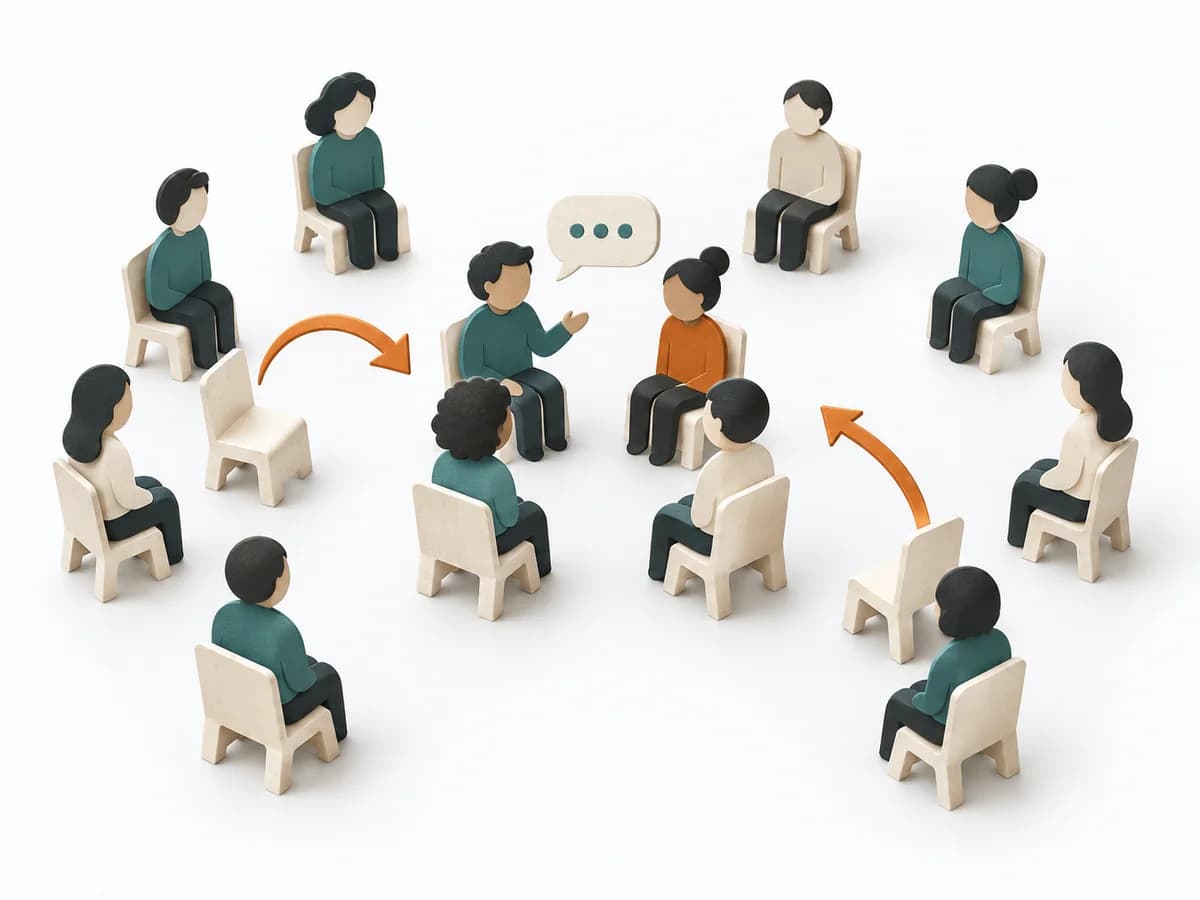
Separates an inner and outer circle so discussion, observation, and tensions become visible at the same time.
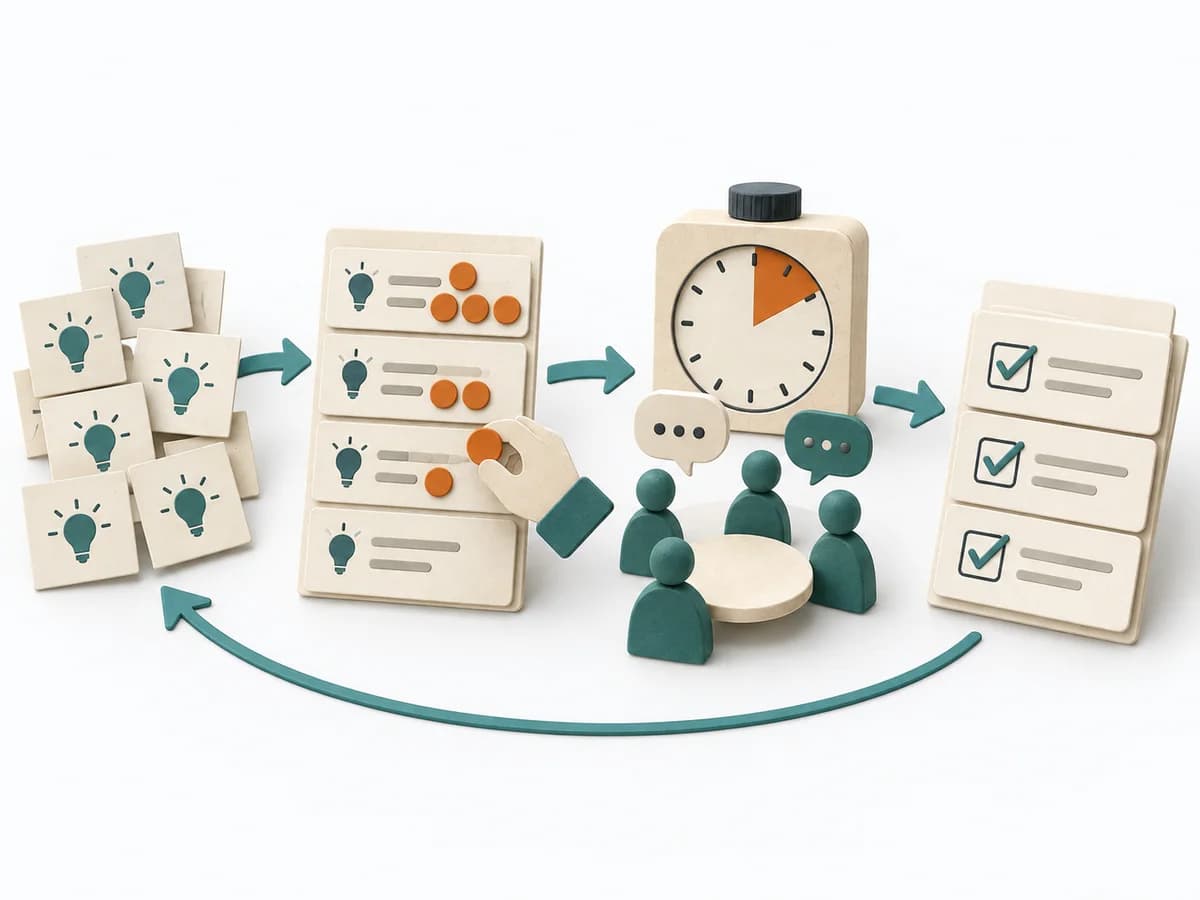
Prioritizes topics by voting and timeboxed discussion, so many points turn into clear action items.
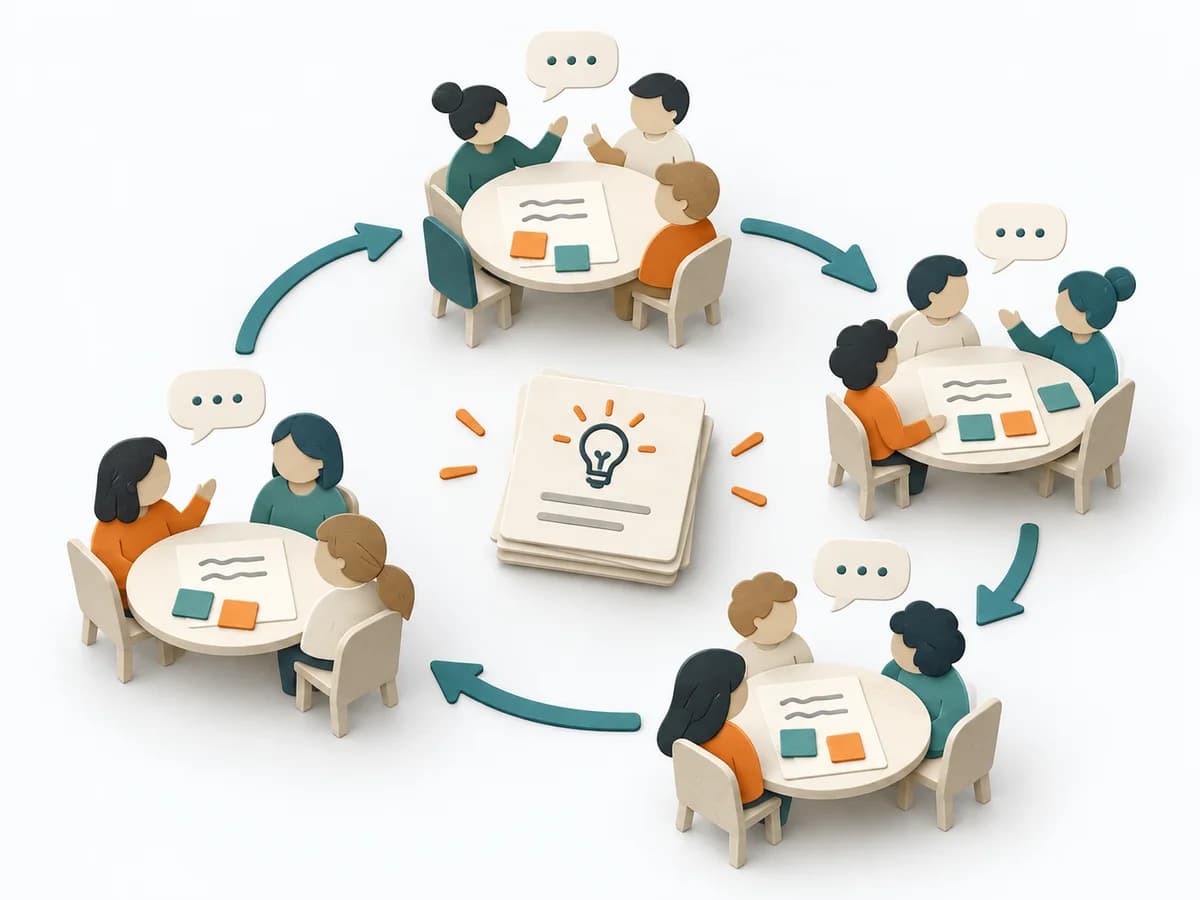
Rotates small conversation groups so table notes, questions, and emergent themes are built on together.

Gives one person precise peer feedback through three roles and records key next actions and observations.

Moves ideas from silent reflection through pair exchange into the group and condenses patterns.