Complete firstWorking basis
Collect 5–8 recurring decisions with risk, current holder, and affected roles. Mark hard legal or organisational boundaries.
Use a concrete case and observable outcome.
A practical method guide: clarify prerequisites and materials, understand the complete process, and look up outputs, pitfalls, and stop criteria.
What needs to be finished first
Collect 5–8 recurring decisions with risk, current holder, and affected roles. Mark hard legal or organisational boundaries.
Explain all seven levels in one direction, from manager decision to full delegation. Choose privately, reveal together, and let the extremes explain first.
What needs to be ready before start
Cards 1–7 for Tell, Sell, Consult, Agree, Advise, Inquire, and Delegate, concrete decision cases, delegation board, and timer.
Manager or current decision holder · affected team members · facilitator · board owner
Collect 5–8 recurring decisions with risk, current holder, and affected roles. Mark hard legal or organisational boundaries.
60–90 minutes for 5–8 decision areas; review the delegation board regularly afterwards.
Explain all seven levels in one direction, from manager decision to full delegation. Choose privately, reveal together, and let the extremes explain first.
The one question this method answers
Which delegation level fits this decision given current capability, risk, and boundaries?
Phases with goal, actions, output and pitfall
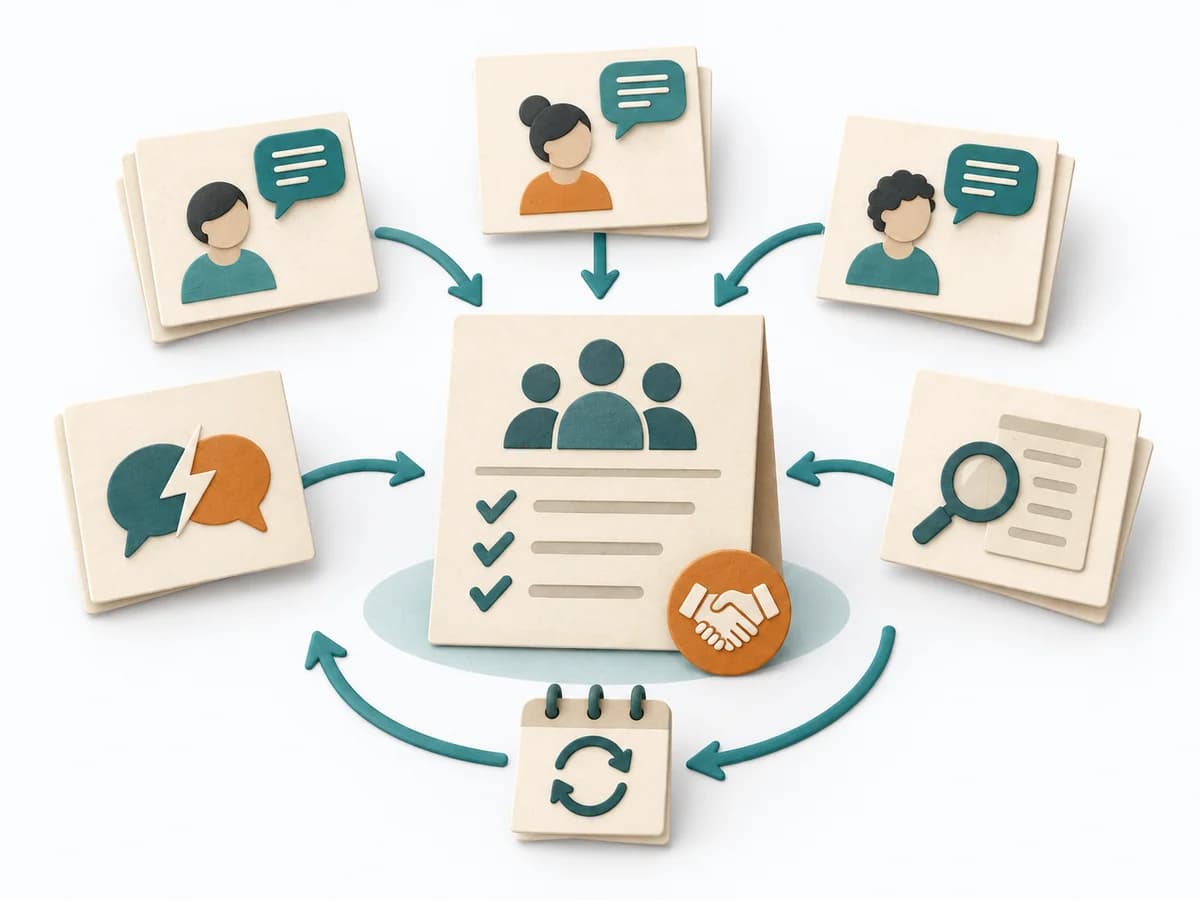
Delegation Poker lets participants simultaneously choose a level from Tell to Delegate for a concrete decision. Discussion clarifies context, risk, and a workable level; the result is recorded on a Delegation Board.
Fictional example
Fictional example for one concrete work case.
| Case | Decision area | Current state | Agreed level | Conditions and review |
|---|---|---|---|---|
| Example caseWhich delegation level fits this decision given current capability, risk, and boundaries? | Monitoring-tool selection | Manager decides after consultation | 5 · Advise: team decides after advice | Budget up to €5,000, security check, review after two decisions |
The example is fictional and must be adapted to mandate and context.
Decisions

Goal
Bounded decision cases: List recurring decisions with context, risk, and affected roles.
Inputs for this step
Actions
Output
Bounded decision cases
Bounded decision cases
Quality check
Does each case describe a recurring decision with a clear boundary?
Pitfall
Whole roles or projects are delegated without naming the actual decision. Return to “Select areas” and repeat this method step: List recurring decisions with context, risk, and affected roles.
Timing: 10–20 minutes
Levels
Goal
Shared understanding of seven levels: Clarify Tell, Sell, Consult, Agree, Advise, Inquire, and Delegate with one example.
Inputs for this step
Actions
Output
Shared understanding of seven levels
Shared understanding of seven levels
Quality check
Can everyone explain who decides and who participates at each level?
Pitfall
Tell and Delegate are reversed, or Agree is treated as a unilateral veto. Return to “Explain delegation” and repeat this method step: Clarify Tell, Sell, Consult, Agree, Advise, Inquire, and Delegate with one example.
Timing: 10–20 minutes
Reveal
Goal
Independent level choices: Leader and team choose face down and explain after revealing.
Inputs for this step
Actions
Output
Independent level choices
Independent level choices
Quality check
Were choices private and revealed simultaneously?
Pitfall
The current manager reveals the desired level before the vote. Return to “Choose simultaneously” and repeat this method step: Leader and team choose face down and explain after revealing.
Timing: 10–20 minutes
Reconcile
Goal
Agreed delegation boundaries: Discuss differences using capability, risk, information needs, and guardrails.
Inputs for this step
Actions
Output
Agreed delegation boundaries
Agreed delegation boundaries
Quality check
Is the agreed level based on risk, capability, information, and guardrails rather than personal trust alone?
Pitfall
A high level becomes a maturity badge while risk and access to information are ignored. Return to “Clarify context and boundary” and repeat this method step: Discuss differences using capability, risk, information needs, and guardrails.
Timing: 10–20 minutes
Board
Goal
Current delegation board: Record level, conditions, information path, and review date on the Delegation Board.
Inputs for this step
Actions
Output
Current delegation board
Current delegation board
Quality check
Are level, conditions, information path, and review visible on the board?
Pitfall
The board shows only a number and omits conditions and review. Return to “Review agreement” and repeat this method step: Record level, conditions, information path, and review date on the Delegation Board.
Timing: 10–20 minutes
What comes out at the end
Sketch: what the artifact looks like
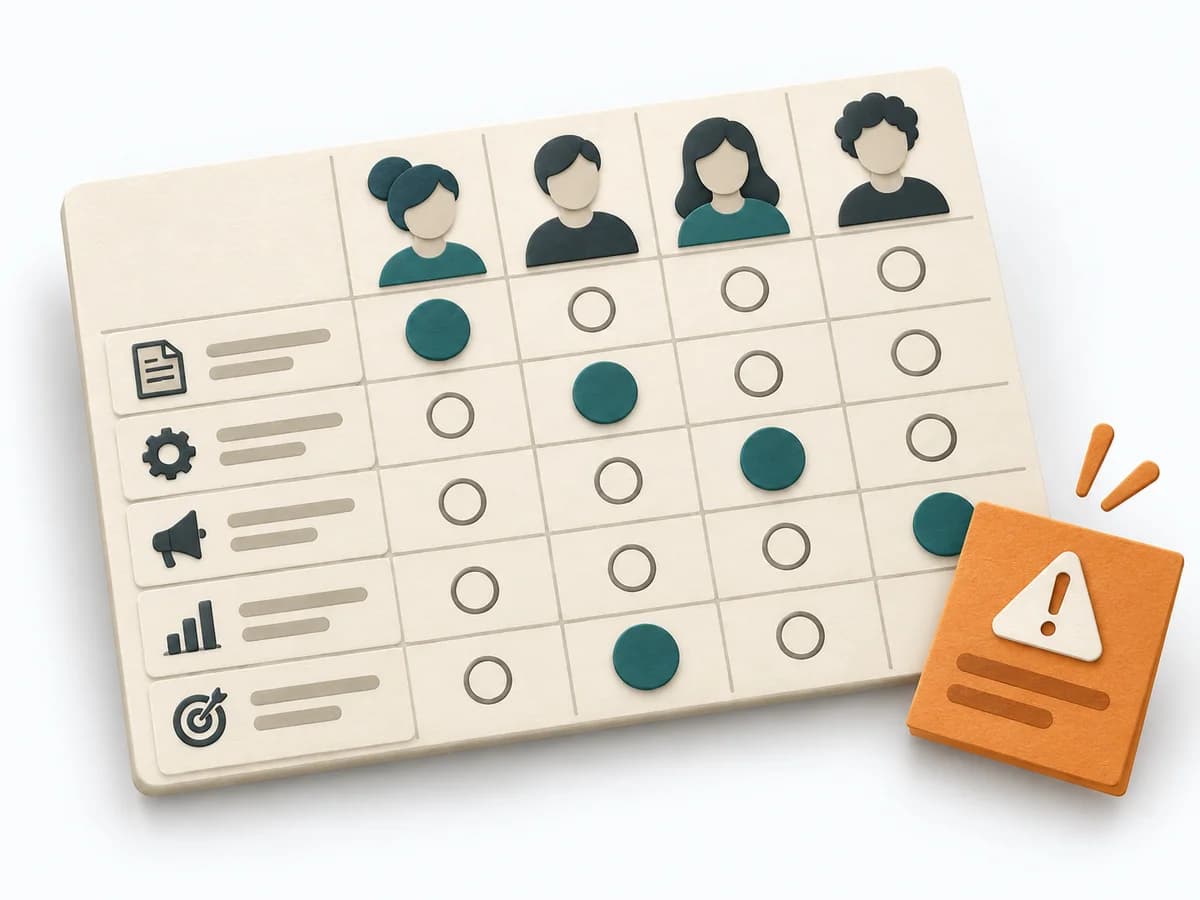
Delegation board with decision area, agreed level, conditions, information path, guardrails, and review date.
Version the current delegation board with date, owner, source state, and review date. Preserve earlier observations and append changes with their reason.
Plan the question, inputs, complete run, and review with clear ownership.
To be confirmed
To be confirmed
Complete run Time: 60–90 minutes for 5–8 decision areas; review the delegation board regularly afterwards.
Complete this worksheet on paper or in your own document during the work.
| Case | Decision area | Current state | Agreed level | Conditions and review |
|---|---|---|---|---|
| Example case |
Use one specifically bounded case per row.
Reference source · original teaching example
Expected artifact: Bounded decision cases
Bounded decision cases
Entry:
...
Expected artifact: Shared understanding of seven levels
Shared understanding of seven levels
Entry:
...
Expected artifact: Independent level choices
Independent level choices
Entry:
...
Expected artifact: Agreed delegation boundaries
Agreed delegation boundaries
Entry:
...
Expected artifact: Current delegation board
Current delegation board
Entry:
...
...
Method guide: https://methodatlas.meierhoff-systems.de/en/methods/delegation-poker/run-sheet
Concrete filled scenario, fictional example
Fictional example for orientation. Counts and timings describe this case and are not universal requirements.
Concrete filled scenario, fictional example
Guiding question: Which delegation level fits this decision given current capability, risk, and boundaries?
| Decision area | Current state | Agreed level | Conditions and review |
|---|---|---|---|
| Monitoring-tool selection | Manager decides after consultation | 5 · Advise: team decides after advice | Budget up to €5,000, security check, review after two decisions |
The example is fictional and must be adapted to mandate and context.
Recognize symptoms and steer against them
Quick overview, the full text is in the matching phase in the flow
Whole roles or projects are delegated without naming the actual decision.
Return to “Select areas” and repeat this method step: List recurring decisions with context, risk, and affected roles.
Tell and Delegate are reversed, or Agree is treated as a unilateral veto.
Return to “Explain delegation” and repeat this method step: Clarify Tell, Sell, Consult, Agree, Advise, Inquire, and Delegate with one example.
The current manager reveals the desired level before the vote.
Return to “Choose simultaneously” and repeat this method step: Leader and team choose face down and explain after revealing.
A high level becomes a maturity badge while risk and access to information are ignored.
Return to “Clarify context and boundary” and repeat this method step: Discuss differences using capability, risk, information needs, and guardrails.
The board shows only a number and omits conditions and review.
Return to “Review agreement” and repeat this method step: Record level, conditions, information path, and review date on the Delegation Board.
When to pause, resolve prerequisites, or choose another approach
Go to the profile for purpose, similar methods, and sources or continue to the next method in the catalog.