
Purpose
When many people in a group too rarely get to speak, 1-2-4-All distributes thinking time more fairly. The format builds participation step by step and makes quiet or still-unformed thoughts usable faster.
Facilitation Facilitation method
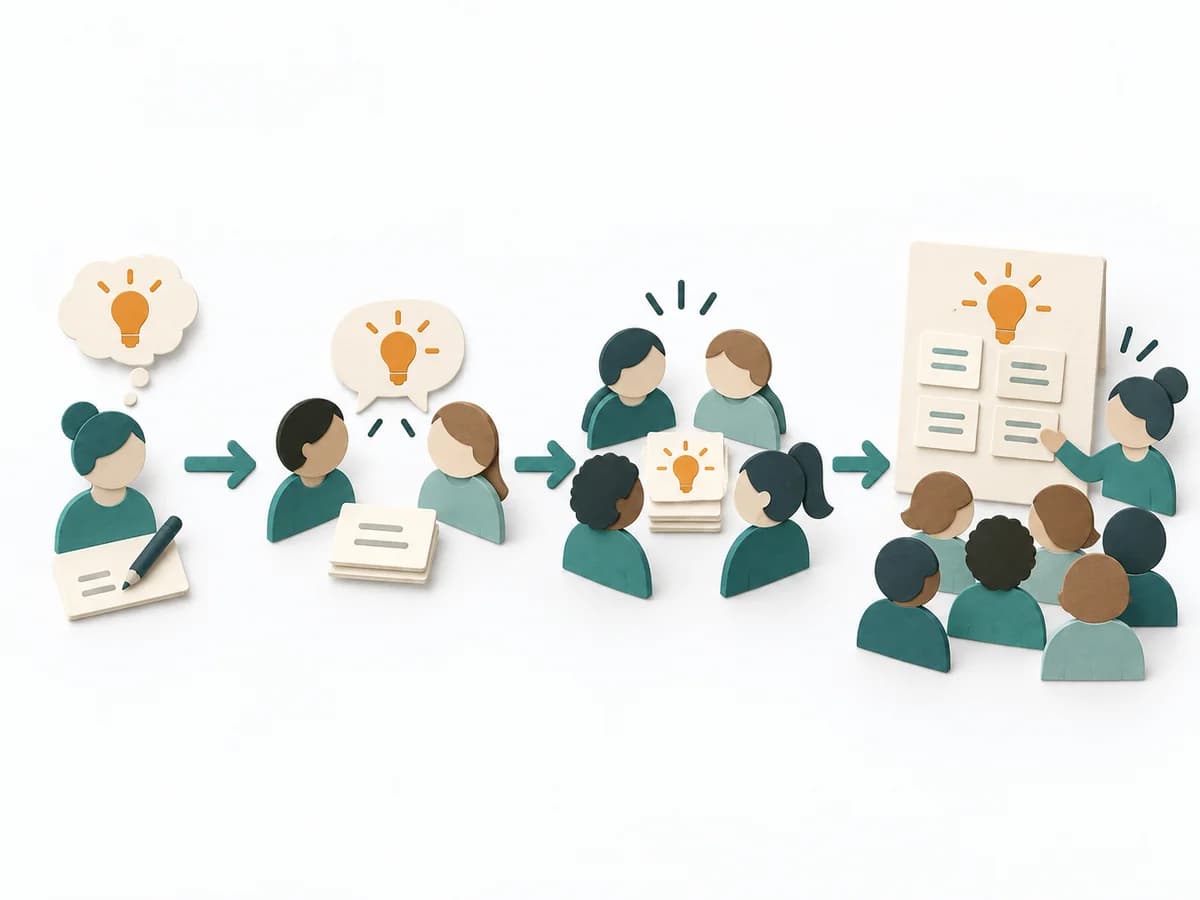
1-2-4-All moves ideas from individual reflection through pairs and groups into the plenary and condenses shared patterns.
1-2-4-All moves an idea from individual reflection through pairs and groups into the plenary. The sequence broadens participation and makes shared patterns visible without letting the first spontaneous impression dominate.
Which ideas and experiences from everyone help with our concrete focus question?
The steps express the method mechanics in one complete run.
Question
Pose a focus question with shared meaning and desired result
Alone
Write ideas silently and individually for one minute
Pairs
Compare differences and common ground in pairs for two minutes
Fours
Synthesize key insights and new combinations in fours for four minutes
Share
Share one important point per group of four and capture plenary patterns
Test open questions through the agreed next step and append new evidence as a version.
Wenn viele Menschen in einer Runde zu selten zu Wort kommen, verteilt 1-2-4-All die Denkzeit fairer. Das Format baut Beteiligung schrittweise auf und macht leise oder noch ungeordnete Gedanken schneller nutzbar.
Plenary patterns with evidence, open points, owner, and review.
Fictional example
Fictional values are assigned to explicit method fields.
Pose a focus question with shared meaning and desired result
Focus: What would halve waiting time for Saturday pickup?
Write ideas silently and individually for one minute
Individual ideas: stagger slots, pre-check, remove express rule.
Compare differences and common ground in pairs for two minutes
Pair: pre-check helps only when inventory is current.
Synthesize key insights and new combinations in fours for four minutes
Group of four: link slots to inventory; handle express cases separately.
Share one important point per group of four and capture plenary patterns
Patterns: data quality, capacity boundary, and a clear express rule.
All details are fictional.
Phrase one open, concrete focus question everyone can answer without extra context; prepare timer and groups of four.
When many people in a group too rarely get to speak, 1-2-4-All distributes thinking time more fairly. The format builds participation step by step and makes quiet or still-unformed thoughts usable faster.
The idea is first sharpened individually, then mirrored in pairs, condensed in small groups of four, and finally shared with the full group. This grows the quality of contributions without the first spontaneous impression dominating the whole discussion.
1-2-4-All uses a clear logic of consolidation: first independent thinking emerges, then ideas are tested in small groups, and finally patterns are brought into the larger group. This helps quieter voices participate earlier and keeps dominant voices from shaping the first round of ideation too strongly. Input is gradually distilled from individual observations into shared themes that can hold the group. The format works especially well because each round lowers complexity while increasing participation.
Prepare a clearly visible question, timeboxes, and a simple collection surface. Moderate the transitions consistently and keep the rounds short so energy builds. A typical mistake is letting the plenary round run too long; ask for patterns rather than every individual idea.
The method guide walks execution through 5 phases, timing, 5 pitfalls, and clear stop criteria.
Open method guideYour perspective
Your feedback helps shape the next improvements to methodatlas.
Plan subject, participation, complete flow, and review.
To be confirmed
To be confirmed
Complete run Time: 12–20 minutes per focus question.
Complete this worksheet on paper or in your own document during the work.
Pose a focus question with shared meaning and desired result
...
Write ideas silently and individually for one minute
...
Compare differences and common ground in pairs for two minutes
...
Synthesize key insights and new combinations in fours for four minutes
...
Share one important point per group of four and capture plenary patterns
...
The blank worksheet contains prompts only.
Reference source · original teaching example
Expected artifact: Focus question
Pose a focus question with shared meaning and desired result
Entry:
...
Expected artifact: Individual ideas
Write ideas silently and individually for one minute
Entry:
...
Expected artifact: Pair patterns
Compare differences and common ground in pairs for two minutes
Entry:
...
Expected artifact: Group synthesis
Synthesize key insights and new combinations in fours for four minutes
Entry:
...
Expected artifact: Plenary patterns
Share one important point per group of four and capture plenary patterns
Entry:
...
...
Method guide: https://methodatlas.meierhoff-systems.de/en/methods/1-2-4-all/run-sheet
Fitting alternatives with decision guidance, followed by other related methods.

Instead of 1-2-4-All, choose Brainwriting when contributions should be created purely in writing and in parallel, without moderating staged rounds of discussion.
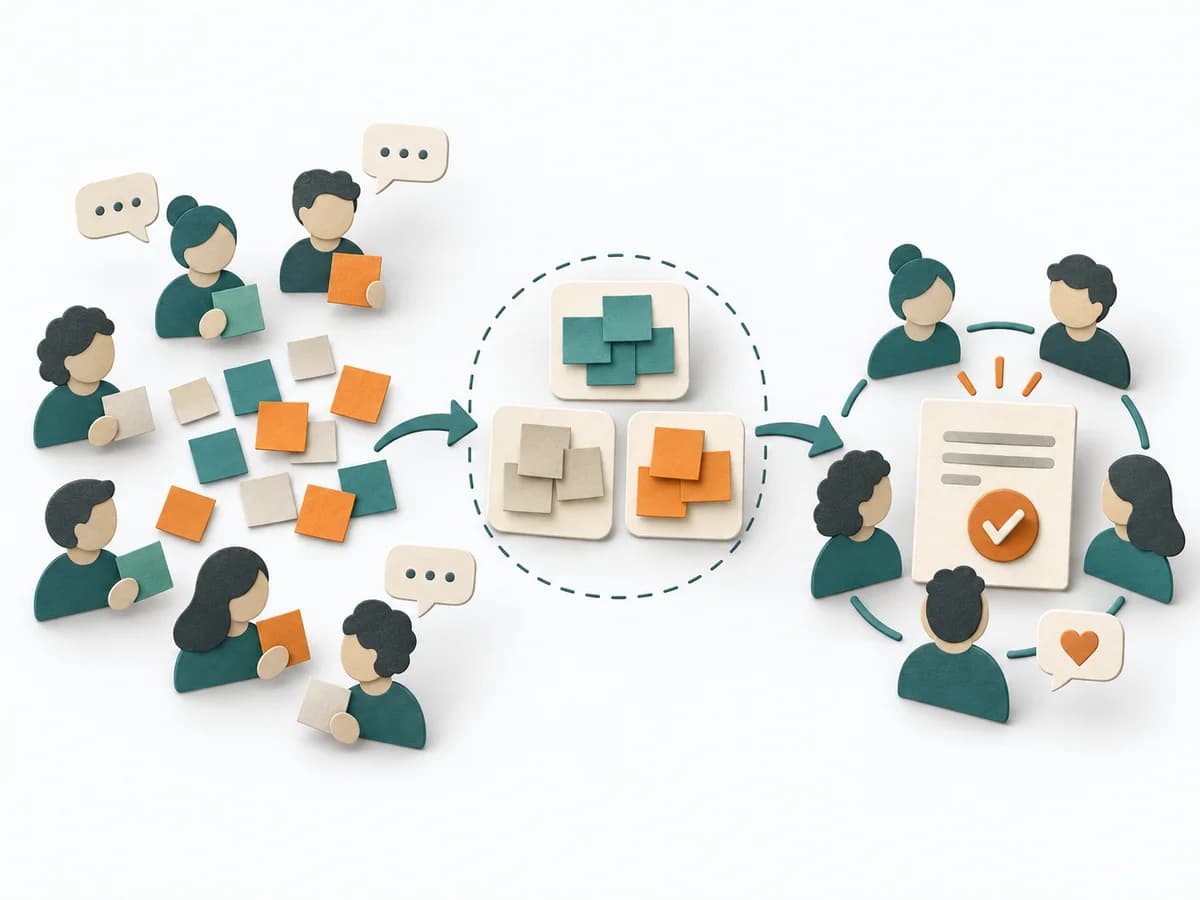
Condenses individual ideas into clusters, themes, and priorities so consensus grows out of individual contributions.
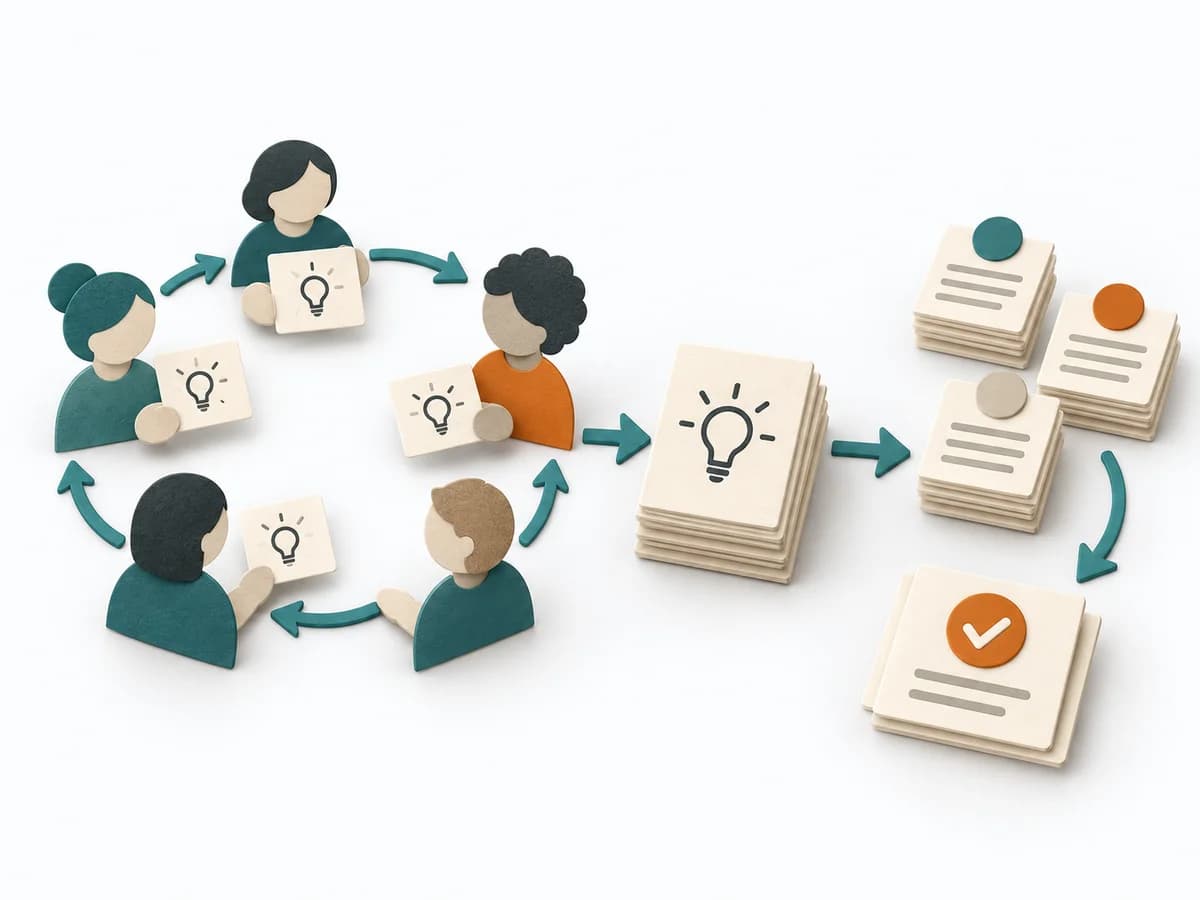
Ensures participation in turn, produces a broad idea list, and then leads it into clusters and a shortlist.
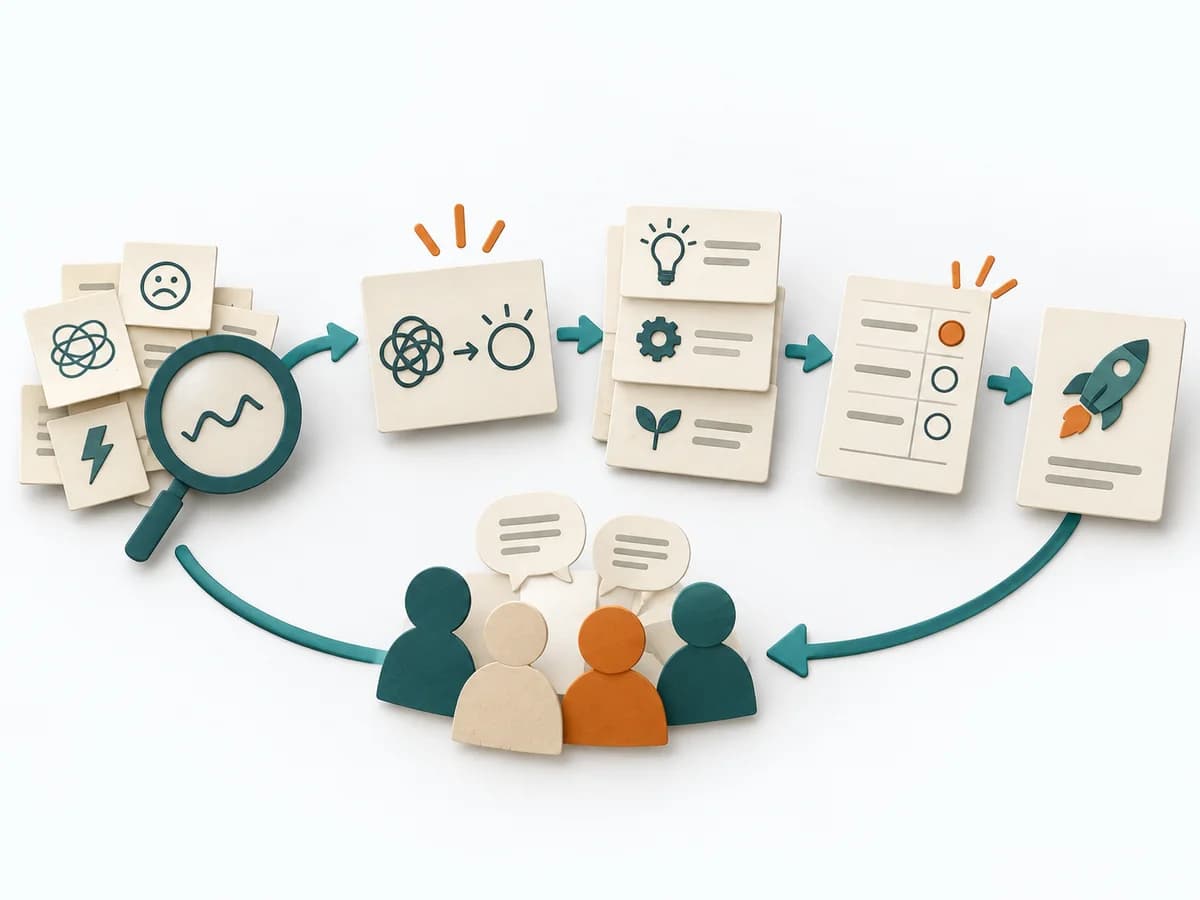
Sorts problems, reframes the top issue, and derives experiments that quickly turn frustration into movement.
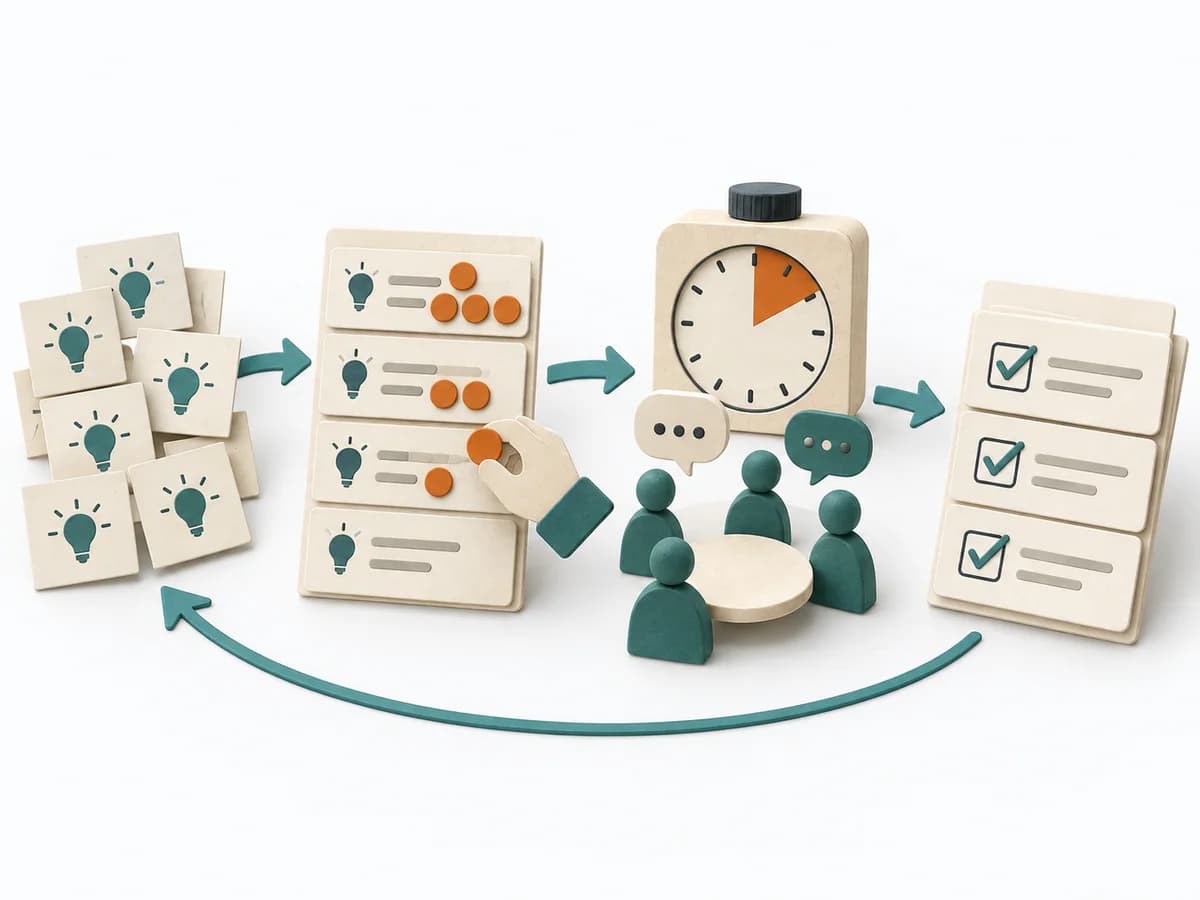
Prioritizes topics by voting and timeboxed discussion, so many points turn into clear action items.

Unfolds a central topic into branches, clusters, and open questions until relevant areas become selectable.