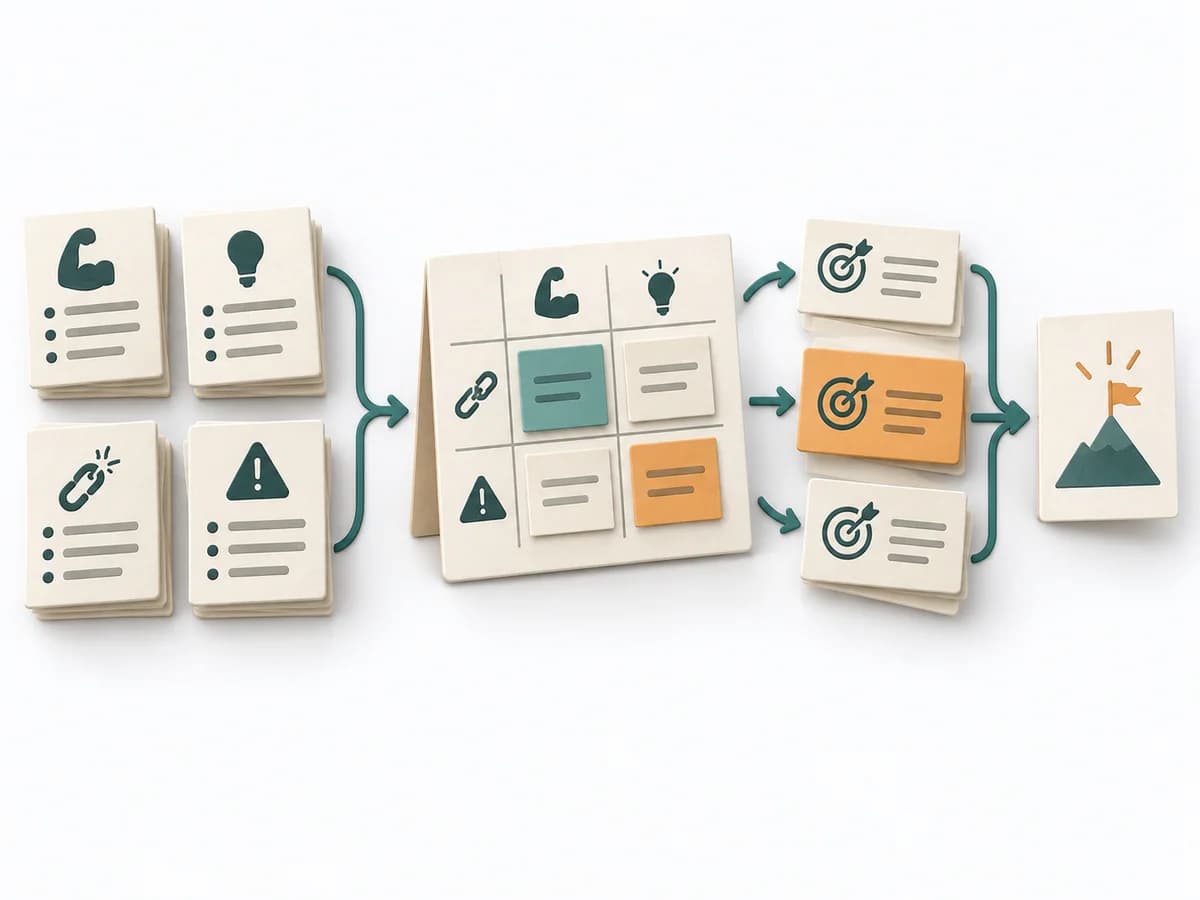
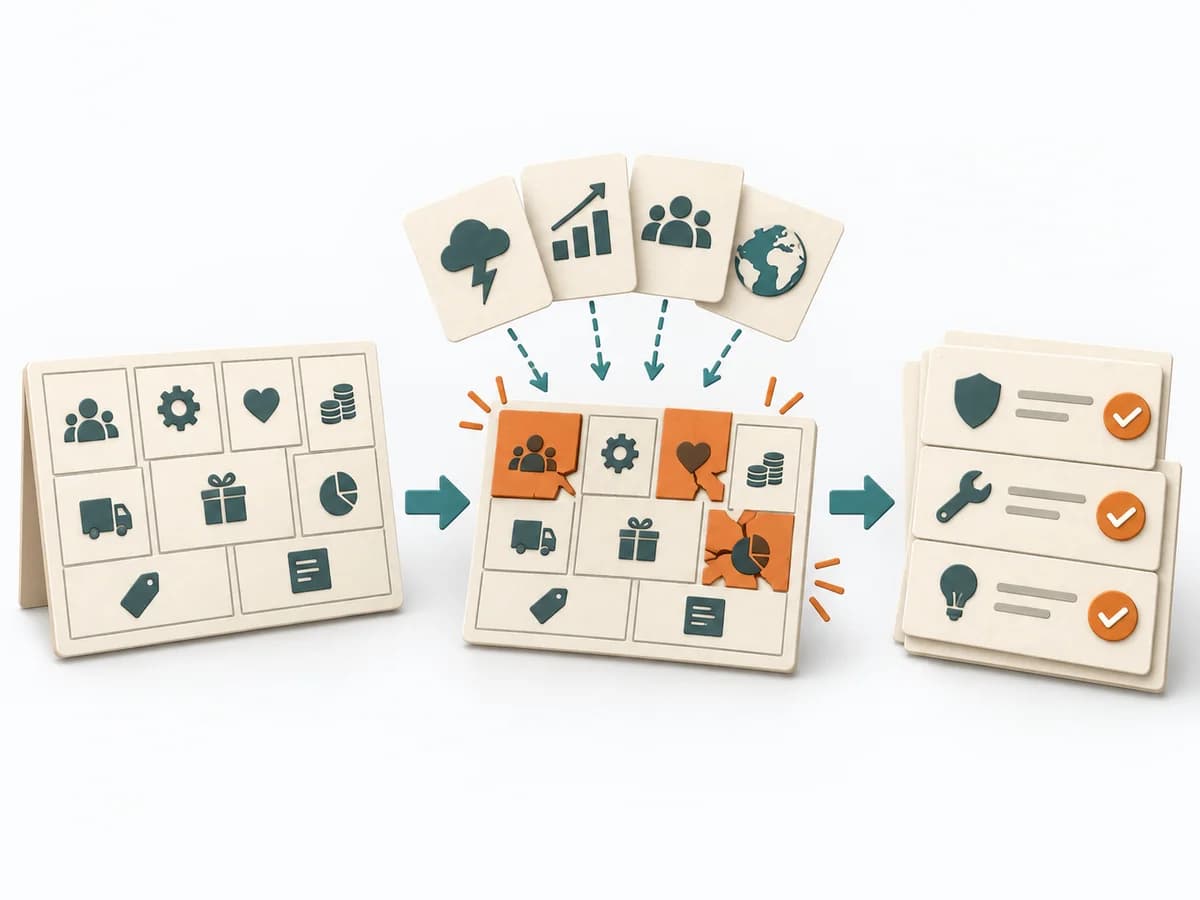
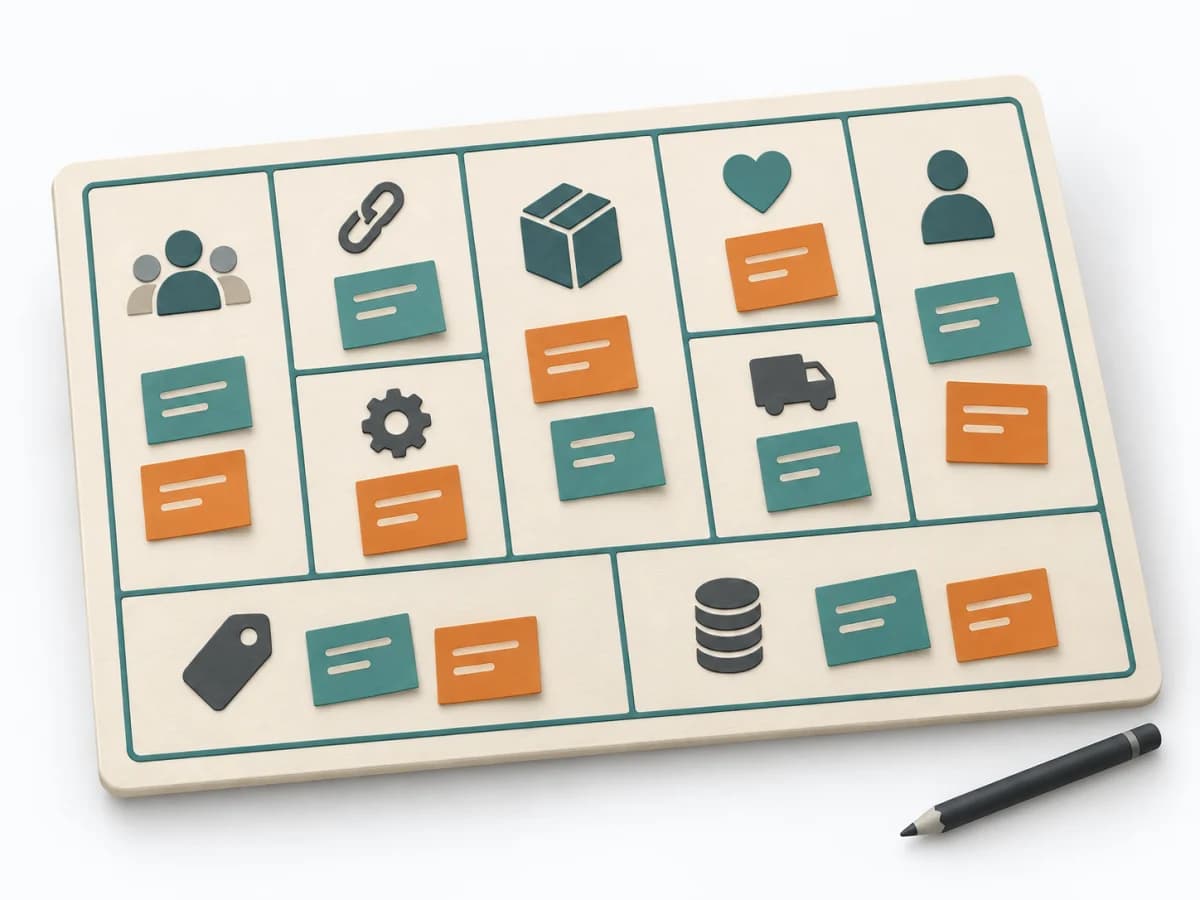
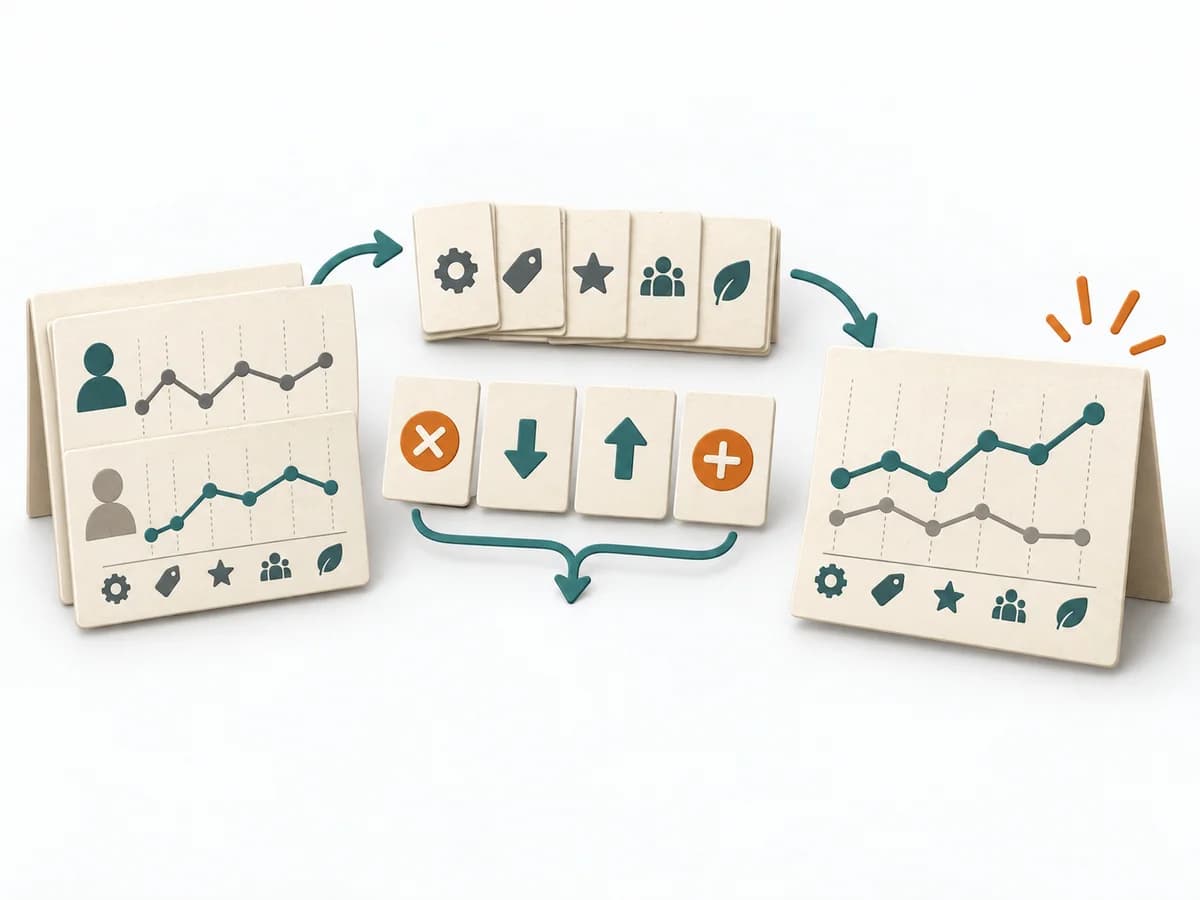
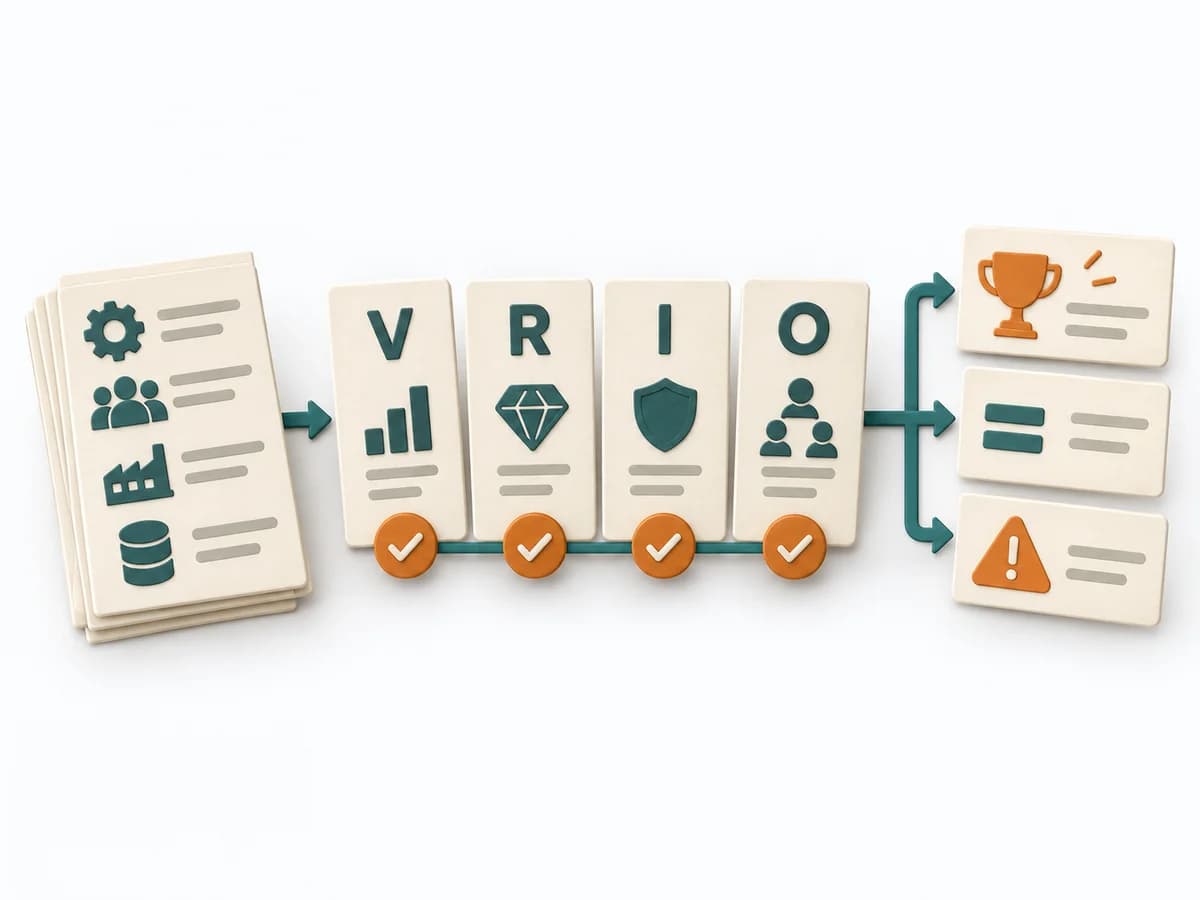
The VRIO Framework rates resources and capabilities on whether they are Valuable, Rare, Inimitable, and Organized. It compares strengths, risks, market logic, and courses of action. The result is captured as a VRIO table and strategic actions.
Business Strategy Decision method
VRIO Framework
Assesses resources for value, rarity, imitability, and organisational exploitation.
VRIO evaluates a bounded resource or capability sequentially. Organisation covers processes, incentives, and governance that actually realise value.
Which resource can sustain what advantage, and what organisation is still missing?
- Participants
- 3-6
- Time
- 90-180 min
VRIO Framework uses sequential V-R-I-O assessment with evidence and competitive implication. Assessments remain justified and context-bound.

Bound resource
Bound resource
Bound resource, rights, and use context.
Test value
Test value
Support contribution to opportunity, threat, cost, or value.
Rarity/imitation
Rarity/imitation
Compare availability, substitutes, and imitation costs.
Test organisation
Test organisation
Test processes, rights, incentives, and governance for exploitation.
Reassess after market, technology, or organisational change.
A good fit when
For strategically relevant resources with comparison data on competitors and substitutes.
Ideal for
- Strategy refresh
- Investment decisions
- Make-or-buy
Not good for
- Early-stage startups without a resource base
Outputs

VRIO assessment
VRIO assessment with traceable sources, assumptions, and domain decisions.

Decision and review trail
Owners, dates, and next review for VRIO assessment.
VRIO assessment
Fictional worked example
sequential V-R-I-O assessment with evidence and competitive implication as a precise working structure with a fictional example.
| Subject | Resource | Value | Rarity/Imitability | Organisation |
|---|---|---|---|---|
| VRIO assessmentWorked example | Labelled failure corpus, internal usage rights. | 28% fewer false alerts. | No peer at equal depth; ten years to build. | Rights unclear for 18%. |
1. Resource
- VRIO assessment
- Labelled failure corpus, internal usage rights.
2. Value
- VRIO assessment
- 28% fewer false alerts.
3. Rarity/Imitability
- VRIO assessment
- No peer at equal depth; ten years to build.
4. Organisation
- VRIO assessment
- Rights unclear for 18%.
The example demonstrates the domain logic of VRIO Framework; worksheets remain blank.
Jay Barney: Firm Resources and Sustained Competitive Advantage
First step
Start with the core question: Which resource can sustain what advantage, and what organisation is still missing?
Good to do first
Deep dive
The team lists critical resources, capabilities, and assets. It then checks each element against the four VRIO questions and derives competitive advantage, parity, or catch-up needs from that. This clarifies which strengths should be defended strategically.
The VRIO Framework by Jay Barney extends the Resource-Based View of strategy. A resource becomes a source of sustainable advantage only when it is valuable, rare, hard to imitate, and actually usable by the organization. It is often used in strategy refresh work after Value Chain Analysis.
Ask in exactly this order: V, then R, then I, then O. As soon as one answer is no, move to the next resource. Bring in an external perspective.
The method guide walks execution through 4 phases, timing, 4 pitfalls, and clear stop criteria.
Open method guideYour perspective
Does this method help with your work?
Your feedback helps shape the next improvements to methodatlas.
Sources and topics
VRIO Framework: WorksheetPlan VRIO Framework around its domain steps and the concrete decision question.markdown
vrio-framework-working-template.md
Plan VRIO Framework around its domain steps and the concrete decision question.
VRIO Framework: Worksheet
Question
To be confirmed
Desired outcome
To be confirmed
Scope
Full workshop Time: 60–90 minutes
Complete this worksheet on paper or in your own document during the work.
Preparation for this scope
Method setup
- Materials: Resource inventory, competitor and substitution data, organisation data, shared workspace, source links, and decision log.
- Roles: Strategy · resource owner · Finance · People/Operations
- Advance information: Collect Resource inventory, competitor and substitution data, organisation data in advance and mark open assumptions.
- Overall time needed: 60–90 minutes
- Setup: Prepare sequential V-R-I-O assessment with evidence and competitive implication visibly and calibrate assessment terms before starting.
Prepare for the work steps
Bound resource: Bound resource
- Resource inventory
- competitor and substitution data
- organisation data
Test value: Test value
- resource profile
- competitor and substitution data
- organisation data
Rarity/imitation: Rarity/imitation
- value evidence
- competitor and substitution data
- organisation data
Test organisation: Test organisation
- competitive comparison
- competitor and substitution data
- organisation data
VRIO assessment
| Subject | Unit · control · context | Causal path · metric · evidence | Comparison · substitutes · imitation cost | Process · rights · governance |
|---|---|---|---|---|
| VRIO assessment |
- VRIO assessment: Worked example
Enter only real input, sources, and decisions.
Jay Barney: Firm Resources and Sustained Competitive Advantage
Bound resource: Bound resource
Expected artifact: resource profile
resource profile · source · uncertainty · next decision
Entry:
...
- Is the resource controllable and concrete?
Test value: Test value
Expected artifact: value evidence
value evidence · source · uncertainty · next decision
Entry:
...
- Is the causal path measurable?
Rarity/imitation: Rarity/imitation
Expected artifact: competitive comparison
competitive comparison · source · uncertainty · next decision
Entry:
...
- Are comparator group and horizon clear?
Test organisation: Test organisation
Expected artifact: VRIO implication
VRIO implication · source · uncertainty · next decision
Entry:
...
- Does the implication follow from all four tests?
Open questions and next steps
...
Method guide: https://methodatlas.meierhoff-systems.de/en/methods/vrio-framework/run-sheet
Alternatives and neighbors
Fitting alternatives with decision guidance, followed by other related methods.

Instead of VRIO Framework, choose SWOT Analysis when you want to consider opportunities and risks in the environment together with internal strengths and weaknesses.

Moves the current situation, opportunities, and strategic options toward a concrete result through "place the Business Model Canvas at the center", "define two to three scenarios", and "derive actions per scenario".

Clarifies starting point, opportunities, and strategic options by defining the scope and market, gathering factors by category, and formulating strategic questions.

Arranges business building blocks, assumptions, and hypotheses so model variants become more clearly comparable.

Clarifies starting point, opportunities, and strategic options by defining the competitive factors, drawing the current value curve, and testing a new value curve.

Compares target and actual state, exposes gaps, and derives prioritized measures with clear risks.
Constraints and origin
Profile
- Method form
- Decision method
- Participants
- 3-6
- Time
- 90-180 min
- Maturity
- Canonical
- Origin
- Jay Barney