
Purpose
Soft Systems Methodology helps explore unclear or politically charged problems systematically. Instead of forcing a quick answer, the method builds a shared understanding of perspectives and room for action.
Systems Thinking Process model
Develops a conceptual picture for difficult organisational issues from a Rich Picture and Root Definitions.
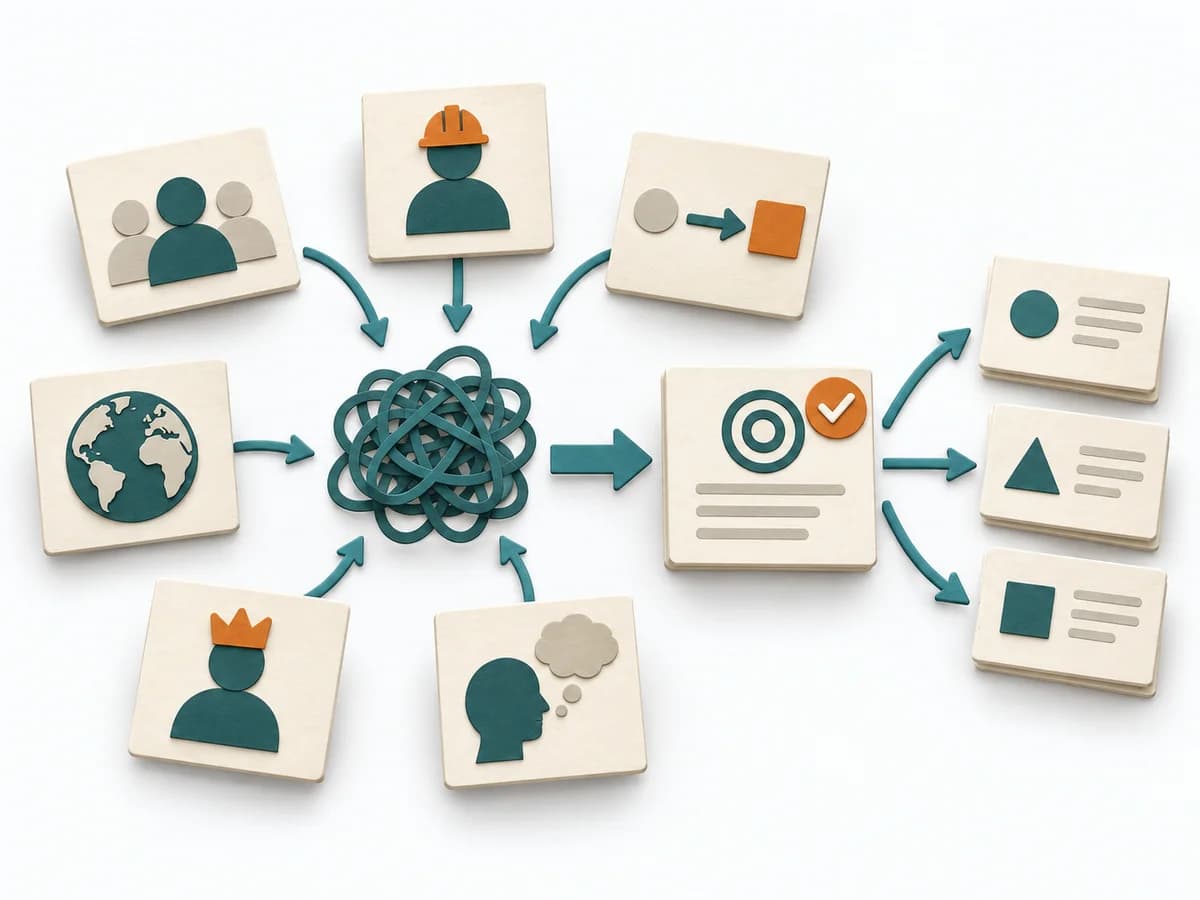
The situation is first described as a rich picture or problem field. The team then develops Root Definitions and Conceptual Models, compares them with reality, and derives feasible changes. The method creates a reflective path from perception to intervention.
Which different purposeful systems help us understand the messy situation and negotiate changes that are both desirable and feasible?
Evidence building, analysis, and effectiveness review form a multi-stage initiative.

Situation
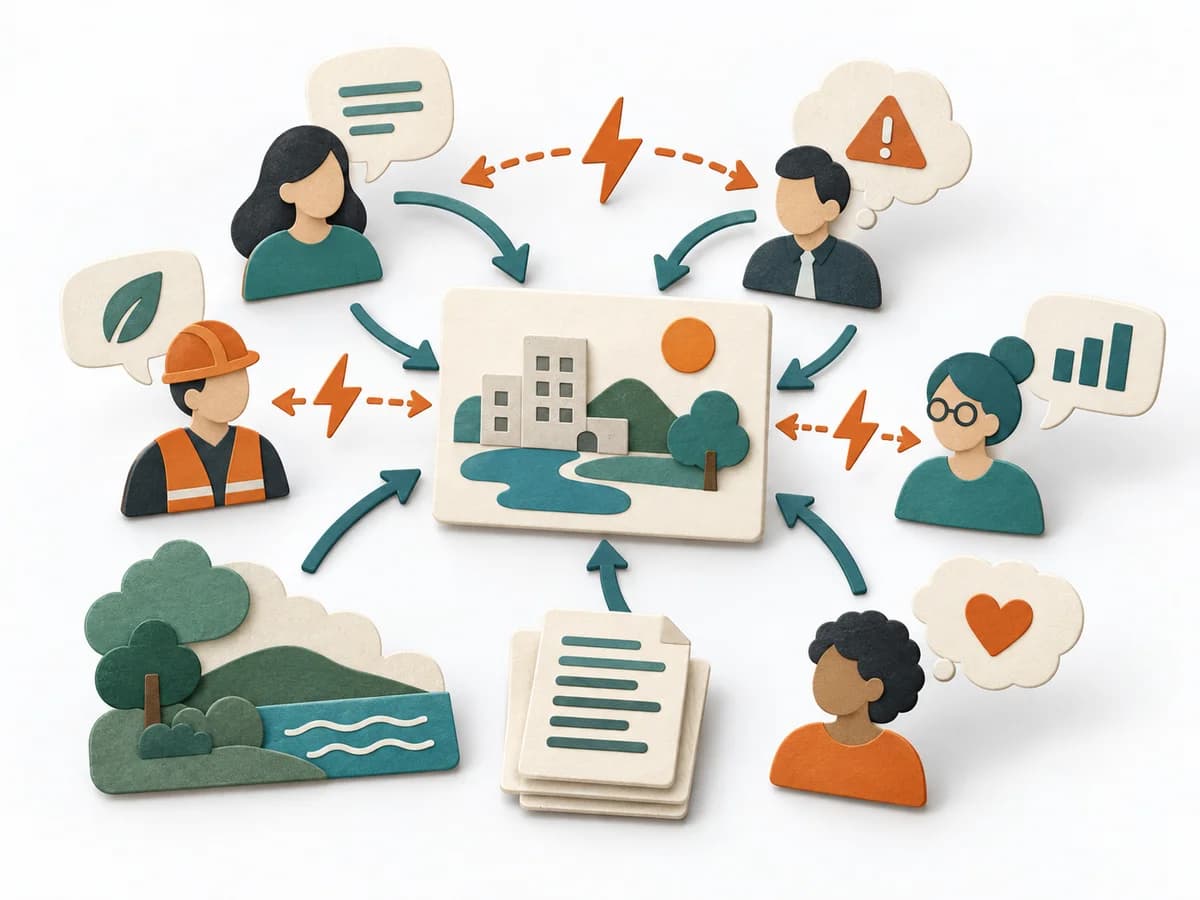
Show facts, perceptions, relationships, conflicts, roles, and the observer position in a rich picture.
Perspectives
Select several relevant purposeful activity systems and write CATWOE plus PQR root definition for each view.
Models
Derive logically necessary activities from each root definition as a conceptual verb model, without copying current process.
Compare
Compare conceptual models with perceived real world and use differences as learning questions.
Change
Negotiate systemically desirable and culturally feasible changes; set learning and next iteration.
Add new evidence at review and version decisions with the prior state.
Soft Systems Methodology hilft, unklare oder politisch aufgeladene Probleme systematisch zu erkunden. Statt eine schnelle Antwort zu erzwingen, baut die Methode ein gemeinsames Verständnis für Perspektiven und Handlungsräume auf.
SSM learning record with rich picture, perspective-specific root definitions, conceptual activity models, real-world comparison, and agreed changes.
Fictional example
Fictional values show the actual method fields.
Show facts, perceptions, relationships, conflicts, roles, and the observer position in a rich picture.
Workshops wait, Warehouse prioritises express cases, Sales promises speed; data flow, conflict, and observer are drawn.
Select several relevant purposeful activity systems and write CATWOE plus PQR root definition for each view.
Workshop view: predictable pickup to limit downtime; Warehouse view: capacity-aware flow for safe handoff.
Derive logically necessary activities from each root definition as a conceptual verb model, without copying current process.
Capture demand → determine capacity → confirm slot → prepare handoff → monitor effect.
Compare conceptual models with perceived real world and use differences as learning questions.
Determine capacity is absent today; question: who could do it with which data before confirmation?
Negotiate systemically desirable and culturally feasible changes; set learning and next iteration.
Four-week capacity-slot pilot; Lea owns; warehouse and workshops review wait and predictability; update rich picture.
All values are fictional.
Set one unstructured problem situation, affected perspectives, and investigation boundary; leave solutions explicitly open.
Soft Systems Methodology helps explore unclear or politically charged problems systematically. Instead of forcing a quick answer, the method builds a shared understanding of perspectives and room for action.
First, the situation is described as a rich picture or problem field. The team then develops root definitions and conceptual models, compares them with reality, and derives feasible changes from them. This creates a reflected path from perception to intervention.
Soft Systems Methodology treats problems as different perceptions of a situation rather than as clearly objective defects. Rich pictures, root definitions, and conceptual models help develop several meaningful viewpoints. Those models are compared with the real situation to find desirable and feasible changes. The method creates learning between stakeholders, not just a technical solution.
Plan several working phases and invite different perspectives. Use visualization to make abstract system models tangible, and formulate changes explicitly as desirable and feasible. Keep the process open enough for learning but clear enough to produce concrete next steps.
The method guide walks execution through 5 phases, timing, 5 pitfalls, and clear stop criteria.
Open method guideYour perspective
Your feedback helps shape the next improvements to methodatlas.
Set subject, evidence, roles, flow, and review.
To be confirmed
To be confirmed
Whole initiative Time: Two to five workshops across several weeks; add field access and comparison conversations.
Complete this worksheet on paper or in your own document during the work.
Show facts, perceptions, relationships, conflicts, roles, and the observer position in a rich picture.
...
Select several relevant purposeful activity systems and write CATWOE plus PQR root definition for each view.
...
Derive logically necessary activities from each root definition as a conceptual verb model, without copying current process.
...
Compare conceptual models with perceived real world and use differences as learning questions.
...
Negotiate systemically desirable and culturally feasible changes; set learning and next iteration.
...
The blank worksheet contains prompts only.
Reference · original teaching example
Expected artifact: Rich picture
Show facts, perceptions, relationships, conflicts, roles, and the observer position in a rich picture.
Entry:
...
Expected artifact: Root definitions
Select several relevant purposeful activity systems and write CATWOE plus PQR root definition for each view.
Entry:
...
Expected artifact: Activity models
Derive logically necessary activities from each root definition as a conceptual verb model, without copying current process.
Entry:
...
Expected artifact: Comparison log
Compare conceptual models with perceived real world and use differences as learning questions.
Entry:
...
Expected artifact: Change agenda
Negotiate systemically desirable and culturally feasible changes; set learning and next iteration.
Entry:
...
...
Method guide: https://methodatlas.meierhoff-systems.de/en/methods/soft-systems-methodology/run-sheet
Fitting alternatives with decision guidance, followed by other related methods.
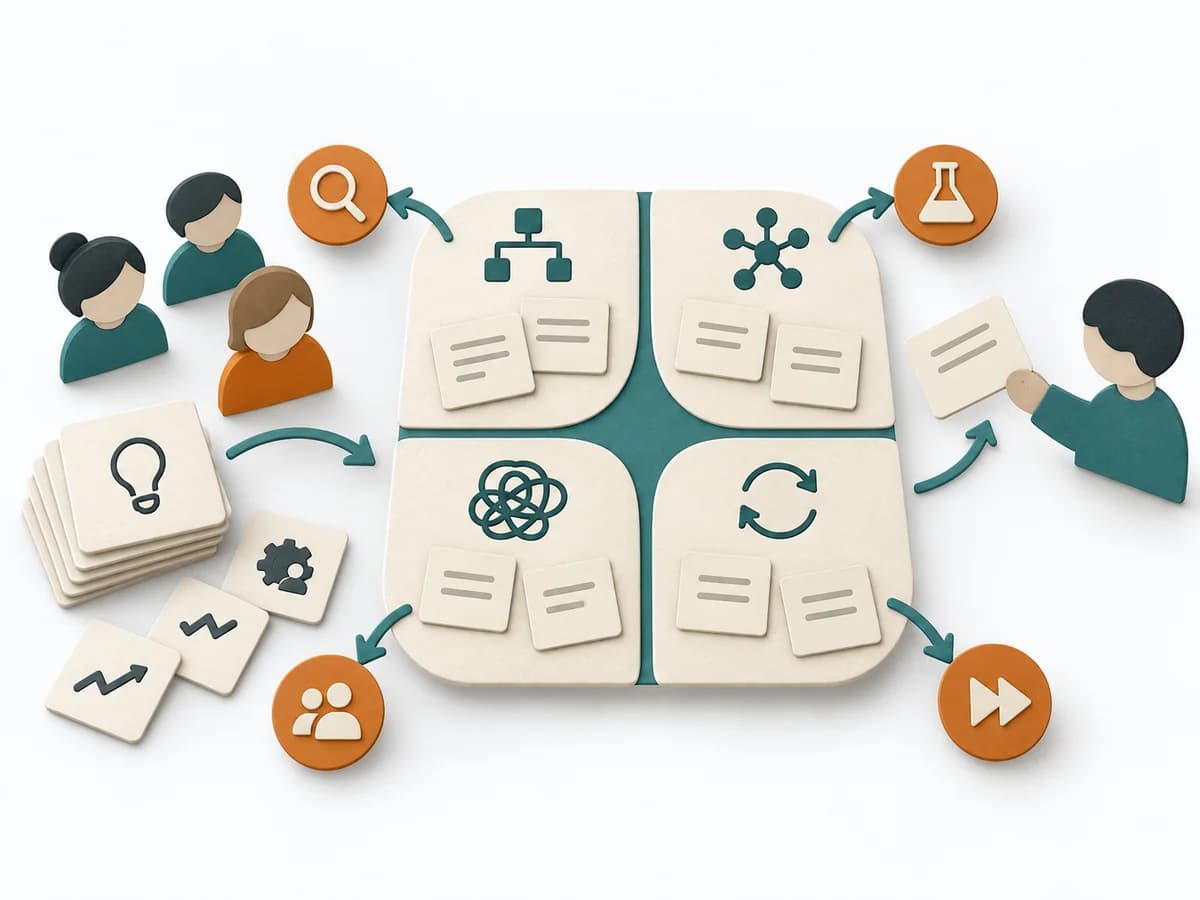
Instead of Soft Systems Methodology, choose Cynefin Workshop when you first want to clarify the nature of the problem before settling on a method.
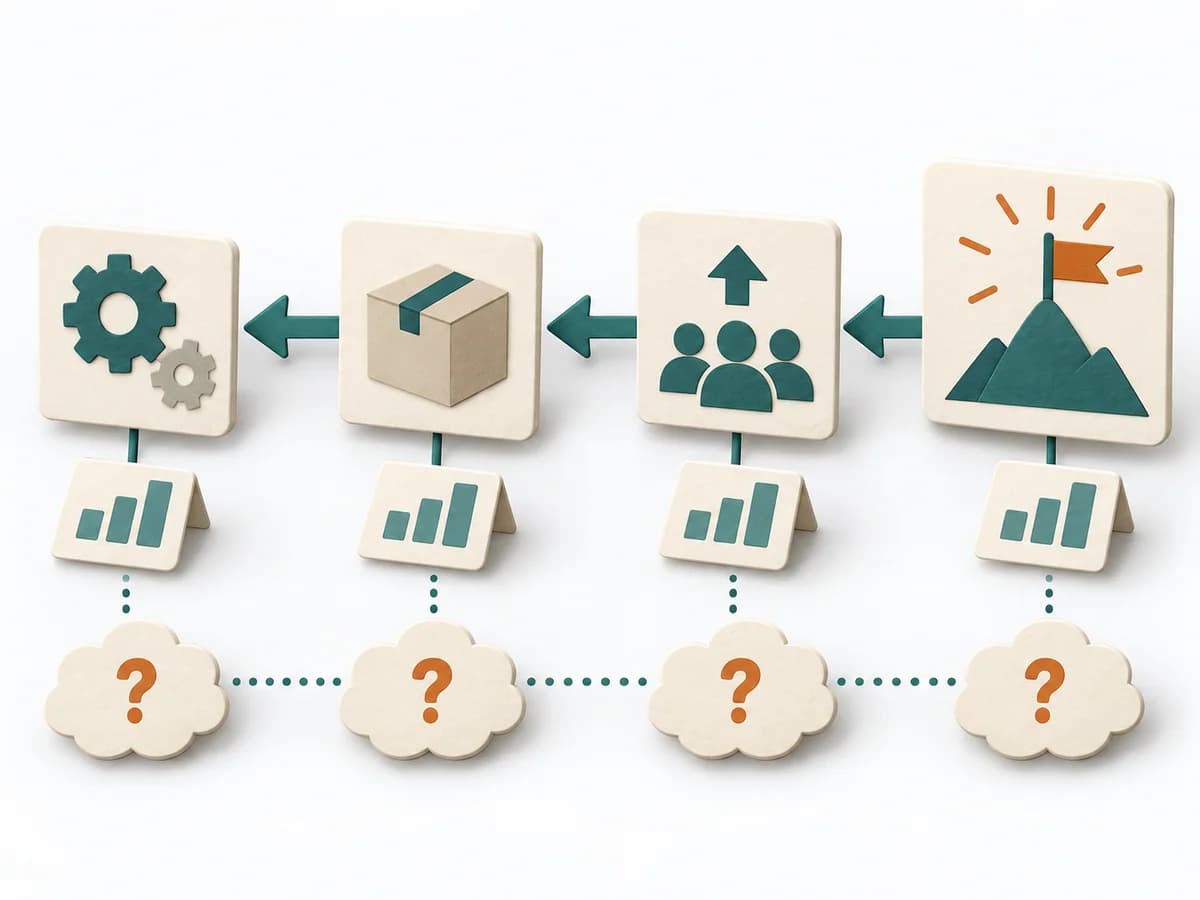
Instead of Soft Systems Methodology, choose Theory of Change when you want to derive the impact pathway, preconditions, and intermediate goals coherently.

Structures a situation along Volatility, Uncertainty, Complexity, and Ambiguity to derive matching logics of action.

Moves relationships, patterns, and leverage toward a concrete result through "introduce the twelve leverage points", "collect planned actions", and "formulate a strategy across multiple levers".

Models stocks, inflows and outflows, and delays to understand dynamics, bottlenecks, and capacity.

Moves relationships, patterns, and leverage toward a concrete result through "formulate current observations", "introduce archetype cards", and "discuss leverage and derive actions".