Purpose
When problems are unclear, chaotic, or only seemingly familiar, standard recipes fall short. A Cynefin Workshop sorts situations by the nature of their problem and connects them with matching action logic.
Decision Making Decision method
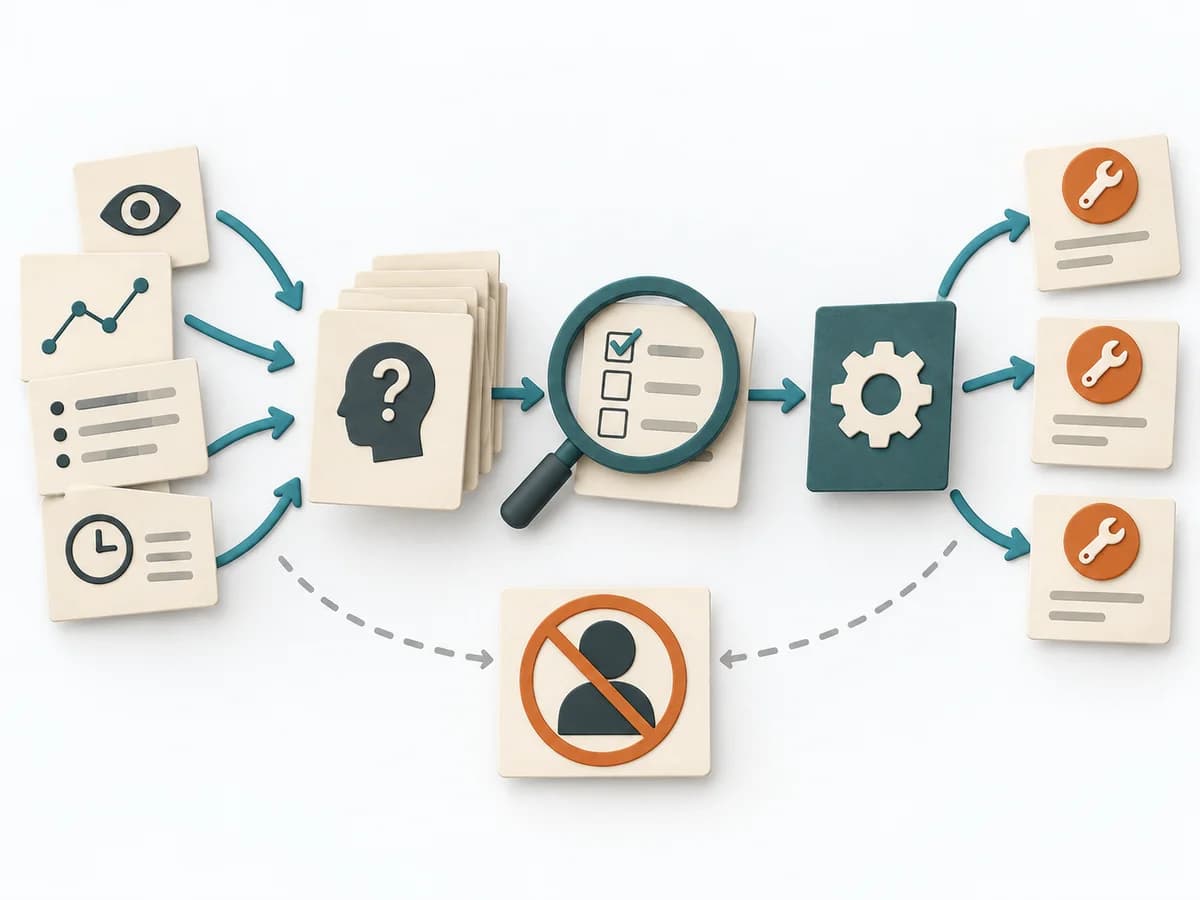
A Cynefin workshop sorts cases into suitable domains and derives actions that fit their degree of clarity or complexity.
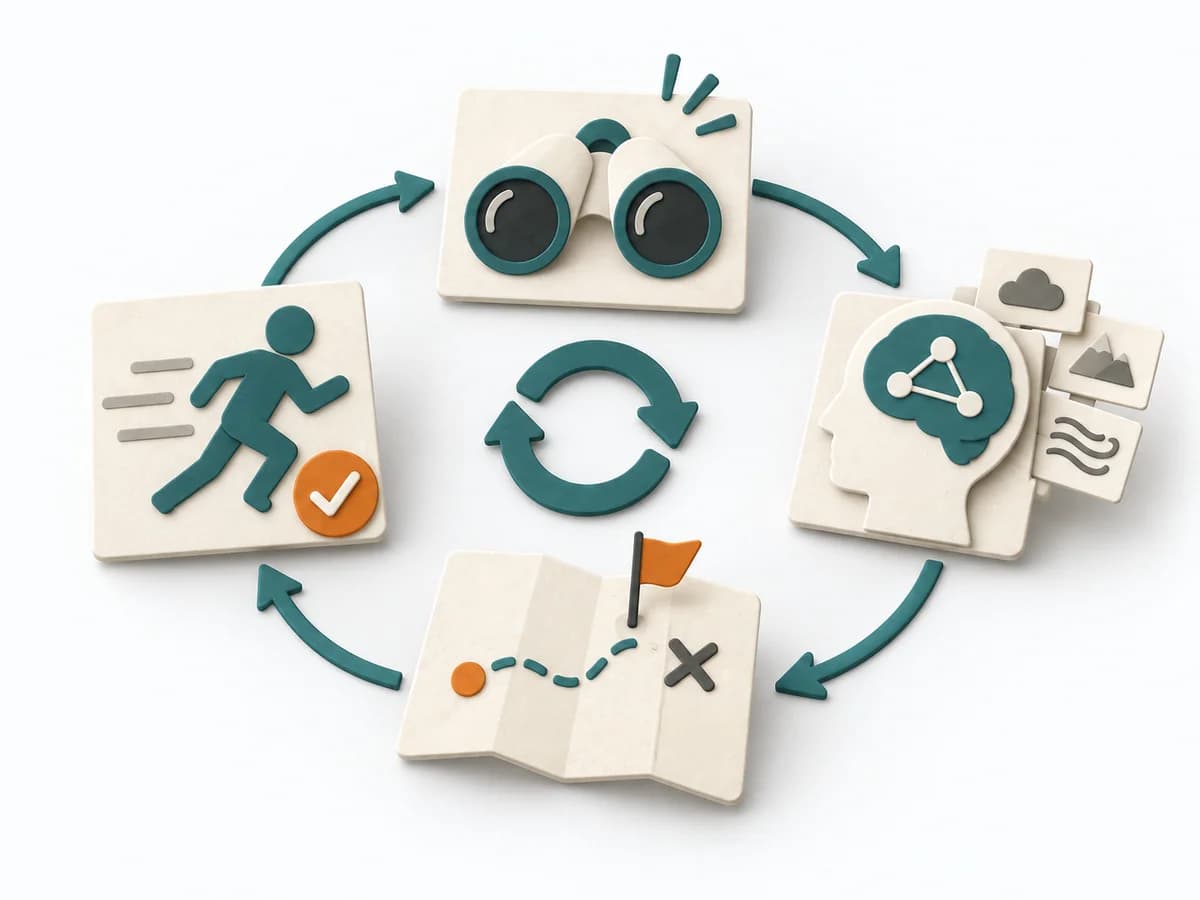
A Cynefin workshop classifies situations by their degree of order, uncertainty, and complexity. The classification indicates where analysis, experiments, or rapid stabilisation fit.
Which context does each concrete case inhabit, and which decision logic fits it?
The steps express the method mechanics; feedback may reopen an earlier step.
Cases
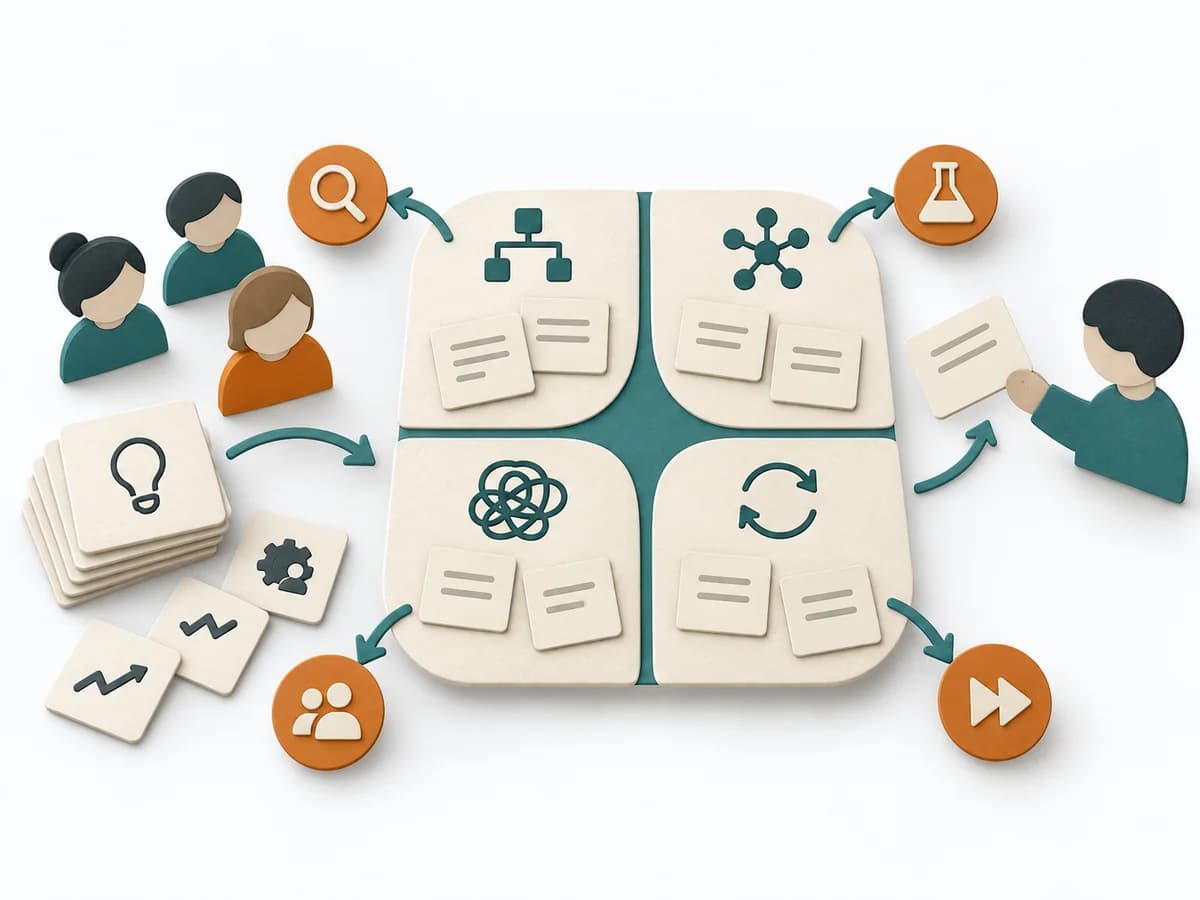
Capture concrete situations as short stories with trigger, observed course, and current decision need.
Domains
Explain Clear, Complicated, Complex, Chaotic, and Confused through causality and matching response logic.
Sort
Place cases individually first, then compare rationale and evidence; keep genuine uncertainty in Confused.
Boundaries
Examine disputed cases, movement between domains, and the Clear-to-Chaotic cliff; decompose bundles when needed.
Respond
Choose a domain-appropriate response for each case; for complex cases define safe-to-fail probes and signals.
At review, add evidence, update assumptions, and version the next cycle.
Wenn Probleme unklar, chaotisch oder nur scheinbar bekannt sind, greifen Standardrezepte zu kurz. Ein Cynefin Workshop sortiert Situationen nach ihrer Problemart und verbindet sie mit passender Handlungslogik.
Cynefin case map with domain rationale, boundary cases, and a matching response for each case.
Fictional example
Fictional values demonstrate the method-specific fields.
| Case | Evidence | Causality | Domain | Response | Next step |
|---|---|---|---|---|---|
| Returns routineAdd rationale and evidence. | Same flow in 17 cases | Cause and effect known | Clear | Sense–categorise–respond | Continue standard |
| Machine selectionAdd rationale and evidence. | Three viable technical models | Several right answers; expertise required | Complicated | Sense–analyse–respond | Expert comparison |
| Express congestionAdd rationale and evidence. | Patterns differ by Saturday | Effect only clear in hindsight | Complex | Probe–sense–respond | Two safe slot probes |
| Coolant leakAdd rationale and evidence. | Immediate hazard | No time for analysis | Chaotic | Act–sense–respond | Isolate, then reassess |
All values are fictional.
Bound one decision landscape and collect 12–30 concrete situations rather than abstract themes.
When problems are unclear, chaotic, or only seemingly familiar, standard recipes fall short. A Cynefin Workshop sorts situations by the nature of their problem and connects them with matching action logic.
Cases are classified not by gut feeling but by the kind of order, uncertainty, or complexity they involve. This shows where analysis, where experimentation, and where fast stabilization make sense. It strengthens shared sensemaking ahead of premature solutions.
A Cynefin Workshop uses the framework as a sorting and conversation surface for real situations. Challenges are not only evaluated but also examined for the kind of causality, uncertainty, and action logic they contain. That helps teams distinguish whether best practices, expertise, experiments, or immediate stabilization are appropriate. The output is a situational map with differentiated next steps.
Prepare clear domain descriptions, real cases, and a large sorting surface. Have participants place examples individually first and then discuss the differences. Avoid long framework lectures; work quickly with concrete situations and derive action principles from them.
The method guide walks execution through 5 phases, timing, 5 pitfalls, and clear stop criteria.
Open method guideYour perspective
Your feedback helps shape the next improvements to methodatlas.
Set subject, evidence, roles, flow, and review.
To be confirmed
To be confirmed
Complete run Time: 90–150 minutes for 12–30 concrete cases and derived response logics.
Complete this worksheet on paper or in your own document during the work.
| Case | Evidence | Causality | Domain | Response | Next step |
|---|---|---|---|---|---|
| Returns routine | |||||
| Machine selection | |||||
| Express congestion | |||||
| Coolant leak |
The blank worksheet contains prompts only.
Reference · original teaching example
Expected artifact: Granular case set
Capture concrete situations as short stories with trigger, observed course, and current decision need.
Entry:
...
Expected artifact: Shared domain criteria
Explain Clear, Complicated, Complex, Chaotic, and Confused through causality and matching response logic.
Entry:
...
Expected artifact: Provisional domain map
Place cases individually first, then compare rationale and evidence; keep genuine uncertainty in Confused.
Entry:
...
Expected artifact: Resolved boundary cases
Examine disputed cases, movement between domains, and the Clear-to-Chaotic cliff; decompose bundles when needed.
Entry:
...
Expected artifact: Context-aware action plan
Choose a domain-appropriate response for each case; for complex cases define safe-to-fail probes and signals.
Entry:
...
...
Method guide: https://methodatlas.meierhoff-systems.de/en/methods/cynefin-workshop/run-sheet
Fitting alternatives with decision guidance, followed by other related methods.
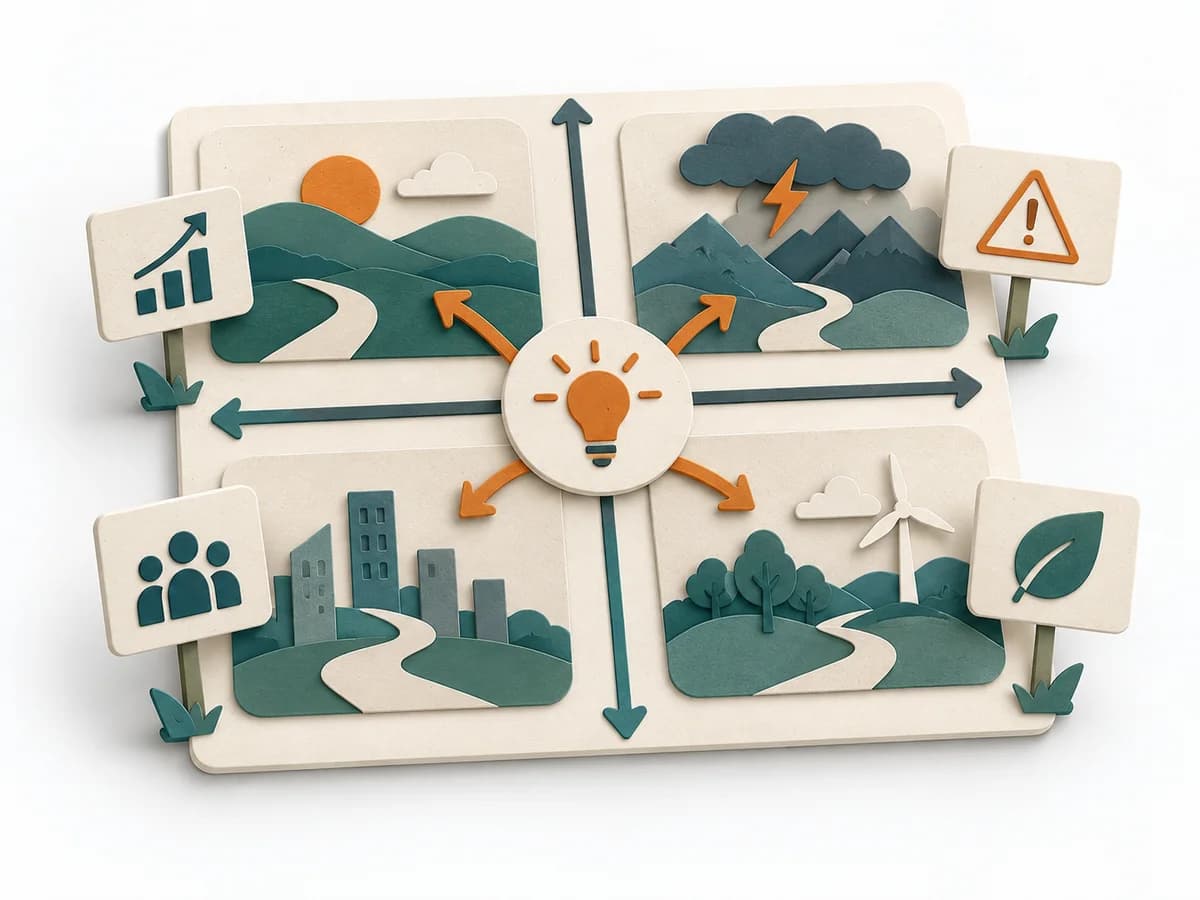
Instead of Cynefin Workshop, choose Scenario Planning when you want to work with several pictures of the future instead of just planning a single course.
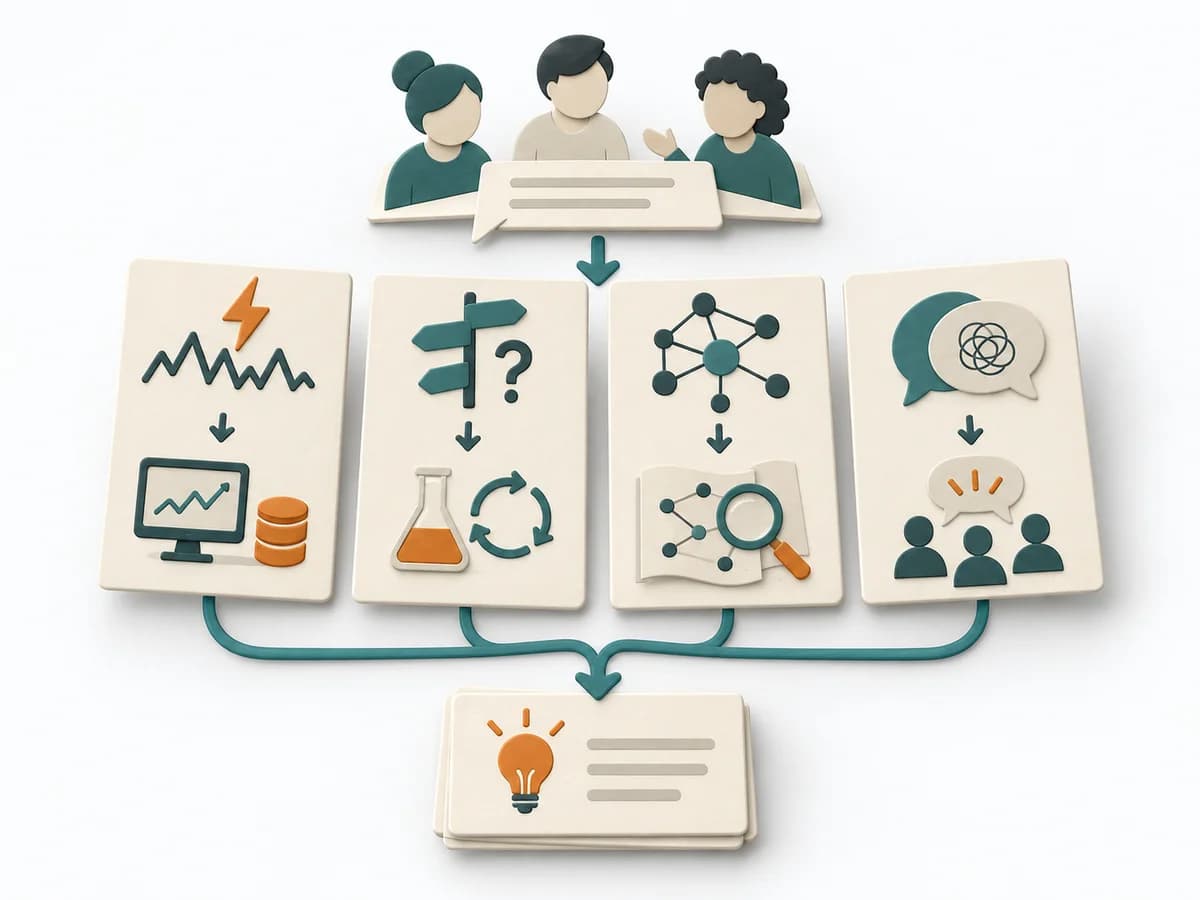
Structures a situation along Volatility, Uncertainty, Complexity, and Ambiguity to derive matching logics of action.
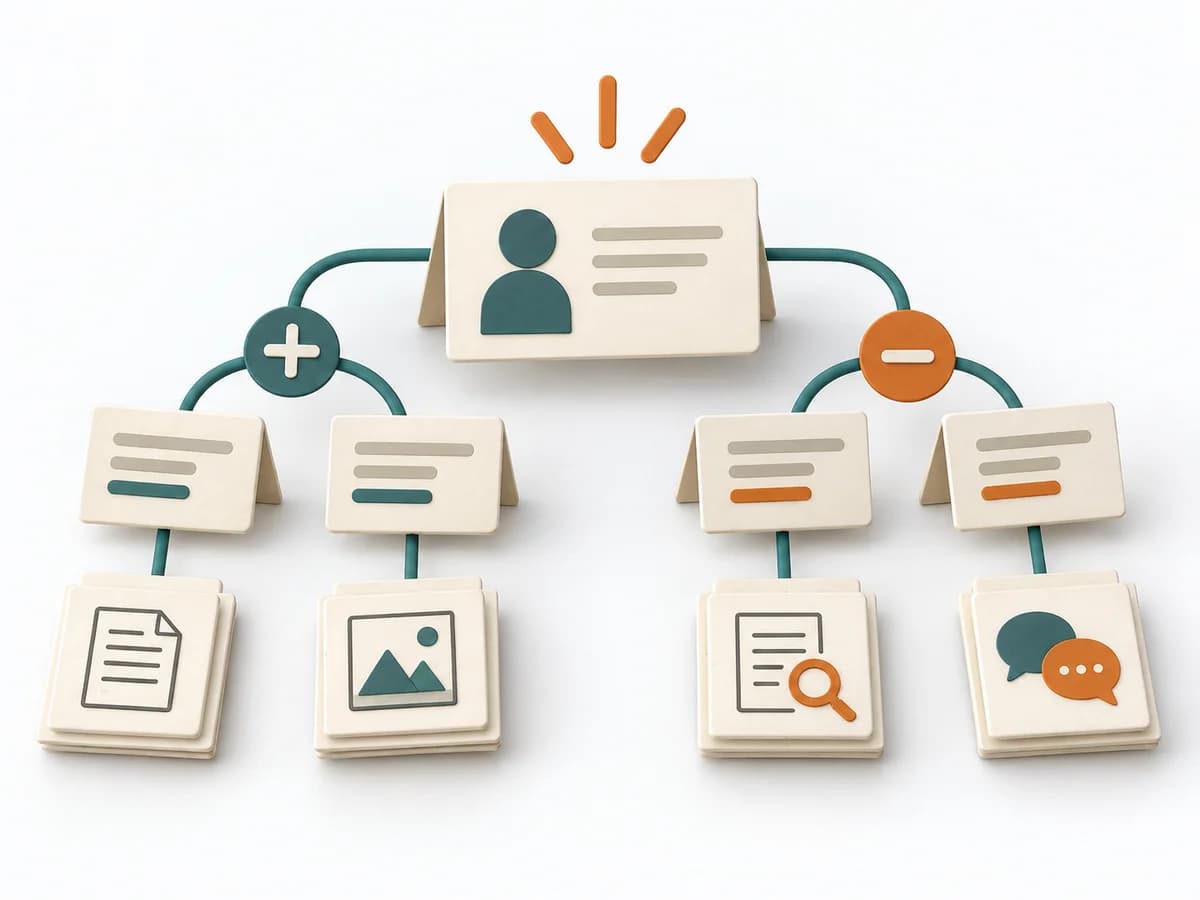
Clarifies options, criteria, and risks by framing the central question, recording the main claim, and marking weak spots.
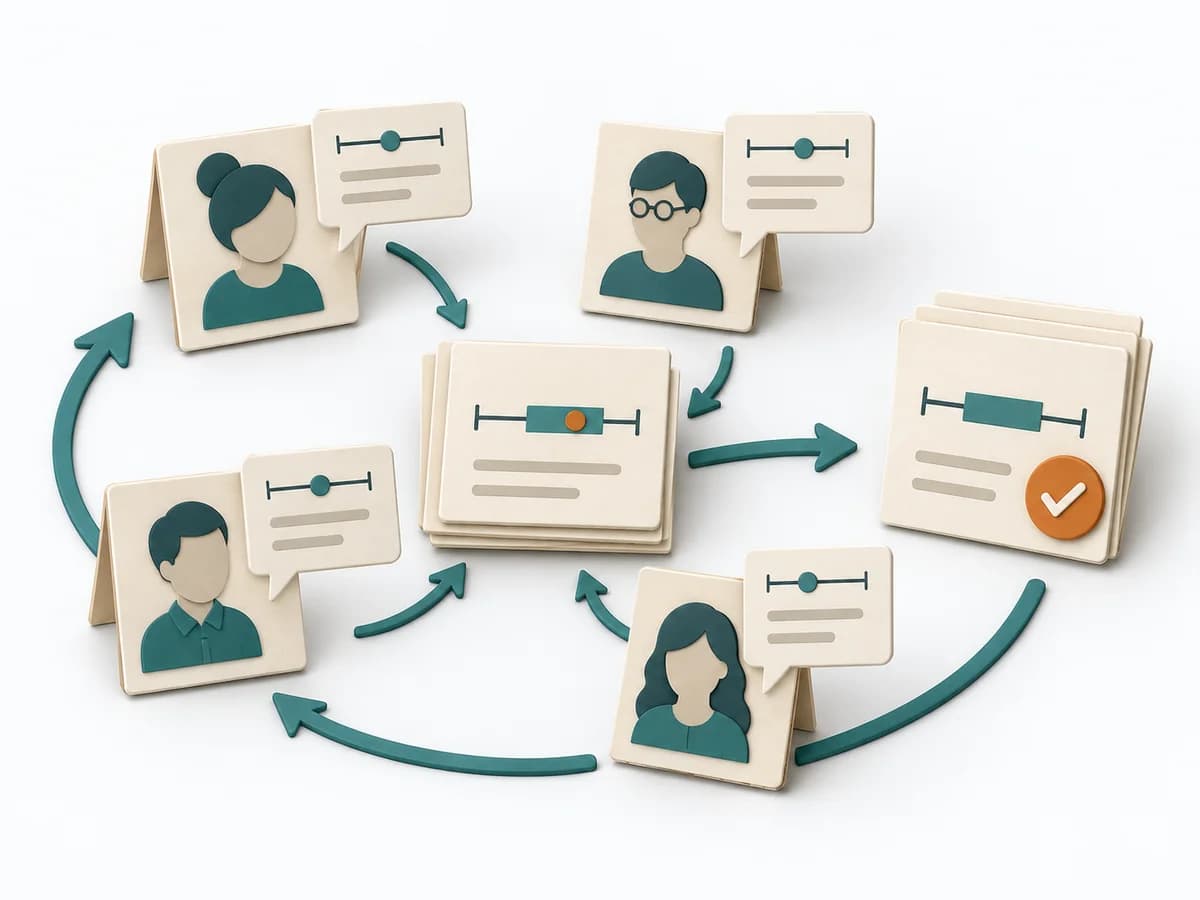
Bundles expert estimates across rounds until ranges, consensus, and assumptions become solid enough.

Thinks through failure in advance to surface risks, countermeasures, and critical assumptions early.
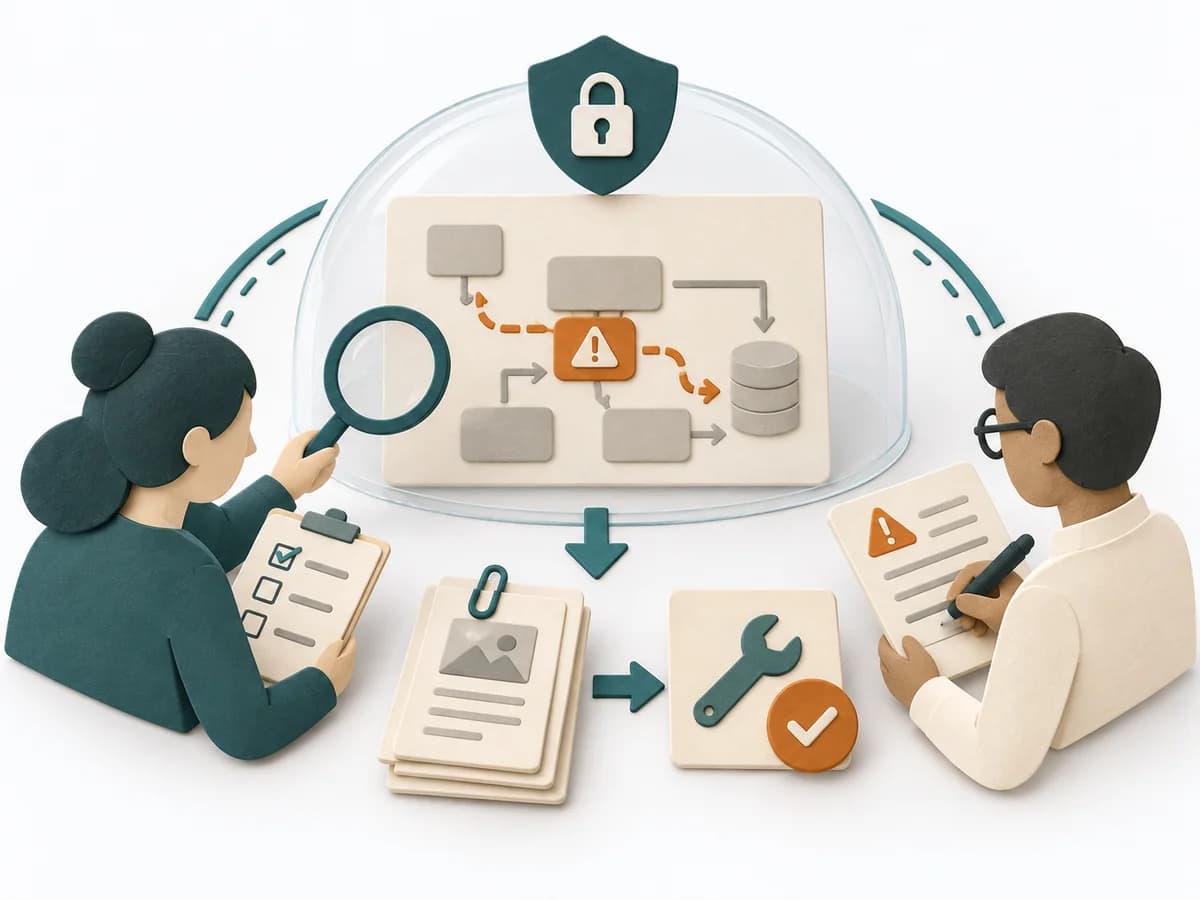
Examines an initiative from an opposing perspective, collects weaknesses, and derives prioritized mitigations.