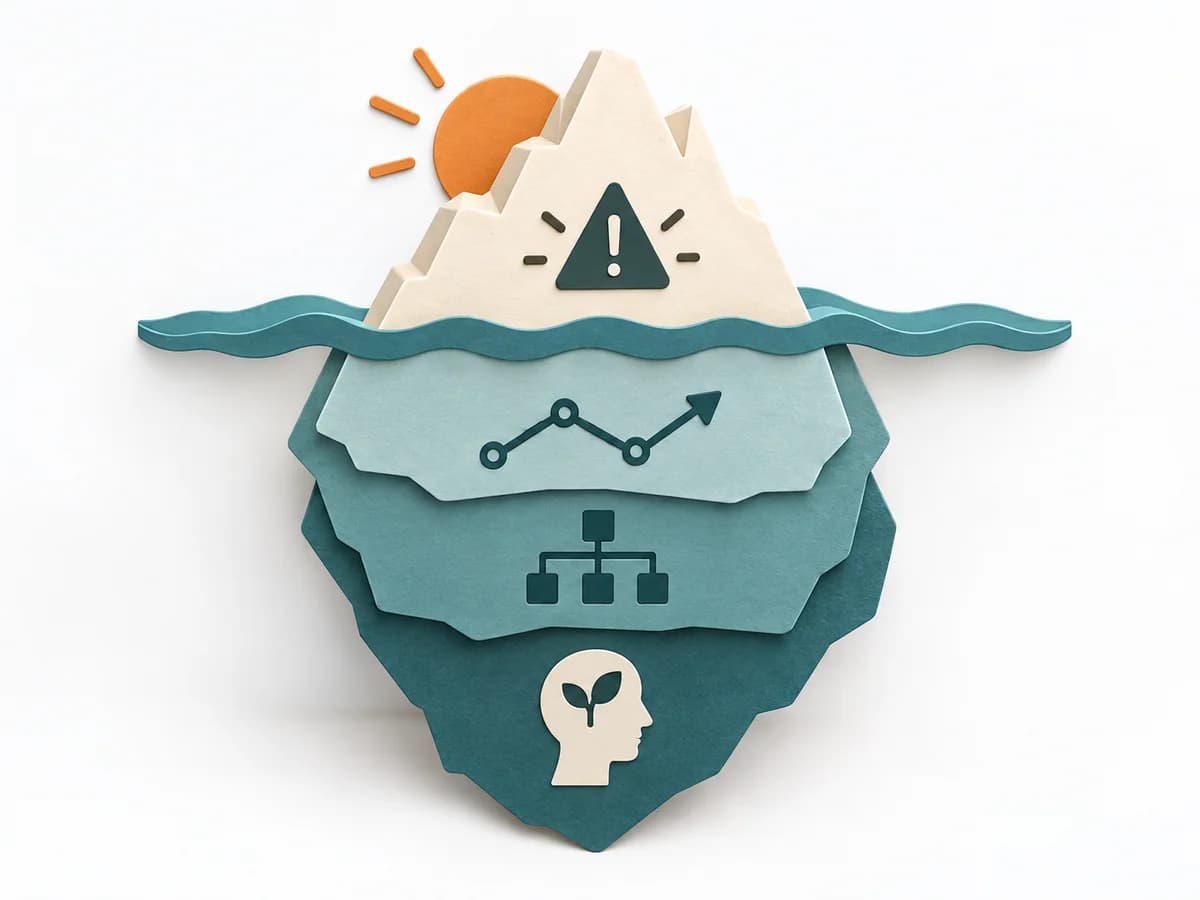
Purpose
A Rich Picture brings an unclear situation onto a shared drawing. It captures actors, tensions, information flows, and blind spots before the team jumps to solutions too early.
Systems Thinking Mapping tool
Makes an unclear situation visible by placing facts, perspectives, relationships, conflicts, and open questions together.
Rich Picture makes an unclear situation visible by placing facts, perspectives, relationships, conflicts, and open questions together. It supports a justified next step without imposing a system explanation.
Which elements and differing perspectives shape the situation before we impose a premature structure?
Phases may be revisited; their order supports the work but does not replace domain judgment.
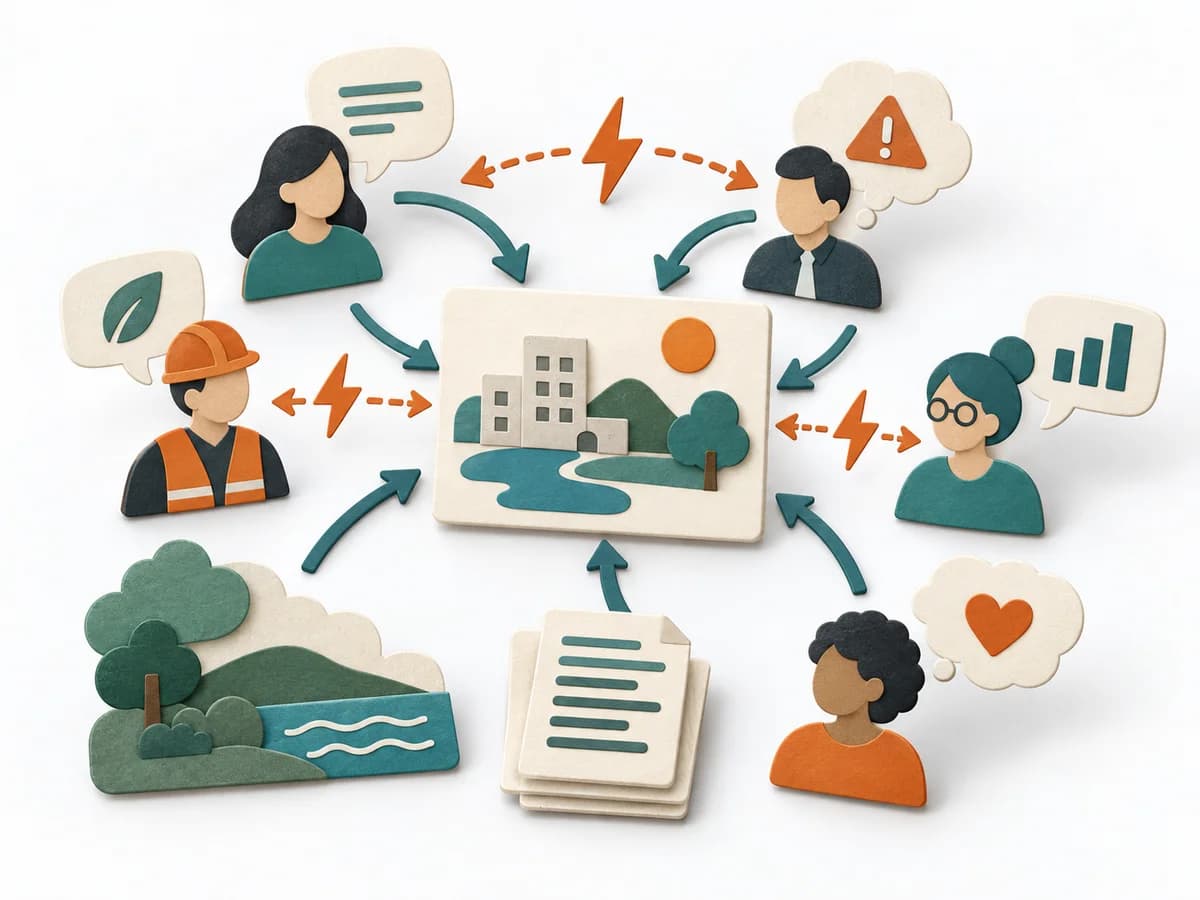
Situation
Pose an open question; show boundaries and perspectives without imposing a system explanation.
Perspectives
Draw people, places, flows, artifacts, feelings, and conflicts; label perspectives.
Relationships
Show explicit interactions and tensions; mark contested or assumed links.
Inquiry
Review the picture with participants; mark surprises, gaps, and next inquiry.
Review the result and open assumptions at the next suitable checkpoint. Record changes, ownership, and new evidence.
Use when: A complex or ambiguous situation where people hold different views and shared understanding is needed first.

The working picture contains an open question, clear boundaries, and the relevant perspectives without imposing a system explanation.
The representation shows explicit interactions and tensions and marks contested or assumed links.
The shared review records surprises, gaps, and the next inquiry.
Fictional worked example
Explore an unclear situation visually by placing facts, perspectives, relationships, conflicts, and open questions together.
Describe the open question and who/what it concerns.
Queue, self-checkout machine, advice desk, returns kiosk, missing books.
Draw elements, voices, places, and hard and soft information.
Fictional: students want fast checkout; staff see more advice needs than capacity.
Mark conflicts, relationships, and doubts as perspectives.
Speed of self-service ↔ personal help; statements are from an invented workshop.
Collect surprises and next questions without prescribing a solution.
Which failures extend queues? Which cases need personal advice?
Fictional city library: picture shows a long queue, time-pressed students, staff balancing checkout and advice, a faulty self-checkout machine, and the open question of missing books. Speech bubbles mark conflicting views; arrows only where participants suspect a relationship.
Start with a bounded question, clarify access and participants, and collect available evidence. Explore an unclear situation visually by placing facts, perspectives, relationships, conflicts, and open questions together.
A Rich Picture brings an unclear situation onto a shared drawing. It captures actors, tensions, information flows, and blind spots before the team jumps to solutions too early.
The group first gathers everything belonging to the situation: people, goals, conflicts, rules, and external influences. The material is then arranged freely and legibly on one page so connections, misunderstandings, and open questions become visible. In the end, the picture serves as a basis for discussion for analysis or further modeling.
Rich Pictures work because complex situations first become graspable as a whole, without forcing them too early into formal models or linear logic. Good use shows actors, tensions, perceptions, and interactions in a form that allows ambiguity while still letting structure emerge. Especially in early problem spaces, the picture creates shared orientation from which more targeted analysis only later makes sense.
Open with the question of central actors, tensions, and notable interactions instead of immediately searching for solutions. The session gains substance when contradictory viewpoints appear side by side and stay held within the picture. Close with a shared reading of the most important areas of tension and a decision on which part of the system gets examined more deeply.
The method guide walks execution through 4 phases, timing, 4 pitfalls, and clear stop criteria.
Open method guideYour perspective
Your feedback helps shape the next improvements to methodatlas.
Prepare Rich Picture with a clear question, roles, and sources.
To be confirmed
To be confirmed
Plan the full method Time: Set according to scope and available evidence
Complete this worksheet on paper or in your own document during the work.
Describe the open question and who/what it concerns.
...
Draw elements, voices, places, and hard and soft information.
...
Mark conflicts, relationships, and doubts as perspectives.
...
Collect surprises and next questions without prescribing a solution.
...
Blank worksheet: start with a bounded question. Enter observed facts only, mark assumptions, and record open questions and sources.
Rich pictures · Open University OpenLearn
Expected artifact: Open situation boundary and participants
Open situation boundary and participants
Entry:
...
Expected artifact: Multi-perspective picture of the situation
Multi-perspective picture of the situation
Entry:
...
Expected artifact: Visible tensions and suspected relationships
Visible tensions and suspected relationships
Entry:
...
Expected artifact: Open inquiry questions
Open inquiry questions
Entry:
...
...
Method guide: https://methodatlas.meierhoff-systems.de/en/methods/rich-picture/run-sheet
Fitting alternatives with decision guidance, followed by other related methods.
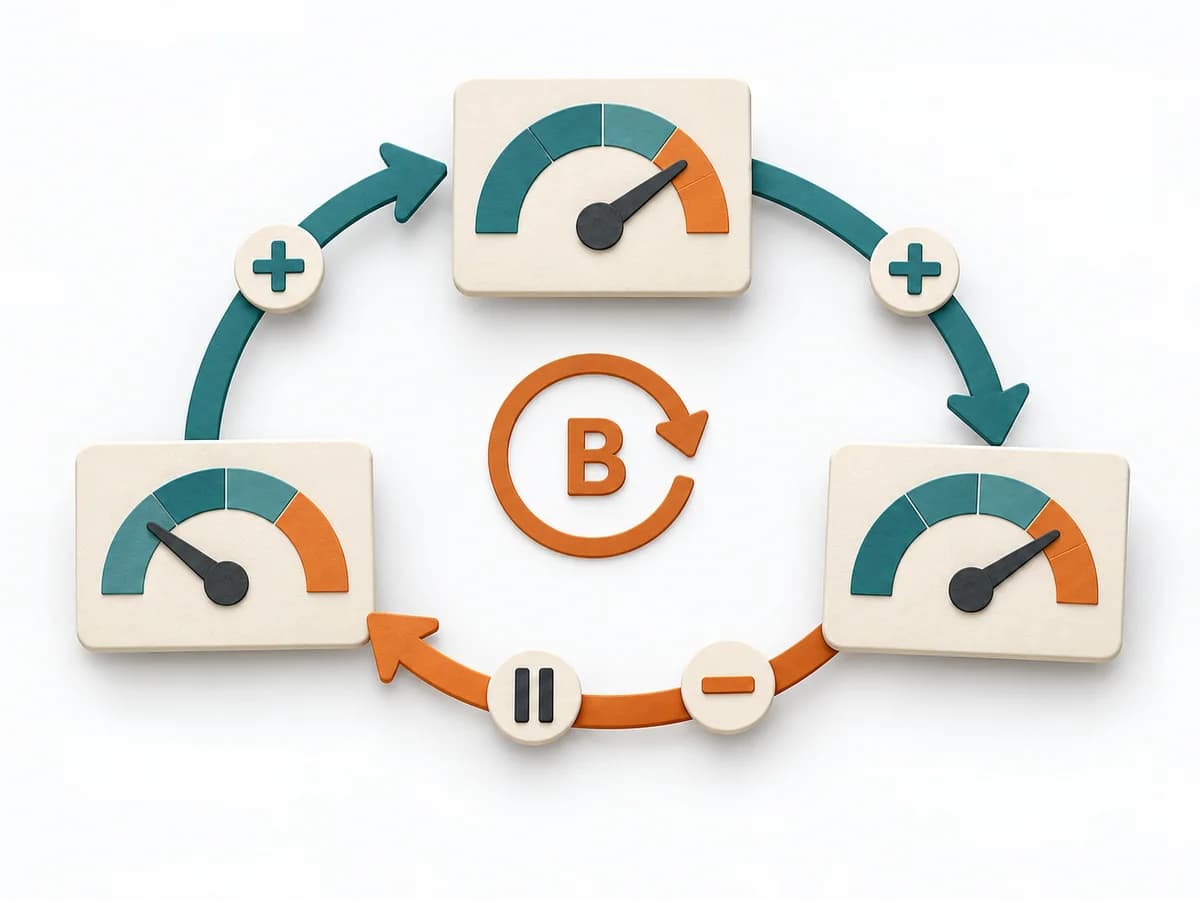
Instead of Rich Picture, when you want to make feedback loops, delays, and reinforcing loops in the system visible.

Moves relationships, patterns, and leverage toward a concrete result through "introduce the twelve leverage points", "collect planned actions", and "formulate a strategy across multiple levers".
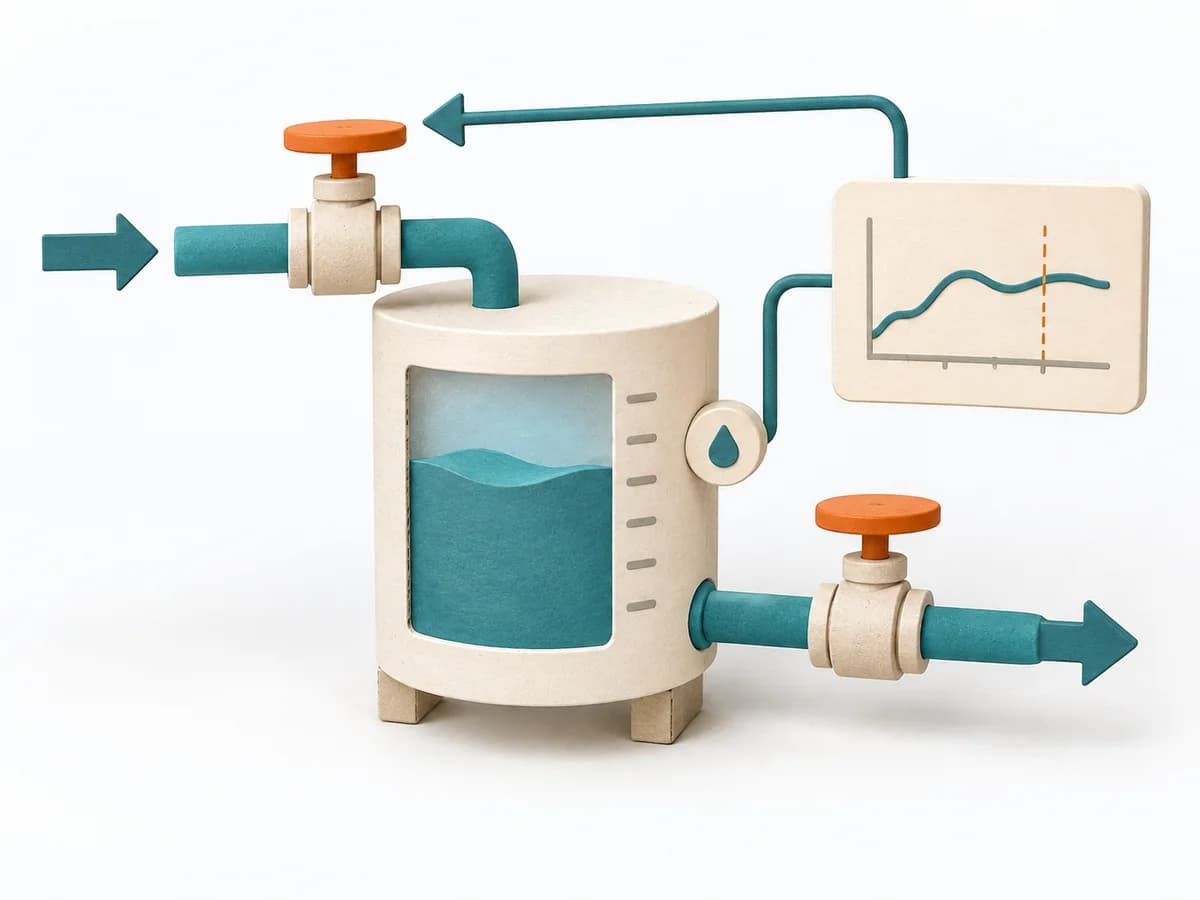
Models stocks, inflows and outflows, and delays to understand dynamics, bottlenecks, and capacity.

Moves relationships, patterns, and leverage toward a concrete result through "formulate current observations", "introduce archetype cards", and "discuss leverage and derive actions".
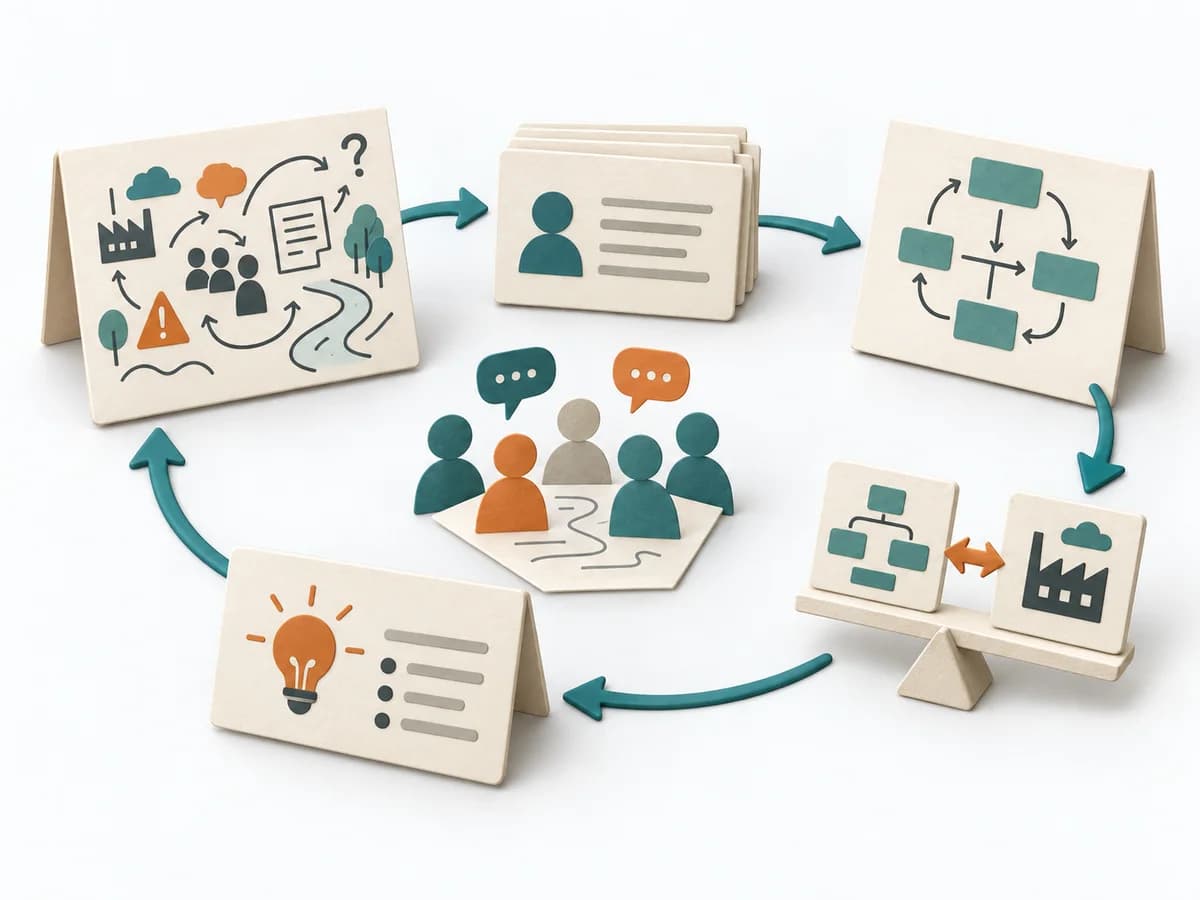
Develops a conceptual picture from a rich picture and root definitions for difficult organizational issues.
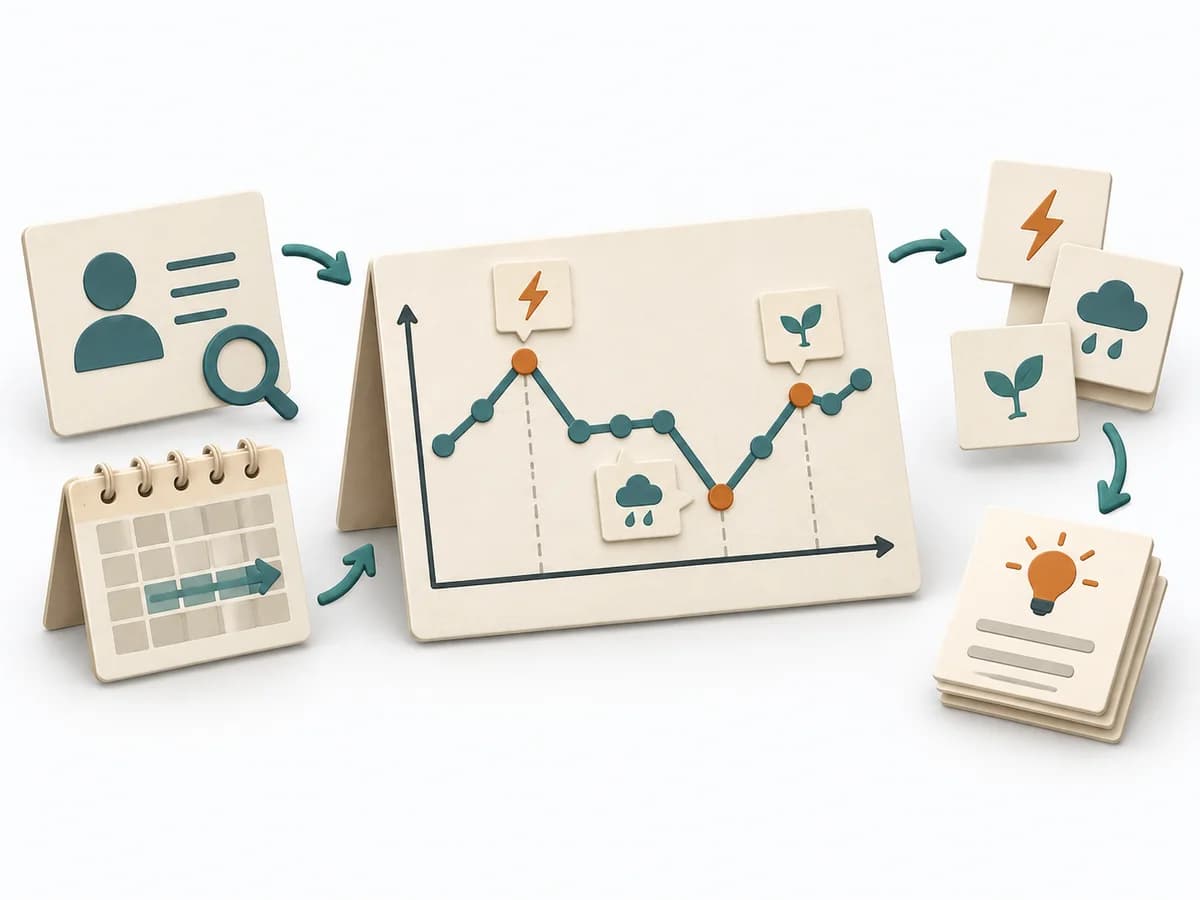
Traces developments over time and reveals turning points, patterns, and possible causes of a trend.
