Purpose
The VUCA Scan helps read difficult situations more precisely. Instead of treating unclarity as generally complicated, the method separates fast change, missing knowledge, systemic entanglement, and ambiguous interpretation.
Systems Thinking Analysis method
Distinguishes volatility, uncertainty, complexity, and ambiguity and identifies fitting responses.
VUCA describes four distinct uncertainty conditions. Volatility calls for buffers, uncertainty for better information, complexity for structure and expertise, and ambiguity for experiments. One issue may span dimensions, but evidence remains separate.
Which VUCA dimension shapes the situation, and which response fits the evidenced mechanism?
VUCA Scan uses diagnose a situation by rate of change, information gap, system interdependence, and missing interpretive model. Assessments remain justified and context-bound.
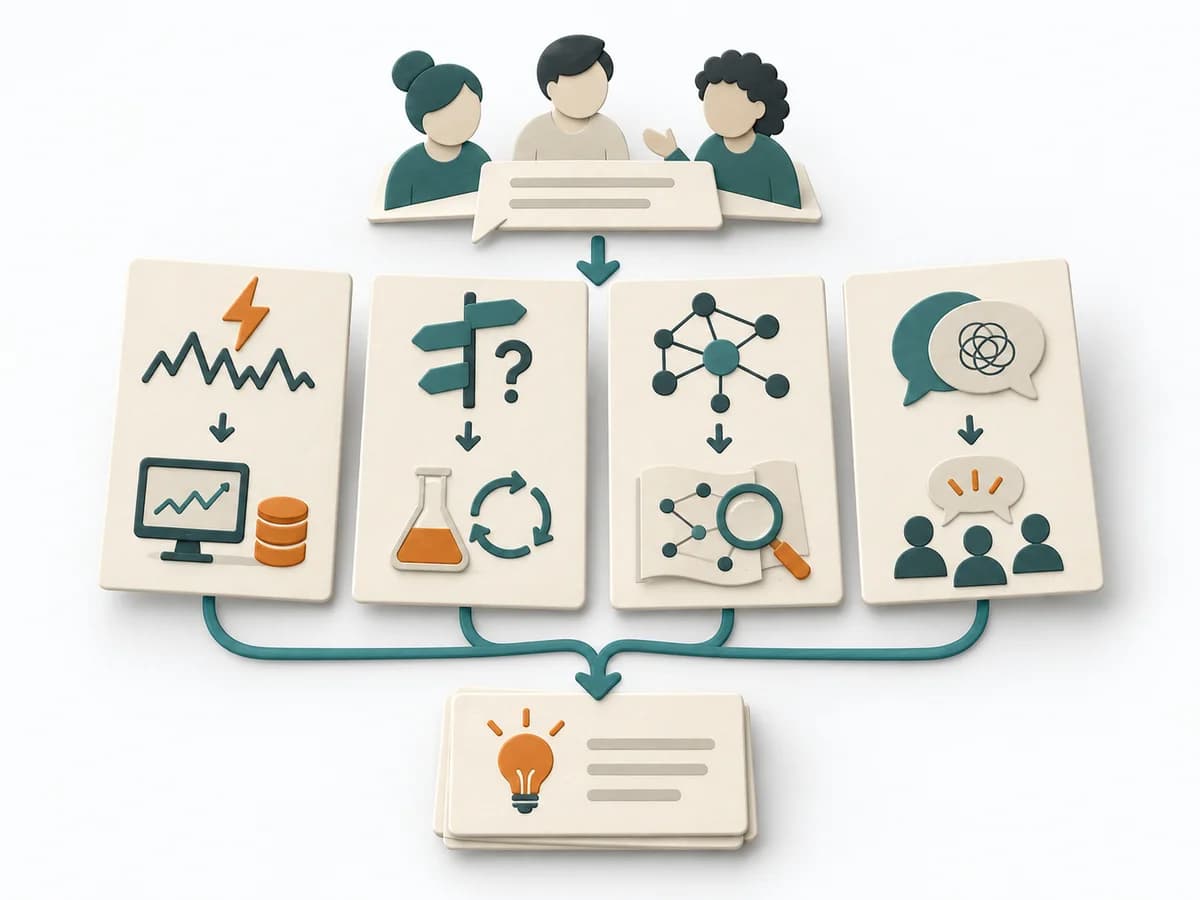
Situation
Bound decision, scope, horizon, and observed signals.
Diagnose
Assign evidence separately to volatility, uncertainty, complexity, and ambiguity.
Response
Design fitting buffers, information, structure, or experiments.
Monitor
Set signposts, owners, and review cadence per response.
Update after new evidence or a material context change and retain the previous version.
For environment and decision diagnosis before strategy, portfolio, or risk responses.
VUCA response map with traceable sources, assumptions, and domain decisions.
Owners, dates, and next review for VUCA response map.
Fictional worked example
diagnose a situation by rate of change, information gap, system interdependence, and missing interpretive model as a precise working structure with a fictional example.
| Subject | Volatility | Uncertainty | Complexity | Ambiguity |
|---|---|---|---|---|
| VUCA response mapWorked example | Preisschwankung: Puffer + Provideroption. | Regelzeitpunkt offen: Signpost Monitoring. | Residency×Segment×Provider: Dependency Map. | Akzeptanz unklar: zwei Prototypenexperimente. |
The example demonstrates the domain logic of VUCA Scan; worksheets remain blank.
Start with the core question: Which VUCA dimension shapes the situation, and which response fits the evidenced mechanism?
The VUCA Scan helps read difficult situations more precisely. Instead of treating unclarity as generally complicated, the method separates fast change, missing knowledge, systemic entanglement, and ambiguous interpretation.
A team first describes the concrete situation or decision. Observations are then assigned to the four VUCA dimensions, and matching responses are derived per dimension: monitoring and buffers for volatility, experiments for uncertainty, system mapping for complexity, and perspective clarification for ambiguity.
The VUCA Scan works as a diagnostic filter for situations where simple cause-and-effect explanations fall short. Volatility asks about speed and fluctuation, Uncertainty about missing knowledge, Complexity about mutual dependencies, and Ambiguity about competing meanings. Good application keeps these four qualities apart and derives matching next steps from them, such as observation, hypothesis testing, a system picture, or reconciling meaning.
Start with a concrete situation, not a general debate about the state of the world. Ask the group to formulate observations as evidence cards rather than proposing solutions right away. The most important moment is distinguishing between missing information, systemic entanglement, and genuine ambiguity; exactly there, better next steps emerge.
The method guide walks execution through 4 phases, timing, 4 pitfalls, and clear stop criteria.
Open method guideYour perspective
Your feedback helps shape the next improvements to methodatlas.
Plan VUCA Scan around its domain steps and the concrete decision question.
To be confirmed
To be confirmed
Establish and review the practice Time: 45–75 minutes
Complete this worksheet on paper or in your own document during the work.
| Subject | Volatility information to record | Uncertainty information to record | Complexity information to record | Ambiguity information to record |
|---|---|---|---|---|
| VUCA response map |
Enter only real input, sources, and decisions.
U.S. Army Heritage and Education Center: VUCA
Expected artifact: situation brief
situation brief · source · uncertainty · next decision
Entry:
...
Expected artifact: VUCA diagnosis
VUCA diagnosis · source · uncertainty · next decision
Entry:
...
Expected artifact: response set
response set · source · uncertainty · next decision
Entry:
...
Expected artifact: monitoring plan
monitoring plan · source · uncertainty · next decision
Entry:
...
...
Method guide: https://methodatlas.meierhoff-systems.de/en/methods/vuca-scan/run-sheet
Fitting alternatives with decision guidance, followed by other related methods.

Instead of VUCA Scan, choose Cynefin Workshop when situations should be sorted by decision domain and directly linked to a fitting course of action.

Instead of VUCA Scan, choose Scenario Planning when several plausible pictures of the future should be developed from critical uncertainties.

Instead of VUCA Scan, choose PESTLE Analysis when external macro factors should be systematically gathered as market and environment drivers.
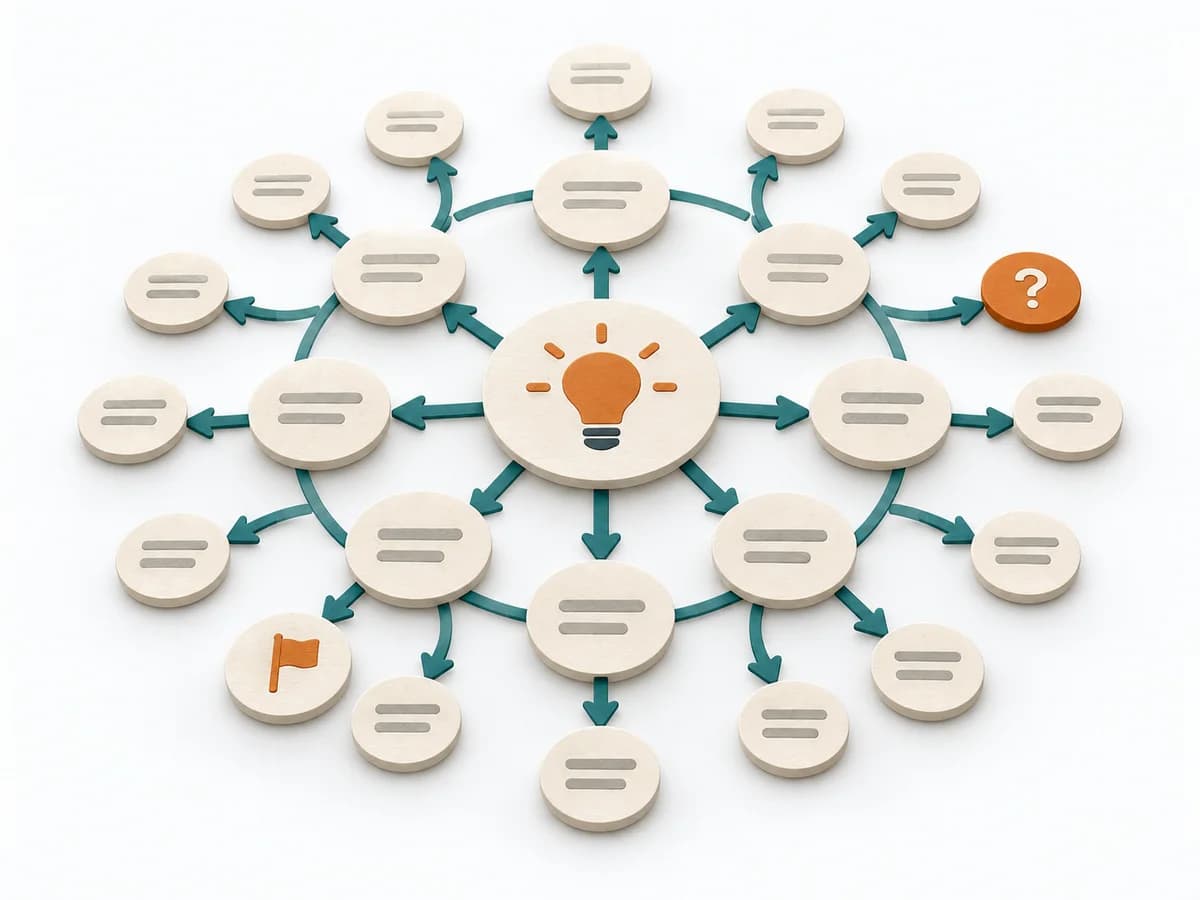
Arranges direct and indirect consequences of a change radially, so future impacts and cascades of consequences become visible.
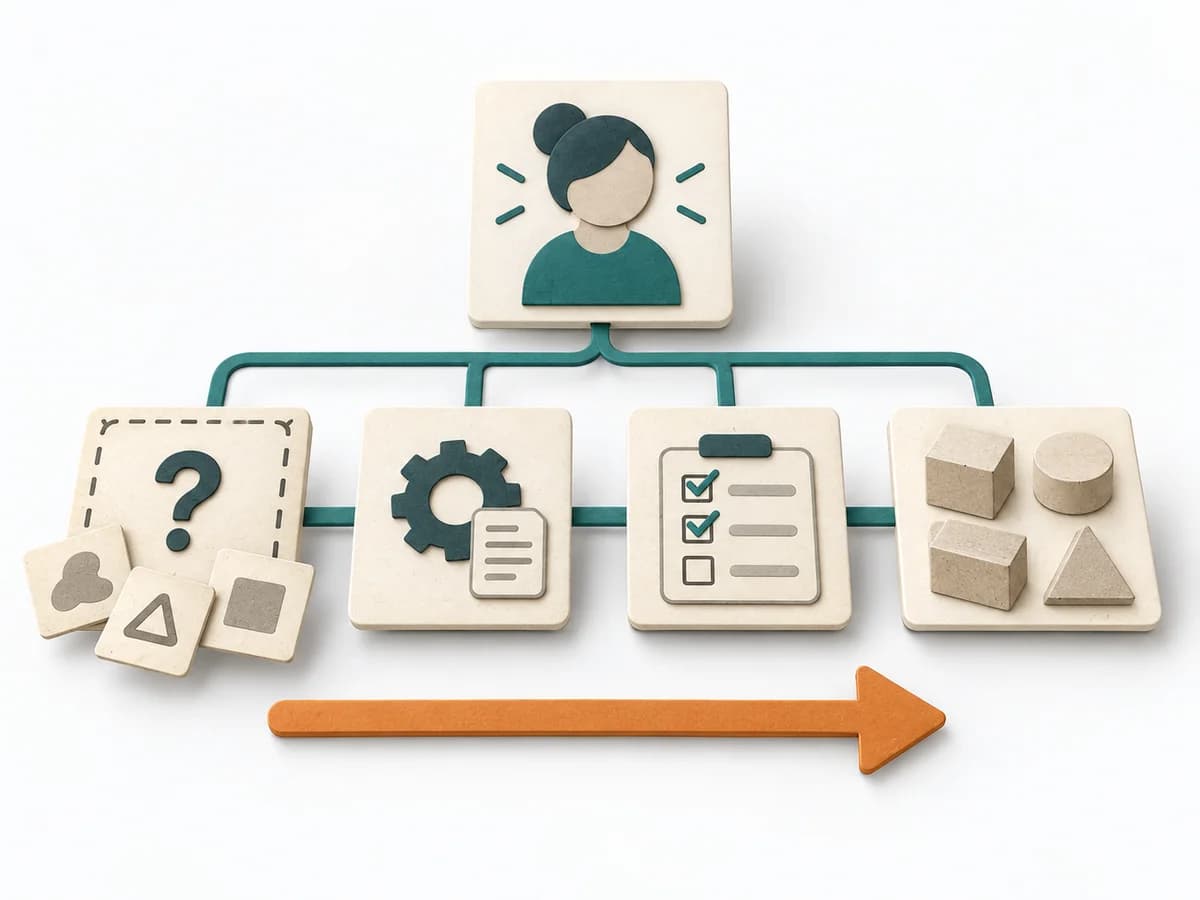
Maps value creation and evolution stages so strategic options, levers, and market movements become legible.

Develops a conceptual picture from a rich picture and root definitions for difficult organizational issues.