Purpose
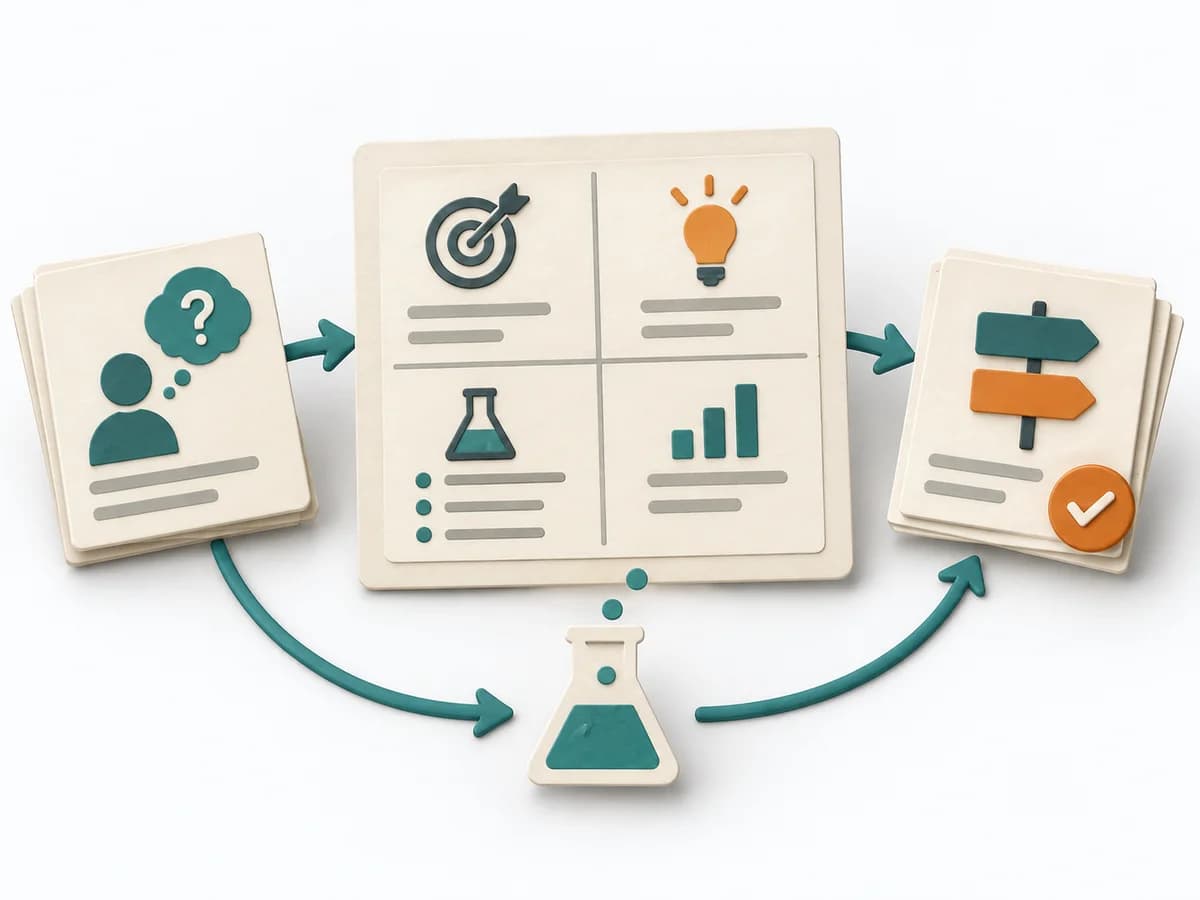
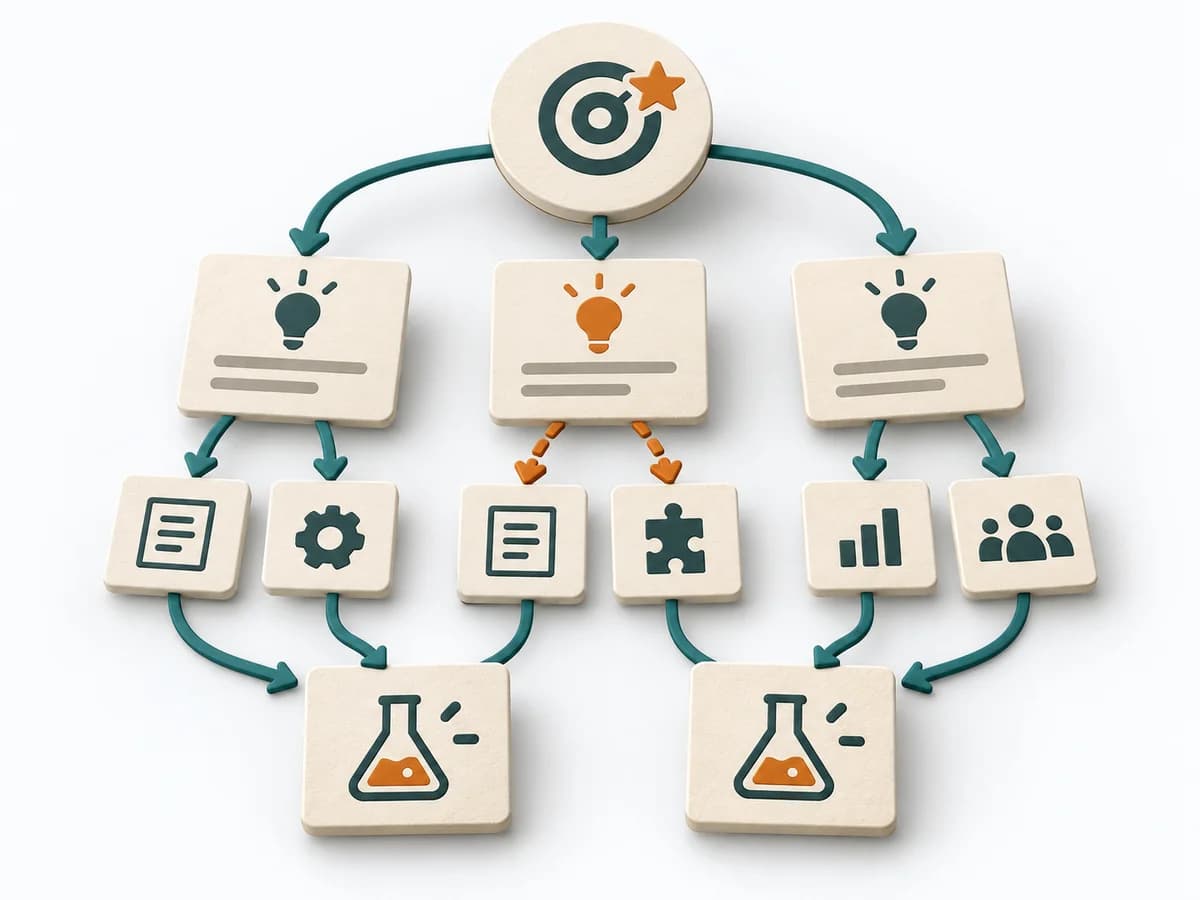
Product Kata helps clarify customer problems, solution ideas, and evidence through a repeatable improvement routine. It captures direction, current metric, target metric, experiment notes, and learning.
Product Discovery Process model
Establishes a repeatable learning cycle from direction, current state, next target, and experiment.
Product Kata connects strategic direction with a measurable next target condition. The team selects the biggest obstacle, runs an experiment, and updates the current state.
Which obstacle separates the current state from the next target condition, and what experiment addresses it?
Product Kata uses direction → current state → target condition → obstacle → experiment → learn. Assessments remain justified and context-bound.
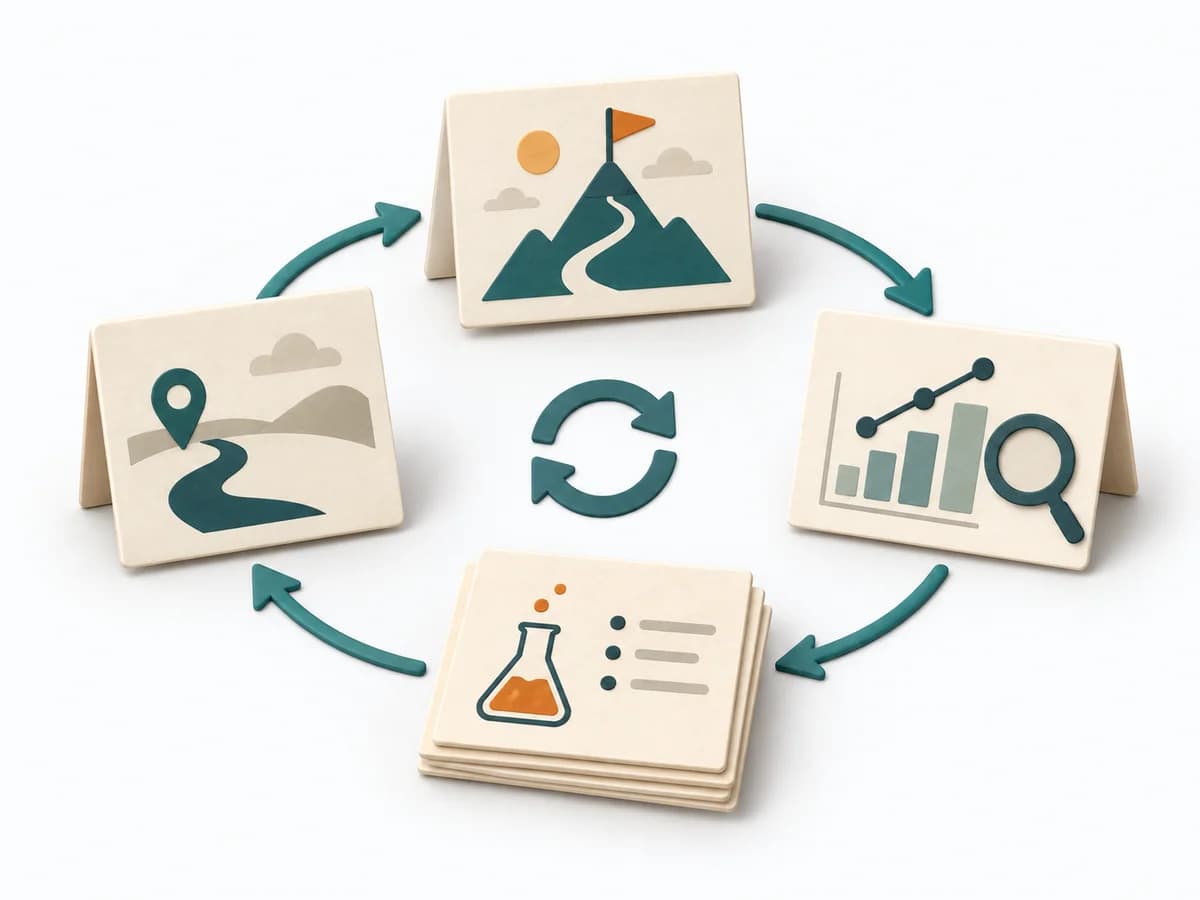
Direction
Clarify strategic direction and affected user outcome.
Current state
Capture current state with data and observation.
Target/obstacle
Choose next measurable target condition and biggest obstacle.
Experiment
Run experiment with expectation and update state.
Update after new evidence or a material context change and retain the previous version.
For product teams establishing outcome work as a continuous habit.
product kata record with traceable sources, assumptions, and domain decisions.
Owners, dates, and next review for product kata record.
Fictional worked example
direction → current state → target condition → obstacle → experiment → learn as a precise working structure with a fictional example.
Direction information to record
Selbstständige Reviews.
Current state information to record
54 % ohne Hilfe.
Target/obstacle information to record
65 % in 6 Wochen; Konfliktschritt unklar.
Experiment/learn information to record
Test mit 12 Teams; +8 pp.
The example demonstrates the domain logic of Product Kata; worksheets remain blank.
Start with the core question: Which obstacle separates the current state from the next target condition, and what experiment addresses it?
Product Kata helps clarify customer problems, solution ideas, and evidence through a repeatable improvement routine. It captures direction, current metric, target metric, experiment notes, and learning.
The team clarifies direction or vision, describes the current condition with evidence, defines the next measurable target condition, selects a small hypothesis or experiment, runs and measures it, then reflects and starts the next kata loop.
The Product Kata was described by Melissa Perri and is inspired by Mike Rother's Toyota Improvement Kata. It uses four recurring questions: where do we want to go, where are we now, what is the next measurable target condition, and what smallest experiment helps us move there? Teams revisit these questions regularly, often weekly, and learn iteratively instead of planning by features alone.
Make all four kata questions visible on the team board. Keep loops short and experiment-focused, and avoid turning them into broad strategy meetings.
The method guide walks execution through 4 phases, timing, 4 pitfalls, and clear stop criteria.
Open method guideYour perspective
Your feedback helps shape the next improvements to methodatlas.
Plan Product Kata around its domain steps and the concrete decision question.
To be confirmed
To be confirmed
Establish and review the practice Time: Weekly 30–60 minutes plus experiment
Complete this worksheet on paper or in your own document during the work.
Direction information to record
...
Current state information to record
...
Target/obstacle information to record
...
Experiment/learn information to record
...
Enter only real input, sources, and decisions.
Expected artifact: direction
direction · source · uncertainty · next decision
Entry:
...
Expected artifact: current state
current state · source · uncertainty · next decision
Entry:
...
Expected artifact: target condition
target condition · source · uncertainty · next decision
Entry:
...
Expected artifact: kata learning
kata learning · source · uncertainty · next decision
Entry:
...
...
Method guide: https://methodatlas.meierhoff-systems.de/en/methods/product-kata/run-sheet
Fitting alternatives with decision guidance, followed by other related methods.
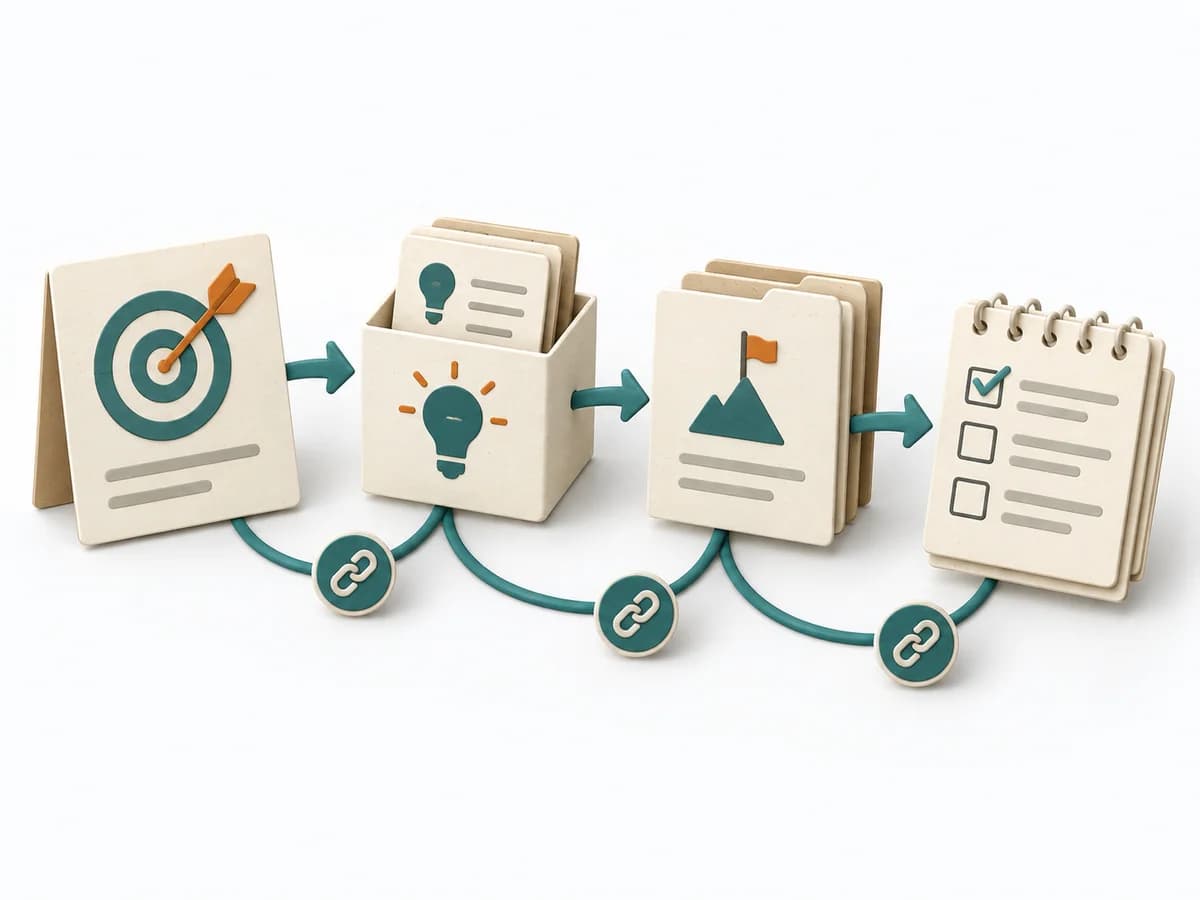
Instead of Product Kata, choose GIST Planning when you want to flexibly connect goals, ideas, assumptions, and tasks.
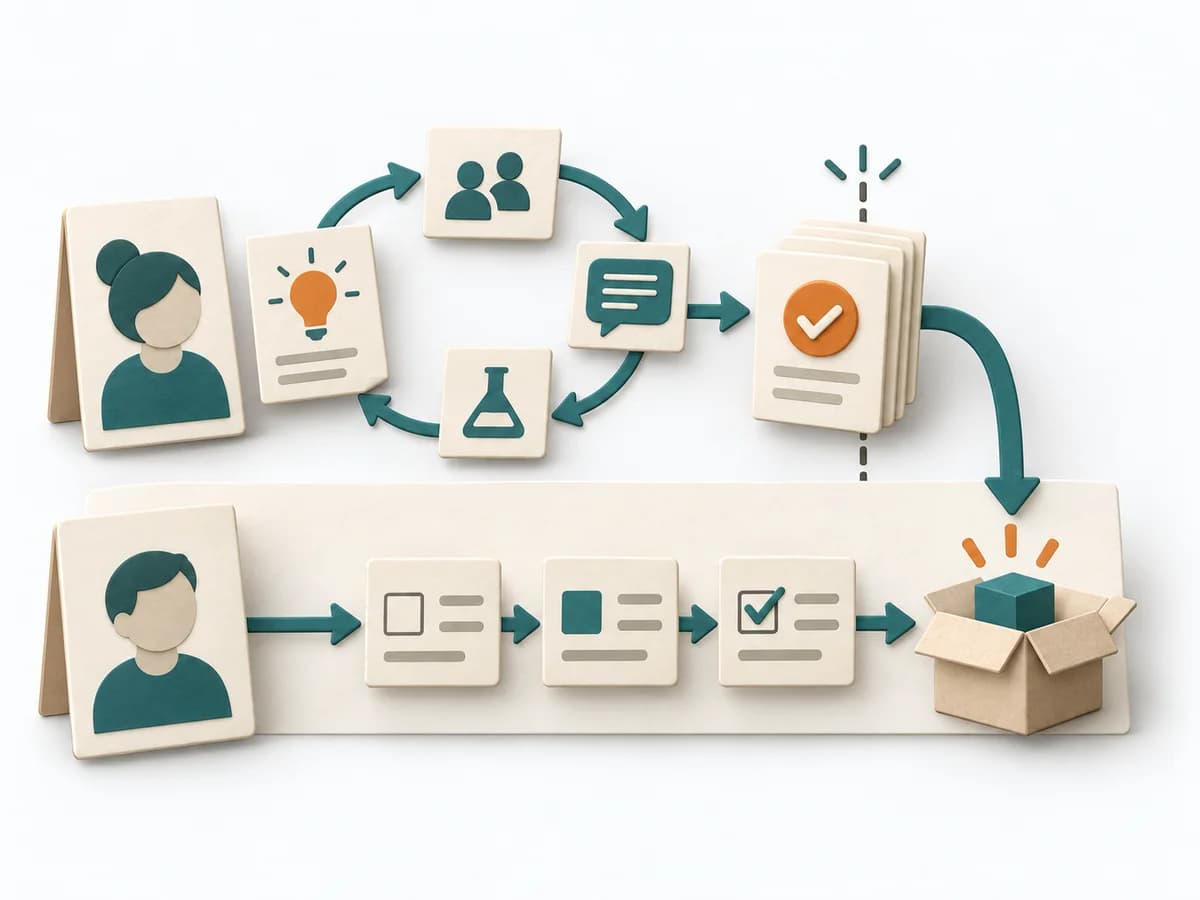
Separates discovery and delivery so that validated stories only move into implementation after learning loops.
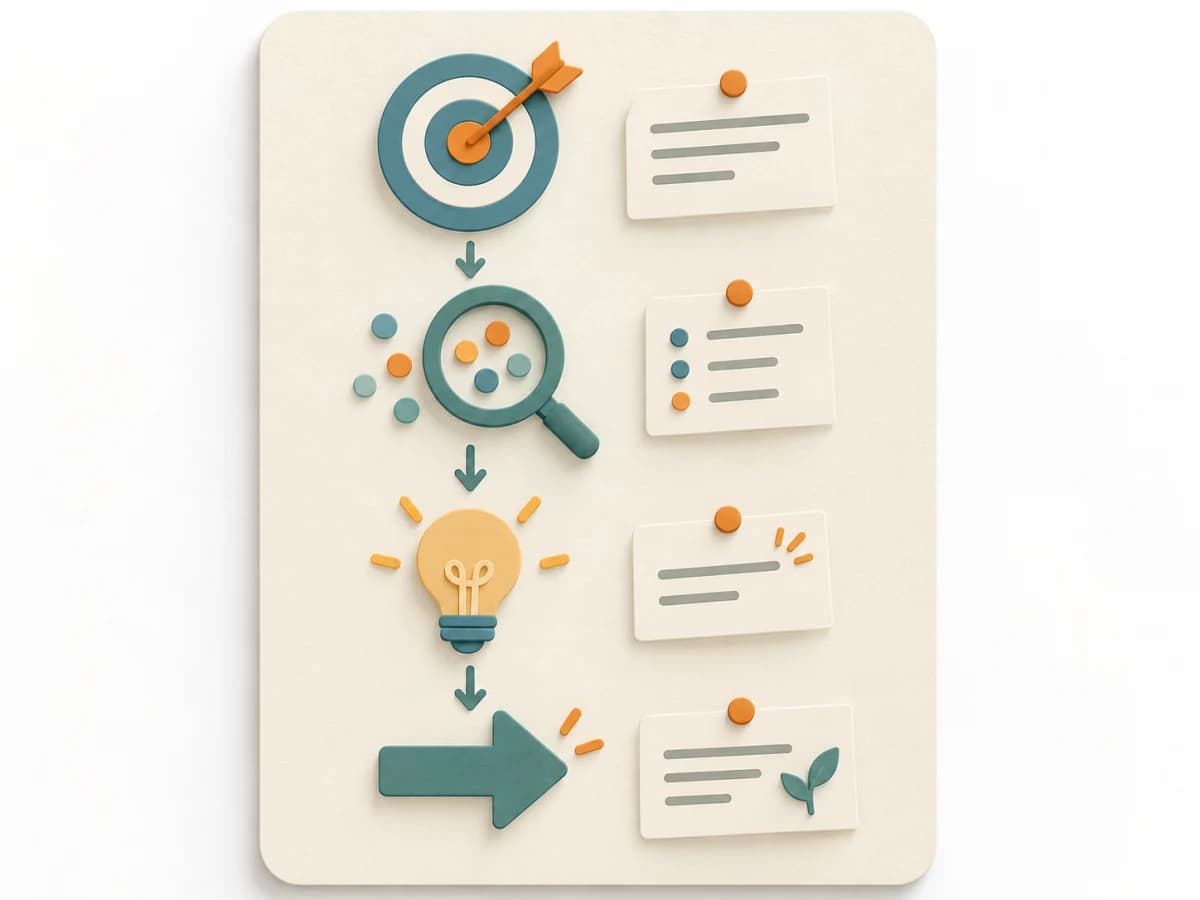
Separates hypothesis, observation, insight, and next action into four fields after a test.
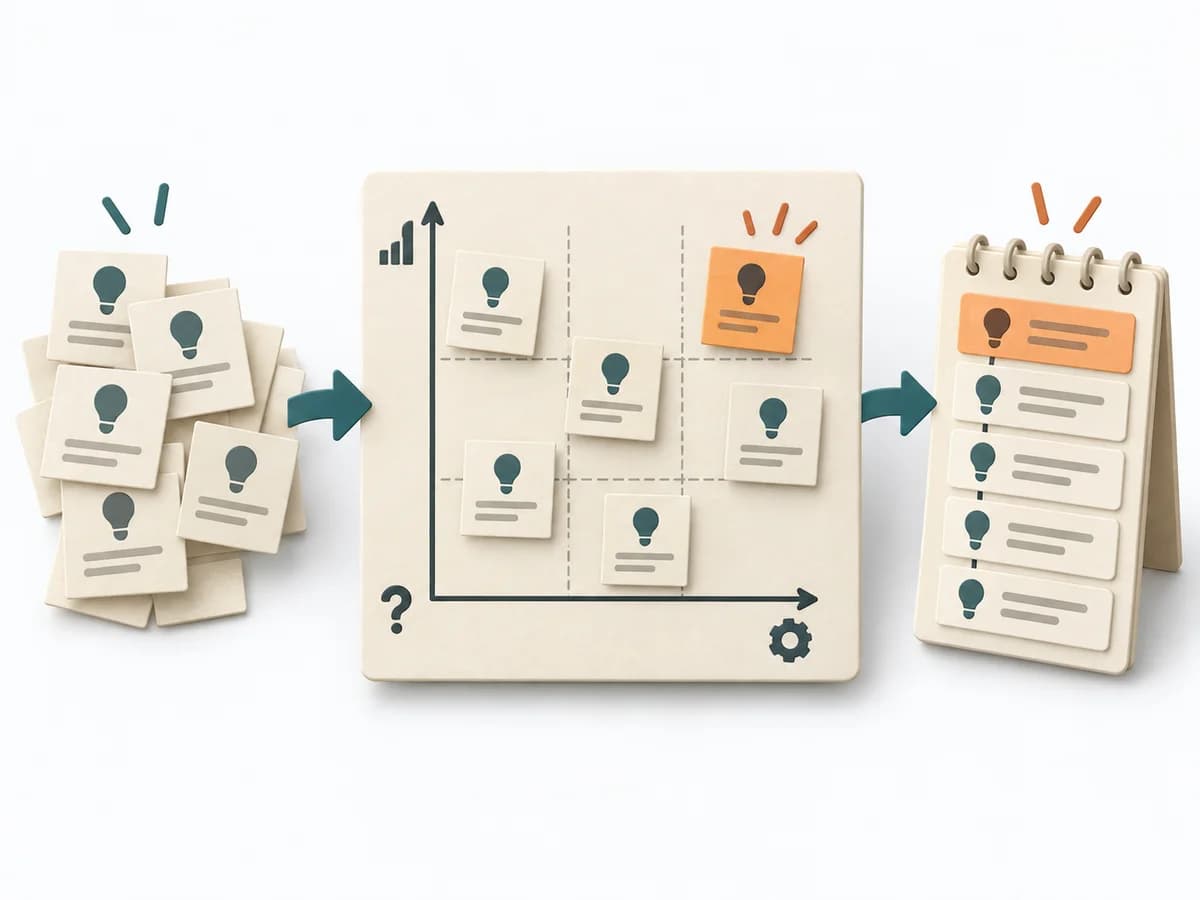
Moves customer problem, solution idea, and evidence toward a concrete result through "take over the hypothesis list", "define the risk scale", and "select the top hypotheses for the next tests".
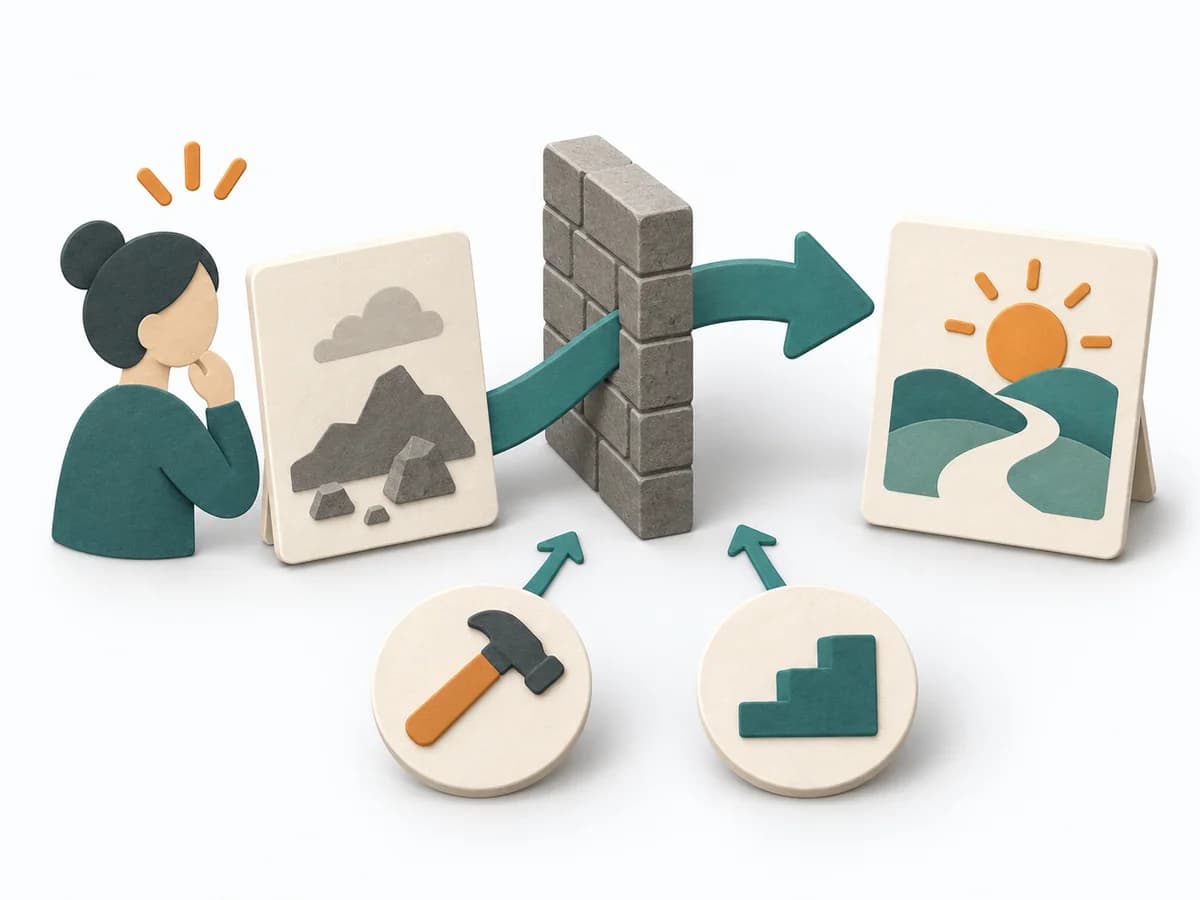
Reconstructs switching motives, progress, and desired outcomes so opportunities emerge from real customer situations.
Moves customer problem, solution idea, and evidence toward a concrete result through "list assumptions", "map assumptions to dimensions", and "derive the test plan".