Complete firstBounded subject
The scope and purpose of Product Kata are stated as a concrete question.
Without scope, product kata record becomes arbitrary.
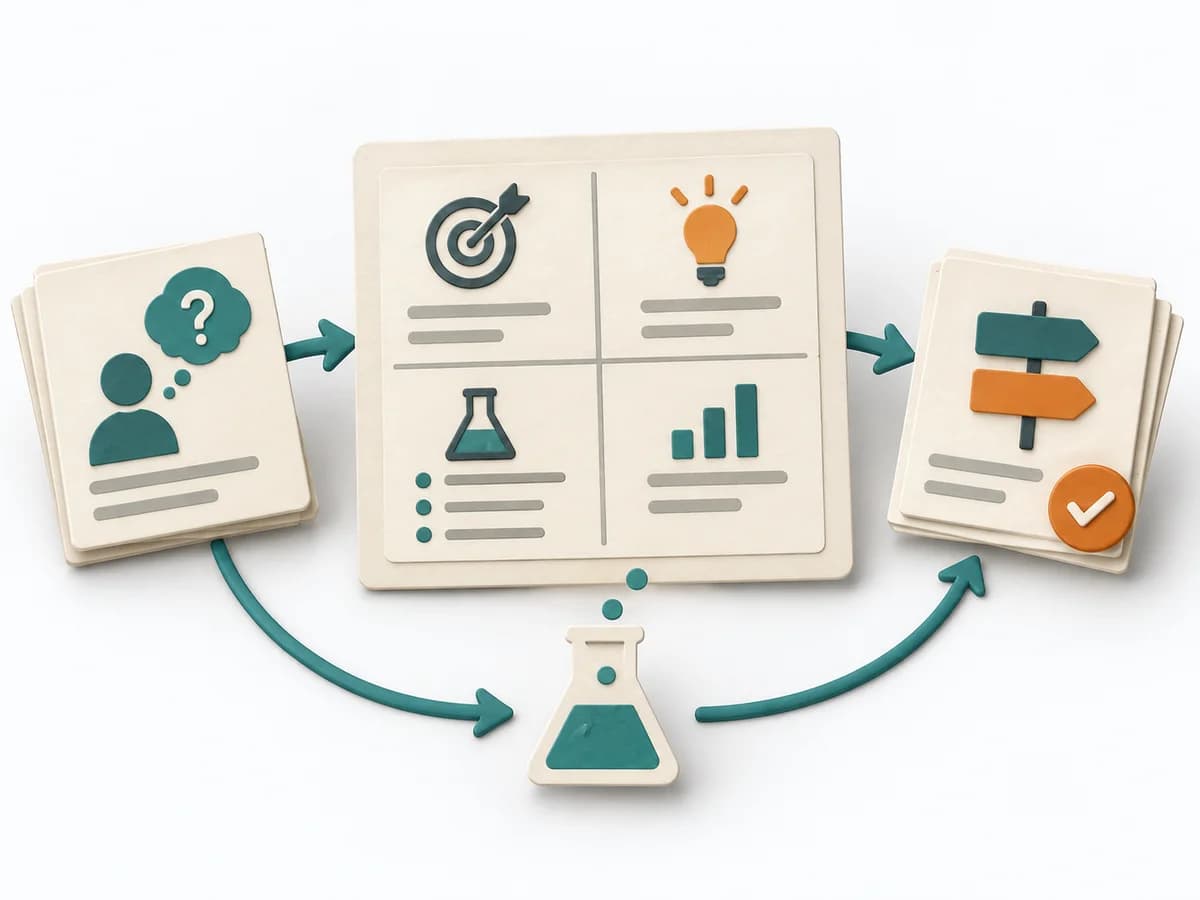
A practical method guide: clarify prerequisites and materials, understand the complete process, and look up outputs, pitfalls, and stop criteria.
What needs to be finished first
The scope and purpose of Product Kata are stated as a concrete question.
Strategic direction, measured current state, team capacity for experiments and domain decision makers are available.
What needs to be ready before start
Strategic direction, measured current state, team capacity for experiments, shared workspace, source links, and decision log.
Product team · product manager · coach
Collect Strategic direction, measured current state, team capacity for experiments in advance and mark open assumptions.
Weekly 30–60 minutes plus experiment
Prepare direction → current state → target condition → obstacle → experiment → learn visibly and calibrate assessment terms before starting.
The one question this method answers
Which obstacle separates the current state from the next target condition, and what experiment addresses it?
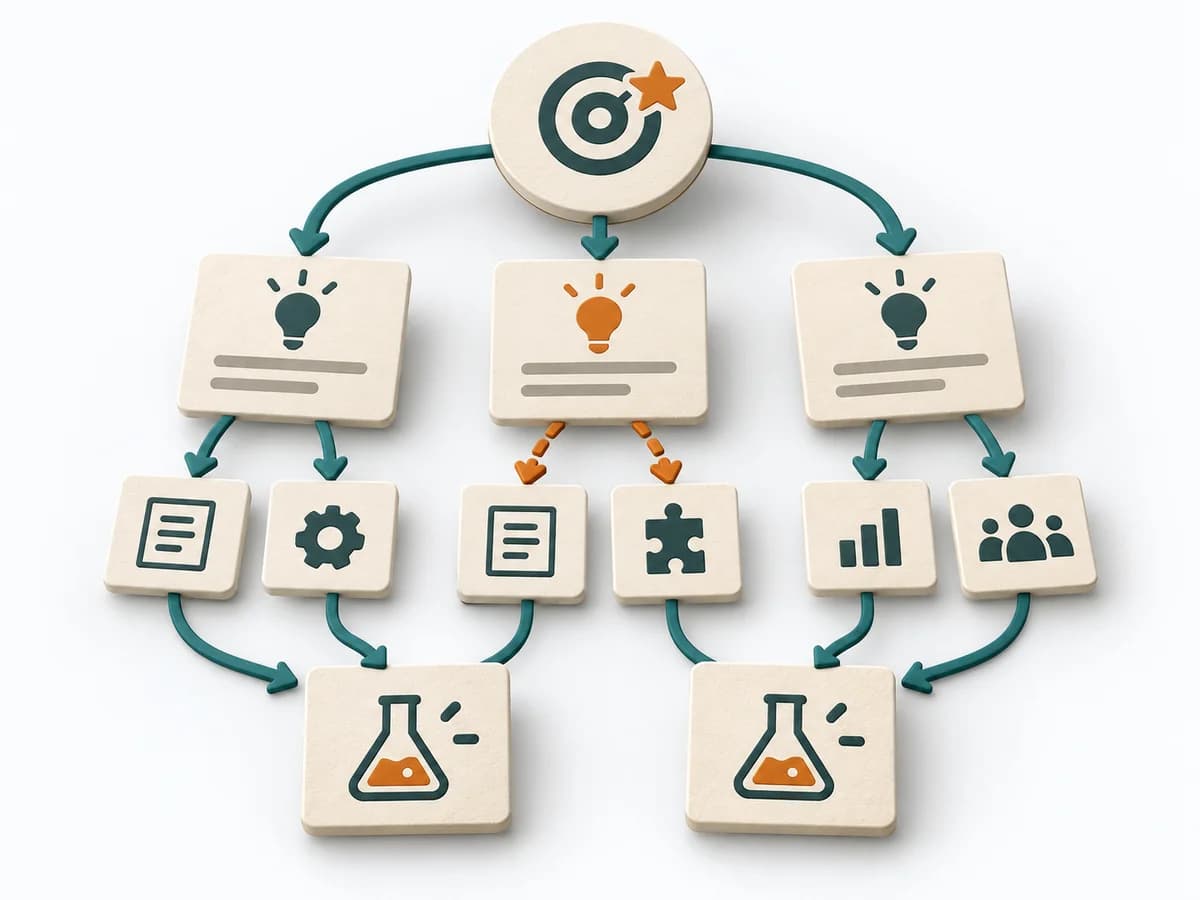
Phases with goal, actions, output and pitfall
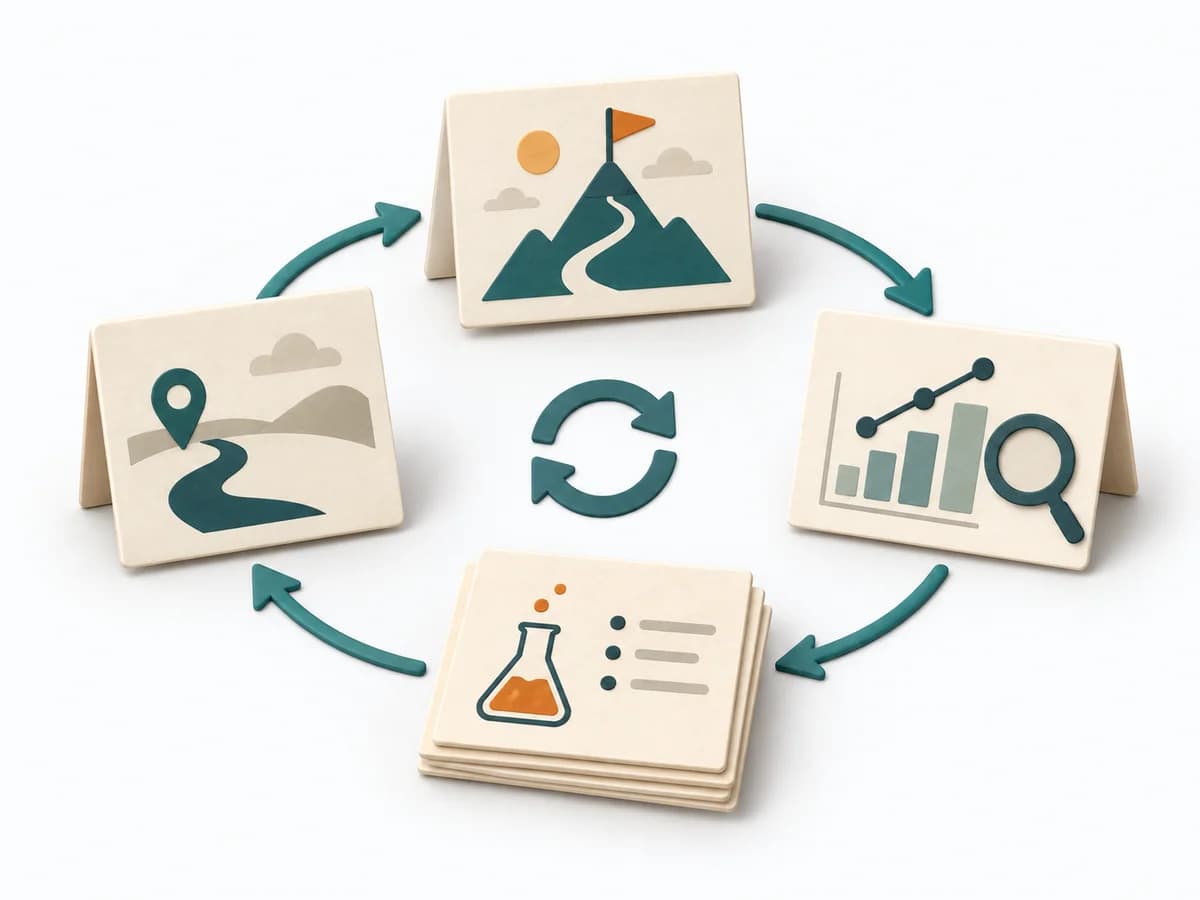
Product Kata connects strategic direction with a measurable next target condition. The team selects the biggest obstacle, runs an experiment, and updates the current state.
Fictional worked example
direction → current state → target condition → obstacle → experiment → learn as a precise working structure with a fictional example.
Direction information to record
Selbstständige Reviews.
Current state information to record
54 % ohne Hilfe.
Target/obstacle information to record
65 % in 6 Wochen; Konfliktschritt unklar.
Experiment/learn information to record
Test mit 12 Teams; +8 pp.
The example demonstrates the domain logic of Product Kata; worksheets remain blank.
Direction
Goal
Produce direction so the core question “Which obstacle separates the current state from the next target condition, and what experiment addresses it?” can be answered with stronger support.
Inputs for this step
Actions
Output
direction
direction · source · uncertainty · next decision
Quality check
Is direction longer-lived than one experiment?
Pitfall
The target condition becomes a delivery list or the experiment starts without a measured current state. Quantify the outcome condition, choose one obstacle, and close each cycle with a new measure.
Timing: 10–20 minutes
Current state
Goal
Produce current state so the core question “Which obstacle separates the current state from the next target condition, and what experiment addresses it?” can be answered with stronger support.
Inputs for this step
Actions
Output
current state
current state · source · uncertainty · next decision
Quality check
Are baseline and context current?
Pitfall
The target condition becomes a delivery list or the experiment starts without a measured current state. Quantify the outcome condition, choose one obstacle, and close each cycle with a new measure.
Timing: 10–20 minutes
Target/obstacle
Goal
Produce target condition so the core question “Which obstacle separates the current state from the next target condition, and what experiment addresses it?” can be answered with stronger support.
Inputs for this step
Actions
Output
target condition
target condition · source · uncertainty · next decision
Quality check
Does target describe a condition rather than output?
Pitfall
The target condition becomes a delivery list or the experiment starts without a measured current state. Quantify the outcome condition, choose one obstacle, and close each cycle with a new measure.
Timing: 10–20 minutes
Experiment
Goal
Produce kata learning so the core question “Which obstacle separates the current state from the next target condition, and what experiment addresses it?” can be answered with stronger support.
Inputs for this step
Actions
Output
kata learning
kata learning · source · uncertainty · next decision
Quality check
Was result compared with expectation?
Pitfall
The target condition becomes a delivery list or the experiment starts without a measured current state. Quantify the outcome condition, choose one obstacle, and close each cycle with a new measure.
Timing: 10–20 minutes
What comes out at the end
Sketch: what the artifact looks like
Versioned product kata record with date, sources, owners, and next review.
Retain date, source, assumption state, and decision for every version of product kata record.
Plan Product Kata around its domain steps and the concrete decision question.
To be confirmed
To be confirmed
Establish and review the practice Time: Weekly 30–60 minutes plus experiment
Complete this worksheet on paper or in your own document during the work.
Direction information to record
...
Current state information to record
...
Target/obstacle information to record
...
Experiment/learn information to record
...
Enter only real input, sources, and decisions.
Expected artifact: direction
direction · source · uncertainty · next decision
Entry:
...
Expected artifact: current state
current state · source · uncertainty · next decision
Entry:
...
Expected artifact: target condition
target condition · source · uncertainty · next decision
Entry:
...
Expected artifact: kata learning
kata learning · source · uncertainty · next decision
Entry:
...
...
Method guide: https://methodatlas.meierhoff-systems.de/en/methods/product-kata/run-sheet
Concrete filled scenario, fictional example
Fictional example for orientation. Counts and timings describe this case and are not universal requirements.
Concrete filled scenario, fictional example
Direction: independent traceable reviews. Current state: 54% completion without help. Target condition: 65% in six weeks. Obstacle: unclear next action after conflict. Experiment: conflict-resolution step for 12 teams; success +8 percentage points without higher abandonment.
Recognize symptoms and steer against them
Quick overview, the full text is in the matching phase in the flow
The target condition becomes a delivery list or the experiment starts without a measured current state.
Quantify the outcome condition, choose one obstacle, and close each cycle with a new measure.
The target condition becomes a delivery list or the experiment starts without a measured current state.
Quantify the outcome condition, choose one obstacle, and close each cycle with a new measure.
The target condition becomes a delivery list or the experiment starts without a measured current state.
Quantify the outcome condition, choose one obstacle, and close each cycle with a new measure.
The target condition becomes a delivery list or the experiment starts without a measured current state.
Quantify the outcome condition, choose one obstacle, and close each cycle with a new measure.
When to pause, resolve prerequisites, or choose another approach
Go to the profile for purpose, similar methods, and sources or continue to the next method in the catalog.