Plan my session
Plan a concrete work block with agenda, roles, preparation, and a copyable result artifact.
Session: Pre-Mortem
The plan translates the method into a concrete facilitated work block. Your inputs flow directly into the session brief and work artifact.
Method session with 4-10. The plan uses the existing method logic and the runsheet.
RunsheetUse the session for shared understanding. Contributions are collected visibly, assumptions are aligned, and open differences remain traceable in the artifact.
The session works directly toward Risk list. After the session, the artifact should be shareable, reviewable, or reusable.
- 1
Phase 1: Invoke scenario
5 minSponsor or facilitator briefly describes the initiative, then states the scenario sentence: "It is [X months later], and the initiative has failed." Pause for 30 sec for visualization. Hint: Anyone who does not take the scenario seriously ("it will be fine") will not contribute real risks. Facilitator sets the tone: serious thought experiment, not pessimism.
FacilitatorRisk list - 2
Phase 2: Solo risk writing
5-10 minEach person silently writes 3-5 reasons for failure on stickies. Formulate concretely ("Stripe integration fails due to 3DS2 compliance"), not generically ("tech problems"). Hint: Solo start avoids groupthink. Otherwise the loudest voices would define the risks. Silence forces diversity.
FacilitatorMitigation plan - 3
Phase 3: Collect and cluster
10-15 minPut stickies on the wall. The author briefly explains each sticky. Cluster similar ones. Consolidate duplicates. Cluster by category (Tech, People, Process, Market, External). Hint: Clustering shows risk hotspots. If all stickies land in one category (for example only Tech), other perspectives are probably missing.
FacilitatorAssumption log - 4
Phase 4: Assess probability and impact
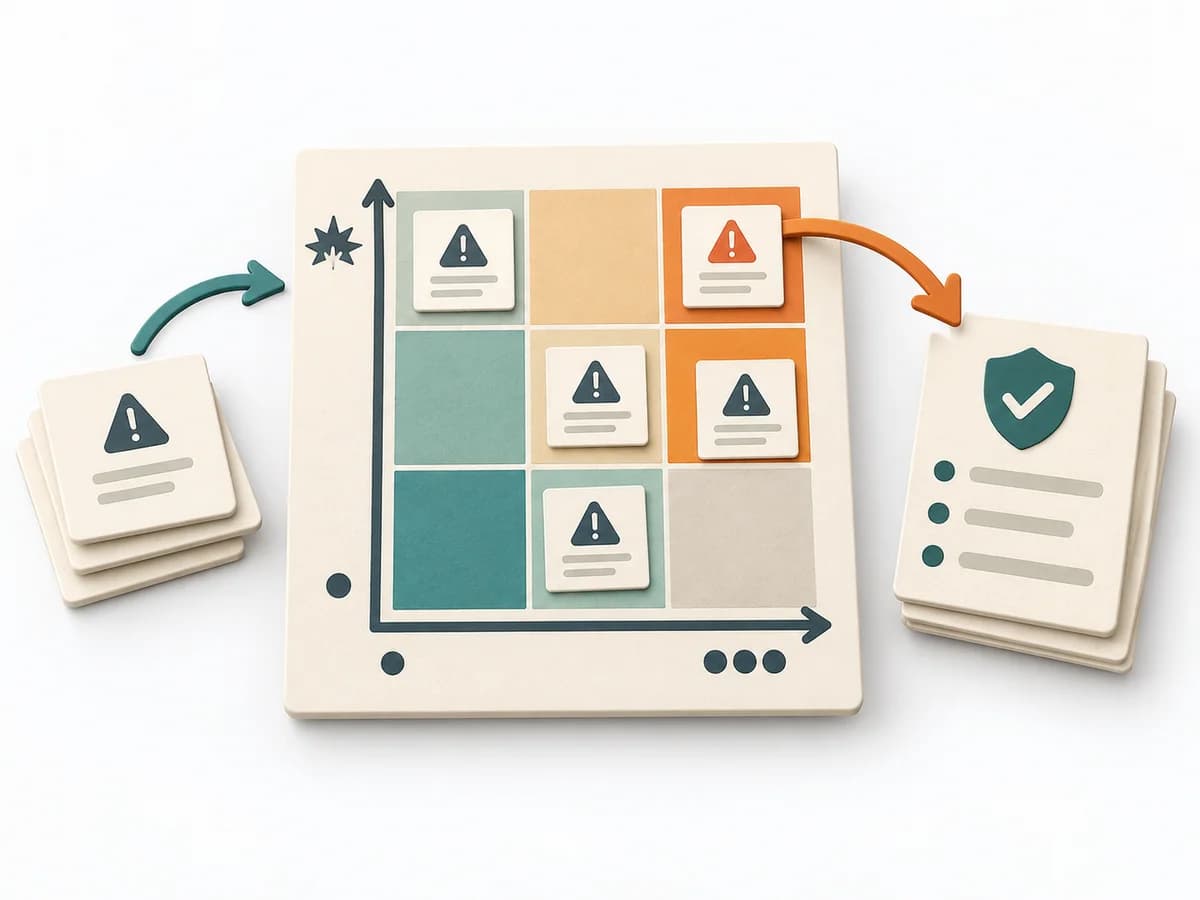
5-10 minFor each cluster or top risk, rate probability (low / medium / high) and impact (minor / moderate / critical). Mark top 5 (high probability x high impact). Hint: Do not ignore risks with low probability but critical impact (tail risk). Show-stoppers matter even when unlikely.
FacilitatorRisk list - 5
Phase 5: Mitigation per top risk
10-15 minFor each top-5 risk, define concrete mitigation (action that reduces probability or impact). Owner and date per mitigation. Integrate mitigation into project plan. Hint: Mitigation must be concrete and assigned. "More tests" is not mitigation. "Stripe integration spike before Sprint 1, Owner @ben, CW 22" is one.
OwnerMitigation plan - 6
Publish artifact
10 minCheck the artifact for completeness, define location, set version or status, and name review recipients.
OwnerRisk list
Session Brief
For invitations, boards, tickets, PR descriptions, or workshop notes.
session-brief.md
Session Brief: Pre-Mortem
Goal
Artifact: Risk list
Working Question
What reasons could cause the initiative to fail, and which mitigations can we build in now to reduce these risks?
Context
Initiative description; already known risks; experience from similar projects; timeframe and scope; stakeholder expectations.
Setup
- Format: Method session
- Duration: 20-45 min
- Mode: Workshop
- Participants: One facilitator; 4-10 participants from the project team, mixed functions and experience; optionally a note-taker; ideally a neutral external member (devil's advocate).
- Owner: One facilitator
- Participation mode: Team round, shared work and alignment
- Outcome logic: Finish artifact
Participation Logic
Use the session for shared understanding. Contributions are collected visibly, assumptions are aligned, and open differences remain traceable in the artifact.
Outcome Logic
The session works directly toward Risk list. After the session, the artifact should be shareable, reviewable, or reusable.
Input
Whiteboard or digital board (Miro, FigJam); stickies in one color for risks, second color for mitigations; markers; timer; visible scenario ("It is 6 months later and the initiative has failed badly").
Preparation
Place scenario sentence at the top: "Imagine it is [target date + 3 months]. The initiative has failed. Why?" Set sticky zones for reasons for failure and mitigation. Set timer to 30 min.
Agenda
-
Phase 1: Invoke scenario (5 min) Owner: Facilitator Action: Sponsor or facilitator briefly describes the initiative, then states the scenario sentence: "It is [X months later], and the initiative has failed." Pause for 30 sec for visualization. Hint: Anyone who does not take the scenario seriously ("it will be fine") will not contribute real risks. Facilitator sets the tone: serious thought experiment, not pessimism. Output: Risk list
-
Phase 2: Solo risk writing (5-10 min) Owner: Facilitator Action: Each person silently writes 3-5 reasons for failure on stickies. Formulate concretely ("Stripe integration fails due to 3DS2 compliance"), not generically ("tech problems"). Hint: Solo start avoids groupthink. Otherwise the loudest voices would define the risks. Silence forces diversity. Output: Mitigation plan
-
Phase 3: Collect and cluster (10-15 min) Owner: Facilitator Action: Put stickies on the wall. The author briefly explains each sticky. Cluster similar ones. Consolidate duplicates. Cluster by category (Tech, People, Process, Market, External). Hint: Clustering shows risk hotspots. If all stickies land in one category (for example only Tech), other perspectives are probably missing. Output: Assumption log
-
Phase 4: Assess probability and impact (5-10 min) Owner: Facilitator Action: For each cluster or top risk, rate probability (low / medium / high) and impact (minor / moderate / critical). Mark top 5 (high probability x high impact). Hint: Do not ignore risks with low probability but critical impact (tail risk). Show-stoppers matter even when unlikely. Output: Risk list
-
Phase 5: Mitigation per top risk (10-15 min) Owner: Owner Action: For each top-5 risk, define concrete mitigation (action that reduces probability or impact). Owner and date per mitigation. Integrate mitigation into project plan. Hint: Mitigation must be concrete and assigned. "More tests" is not mitigation. "Stripe integration spike before Sprint 1, Owner @ben, CW 22" is one. Output: Mitigation plan
-
Publish artifact (10 min) Owner: Owner Action: Check the artifact for completeness, define location, set version or status, and name review recipients. Output: Risk list
Closeout
- Update result artifact: Risk list
- Define location, version, and review recipients.
- Define owner, next step, and review date.
Work artifact
Pre-filled starting point based on the matching template.
work-artifact.md
Risk list: Pre-Mortem
Working Question
What reasons could cause the initiative to fail, and which mitigations can we build in now to reduce these risks?
Context
Initiative description; already known risks; experience from similar projects; timeframe and scope; stakeholder expectations.
Participants
- Owner: One facilitator
- Participants: One facilitator; 4-10 participants from the project team, mixed functions and experience; optionally a note-taker; ideally a neutral external member (devil's advocate).
Input
Whiteboard or digital board (Miro, FigJam); stickies in one color for risks, second color for mitigations; markers; timer; visible scenario ("It is 6 months later and the initiative has failed badly").
Template
Pre-Mortem Working Template
Goal
Imagines future failure to identify risks in advance.
Context
When and for what do we use this method?
Input
Which data, observations, decisions, or materials are available?
Execution
Short notes along the runsheet.
Output artifacts
- Risk List:
- Mitigation Plan:
- Assumption Log:
Assumptions and open questions
- ...
Decision / Next step
Owner, date, and success signal.
Completion Check
- Risk list is complete enough for review:
- Location:
- Version / status:
- Review by:
- Next step:
Next Step
- Review result
- Mark open questions
- Schedule review or decision
Pre-Mortem Working Template
View templateCompact working template for Pre-Mortem with context, input, output artifacts, and next step.markdown
pre-mortem-working-template.md
Compact working template for Pre-Mortem with context, input, output artifacts, and next step.
Pre-Mortem Working Template
Goal
Imagines future failure to identify risks in advance.
Context
When and for what do we use this method?
Input
Which data, observations, decisions, or materials are available?
Execution
Short notes along the runsheet.
Output artifacts
- Risk List:
- Mitigation Plan:
- Assumption Log:
Assumptions and open questions
- ...
Decision / Next step
Owner, date, and success signal.
- Working question, owner, and target artifact are visible.
- The result fits Risk list.
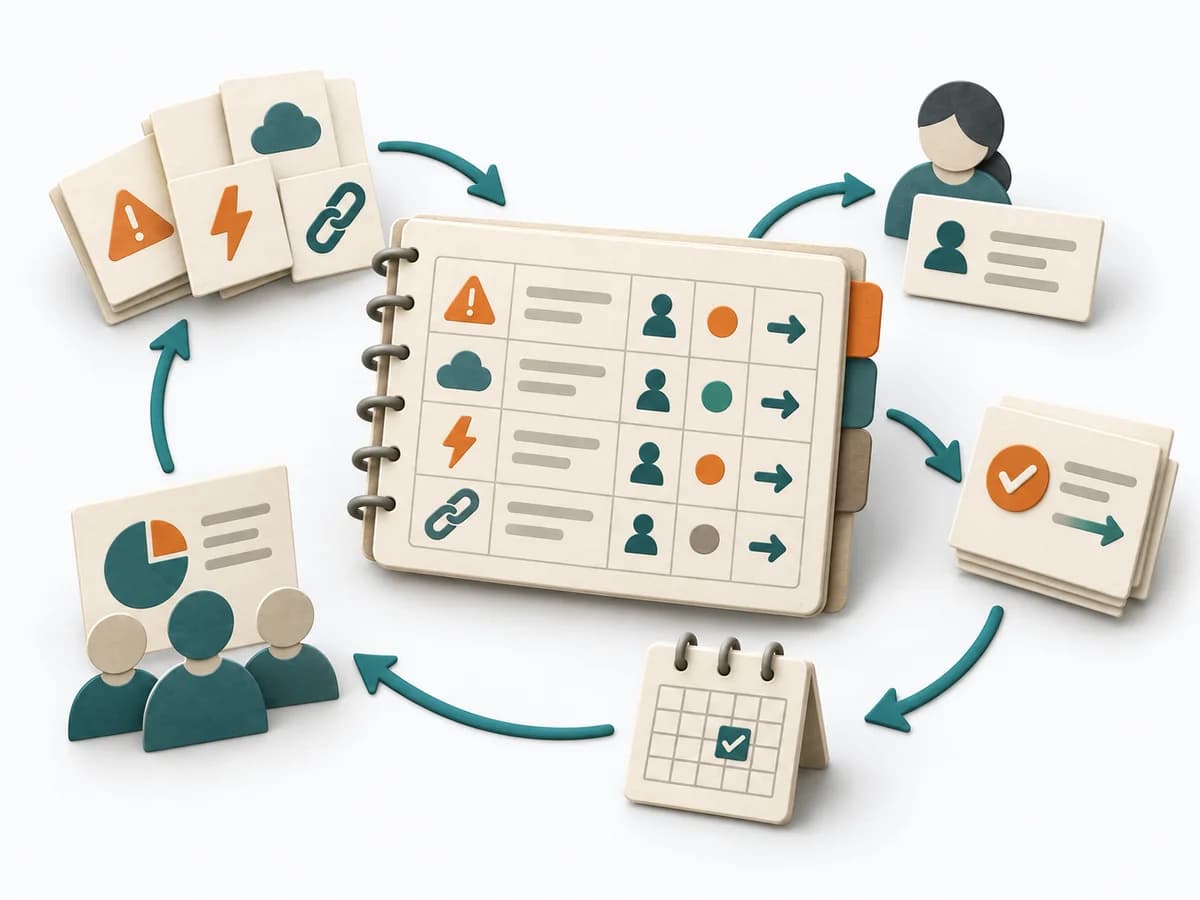
- Run Pre-Mortem at the start of an initiative, plus optional mid-point refresh. Track risk status (open, mitigated, occurred, discarded) over the lifecycle. After initiative end, compare Post-Mortem with Pre-Mortem predictions for learning.
- Open questions are noted as follow-ups.
- The next review or decision point is scheduled.