Purpose
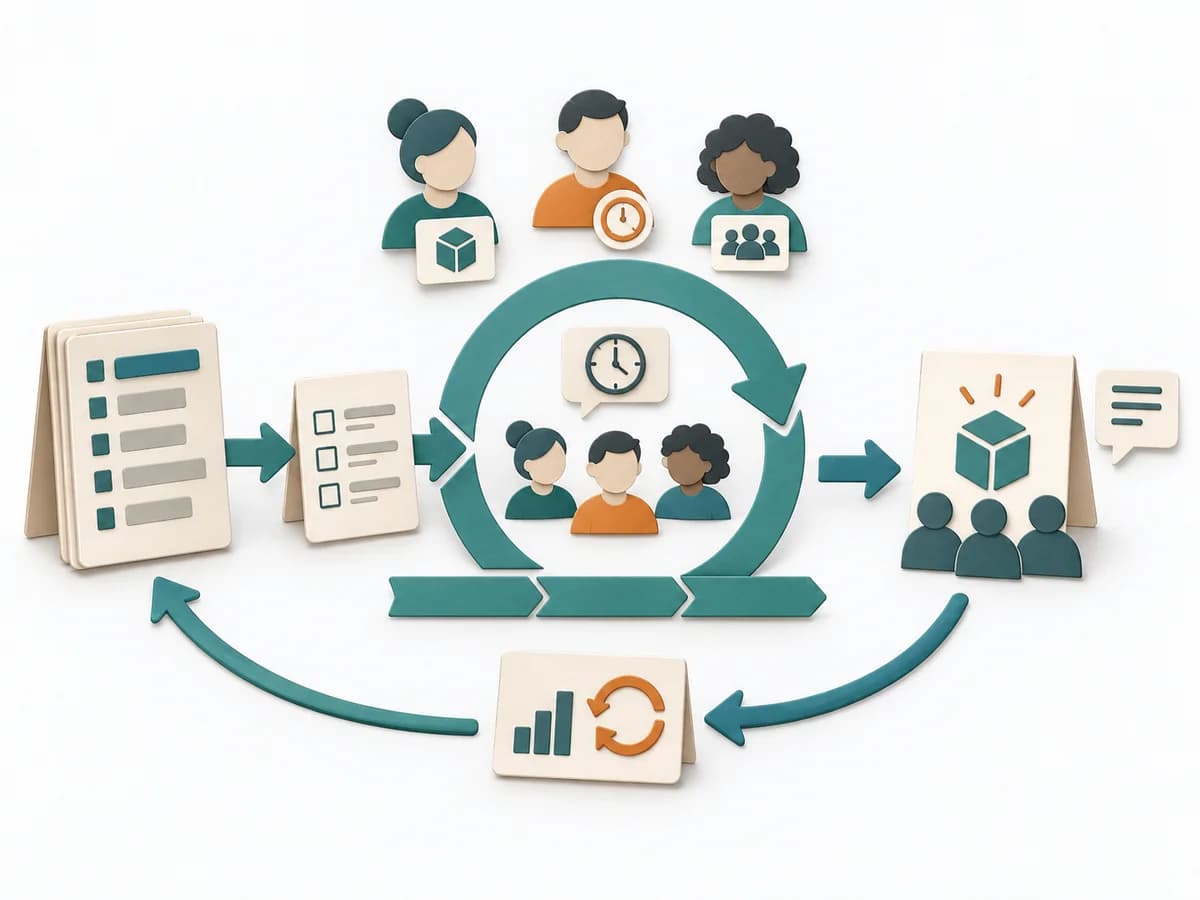
When teams want to rate complexity rather than hours, it creates a shared, relative scale. It sorts work by value, risk, and delivery ability. The result is captured as Point Estimates, Reference Stories, and Velocity Data.
Agile Decision method
Assigns relative points using reference stories and makes risk, scope, and learning effort comparable.
Story Points place stories in relation to one another and use comparison rather than a time calendar as the basis for assessment. This makes estimation more consistent and less tied to apparently precise hours, without claiming exactness.
How large is an item relative to known team stories when effort, complexity, and risk are considered together without translating points into hours?
The practice is repeated across comparable work items.

Scale
Explain team-specific relative scale and included effort, complexity, and risk.
References
Check small, medium, and large completed stories as anchors.
Compare
Triangulate the item against at least two references and name differences in work, complexity, and risk.
Clarify
Resolve divergent estimates and large items through scope, uncertainty, and splitting.
Use
Use points for team-internal backlog understanding and historical forecasts; never target velocity or compare teams.
Add new evidence at review and version estimates with the prior state.
Wenn Teams Komplexität statt Stunden bewerten wollen, schafft sie einen gemeinsamen relativen Maßstab. Sie hilft, Unsicherheit, Risiko und Umfang zusammen zu sehen.
Team-relative story-point estimates with reference comparison, clarified assumptions, split needs, and team-internal forecast use.
Fictional example
Fictional values show the actual method fields.
| Story | Included | Smaller anchor | Larger anchor | Comparison | Points | Follow-up |
|---|---|---|---|---|---|---|
| Save cardAdd evidence and rationale. | Build, test, security, rollout | 3 · billing address | 8 · new payment method | More security than 3; existing API less than 8 | 5 | Ready |
| Provider migrationAdd evidence and rationale. | Auth, migration, fallback, certification | 8 · new payment method | 13 · checkout rebuild | Several independent outcomes | 20 | Split 5/8/5; re-estimate |
All values are fictional.
Set team, Done, included work types, and point sequence; choose several completed reference stories with stable points.
When teams want to rate complexity rather than hours, it creates a shared, relative scale. It sorts work by value, risk, and delivery ability. The result is captured as Point Estimates, Reference Stories, and Velocity Data.
It ranks stories relative to each other and uses comparison rather than a time calendar as the basis for evaluation. This makes estimation more consistent and less tied to falsely precise hours, without pretending to exactness.
Story Points are not a universal unit of time, but a team-specific relative size. A team compares one item with another and assigns points for effort, complexity, and uncertainty in relation to each other. Velocity is then useful only as an internal signal for that same team. It should not be turned into a cross-team productivity metric.
Use a small set of reference stories and revisit them regularly. Keep the scale stable once the team has calibrated. Never compare velocity across teams as if it were an objective productivity measure.
The method guide walks execution through 5 phases, timing, 5 pitfalls, and clear stop criteria.
Open method guideYour perspective
Your feedback helps shape the next improvements to methodatlas.
Set subject, data, roles, flow, and review.
To be confirmed
To be confirmed
Practice run Time: 30–60 minutes for 8–15 refined items; ongoing calibration in refinement.
Complete this worksheet on paper or in your own document during the work.
| Story | Included | Smaller anchor | Larger anchor | Comparison | Points | Follow-up |
|---|---|---|---|---|---|---|
| Save card | ||||||
| Provider migration |
The blank worksheet contains prompts only.
Reference · original teaching example
Expected artifact: Point frame
Explain team-specific relative scale and included effort, complexity, and risk.
Entry:
...
Expected artifact: Story anchors
Check small, medium, and large completed stories as anchors.
Entry:
...
Expected artifact: Relative finding
Triangulate the item against at least two references and name differences in work, complexity, and risk.
Entry:
...
Expected artifact: Clarified story
Resolve divergent estimates and large items through scope, uncertainty, and splitting.
Entry:
...
Expected artifact: Team estimate
Use points for team-internal backlog understanding and historical forecasts; never target velocity or compare teams.
Entry:
...
...
Method guide: https://methodatlas.meierhoff-systems.de/en/methods/story-points/run-sheet
Fitting alternatives with decision guidance, followed by other related methods.

Instead of Story Points, choose NoEstimates when you want to steer by flow and delivery throughput instead of mandatory estimates.
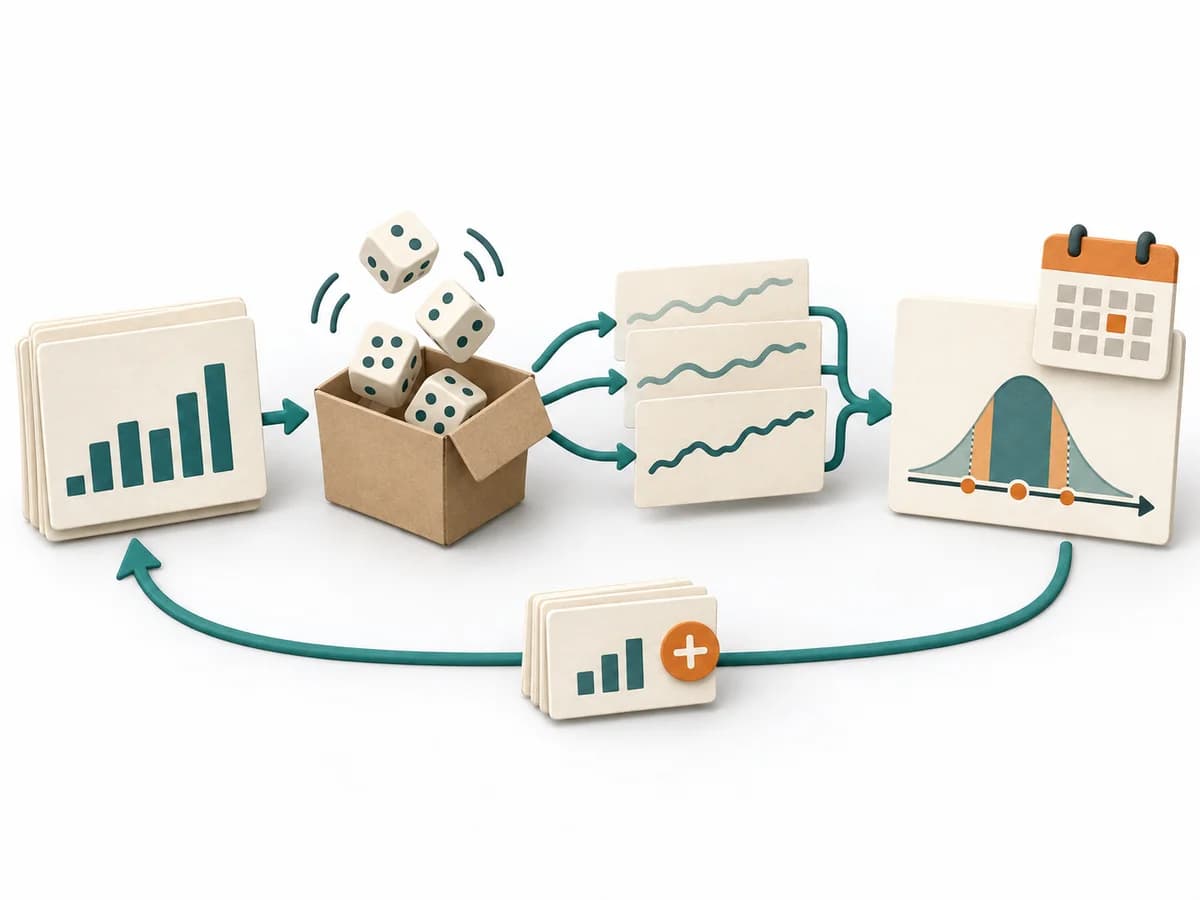
Instead of Story Points, choose Monte Carlo Forecasting when you want to plan with probabilities instead of individual estimates.

Moves backlog, sprint work, and team flow toward a concrete result through "explain the ideal day unit", "calibrate with a reference item", and "do not confuse it with calendar days".

Sorts backlog items roughly by reference sizes and flags early on which items will later need splitting or clarification.

Has the team group items silently, discusses deviations, and produces consistent relative size pictures.
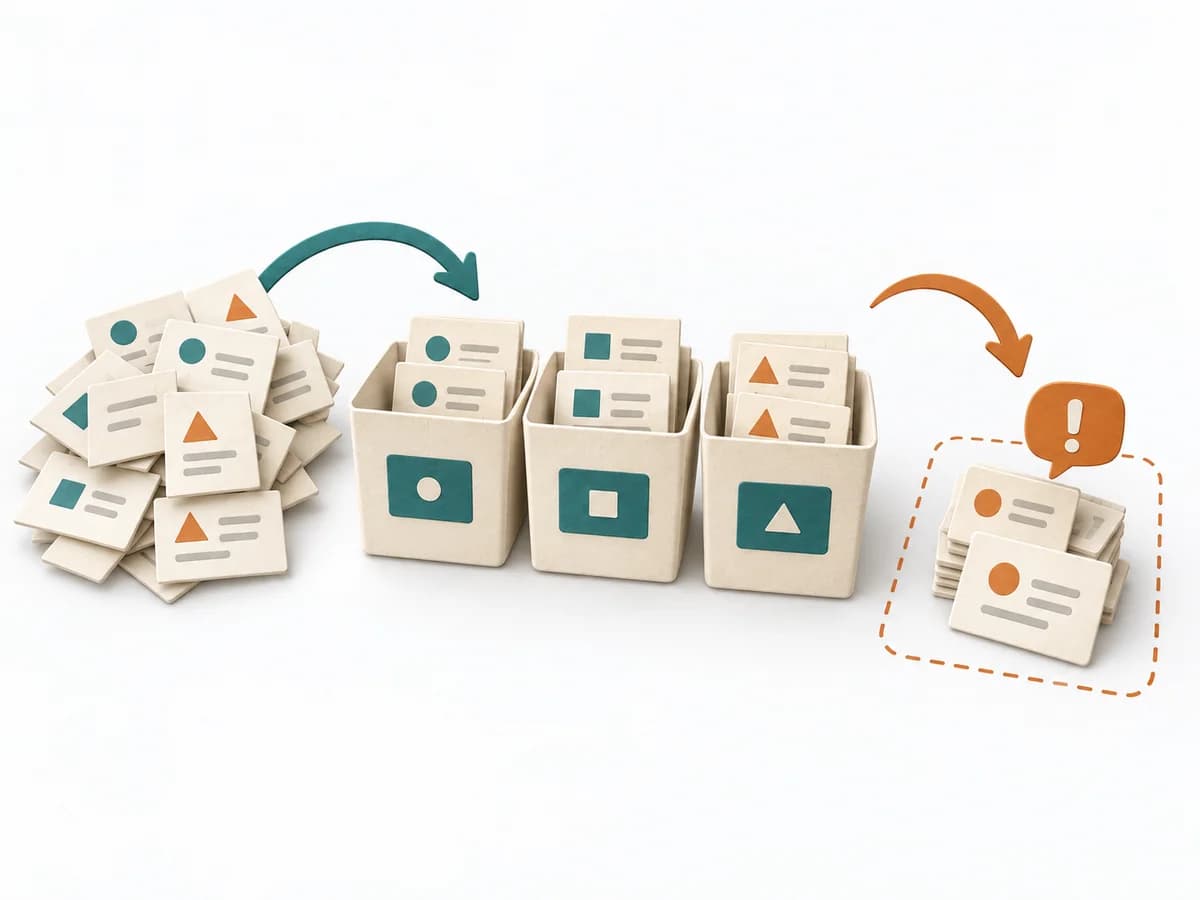
Moves backlog, sprint work, and team flow toward a concrete result through "prepare buckets and scale", "place reference items", and "flag large or unclear items".