
Purpose
The Lean UX Canvas helps clarify user behavior, touchpoints, and concept decisions. It makes assumptions and desired outcomes visible and captures the result as a completed canvas, hypothesis list, and first experiment.
UX Design Canvas
Connects business problem, users, outcomes, solutions, and assumptions into testable hypotheses.
Lean UX Canvas v2 moves from business problem and outcomes through users, user outcomes, solutions, hypotheses, riskiest assumption, and learning plan. Solutions remain replaceable.
Which assumption must hold for a solution to move user and business outcomes, and how will we learn?
Lean UX Canvas uses eight canvas fields from business problem to learning plan. Assessments remain justified and context-bound.
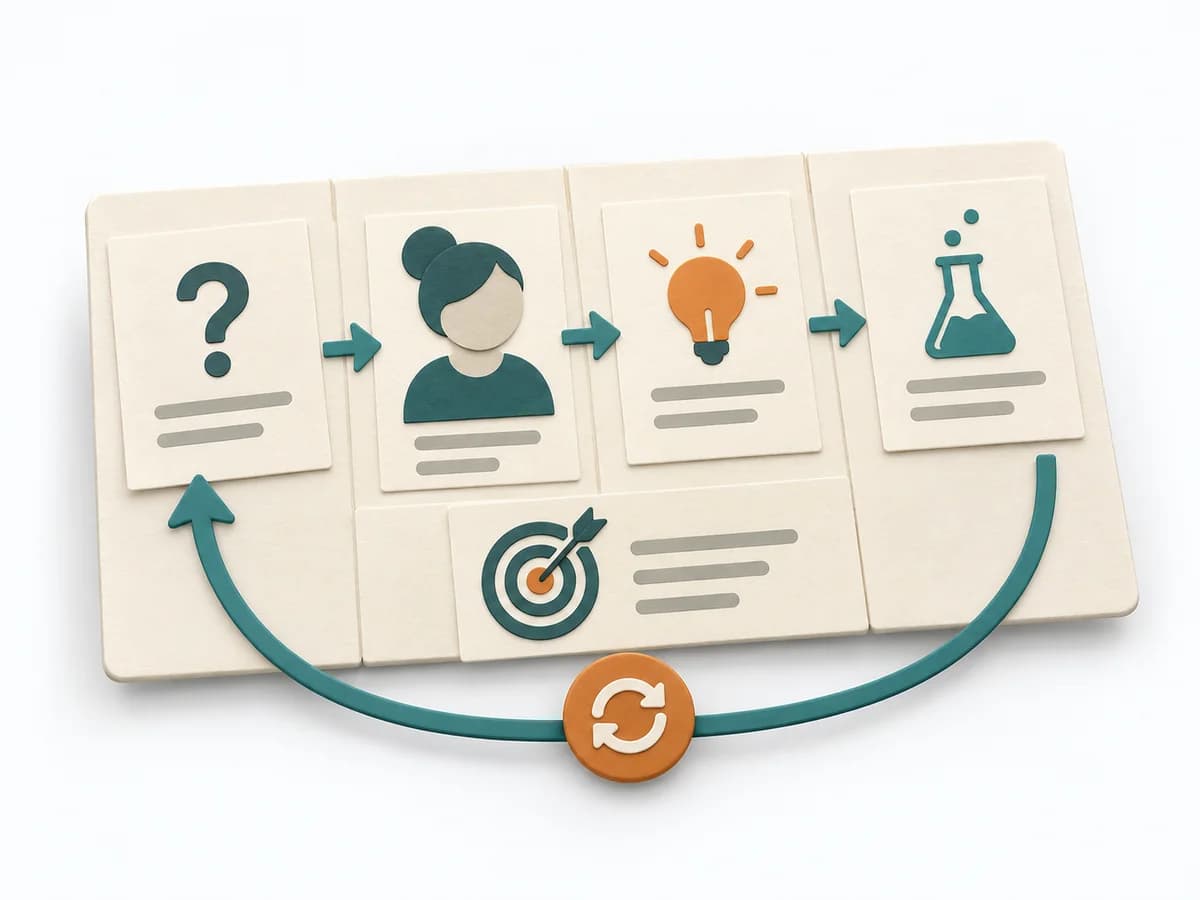
Problem
Define business problem, baseline, and business outcomes.
Users/needs
Evidence users, user outcomes, and current barrier.
Test hypotheses
State several solutions and outcome hypotheses.
Risk/learning
Choose riskiest assumption and define learning plan.
Update after new evidence or a material context change and retain the previous version.
For cross-functional teams before or during discovery of a measurable problem.
Lean UX canvas with traceable sources, assumptions, and domain decisions.
Owners, dates, and next review for Lean UX canvas.
Fictional worked example
Eight distinct Lean UX Canvas v2 fields from business problem to learning plan.
Measured current disadvantage, context, and cause.
31% of started reviews are abandoned; 62% of those after unresolved conflict.
Measurable desired business change with horizon.
Reduce abandonment below 20% by Q4 without increasing median duration.
Concrete users or customers in the affected context.
New facilitators in regulated project teams with no more than three reviews of experience.
Observable user behaviour and resulting benefit.
Resolve conflict without outside help and save a traceable decision.
Several possible solutions, still uncommitted.
Guided conflict step; role card; asynchronous clarification link.
If-then-because hypothesis linking solution and outcomes.
If the conflict step is visible, independent completion rises because next actions become clear.
Assumption with highest impact and weakest evidence.
Conflict causes abandonment rather than merely accompanying it.
Method, population, signal, threshold, and next decision.
Eight replays plus five interviews; cause in at least six replays and four interviews; otherwise reframe the problem.
Start with the core question: Which assumption must hold for a solution to move user and business outcomes, and how will we learn?
The Lean UX Canvas helps clarify user behavior, touchpoints, and concept decisions. It makes assumptions and desired outcomes visible and captures the result as a completed canvas, hypothesis list, and first experiment.
The team formulates the business problem, defines desired business outcomes, narrows users and personas, specifies user outcomes, collects solution ideas, marks hypotheses and critical assumptions, and derives the first experiment.
The Lean UX Canvas was developed by Jeff Gothelf to make Lean UX practical for teams. Its fields connect business problem and outcomes with users, user outcomes, solution ideas, hypotheses, assumptions, and experiments. Each solution idea is treated as a testable hypothesis, making clear what is known, assumed, and still to be learned.
Work through the fields in order so the team does not jump directly to solutions. Mark uncertain fields explicitly as assumptions and define the first experiment during the workshop.
The method guide walks execution through 4 phases, timing, 4 pitfalls, and clear stop criteria.
Open method guideYour perspective
Your feedback helps shape the next improvements to methodatlas.
Plan Lean UX Canvas around its domain steps and the concrete decision question.
To be confirmed
To be confirmed
Establish and review the practice Time: 90–120 minutes
Complete this worksheet on paper or in your own document during the work.
Measured current disadvantage, context, and cause.
...
Measurable desired business change with horizon.
...
Concrete users or customers in the affected context.
...
Observable user behaviour and resulting benefit.
...
Several possible solutions, still uncommitted.
...
If-then-because hypothesis linking solution and outcomes.
...
Assumption with highest impact and weakest evidence.
...
Method, population, signal, threshold, and next decision.
...
Jeff Gothelf: Lean UX Canvas v2
Expected artifact: outcome frame
outcome frame · source · uncertainty · next decision
Entry:
...
Expected artifact: user frame
user frame · source · uncertainty · next decision
Entry:
...
Expected artifact: hypothesis set
hypothesis set · source · uncertainty · next decision
Entry:
...
Expected artifact: learning plan
learning plan · source · uncertainty · next decision
Entry:
...
...
Method guide: https://methodatlas.meierhoff-systems.de/en/methods/lean-ux-canvas/run-sheet
Fitting alternatives with decision guidance, followed by other related methods.

Instead of Lean UX Canvas, choose Experiment Canvas when you want to clearly prepare an experiment with goal, hypothesis, measurement, and risk.
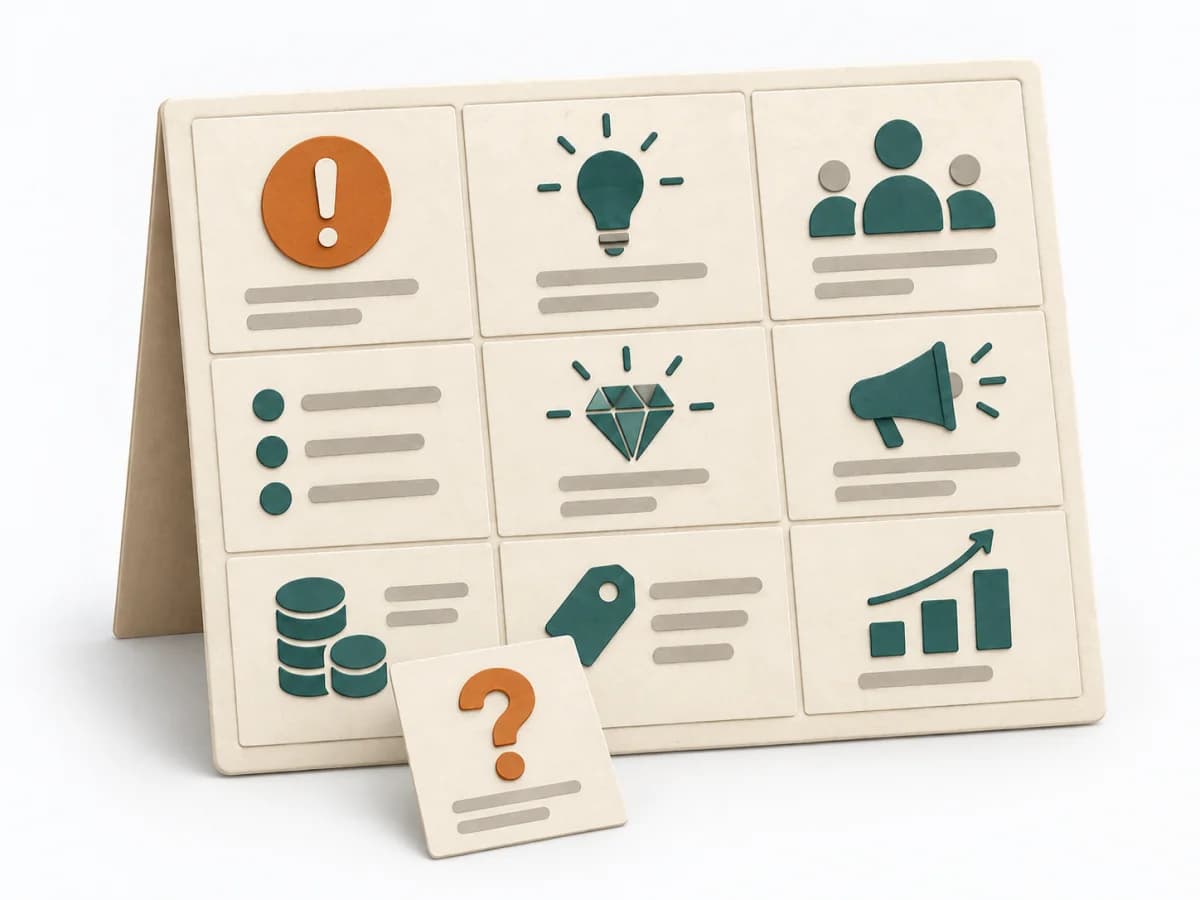
Instead of Lean UX Canvas, choose Lean Canvas when business model, problem, and solution idea should be condensed as an early product bet.
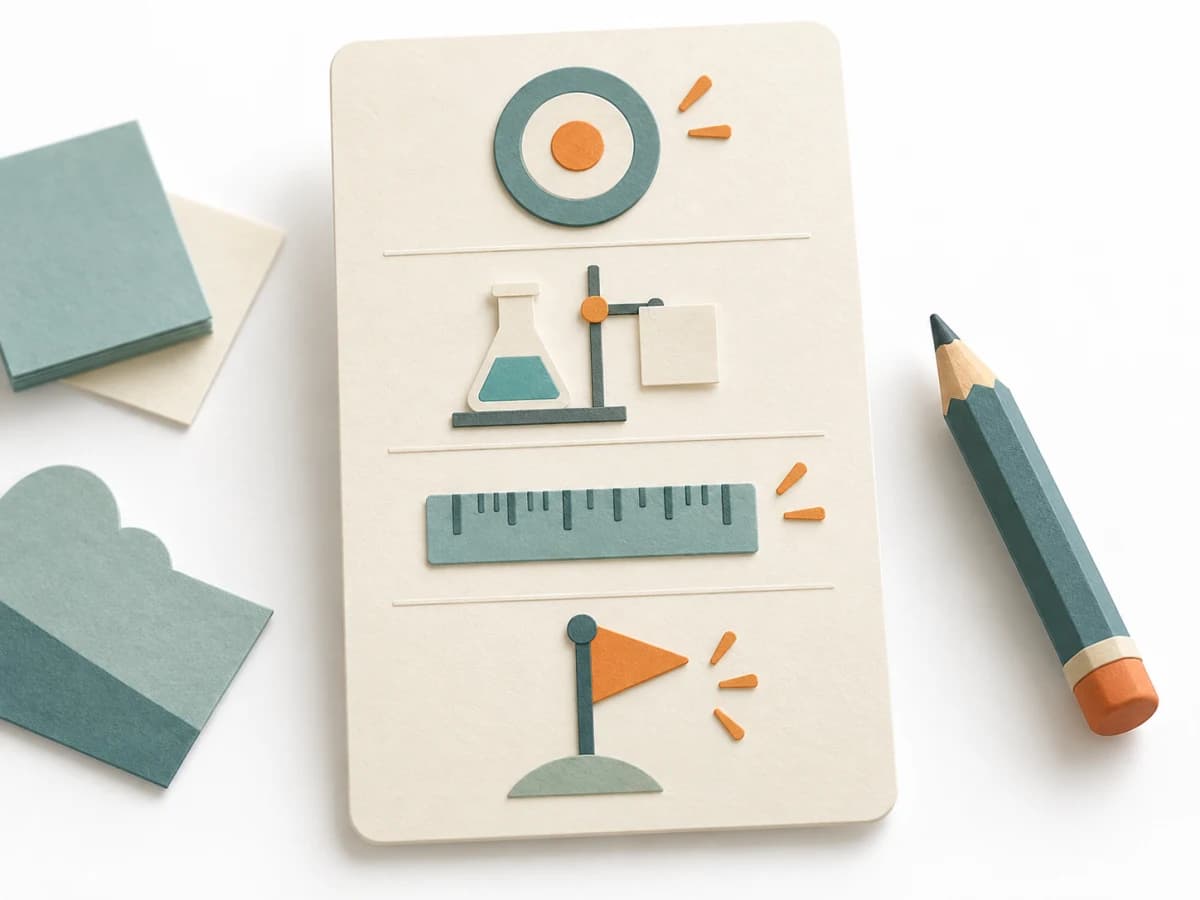
Condenses hypothesis, test, metric, and success threshold onto one card before execution.
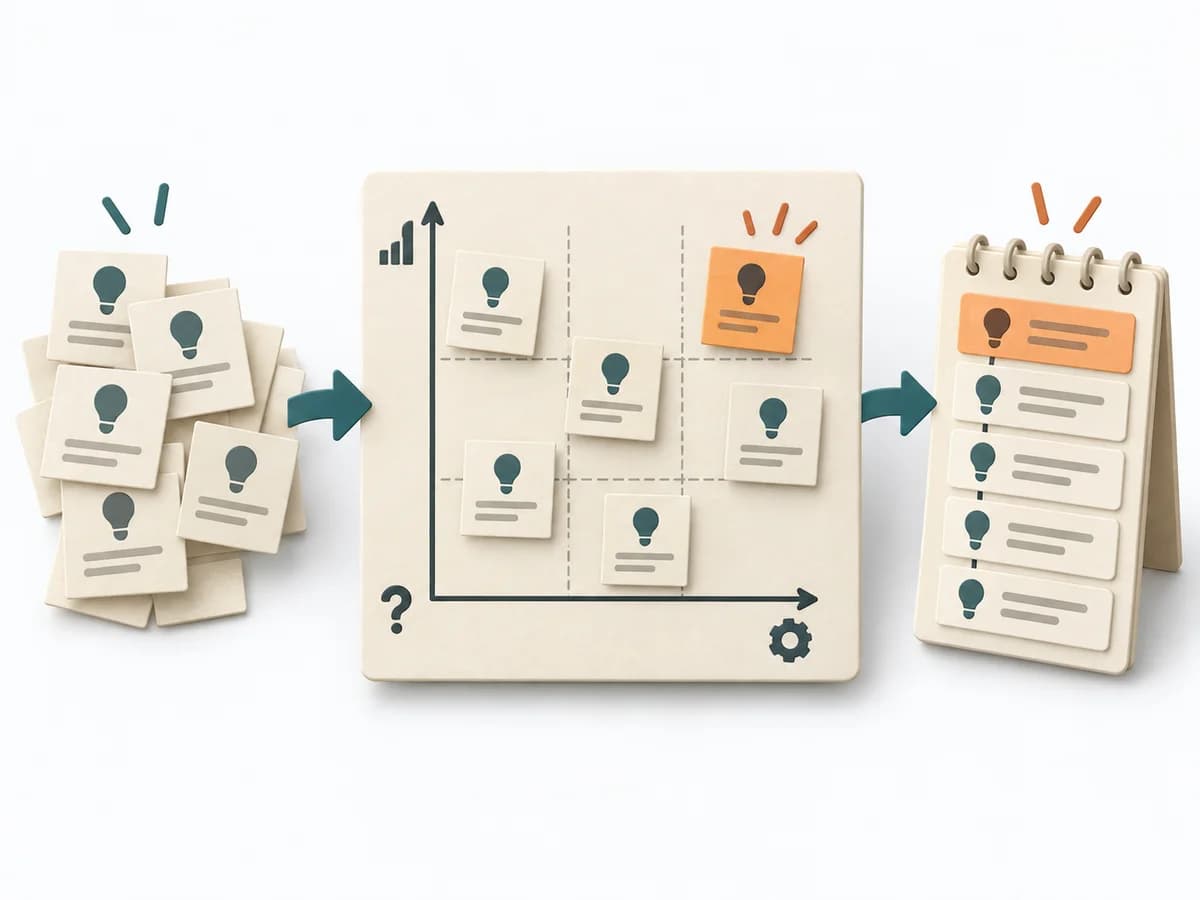
Moves customer problem, solution idea, and evidence toward a concrete result through "take over the hypothesis list", "define the risk scale", and "select the top hypotheses for the next tests".
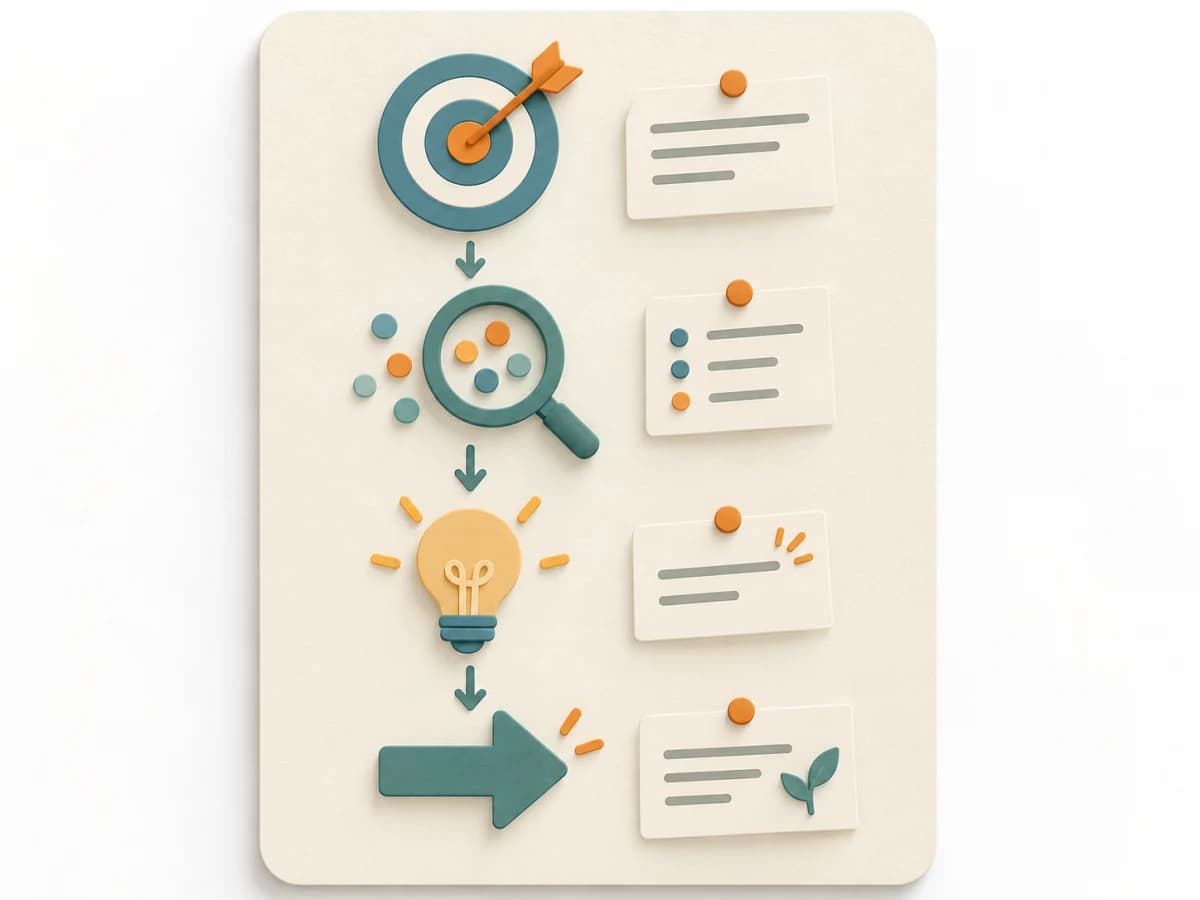
Separates hypothesis, observation, insight, and next action into four fields after a test.
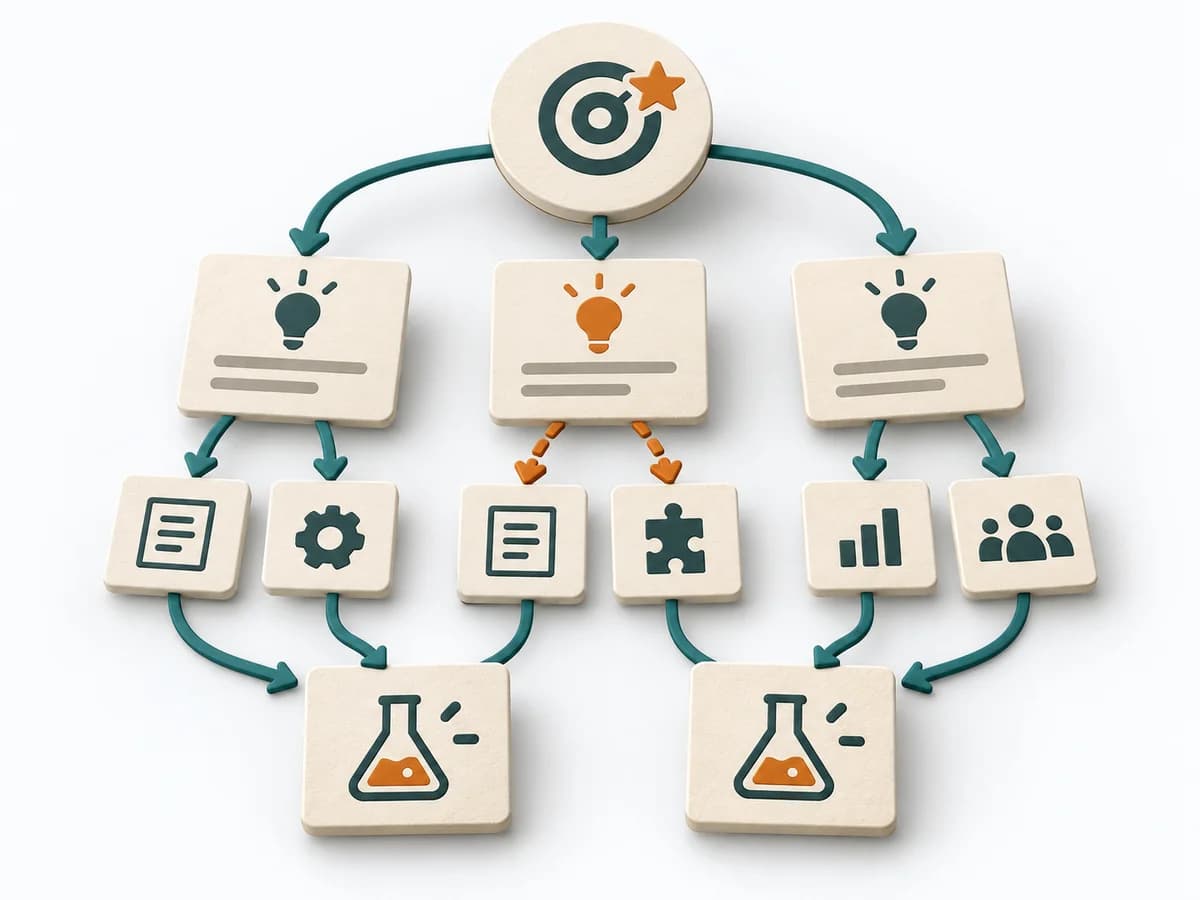
Links outcomes, opportunities, solution paths, and experiments into a tree that makes discovery work steerable.