Purpose
When a domain consists of many events, rules, and states, it creates a shared modeling space for the team. It bundles language, flows, and boundaries before domain knowledge fragments into siloed views.
Domain Modeling Workshop method
Makes business flows visible through shared exploration of past domain events.
EventStorming explores complex business flows collaboratively through past domain events. Big Picture creates a shared overview; Process Level uses richer notation to examine a bounded process.
Which business events, triggers, and boundaries shape the flow, and where do friction, risk, or learning needs arise?
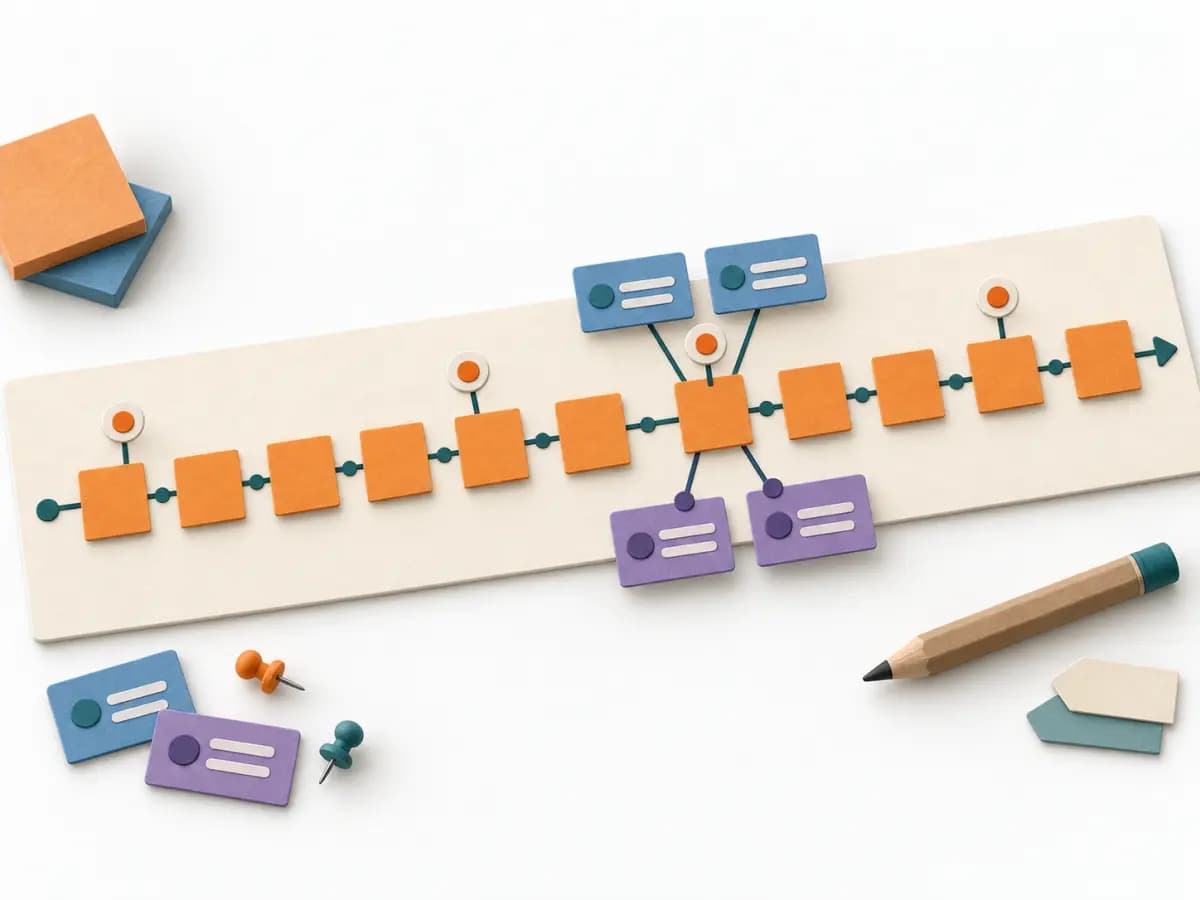
Frame
Set a shared slice and the domain perspectives needed to explore it.
Events first
Put the domain story on cards without explaining it too early.
Timeline
Explore order, turning points and conflicting perspectives together.
Zoom
Prioritize hot spots and choose the next useful modelling zoom.
Follow-up
Turn snapshots, language and next questions into owned work.
Work in bounded slices and revisit the model as evidence changes. A Big Picture is a map for further questions, not a finished data model.
A good fit when several perspectives on one business flow need to meet and gaps, hand-offs or competing terms need to become discussable.
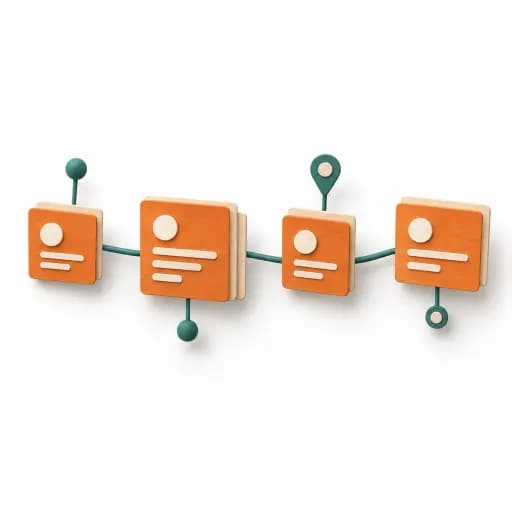
A shared picture of the business flow with turning points, variants and open questions.

A reasoned boundary hypothesis with prioritized hot spots for the next zoom.
Choose an observable business flow with a clear start and end. Invite the people who know decisions and exceptions from practice.

Turns hot spots and boundary hypotheses into a written-up bounded context.

Deepens one prioritized slice of the timeline as a concretely narrated situation.
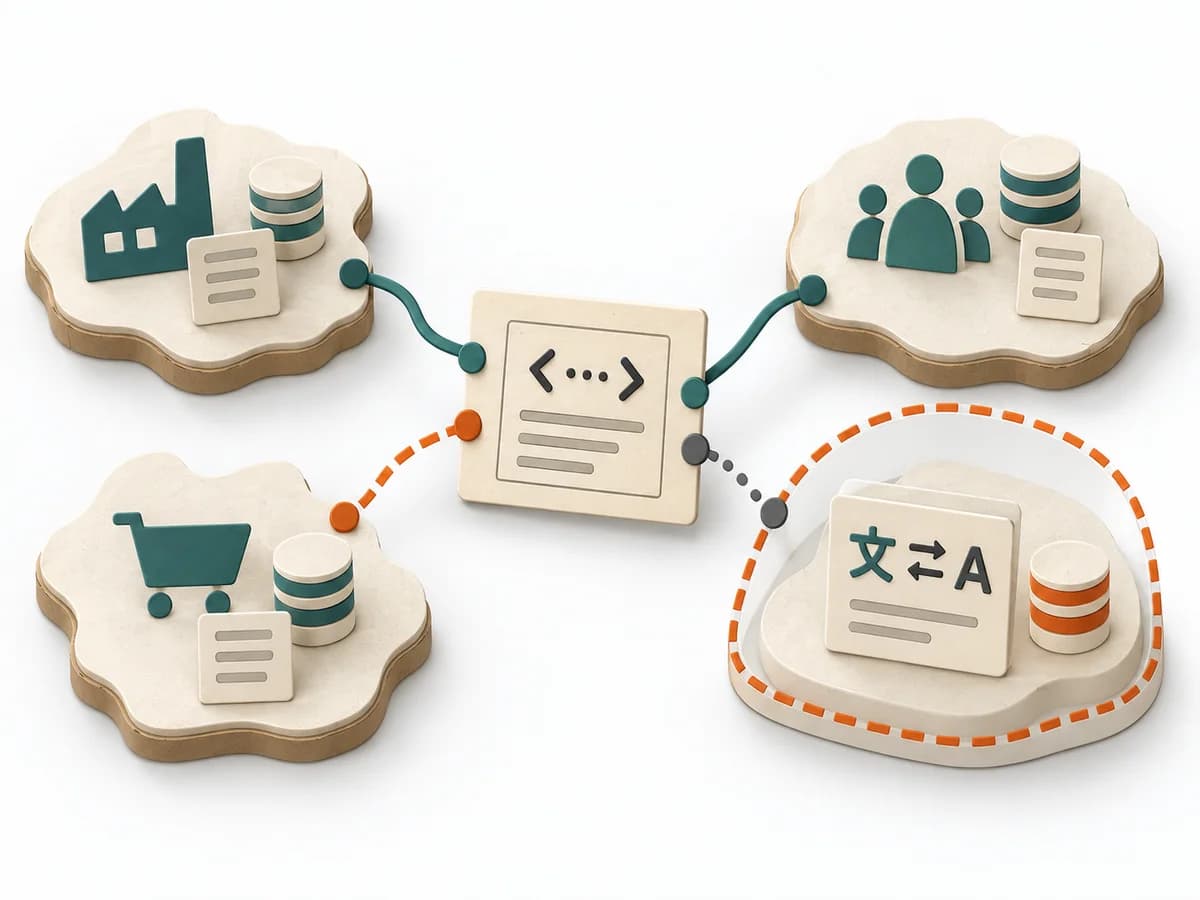
Arranges the resulting domain boundaries into a map of their relationships.
When a domain consists of many events, rules, and states, it creates a shared modeling space for the team. It bundles language, flows, and boundaries before domain knowledge fragments into siloed views.
It arranges events and their relationships on a visible surface and lets contradictions be discussed directly on the model. This produces shared terms, clearer boundaries, and a solid basis for follow-up decisions.
EventStorming works because it makes business dynamics visible as a sequence of real events, which quickly surfaces hidden assumptions. Good facilitation shows up in terms, turning points, and edge cases being sharpened on the wall, rather than just sorting colored sticky notes. The real insight for the model, language, and later cuts emerges as soon as several viewpoints on the same situation appear.
Prepare a few real business cases that cause friction, exceptions, or escalations in daily work, and start with a case everyone recognizes without explanation. The turning point appears exactly where terms collide or responsibilities shift. Capture that moment and close with clearly named open modeling questions or candidates for bounded contexts.
The method guide walks execution through 5 phases, timing, 5 pitfalls, and clear stop criteria.
Open method guideYour perspective
Your feedback helps shape the next improvements to methodatlas.
Prepare a selected step or the complete flow. Your ready-to-use plan takes shape on the right.
To be confirmed
To be confirmed
Entire workshop Time: Allow 2 hours or more for a focused slice; schedule Process-Level depth separately.
Complete this worksheet on paper or in your own document during the work.
Expected artifact: Working frame
Scope · participants · initial glossary · missing perspectives
Entry:
...
Expected artifact: Raw event picture
Event collection · rough order · marked uncertainty
Entry:
...
Expected artifact: Shared event timeline
Timeline · turning points · variants · open questions
Entry:
...
Expected artifact: Hot-spot and boundary sketch
Prioritized friction · boundary hypothesis · reasoned next zoom
Entry:
...
Expected artifact: Usable EventStorming documentation
Snapshot · timeline · glossary · owned hot spots and next actions
Entry:
...
...
Method guide: https://methodatlas.meierhoff-systems.de/en/methods/event-storming/run-sheet
Fitting alternatives with decision guidance, followed by other related methods.
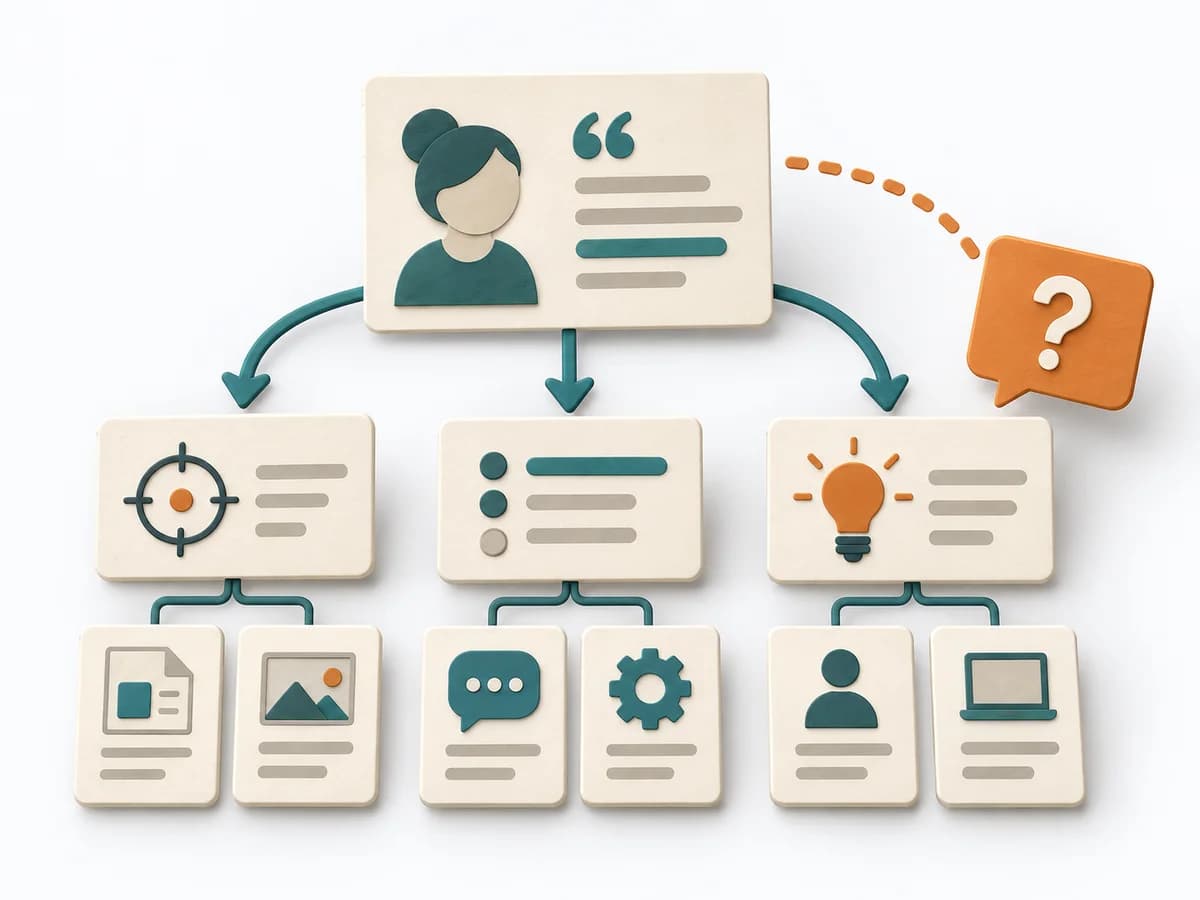
Instead of EventStorming, when you want to use concrete examples to clarify cases, rules, and exceptions faster.
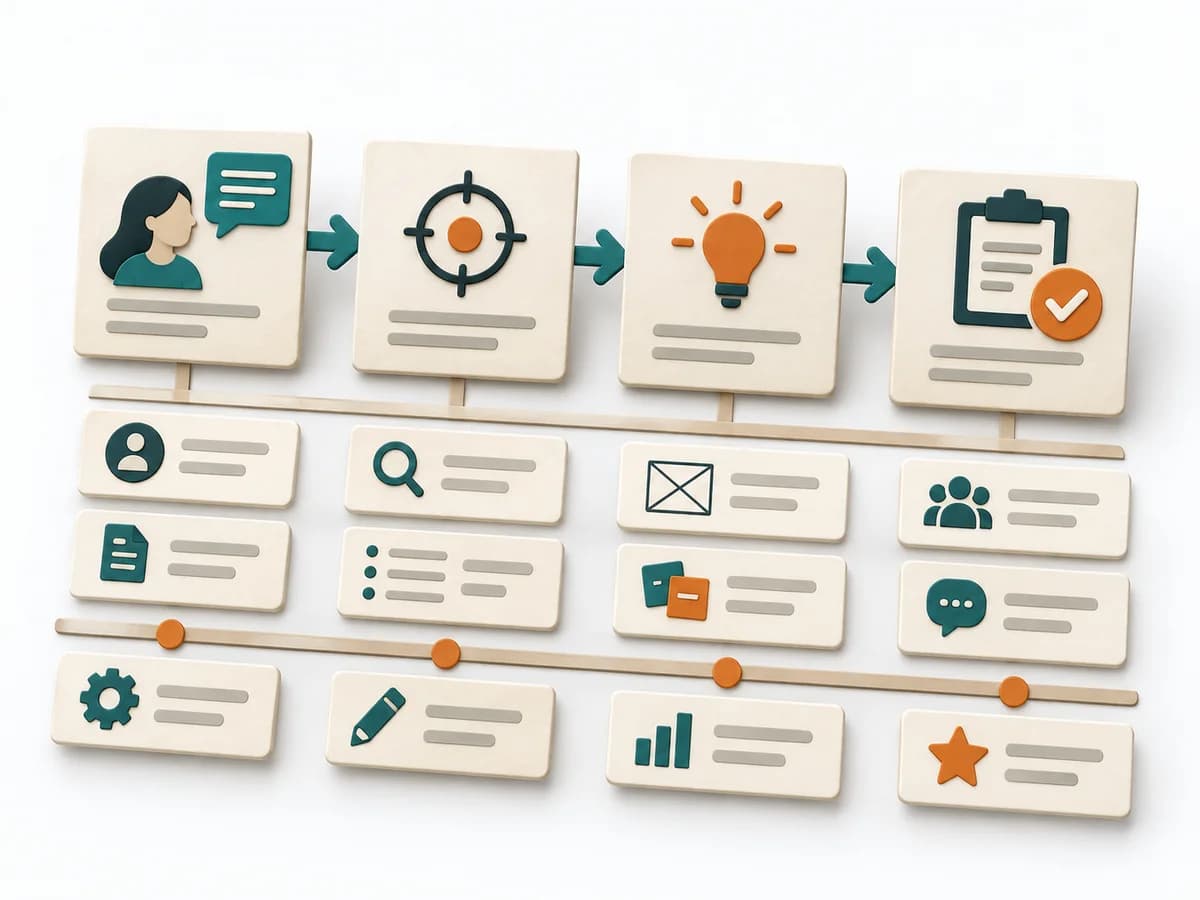
Instead of EventStorming, when you want to structure processes along user goals and delivery slices.
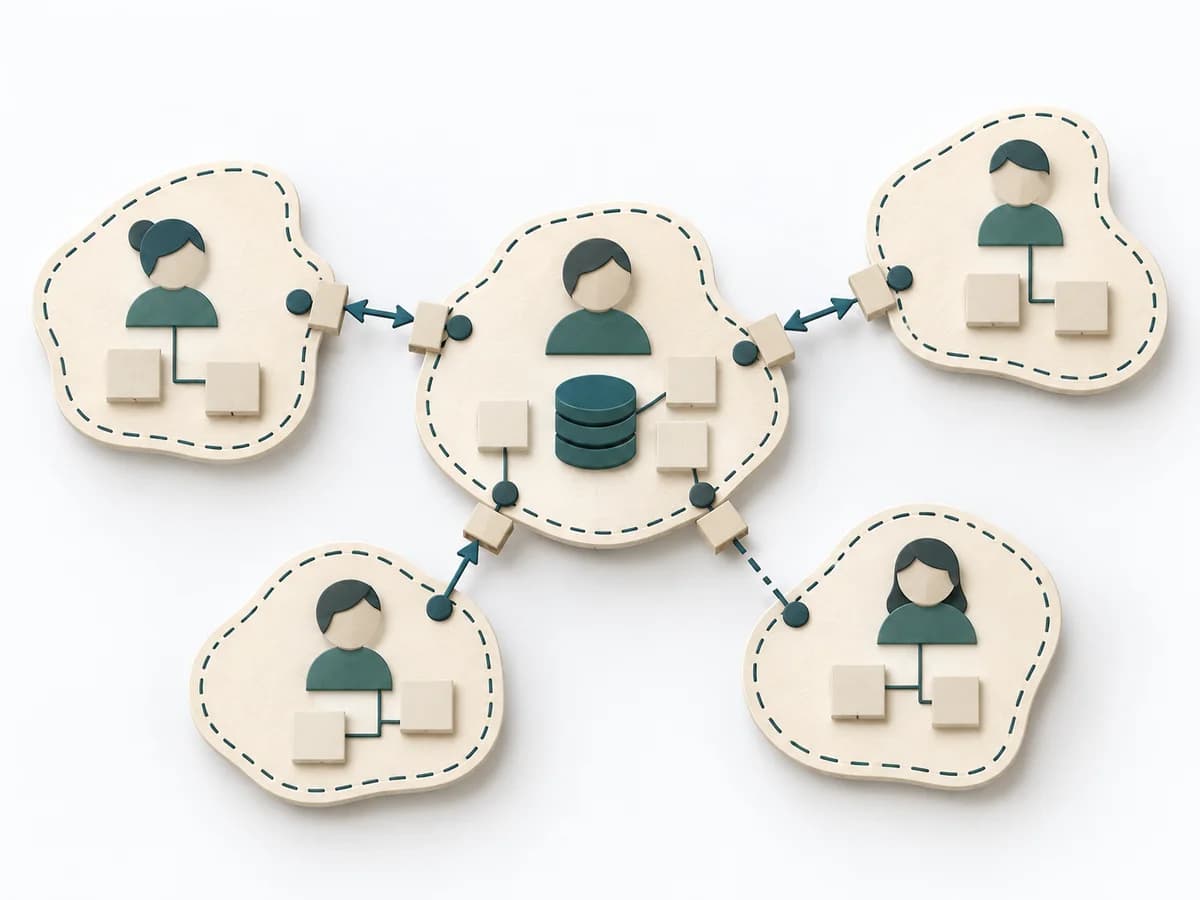
Makes domain boundaries, ownership, and relationships visible so modeling questions and responsibilities get cleanly resolved.

Links events, commands, and views into a flow picture that brings UI, behavior, and implementation together.
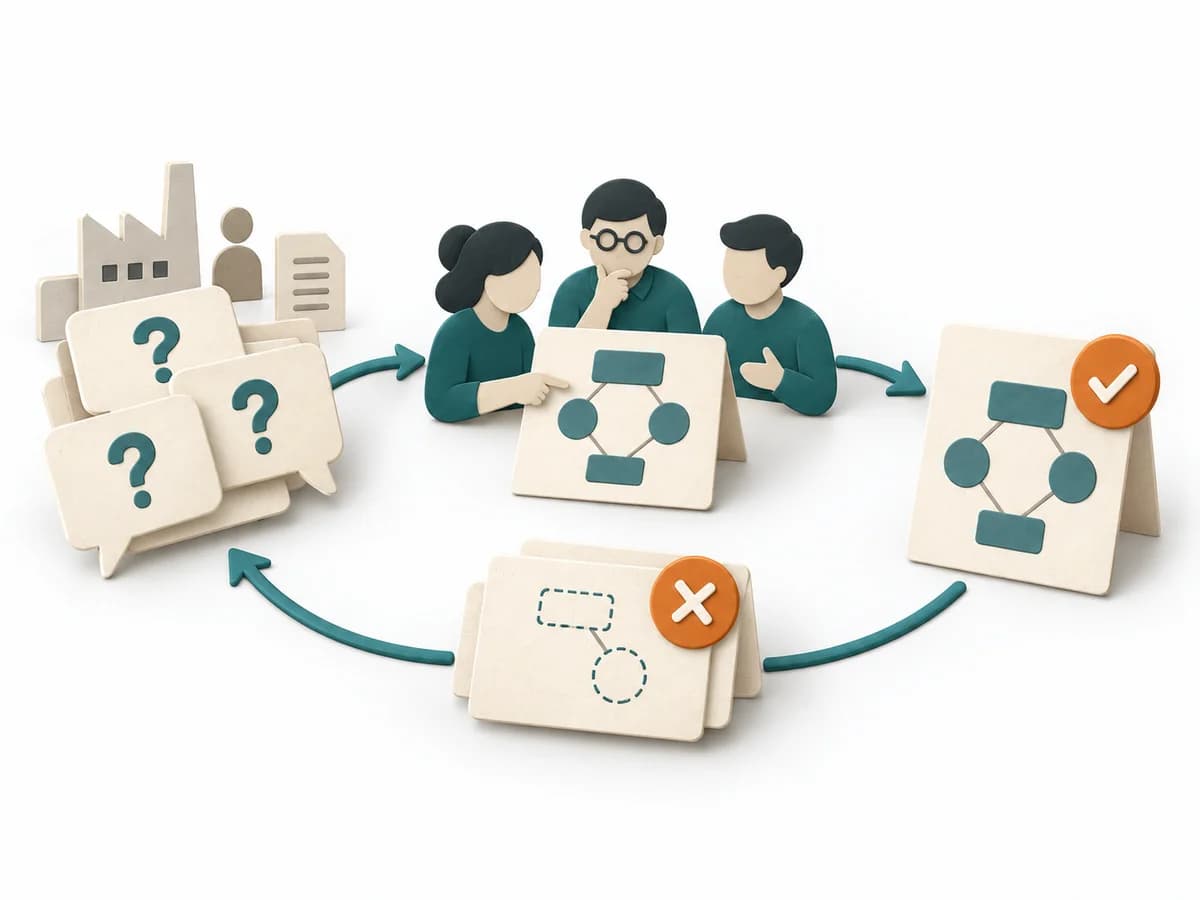
Concrete domain questions define what an ontology or knowledge model must be able to answer and test.
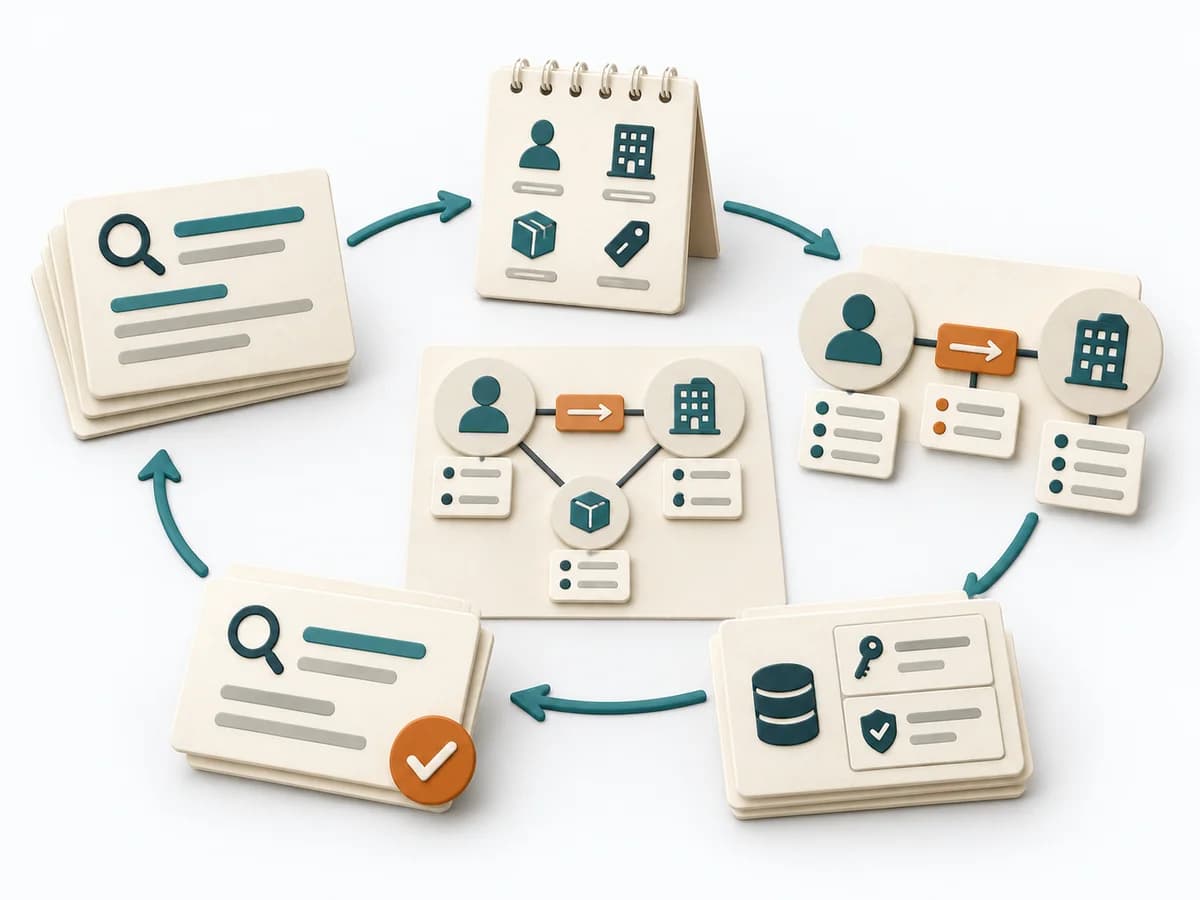
Query patterns drive node labels, relationships, and constraints so property graphs match real retrieval needs.